
INTERNATIONAL SAFETY PRODUCTS REACHES NEW HEIGHTS IN PRODUCTIVITY AND PROCESS EFFICIENCIES

Mills CNC has supplied International Safety Components (ISC), a Bangor-based designer and manufacturer of height safety equipment, with two new DN Solutions machine tools to increase production capacity, improve process efficiencies and meet rising global demand for its products. 

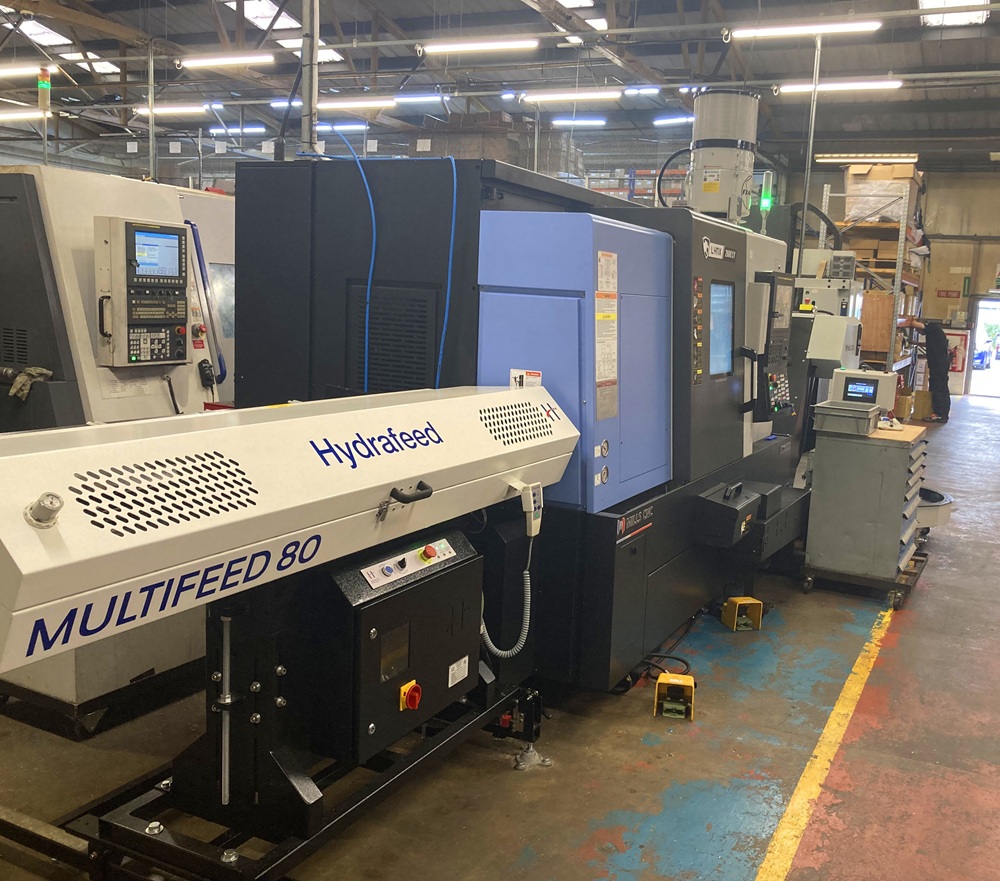
Installed at ISC’s vertically integrated manufacturing facility on the Llandygai Industrial Estate in Gwynedd in 2026, the machines comprise an NHP 4000 twin-pallet horizontal machining centre and a Lynx 2600SY sub-spindle, Y-axis multi-tasking lathe. The latter, equipped with a 10-inch chuck, 81 mm bar capacity and integrated bar feeder, replaces an older machine and forms part of an automated turning cell. 

The investments followed a 2025 audit of ISC’s machine shop, undertaken as part of a company-wide continuous improvement programme. 

“We regularly monitor and benchmark our machine tools’ performance and are always looking for ways to improve and upgrade our capabilities,” says Ricky Jones, ISC’s CNC supervisor. “The audit identified potential issues that, if not addressed, could detrimentally affect process efficiencies, floor-to-floor times and our ability to meet customer lead times.” 

The review was particularly timely, with global demand for ISC’s height safety equipment reaching record levels, especially in the US. Its recently introduced Reflex mechanical hitch system, aimed at the arborist market, has also been generating considerable interest. 

ISC operates a well-equipped machine shop incorporating horizontal and vertical machining centres, fixed-head turning machines and sliding-head lathes, including bar-fed equipment. These process materials ranging from high-strength 6082-T6 and 7075 aluminium alloys to 316, 17-4PH and 420S29 stainless steels, as well as engineering plastics. 

Components are manufactured in batch sizes ranging from 10 or 20 to 5000, using near-net-shape castings and forgings, bar, billet and plate. With geometric tolerances as tight as 18 µm and surface finishes down to Ra 1.6 µm, precision and repeatability are essential. 

“High accuracy, guaranteed repeatability and fast processing speeds are critical,” confirms Jones. “Where possible and feasible, our capital investment strategy has always focused on acquiring high-performance multi-axis and multi-tasking machines capable of producing complex, high-precision parts in a single set up.” 

ISC has a long-standing relationship with Mills CNC. In the early 2000s, the company invested in a Doosan Puma 2500SY sub-spindle, Y-axis lathe and a Doosan TT800SY twin-turret, twin-spindle turning centre. A Lynx 2100LB two-axis lathe followed in 2017 to strengthen its small turned-parts operation. 

“Mills has a good reputation for the machines it sells and supports, so whenever we are looking for a new machine, we make sure to see what it can offer,” says Jones. 

In 2025, ISC began looking for a horizontal machining centre to increase its milling capacity. Requirements included a powerful spindle with through-spindle coolant, a large, fast tool changer, touch probes for in-process measurement and an efficient swarf management system. 

After discussing its requirements with Mills CNC, ISC visited the supplier’s Leamington Spa facility, where the NHP 4000 was demonstrated. Impressed by its capabilities, ISC agreed the specification and placed an order. 

Equipped with a 30 kW, 15,000 rpm high-torque spindle, a 60-tool automatic tool changer and two 400 x 400 mm pallets, the NHP 4000 is designed for demanding production work. Its 360° B-axis rotary table provides indexing in increments of 0.001° or standard 90° positioning. 

Installed in January 2026, the machine is now producing a range of complex, high-precision components in single set ups. ISC uses high-density tombstone work holding alongside its own fixtures to maximise capacity. 

“Using two of the four faces on a tombstone, we can fixture multiple identical parts – 10, 20 or 30, for example – and machine them in one go,” he explains. “While the machine is running, operators can load and set up the second pallet with another tombstone and a fresh batch of workpieces. This keeps the spindle productive while the next job is prepared, helping us maintain continuous production.” 

The second investment, the Lynx 2600SY, replaces the Doosan Puma 2500SY acquired in 2004. Although the older machine had served ISC well, changing production requirements prompted a reassessment of its turning capabilities. 

“Given the types of components we machine and the volumes required, we decided we no longer needed a box-guideway machine. However, full multi-tasking capabilities and a bar feeder remained essential. Mills recommended the Lynx 2600SY. It’s similar in size and capability to the Puma it replaces, but its linear roller guides, integrated thermal compensation, greater turning capacity and Y-axis travel, together with the more advanced FANUC iPlus control, offer distinct advantages.” 

The Lynx 2600SY features an 18.5 kW, 3500 rpm main spindle, a 12-station, 24-position servo-driven turret, a maximum turning diameter of 380 mm and a maximum turning length of 610 mm. Its 6-inch chuck sub-spindle, which runs at up to 4500 rpm, works alongside a ±52.5 mm Y axis and driven tooling capable of reaching 5000 rpm. This combination allows the turning, milling and drilling of complex components drilled in a single set up. 

Since its installation in March 2026, the machine has been producing pulley wheels in various sizes and diameters from bar stock. Operations include machining external profiles, centre bores and V-belt grooves. 

To increase throughput and enable unattended production, ISC specified the Lynx 2600SY with a Hydrafeed Multifeed 80 bar feeder, automatic tool setter, Renishaw RLP40 workpiece inspection and set-up probe, and Hainbuch 80 mm quick-change dead-length power chuck system. A parts accumulator from J&S Engineering completes the automated turning cell. 

“The Lynx 2600SY, with its integrated bar feeder and parts accumulator, is a sophisticated solution that has significantly increased the efficiency and productivity of our small turned-parts operation,” says Jones. 

Established in 1966, family-owned ISC employs 75 people and controls its supply chain from product design and development through manufacture, assembly, inspection, testing and distribution. Continuous improvement underpins its investment in people, equipment, systems and processes. 

Alongside developing products such as the Reflex mechanical hitch series, the company is evolving its customer service and distribution model, placing greater emphasis on direct relationships with retailers and end users to improve responsiveness, operational control and distribution margins. 

“Our future success depends on developing and maintaining long-term, mutually beneficial customer relationships,” he concludes. “Achieving our growth ambitions requires a world-class manufacturing facility capable of producing high-quality, competitively priced products quickly and at the increased volumes we need. Our investment in these two new DN Solutions machines demonstrates our commitment to continuous improvement and growth.” 

More information www.millscnc.co.uk
ER HP Collet Chucks Elevate Standard For High-Speed Milling

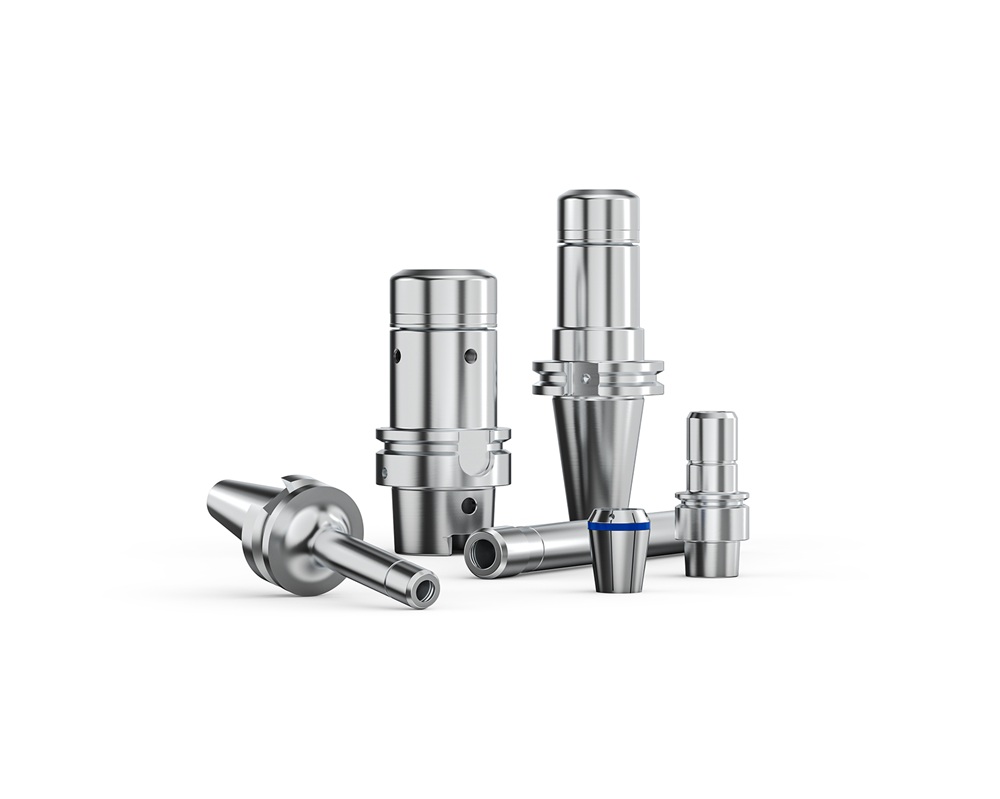
Engineered for high-speed milling and five-axis machining, Seco has enhanced the company’s ER HP collet chuck range. Now offering a finely balanced, rigid design, the ER HP delivers smoother finishes, longer tool life and unmatched reliability, reports Seco. 
 

With reference for tool clamping in demanding applications, the new ER HP collet chuck is designed to address the challenges of modern machining where tool slippage, vibration and unreliable clamping can lead to costly downtime and wasted material.  

With high levels of run-out accuracy and a robust, symmetrical build, Seco says its ER HP ensures consistent results, reduced tooling costs and faster cycle times. The high clamping force and secure grip of the collet chucks provide process security even during heavy-duty operations, while the intuitive roller key system makes setup quick, safe and accessible for every team member. 
 
Implementing the ER HP collet chuck is quick, safe and straightforward. Unlike complex tool-holder systems that require specialised training or risky set ups, the ER HP uses a simple roller key for installation, making changeovers fast for minimal downtime. 
 
“Our ER HP collet chuck is all about giving manufacturers the confidence to push their processes further without sacrificing precision or reliability,” explains Yves Heitz, global product manager for machine solutions at Seco. “By combining fine balancing, high clamping force and easy implementation, we’re helping our customers achieve smoother finishes, longer tool life and greater sustainability in their daily operations.”  

More information www.secotools.com 

Clever Work Holding Helps One Machinist Operate Many Mills

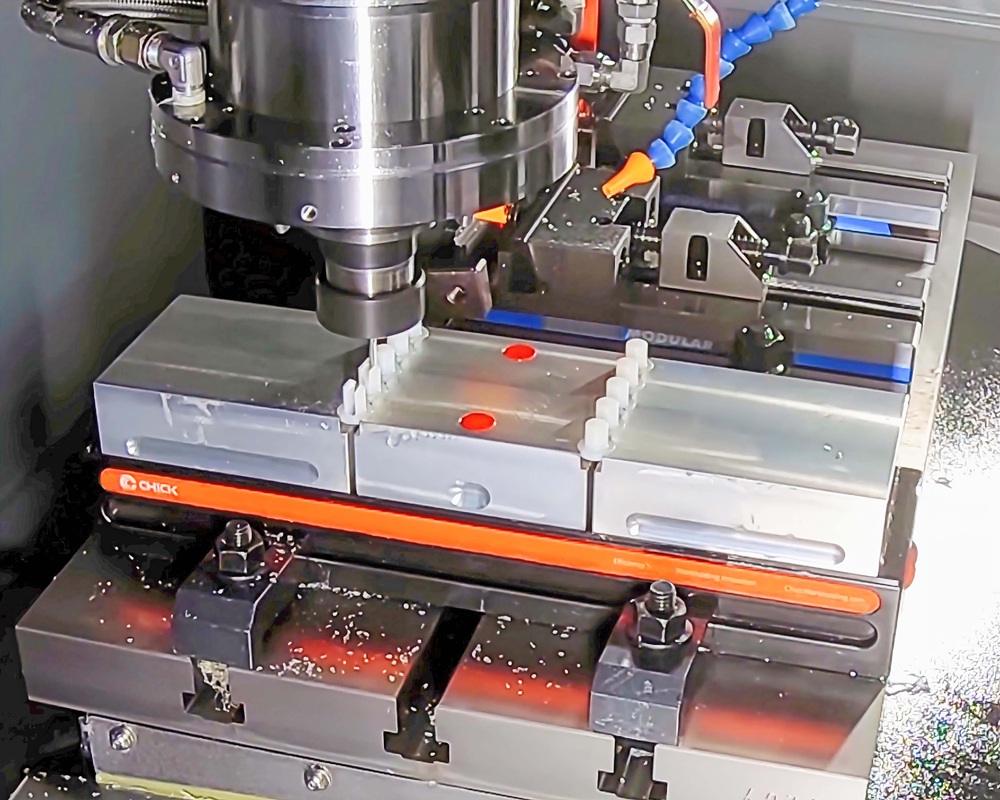
Wimborne-based RPH Manufacturing produces more than 45,000 components annually across 98 part varieties, with owner Richard Haim operating 14 machine tools single-handedly. Helping him maximise productivity are Chick QwikLOK twin-station clamps, supplied by UK distributor 1st Machine Tool Accessories. 

Typically, eight to 10 components are secured simultaneously using aluminium jaws machined to match their profiles. A single handle moves two jaws towards a central fixed jaw, balancing opposing forces and providing a consistent reference point. The jaws also generate a pull-down action for rigid work holding. 

“The best thing about these clamps is their repeatability of positioning to within 10 to 15 microns, better than the 20 microns that the US work-holding equipment manufacturer specifies in its literature,” says Haim. “So every part we machine comes off perfect.” 

By machining multiple components in one cycle, Haim reduces tool-change overheads and can leave machines running while undertaking other production tasks. Combined with the Patterns feature in Hurco’s MAX conversational control, the system makes programming repetitive operations straightforward. 

“For example, at the control I can program a slot mill to machine one part and then tell it to step and repeat the same operation across all of the components, simply by creating a Pattern block to define the X,Y location of each of them on a grid,” he explains. 

The clamps also accommodate larger individual components requiring high clamping forces, including a tapered cylindrical manifold held on just 3 mm of material. 

RPH uses Chick work holding to manufacture 14 of the metal and plastic components in its own 74-piece Parallel Lock kit, developed to keep parallels in position when closing a machine vice. 

More information www.1mta.com 

One Set Up, Hours Saved, Using Nikken Rotary Table With Trunnion

Manufax Engineering is a UK precision engineering company specialising in high-quality CNC machining for demanding sectors including defence, aerospace, medical and industrial manufacturing. With expertise in complex components and precision machining, the company continually invests in advanced manufacturing technologies to improve quality and efficiency.  

For one defence application involving precision tube machining, Manufax relied on manually indexing components between operations. The process was time-consuming, introduced additional set ups, and increased the potential for scrap and material waste. The business wanted a solution that would improve accuracy, reduce set-up time and create greater manufacturing flexibility for future work.  

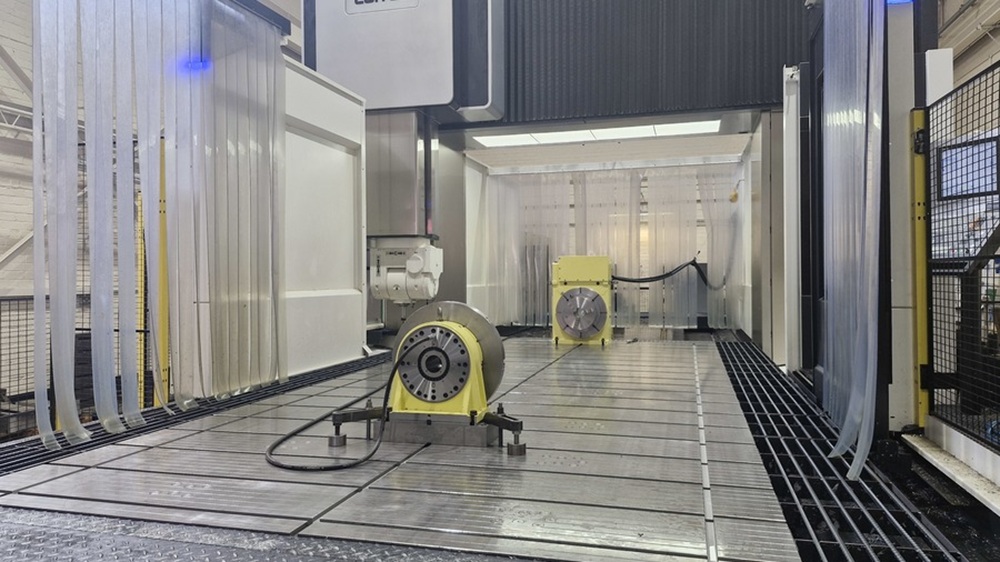
Manufax invested in a Nikken CNC501 rotary table with trunnion, enabling the completion of complex machining operations in a single set up, specifically for the company’s defence application. The improvements have transformed the machining process. Completing components in a single set up has improved accuracy and repeatability, while reducing scrap and raw material costs.  

Each operation now saves between eight and 10 hours of machining time, delivering substantial productivity gains and increasing manufacturing capacity. Beyond the immediate application, the additional fourth-axis capability has opened opportunities to secure new work while giving the business greater flexibility for future projects.  

Alongside the equipment itself, Manufax also highlights the support provided by the Nikken team.  

“Honesty is key, even when things don’t go fully to plan,” says a company representative. “The NIKKEN team has been fantastic throughout. The engineers know exactly what they’re doing, and whenever we need support, they’re there.”  

For Manufax, the combination of reliable technology, responsive support, and long-term partnership made Nikken the natural choice.  

More information www.nikken-world.co.uk 

Vice Automation System From Schunk Lowers Barrier To Entry

Schunk has introduced a new vice automation system designed to make automated machine loading and unloading straightforward, cost-effective and reliable. Combining precise positioning and clamping with simple robot programming, the solution offers manufacturers an accessible entry point into automated machine tending, extending machine running times without additional staffing. 

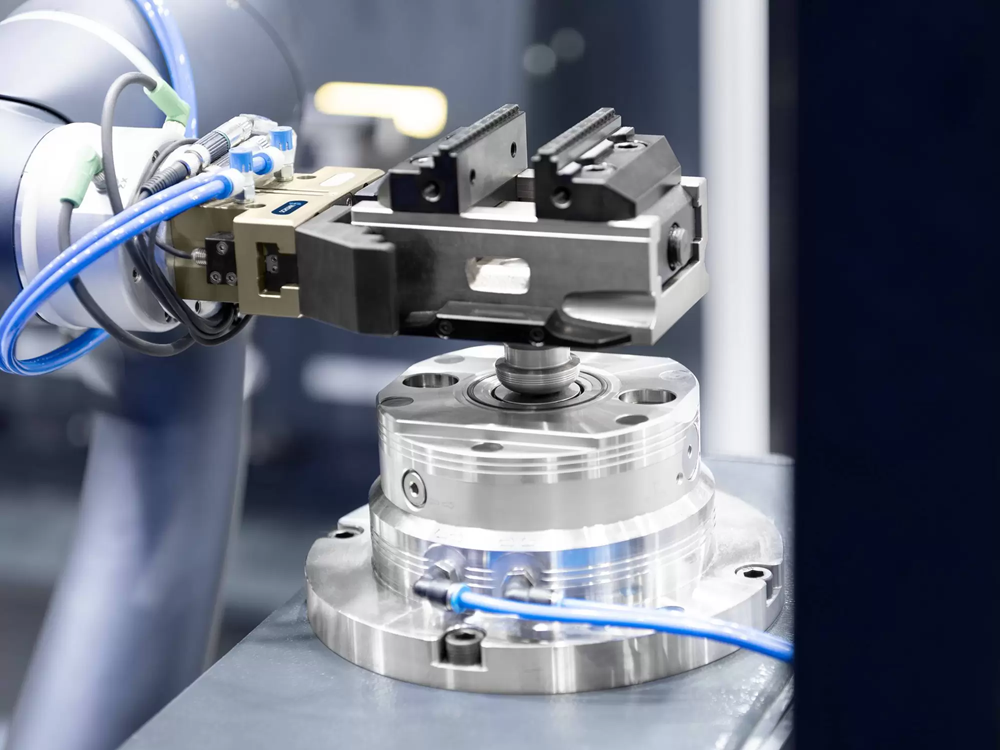
The system is based on a simple concept. Operators manually clamp workpieces into specially prepared vices outside the machine before placing them in a storage rack. A robot fitted with dedicated gripping fingers transfers each vice to a raised Schunk Vero-S 1-way clamping station on the machine table. After machining, it returns the vice and workpiece to the rack. Re-clamping for underside machining can take place inside or outside the storage area. 

At the heart of the system, the console-mounted Vero-S station provides a defined interface between the robot and machine tool. High pull-down forces and the quick-change pallet system’s precision interface ensure repeatable positioning and secure clamping in a single operation. The raised design also provides access for five-sided machining, while the clamping device covers the pallet module to prevent chip accumulation and maintain process reliability. 

Importantly, the operator retains control of the clamping process, while the robot handles the complete vice. Using a consistent interface and fixed positions simplifies programming to point-to-point movements, reducing integration complexity. With no requirement for a media supply on the machine side, the system can be used with virtually any machine tool. 

By preparing multiple vices before the end of a shift, operators can enable unattended machining beyond normal working hours. Standardised components, straightforward integration and relatively low capital expenditure make the system an attractive option for manufacturers looking to increase productivity through automation. 

More information www.schunk.com