UK Manufacturing is Growing. Now is The Time to Build on It

UK manufacturing entered autumn with another month of growth, strengthening the case for renewed investment in Britain’s industrial base. The S&P Global manufacturing Purchasing Managers’ Index rose to 51.9 in September from 51.7 in August, marking an 11th consecutive month of expansion. A reading above 50 indicates growth. 

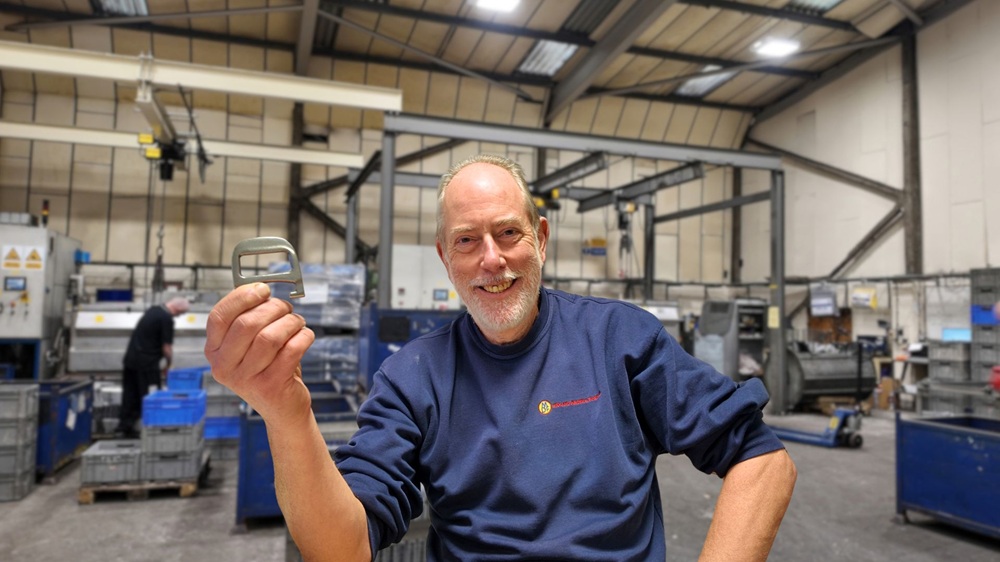
For Midland Deburr managing director Chris Arrowsmith (pictured), the figures highlight an opportunity to build capacity across the wider manufacturing supply chain: “Eleven months of manufacturing growth tells us something important. There’s work out there, companies are investing and there’s still tremendous engineering capability in Britain.  

While manufacturing growth is often measured through factory output, every finished component depends on a network of specialist suppliers. From its West Midlands facility, Midland Deburr provides vibratory deburring, component cleaning, solvent degreasing and vapour degreasing for manufacturers producing pressings, castings and machined components. 

“When customers become busier, that work travels through the supply chain,” Arrowsmith explains. “Machining creates components that need finishing, while pressings and castings require deburring and cleaning. Increased production ultimately means increased demand across specialist processes.” 

September’s survey recorded continued growth in new orders and exports, alongside longer supplier delivery times and higher input costs. Arrowsmith believes investment throughout the supply chain will be essential if manufacturers are to respond to rising demand. 

“If Britain wants higher manufacturing output, we have to think about capacity all the way through the supply chain,” he says. “That means machinery, skills, energy, premises, logistics and the specialist processes that keep components moving.” 

He adds: “Britain knows how to manufacture. We have the people, the engineering heritage and an extraordinary base of specialist companies. This is the time to use it, invest in it and give it every opportunity to grow.” 

More information www.midlanddeburrandfinish.co.uk 

Invitation to Compete for Fritz Studer Award 2026 Prize

Grinding machine builder Fritz Studer AG is inviting young researchers from European universities and technical colleges to enter the eighth Fritz Studer Award, which recognises innovative research with the potential to advance machine tool technology. 

The competition is open to graduates whose student research projects, college work or dissertations have focused on scientific or applied research relevant to the machine industry. Entries can address areas including precision machine tool concepts, alternative construction materials, simulation of machine dynamics and thermal behaviour, control and sensor technology, digital solutions for grinding, or new manufacturing technologies such as grinding and hard turning. 

To qualify, applicants must be able to demonstrate substantiated results or partial results from their research. The jury will assess the scientific content, form and accuracy of submissions, as well as the originality of the approach and, importantly, the feasibility of applying the findings in the machine industry. 

“With the Fritz Studer Award, we want to give young researchers an opportunity to present innovative ideas that could contribute to the future development of machine tools,” says a Studer representative. 

The winner or winners will receive CHF 10,000, the Fritz Studer Award and a certificate. Entries will be assessed by a jury comprising: Dr Konrad Wegener of Inspire-IWF Machine Tools and Manufacturing at ETH Zurich; Fred Gaegauf, Board of Directors of Fritz Studer AG; and Dr Frank Fiebelkorn, Head of Research and Development at Fritz Studer AG. 

The award ceremony will take place in mid-February 2027. The competition provides young researchers with an opportunity to gain recognition for work that combines scientific innovation with practical potential for precision manufacturing. 

More information www.studer.com

Keep Process, Material and Unit Costs Low in The Long Term

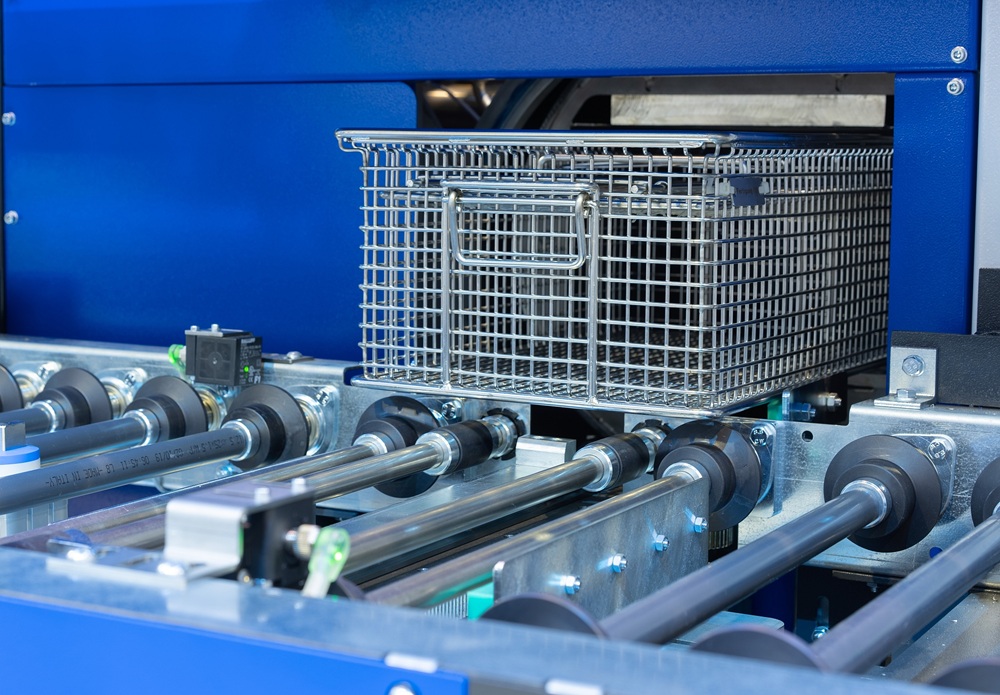
Ecoclean has launched the EcoCbase, a compact, flexible cleaning system designed to provide a cost-effective entry into high-performance component cleaning with non-halogenated hydrocarbons and modified alcohols. 

Developed for companies with lower cleaning volumes, the plug-and-play system combines process reliability with resource and energy efficiency. Available in S and M versions, it can be configured for pre-cleaning, intermediate cleaning and final cleaning applications, making it suitable for general industrial manufacturers facing increasingly demanding cleanliness requirements and more diversified product portfolios. 

The single-chamber, full-vacuum system has a compact footprint and low transport height, allowing installation where space is restricted. Its manually operated loading station can also be automated on request, while batch sizes of up to 50 kg for the S version and 75 kg for the M version provide flexibility for different component requirements. 

EcoCbase supports a range of cleaning processes, including steam degreasing, spray and immersion cleaning, injection flood washing, and ultrasonic cleaning. Part-specific cleaning programs can be stored in the system control, with 50 program slots available for current and future requirements. 

Process reliability is supported by filtration during filling and emptying, bypass filtration and continuous solvent treatment through an integrated distillation unit. Separated oil is discharged into an external tank, allowing valuable machining oils to be recovered while extending solvent service life and reducing operating costs. 

Energy efficiency is further enhanced by using waste heat from distillation to heat the solvent, alongside heat recovery functions designed to reduce energy consumption. A redundant safety system monitors relevant temperatures and pressures, while the closed cleaning process minimises emissions. 

EcoCbase is also suited to decentralised cleaning stations within larger manufacturing facilities and applications where water use or wastewater disposal is restricted.  

More information www.ecoclean-group.net

LENS MANUFACTURER SEES CLEAR ADVANTAGES WITH TOOLING FROM TAEGUTEC

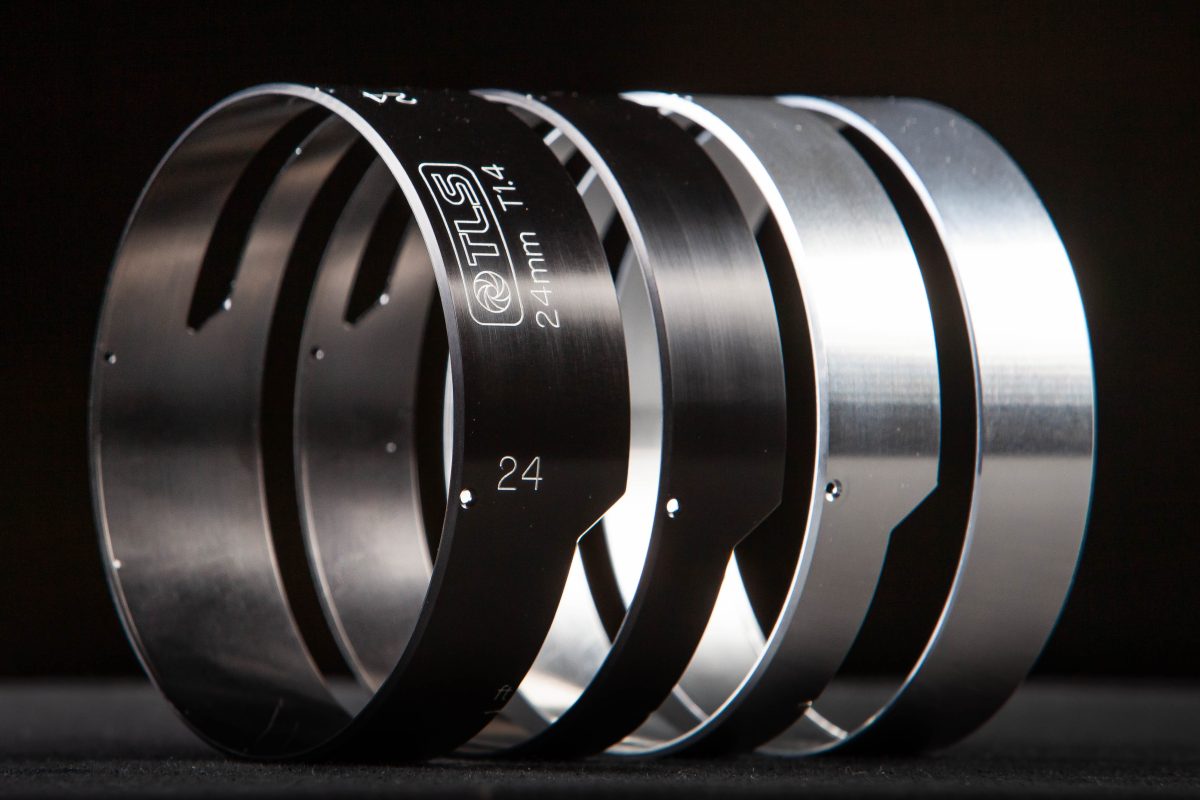
A Leicestershire cine lens specialist turned to TaeguTec’s aluminium turning grade to protect the mirror finish its camera housings demand and discovers an unplanned tool-life benefit along the way. Barwell-based True Lens Services adopted TaeguTec’s TTA101-grade VCGT 110304 FL turning insert after a trial addressed the hand-polishing bottleneck that had been adding time and labour to the production of its aluminium camera lens housings. 

True Lens designs, engineers and rehouses professional cinema lenses, converting vintage stills optics into modern cine tools used by filmmakers around the world, alongside lens servicing, repair and custom mechanical work carried out entirely in-house. The company supplies an international client base, and its engineering team won the Bert Easey Technical Award from the British Society of Cinematographers in 2025, recognition of the precision behind every lens leaving its workshop. 

Much of what True Lens machines is aluminium, produced on a pair of Nakamura-Tome AS200 turning centres in batches ranging from 50 to 500 pieces, depending on the job. Because the finished components are anodised, any mark or inconsistency left on the surface by the cutting tool is magnified, making a high-quality finish essential. 

TaeguTec technical sales engineer Brandon Kane had, in a previous role, helped install the pair of Nakamura-Tome AS200 machines already on the shop floor at True Lens Services. A conversation about that earlier work led the company to ask whether Brandon could take a look at a finishing problem on its aluminium parts. 

Working with an existing supplier’s uncoated turning insert, parts coming off the AS200s were failing visual inspection at a rate that meant roughly half of every batch had to be picked out and hand-polished before anodising. Every mark or burr had to be caught by eye by operators experienced enough to spot imperfections invisible to anyone else. Left unresolved, that meant additional manpower and time on every batch, a cost that never appeared as scrap or a cycle-time problem but sat quietly behind every job. 

The initial diagnosis pointed towards the machines themselves and a lack of rigidity in the process. Brandon had previously worked as a service engineer supporting Nakamura-Tome turning centres, so he was confident that was not the real cause. Aluminium finishing problems this consistent were more likely to be down to the insert than the machine. 

TaeguTec’s TTA101 grade, one of the first new products released since Kane joined the company, was proposed as a targeted trial rather than a wholesale tooling change. The VCGT 110304 FL insert would be introduced purely for the cosmetic outside-diameter finishing pass, with the existing tooling retained for roughing and general machining. 

TaeguTec’s TTA101 is a ta-C coated grade, applied at a thickness of less than 0.5 microns to preserve the sharpness of the cutting edge rather than rounding it off. With a hardness rating of HV5000 or higher, it also provides strong resistance to abrasive wear. Engineered specifically to resist the built-up edge that is a persistent problem when machining aluminium, the inserts rapidly made an impact. 

The trial insert was run on one Nakamura AS200 at a cutting speed of 525 m/min, a feed rate of 0.07 mm/rev and a depth of cut of 0.4 mm on the finishing pass. Feeds and speeds were fine-tuned specifically for surface quality rather than cycle time and slowed slightly from where they might otherwise have been. It was a trade-off True Lens Services was entirely comfortable with: getting the aesthetics and surface finish correct was the priority, not reducing cycle times. 

The formal trial report, compiled by True Lens Services and reviewed by TaeguTec, recorded a significant improvement in surface finish based on the customer’s own visual assessment. The more significant result, however, was tool life. With the previous insert, edges typically needed replacing after five to 10 parts. The TTA101 trial edge was still producing high-quality parts a month after the trial began and had not required changing. 

As the insert remains in service well beyond the initial trial period, this substantial improvement has yet to be benchmarked against its predecessor. With no insert failures to date, True Lens and TaeguTec still cannot quantify the tool-life gain. However, fewer insert changes, less operator intervention and more consistent production between tool changes have enabled True Lens Services to meet its surface finish requirements without switching machines, changing processes or resorting to excessive post-machining hand-finishing. 

The results were enough to move True Lens Services from trial to purchase. The company placed its first order, a box of 10 TTA101 inserts, and extended use of the TaeguTec grade from the single trial machine to both AS200s.  

Mark Lightbown, workshop supervisor at True Lens Services, says: “The TaeguTec inserts have made a massive difference, and we now run the TTA101 inserts on both machines. Whilst still early days, the savings from eliminating hand finishing are considerable. Equally important is process stability, with no need to tweak the process and full confidence that the surface finish on a batch run will not diminish. This is a huge benefit to our highly skilled machinists.” 

Parts finished with the TTA101 insert are now coming off the machine ready for anodising, removing the secondary hand-polishing step. For a business where every part is inspected, and where every imperfection is magnified by anodising, that translates into less labour, less handling and a more predictable route from machine to finished lens. 

With the trial proving a huge success, the next step for TaeguTec’s Brandon Kane is to identify further areas where the company’s cutting tools can deliver additional process and productivity improvements. 

More information www.taegutec.com 

£130k Grant 

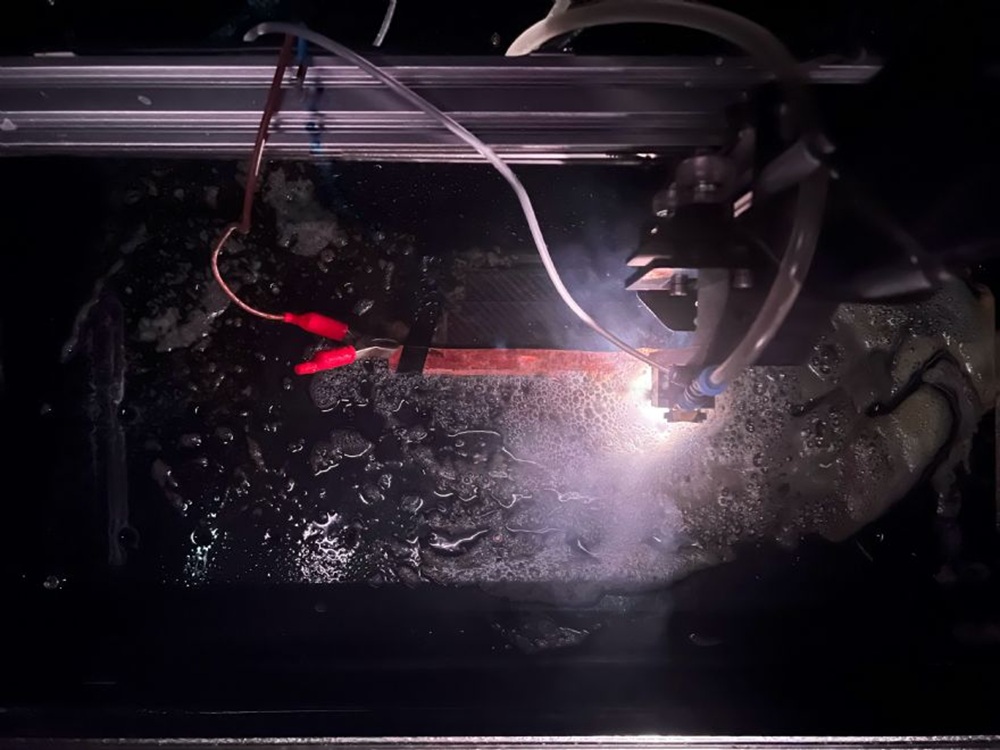
TextureJet has been awarded a £130,000 Innovate UK grant to accelerate the development of ArcSlice, the company’s new and disruptive surface-finishing technology platform for composite and polymer surfaces. Awarded through Innovate UK’s ‘Advanced Manufacturing Supply Chains: Potential High Growth SMEs’ competition, the funding will support an intensive nine-month project designed to move ArcSlice another significant step towards commercial deployment. The ambition is clear: to help manufacturers improve process consistency and product quality while reducing waste, time and cost.  

More information www.tinyurl.com/33tysxey