
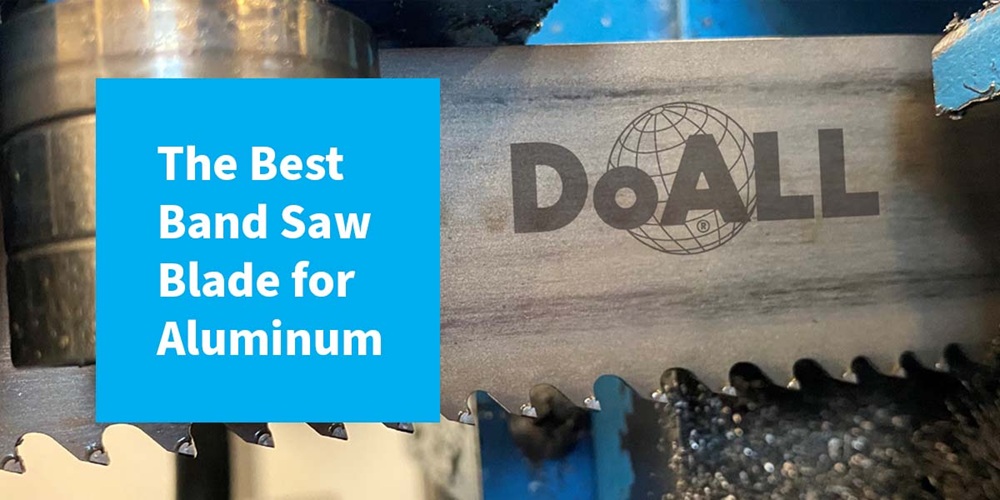
Selecting The Optimal Bandsaw Blade For Aluminium

Aluminium is valued for its high strength-to-weight ratio and corrosion resistance, but it presents unique challenges when sawing. Soft, sticky chips can weld to the blade teeth, leading to poor surface finish, erratic cutting and reduced blade life. According to industrial bandsaw manufacturer, DoAll, selecting the correct bandsaw blade is therefore essential for achieving consistent results.

Blade material is the first consideration. Bi-metal blades, with high-speed steel teeth welded to a flexible spring-steel backing, provide an excellent balance of durability, performance and cost, making them suitable for general-purpose aluminium cutting. For high-volume production or abrasive aluminium alloys, tungsten carbide-tipped blades offer greater wear resistance, maintain sharpness for longer and support higher cutting speeds.

Tooth geometry is equally important. Aluminium produces large, stringy chips that require sufficient gullet capacity to clear the cutting zone efficiently. Positive rake tooth forms encourage a shearing action that reduces cutting forces and heat, while deep gullets help prevent chip welding and improve surface finish.

Choosing the correct tooth pitch (TPI) is also critical. Thin sections require finer pitches to minimise vibration and produce clean cuts, while thicker material benefits from coarser pitches that provide greater chip clearance. Variable-pitch blades offer additional versatility by reducing vibration and improving performance when cutting extrusions or sections with varying wall thicknesses.

Correct machine settings are just as important as blade selection. Aluminium can be cut at relatively high blade speeds, but feed rates must remain sufficient to produce well-formed chips. Excessive speed with insufficient feed causes the blade to rub rather than cut, generating unnecessary heat and accelerating wear.

Finally, a quality cutting fluid designed for non-ferrous materials helps lubricate the cut, control temperature and flush chips from the blade. Combined with the correct blade specification, it delivers cleaner cuts, longer blade life and more reliable sawing performance.

More information www.doallsaws.com
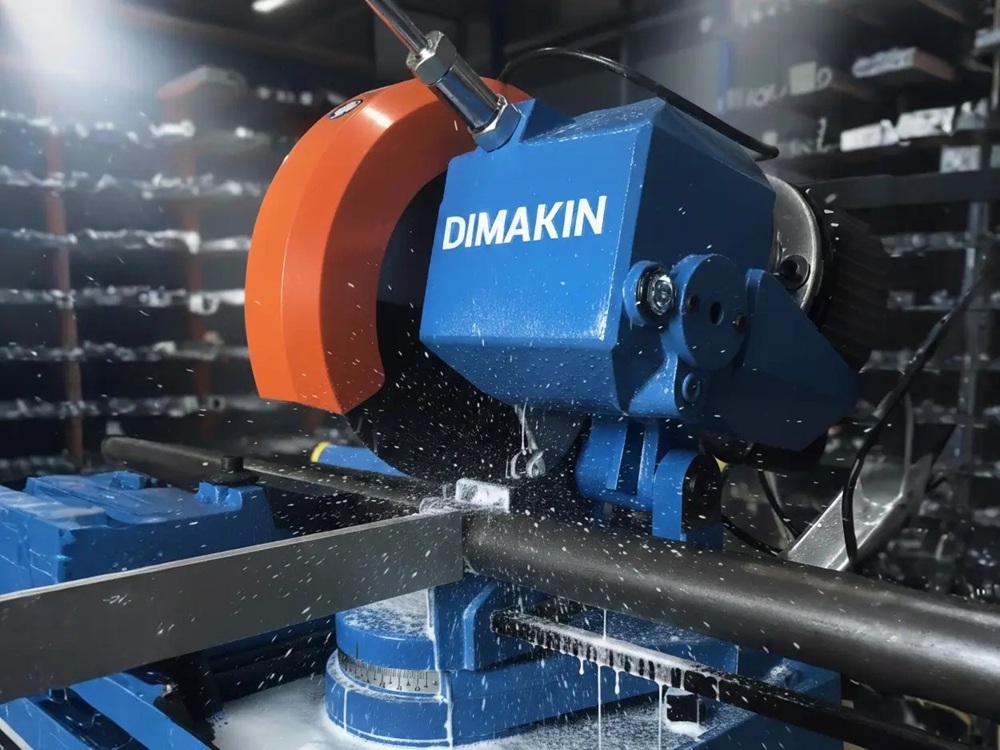
Why Coolant Matters In Cold Saw Cutting Quality

Cold saws are widely used in metalworking because they produce clean, accurate cuts with excellent repeatability. However, many cutting problems attributed to blades or machines can often be traced to a much simpler cause: coolant. Metalworking machinery supplier Dimakin sets out why coolant matters in cold saw cutting quality.

Although described as ‘cold cutting’, the process still generates considerable heat where the blade meets the workpiece. Without effective cooling and lubrication, heat builds up in both the blade and the material, reducing cutting accuracy, accelerating tool wear and affecting surface finish.

Unlike abrasive saws, cold saws use a toothed HSS or TCT blade to shear metal cleanly. Coolant plays a vital role by removing heat from the cutting zone while reducing friction between the blade teeth and the workpiece. The fluid helps maintain stable cutting conditions, particularly during long production runs or when machining difficult materials.

Effective coolant flow also improves surface finish by flushing swarf away from the cut, preventing chips from being recut and reducing burr formation. Lower friction means smoother cutting, less vibration and longer blade life, helping to reduce downtime and operating costs.

Coolant quality is equally important. Poor-quality or incorrectly mixed fluids provide inadequate lubrication and cooling, leading to increased blade wear, residue build-up and inconsistent cutting performance. Using a high-quality soluble cutting fluid at the correct concentration helps maintain reliable cutting conditions while protecting both the machine and the tooling.

Rather than being treated as a simple consumable, coolant should be regarded as an integral part of the cutting process. Correct coolant selection and maintenance deliver measurable improvements in cutting accuracy, surface finish, blade life and overall productivity.

More information www.dimakin.co.uk

Gentiger Brings Precision And Performance To Copper Alloys

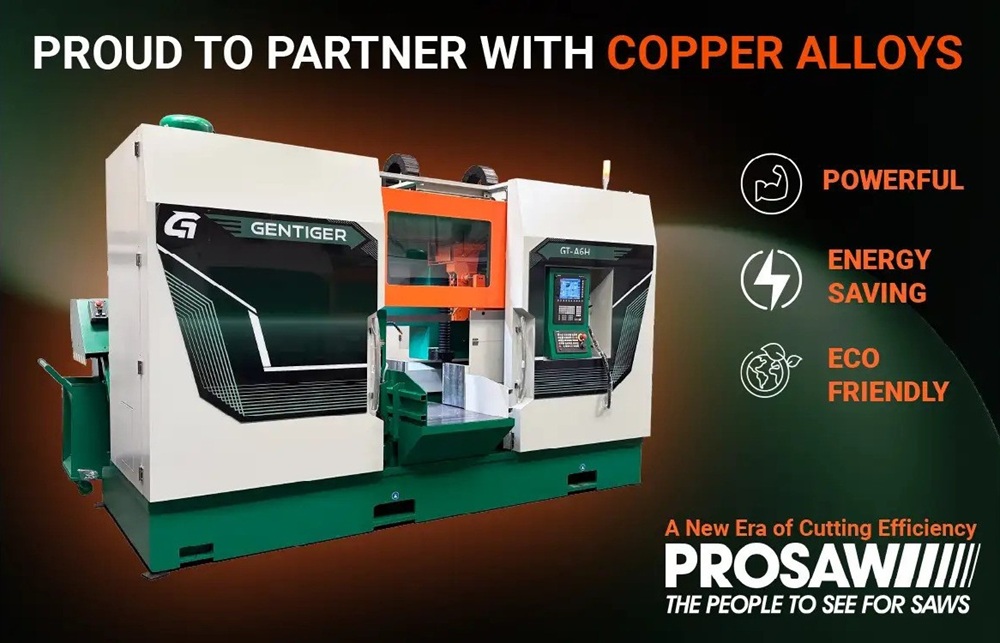
Long-standing Prosaw customer Copper Alloys has once again chosen to strengthen its manufacturing capabilities with a significant investment in three new Gentiger GT-HS bandsaw machines, enhancing its production capacity after the company secured a major new contract for the supply of its exotic alloys.

With more than 20 years of partnership between the two companies, Copper Alloys turned to Prosaw to support the increased demand and precision requirements associated with cutting high-performance materials. To meet these needs, the company has ordered three Gentiger saws, offering round cutting capacities of 430, 615 and 850 mm. This new equipment will enable Copper Alloys to apply efficient cuts to a wide range of exotic metals used across advanced sectors such as aerospace, defence, and high-integrity industrial applications.

A key part of the workload involves topping and tailing large non-ferrous alloy billets, as well as conducting various pre- and post-forging cutting operations. To streamline this, Prosaw designed and manufactured a bespoke heavy-duty rotating infeed table, engineered specifically to allow faster, safer, and more ergonomic rotation of billets during cutting.

Once fully commissioned, the new equipment will deliver notable performance gains for Copper Alloys. Faster cutting speeds, greater machine efficiency, and extended blade life all contribute to reduced operating costs and improved overall productivity. Each machine also features integrated power-usage monitoring for every cut, an increasingly valuable data point as energy costs continue to rise across the manufacturing sector.

This latest investment reinforces Copper Alloys commitment to high-precision sawing machines and continuous improvement, ensuring they remain a trusted supplier of advanced alloys to industries where quality and reliability are paramount.More information www.prosaw.co.uk

Katthöfer Cutting Tools Continues Growth With Vollmer

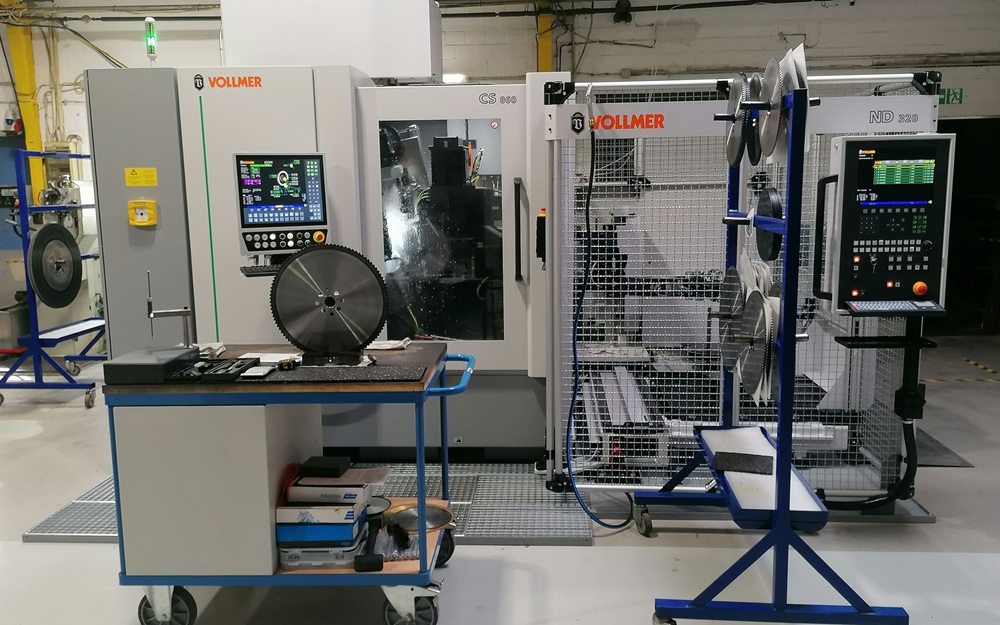
Katthöfer Cutting Tools has strengthened its capability to regrind carbide-tipped circular saw blades following the installation of a fully automated Vollmer CS 860 grinding machine with ND 320 handling system at its Selm facility in north-west Germany.

The family-owned company supplies saw blade maintenance and procurement services to customers in the steel, tube, profile and aluminium industries, while also expanding into wood processing and non-ferrous metal machining. The investment enables Katthöfer to respond more effectively to growing demand for precision regrinding as manufacturers seek to extend tool life and reduce costs.

“Our long-term strategy includes working closely with manufacturers to support the development of HSS and carbide-tipped saw blades,” says managing director Daniel Katthöfer. “At the same time, rising material costs are making professional resharpening increasingly important. Our investment in the CS 860 enables us to deliver greater precision while offering customers a more economical and sustainable solution.”

Commissioned at the beginning of 2026, the fully CNC-controlled CS 860 processes circular saw blades from 80 to 860 mm in diameter. Integrated measuring systems, 3D probing and acoustic sensor technology automate machine setup and maximise process reliability, while intelligent software simplifies programming and automatically detects broken teeth and tooth pitch. Coupled with the ND 320 handling system, the machine can operate unattended around the clock, automatically changing saw blades weighing up to 11 kg.

Katthöfer says the investment is already opening new opportunities in the carbide sector by delivering greater grinding precision, longer tool life and consistently high cutting quality.

Tobias Trautmann, managing director of the Vollmer Group, adds: “Targeted investment in automated grinding technology enables specialist tool service providers to improve productivity, enhance quality and support long-term business growth.”

More information www.vollmer-group.com

Precision And Cutting Efficiency For Metalworking Sector

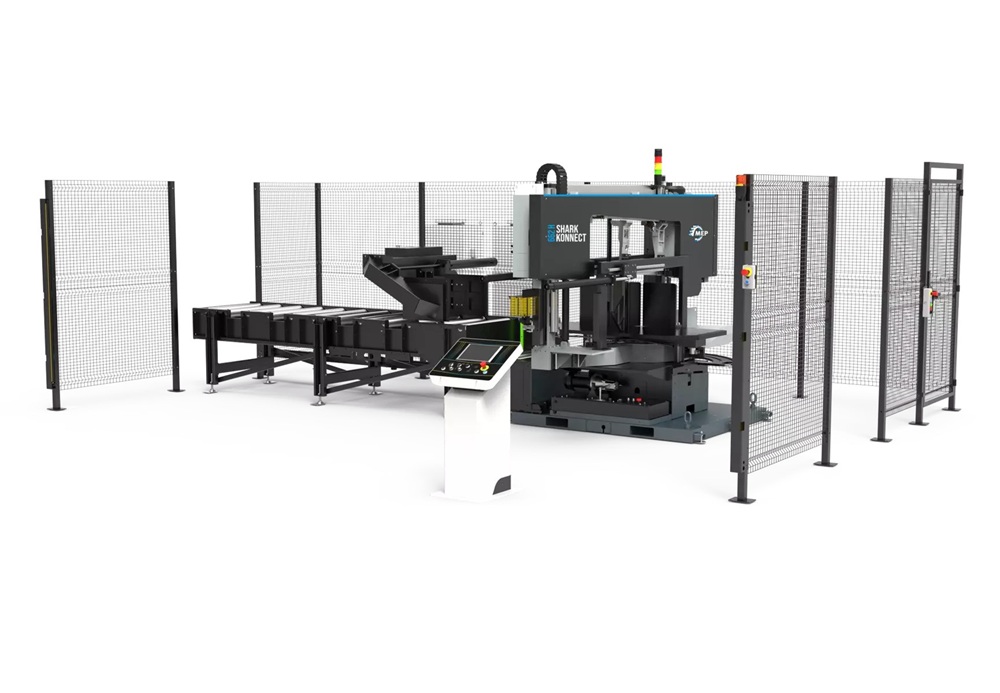
The new Shark 662 H Konnect from MEP is a dual-column automatic electromechanical bandsaw designed to deliver high-precision cutting of tubes, profiles and steel beams at mitre angles from -60° to +60°. Suitable for both steel fabrication and general machining applications, the machine combines structural rigidity, cutting accuracy and operational flexibility.

A robust cast iron structure, 9 kW motor and 41 mm saw blade provide the power and stability required to process demanding materials. A gantry-based material clamping system secures the workpiece throughout the cutting cycle, while a potentiometric vice continuously monitors its position and immediately detects any deviation from the programmed cut, helping to maintain both accuracy and safety.

The self-aligning, tilting feeder accommodates deformed bars, while a brushless motor and helical rack transmission ensure precise material positioning. A fixed cutting plane maintains stability when the cutting head is angled, allowing fast, accurate movement and reliable cutting performance, including for short sections and end cuts.

The Shark 662 H Konnect incorporates an industrial Linux-based control platform with native IIoT connectivity, providing real-time machine monitoring, simplified software updates and seamless integration with Industry 4.0 production environments.

Designed to suit a wide range of manufacturing operations, the machine is configurable with portal or pincer feeding systems, optional material handling equipment and either minimum quantity lubrication or flood coolant, depending on the application. New functionality can also be added without modifying the core software, simplifying future upgrades.

Safety is integral to the design, with the machine complying with the latest CE requirements. Customisable perimeter guarding, together with advanced cybersecurity features that protect machine data and network communications, provide secure operation in increasingly connected manufacturing environments.More information www.mepsaws.it/en