For more than a decade, BEMA (British Engineering Manufacturers’ Association) has been investing in manual machine tools from MACH Machine Tools to ensure its engineering apprentices develop the practical machining skills that employers across the southwest of England continue to demand.
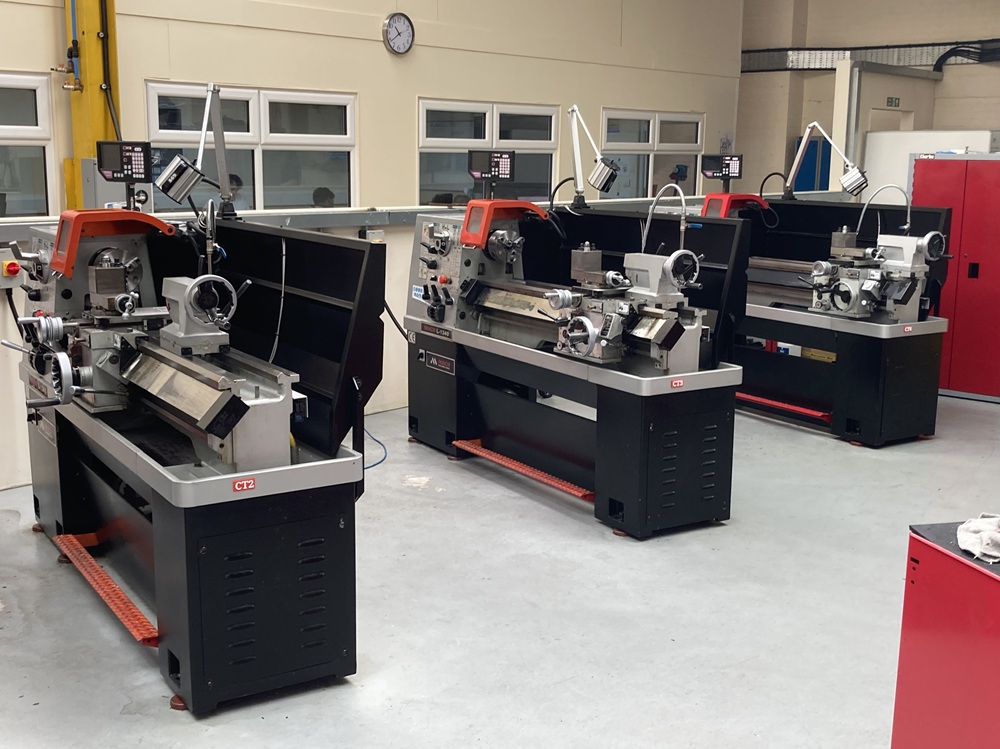
The latest investments form part of an ongoing commitment by BEMA to provide apprentices with relevant, transferable workshop experience before they return to their employers to complete the remainder of their training. To date, the organisation has purchased 11 manual machines from the Bristol-based supplier, including six MACH L-1340 centre lathes and five MACH VS-1 vertical milling machines.
The machines are installed at BEMA’s dedicated engineering training centre in Yate, South Gloucestershire. Operated in partnership with Swatpro Academy, the purpose-built facility delivers practical training for Level 2 and Level 3 engineering apprentices in machining, fitting and maintenance. The centre serves employers across the region, helping develop the skilled workforce required by the area’s diverse manufacturing and engineering industries.
Engineering apprenticeships supported by BEMA and delivered through Swatpro typically span four years. During the first year, apprentices spend ten months at the training centre, attending full-time from September through to July before returning to their respective employers to complete the remaining three years of their apprenticeship.
Following an initial induction period, apprentices undertake a structured programme divided into six-week training blocks. Each block comprises two weeks of turning, two weeks of milling and two weeks of fitting, providing a balanced introduction to the core engineering disciplines while allowing instructors to monitor progress through regular assessments and practical inspections.
“Our turning, milling and fitting modules are very much practical, skills-based programmes,” explains Andrew Dunster, lead workshop and commercial training instructor and assessor.
“By the time apprentices complete their first year, they have developed a solid level of technical competence across all three disciplines. Those skills provide the foundation they need when they return to their employers, where they continue developing throughout the remainder of their apprenticeship.”
Throughout their training, apprentices use the MACH lathes and milling machines to manufacture a wide variety of precision components from materials including mild steel, alloy steel, aluminium, brass and engineering plastics.
Rather than producing simple practice pieces, the machining projects are deliberately designed around functional workshop equipment that apprentices can use during subsequent training. These include thread vices, go/no-go gauges, location plates, V-blocks, toolmakers’ clamps and precision vices.
“Our apprentices are machining practical tools that have a genuine purpose, rather than simply producing parts with abstract features,” says Dunster. “It gives greater meaning to the work while reinforcing the importance of accuracy and good machining practice.”
Producing these components requires considerably more than simply operating a machine tool. Apprentices must learn to read and interpret engineering drawings, select appropriate tooling, safely set up each machine and consistently achieve the specified dimensional tolerances and surface finishes.
On the lathes, this includes operations such as external and internal turning, facing, parting-off, grooving, drilling and thread cutting. Milling exercises include face milling, end milling, drilling and boring, helping apprentices build a broad understanding of conventional machining processes before progressing to more advanced manufacturing technologies.
According to Dunster, the reliability and usability of the MACH machines make them particularly well suited to an educational environment.
“The MACH lathes and milling machines are accurate, reliable and straightforward to use,” he says. “That consistency is important when you’re teaching apprentices because it allows them to concentrate on developing sound machining techniques and good workshop practices.”
Value for money has also been an important factor in BEMA’s purchasing decisions.
“The machines are competitively priced and supplied with a comprehensive range of standard equipment, including tooling packages, chucks, steadies and digital readouts, rather than these being optional extras,” he adds. “That makes them an attractive proposition whenever we evaluate new equipment.”
This combination of technical capability, competitive pricing and educational support proved decisive when BEMA invited tenders in 2019 for a further six manual machine tools comprising three MACH L-1340 lathes and three MACH VS-1 milling machines.
For Martin Wear, BEMA’s centre manager, the decision extended beyond the machines themselves.
“MACH Machine Tools presented a strong technical proposal, but what also impressed us was the company’s understanding of the education and training sector,” he explains. “Its experience of working with training providers, together with the additional support and sponsorship it offers educational organisations, helped distinguish its submission.”
Today, the MACH machines play a central role in the day-to-day operation of the training centre.
The MACH VS-1 manual milling machines feature rigid construction, generous table capacities, variable-speed 5,000rpm spindles and two-axis digital readouts, while the MACH L-1340 centre lathes combine compact footprints with features including quick-change tool posts, precision tailstocks, stress-relieved beds and two-axis digital readouts. Together they provide apprentices with the robust, accurate and dependable platform needed to develop fundamental machining skills.
As engineering employers continue to seek apprentices with strong practical capabilities alongside theoretical knowledge, BEMA believes that investment in high-quality workshop equipment remains essential.
“We currently have 11 MACH machine tools in our training centre,” concludes Wear. “They continue to perform reliably year after year and play an important role in helping us develop the turning and milling skills our apprentices need before they progress into industry. Ultimately, that’s what this investment is all about: giving employers apprentices who are confident, capable and ready to contribute from day one.”
More information www.machinetoolsalesonline.com