
Horn introduces latest indexable-insert mills

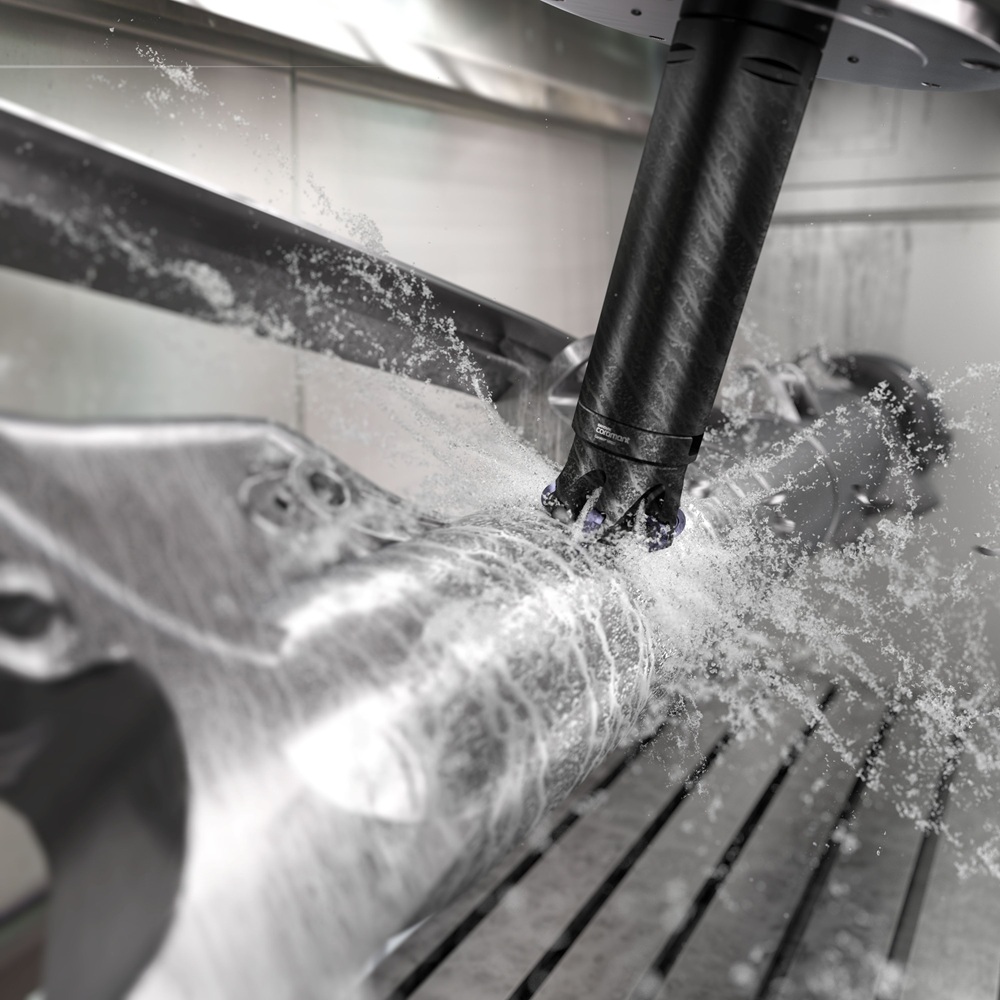
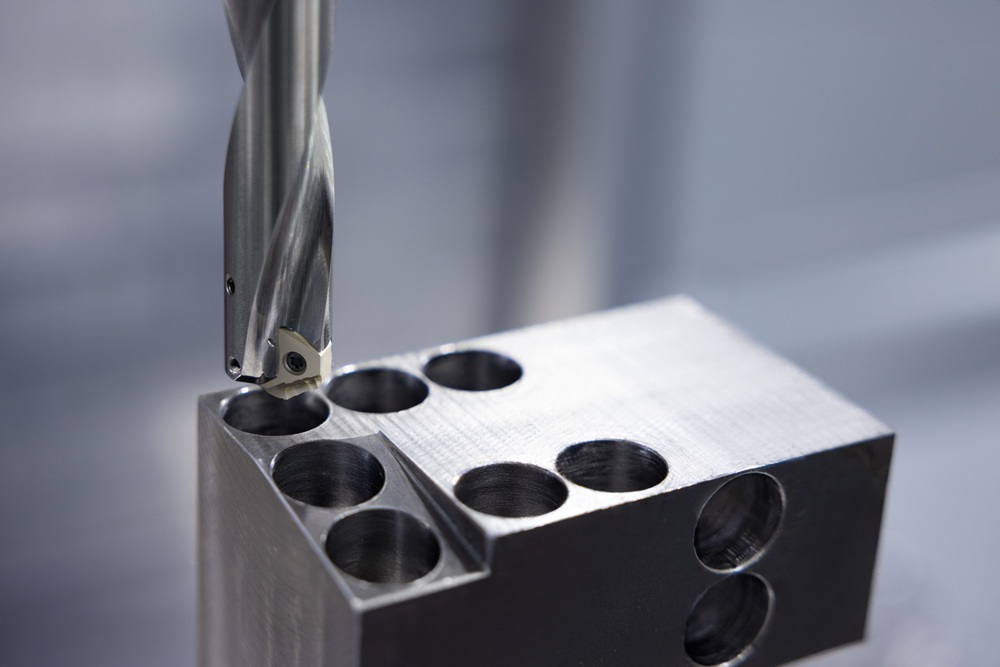
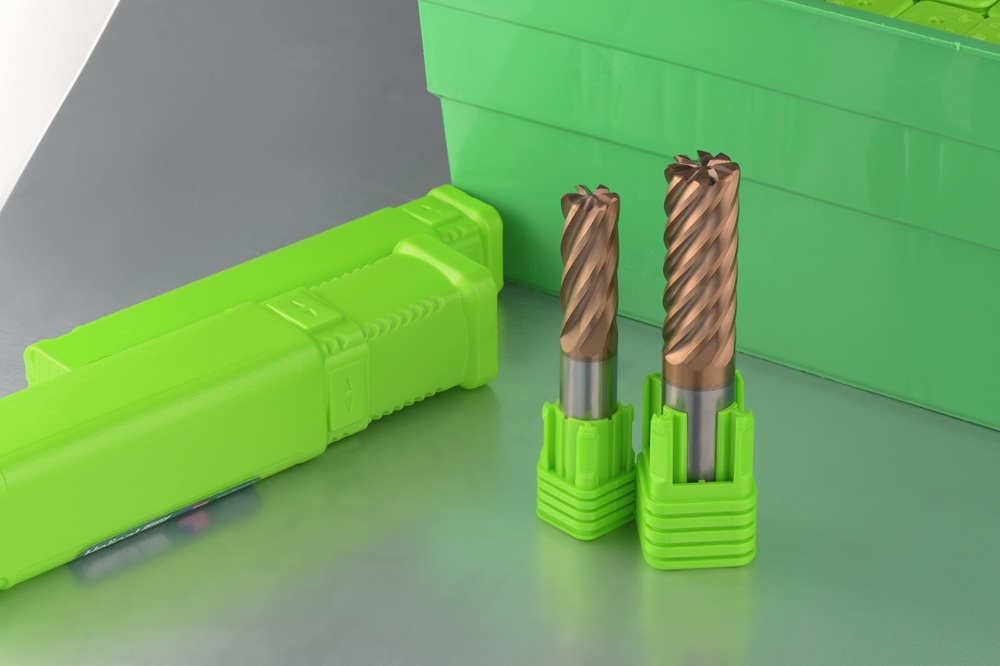
Tooling manufacturer Horn has expanded its DA milling programme for corner, face and plunge milling. Suitable for roughing or finishing, the new DA65 system uses a larger insert than the existing DA62, enabling greater axial depths of cut. The patented, six-edged, indexable insert can be used on both sides and has three axial and three radial cutting edges per side, leading to an economical cost-per-edge ratio.

The sintered, trigonal insert has a thick cross-section and, despite the negative lead angle, exhibits a positive cutting geometry, ensuring soft machining characteristics and reduced cutting forces. The selected axial and radial rake angles result in low torsional moment and less transverse load on the spindle, allowing system deployment on older and less powerful machines. A further advantage of the chosen axial rake angle is efficient chip evacuation, especially during helical plunging.

The cutting edge profile generates a precise 90° corner angle, the maximum cutting depth being 7 mm. As a point of note, the inserts are available with corner radii of 0.8 or 1.2 mm. The proven SA4B carbide substrate is an all-rounder for milling steel, stainless steel, cast iron and aluminium workpiece materials. Inserts are also available in grades SC6A or IG6B for machining other material groups.

The tools come as end mills in diameters of 32 and 40 mm featuring two or three inserts, and as shell milling cutters with a diameter of 50, 63, 80 or 100 mm. Depending on the size, there are four, five, seven, nine or 11 inserts. All tools have provision for internal coolant supply to the cutting zone.

More information www.horn-group.com

New right-angle heads suitable for automation

A new range of tool-holding heads designed to mill and drill components at right angles to the orientation of a machining centre spindle has been introduced by Swiss manufacturer Pibomulti, whose products are sold into the British and Irish markets exclusively by Gewefa UK. The next-generation CEP-NG heads can likewise be used in the B-axis spindle of a multi-tasking lathe, or in a live VDI turret station of a turn-mill centre.  

Built with high-quality, hardened and ground bevel gears and ABEC 9 angular contact bearings, CEP-NG heads are engineered to deliver reliability, performance, precision and longevity, even when tackling challenging applications in demanding sectors such as automotive, aerospace, medical, defence and energy.

Compared with previous models, the new generation of heads is capable of transmitting higher rotational speeds at a 1:1 ratio, leading to greater productivity due to raised metal removal rate when roughing, or finer surfaces when taking finishing cuts. The CEP-NG 17 model, for instance, which clamps the cutter in an ER25 collet, can reach a maximum speed of 5000 rpm, optionally 6000 rpm, and has a maximum torque of 50 Nm. 

ER8 up to ER50/ISO40 tool clamping is available, the latter being capable of deploying a 36 mm diameter tool and transmitting 210 Nm of torque. A further benefit of the head redesign is that vibration is lower, especially when tool overhang is long, further promoting good surface finish as well as extending tool life. 

Pibomulti CEP-NG heads are also lighter in weight, reducing stress on the machine tool spindle bearings, as well as on the machine structure when the spindle head is accelerating or decelerating in the linear axes. The lightness similarly lessens the load on the magazine arm during automatic tool change and allows quicker exchange.

More information www.gewefa.co.uk

New small diameter boring bars from Mitsubishi Materials

Mitsubishi Materials has launched a new range of small boring bars for Swiss type automatic lathes. Notably, the whole series is available in both solid carbide and steel. The inclusion of both types provides a choice for end users and offers the benefits of deeper boring capability due to the extra rigidity of the carbide type. Additionally, not all components need an extra-deep-hole carbide shank, therefore the cost-effective steel type is also available in all types.

The length of the tools is compatible with Swiss-type automatic lathes, an important criteria, especially where workspace is at a premium. This ready-made-to-length feature negates the costly and time consuming process of cutting the shanks of standard tools to a shorter length to prevent interference.

A comprehensive selection of hard steel bars has recently been introduced to the range. The hard steel body is effective in preventing damage and wear caused by chip evacuation. Hard steel types are available in diameters ranging from 4 to 10 mm diameter for the 7° SCLC, STUC, SDUC, SDQC and SWUC types of holder, and for SCLP and STUP 11° types.

A vast range of different carbide bar diameters, ranging from 4 to 32 mm diameter with a minimum pre-boring diameter of 5 to 34 mm are also available for the 7° SCLC, STUC, SDUC,

SDQC and SWUC types of holder, and for SCLP and STUP 11° types.

Finally, the steel bars range from 12 to 32 mm diameter with a minimum pre-boring diameter of 14 to 40 mm. Again. these are available in the 7° SCLC, STUC, SDUC, SDQC and SWUC types of holder, and for SCLP and STUP 11° types.

More information www.mmc-carbide.com

Standardised chip-breaker geometry for long-chipping steels

Machining long-chipping steel materials like stainless steels has always been a challenge. With the development of a new, standardised chip breaker geometry for fine-boring blades, MAPAL says it has achieved a crucial breakthrough that has both technical and economic benefits.

In metal machining, chip formation plays a key role in process reliability, tool life and surface quality. Controlled chip formation is particularly crucial to the fine machining of unalloyed, alloyed and stainless steels.

MAPAL has developed a brand-new approach to chip breaking for fine-boring tools. The solution combines a precisely defined lead and rake angle geometry with optimally adapted cutting data and cutting depths. According to the company, this precise adaptation enables perfect chip formation, even for challenging materials. The result? Optimal chip removal, reduced heat development and much greater process stability.

The benefits of this technology can be seen not only in the quality of the finished workpieces, but in the cost-effectiveness of manufacturing. Less machine downtime and tool wear and greater dimensional accuracy make this approach a real leap forward in machining technology.

Chip breakers are not a new invention, but the idea of implementing standardisation for long-chipping steel materials in fine boring is. The chip-breaker geometry developed by MAPAL combines decades of experience in this area with a clear focus on cost-effectiveness and user orientation. Until now, MAPAL has used chip-breaker technologies for custom solutions. With this new innovation, the company is taking a big step towards standardisation and efficiency.

The fine-boring blades with chip-breaker geometry for unalloyed, alloyed and stainless steels are now available from stock with defined geometries and coatings.

More information www.mapal.com

Redefining the management and use of cutting tools

Together with its customers, Seco, part of Sandvik Group, says it is redefining the management and use of cutting tools, driving greater efficiency and sustainability throughout the product lifecycle.

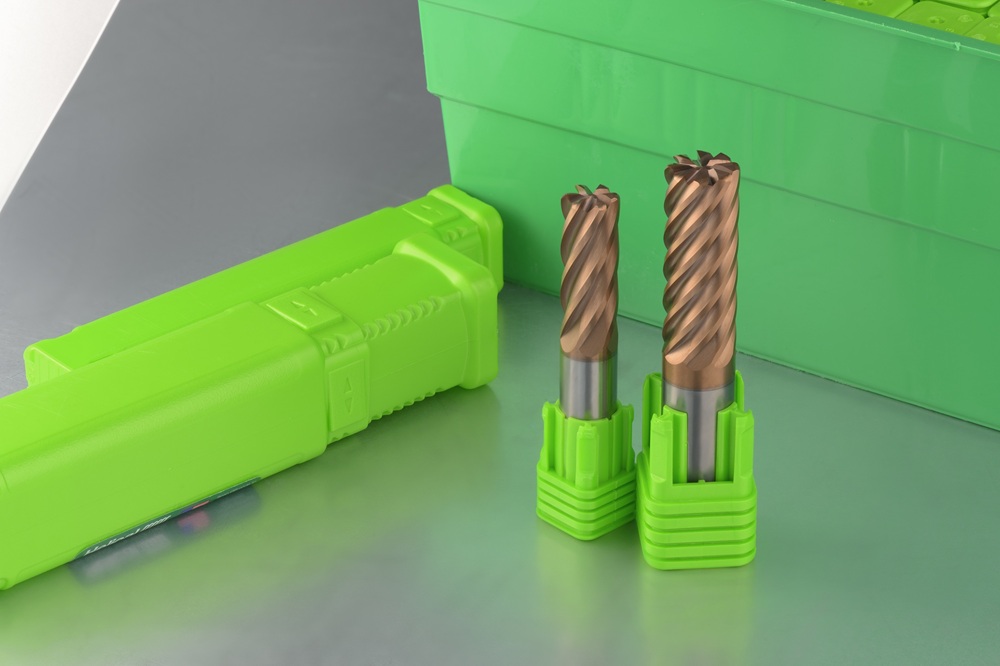
A key contributor is Seco’s reconditioning programme for solid-carbide tools, helping customers to reduce both environmental impact and tooling costs. Through its reconditioning services, the company is not only extending tool life but also paving the way for smarter, more efficient and sustainable manufacturing.

Traditionally, machine shops discard worn solid-carbide tools, contributing to high operational costs and environmental impact. The Seco reconditioning programme offers an alternative: restoring original tool quality and prolonging life while guaranteeing new tool performance. By bringing the tools back to their original geometry and coating, and extending their lifecycle, machines shops gain from reduced raw material consumption, environmental impact and cutting tool costs.

But the benefits go further. Ongoing geopolitical risks continue to disrupt global supply chains, highlighting the importance of proximity to manufacturers. A more local reconditioning resource not only shortens lead times but also supports broader sustainability goals by enhancing environmental and operational efficiency. Seco continues to grow its global reconditioning presence, with full capabilities across key regions.

In addition to remanufacturing services, Seco also has its own recycling programme for carbide tools. When tools are so worn out that remanufacturing is no longer possible, the company brings them back and ensures responsible recycling into new products.


A key enabler in transforming Seco’s solid-carbide tool offering is digital traceability, powered by data matrix codes. A laser-etched matrix code allows the tracking of each individual tool from production to reconditioning, and eventually recycling. Digital traceability gives real time insight into the status of every tool in the reconditioning loop.

More information www.secotools.com