
Horn demonstrates efficient lead-free alloy turning

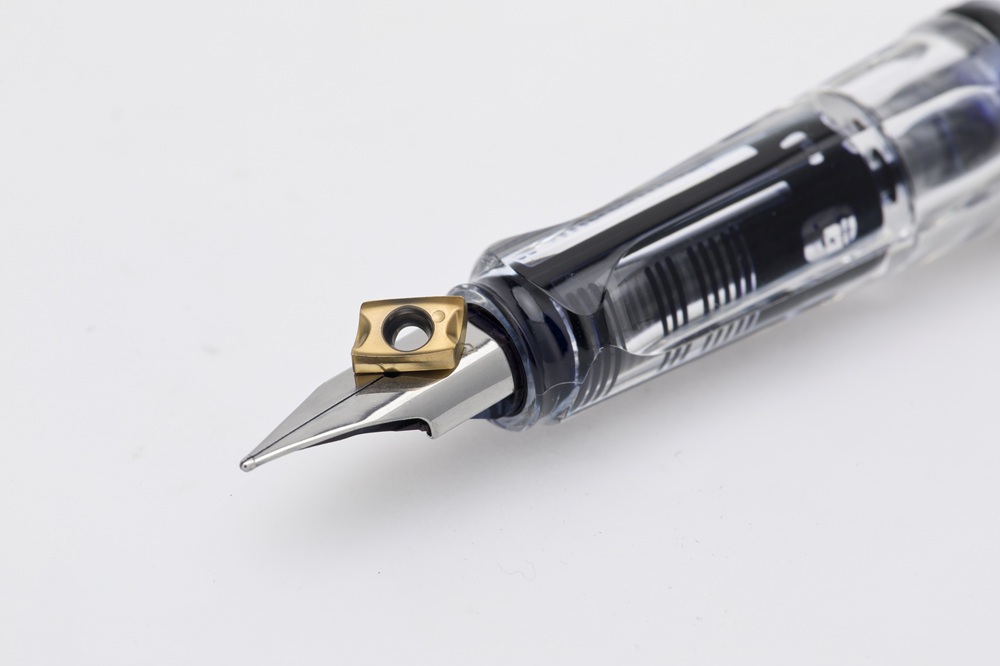
At its recent Technology Days open house in Tübingen, Germany, cutting tool and insert manufacturer Paul Horn GmbH explained the measures it is taking when producing its latest products to mitigate the difficulties that its customers face due to the phasing out of lead as an alloying element.

The main problem when machining lead-free alloys, whether steel or brass, is a lack of reliable chip breaking. Horn engineers remedied this for grooving and longitudinal turning by taking laser-cut chip-breaker geometries normally reserved for cutting steels, adapting them and applying them not only to those materials but also to lead-free brass and other non-ferrous alloys that no longer have their free-machining properties. Extensive investigations showed this works very well.

For boring, geometries were again adapted to ensure reliable chip breaking. One of the biggest challenges in internal machining is the generation of long swarf that wraps around the tool, clogs the hole or, in the worst case, leads to tool breakage. Previously, laser-cut or ground chip breaker geometries were employed but such carbide inserts tend to be expensive.

With Horn’s new Type 105 Supermini and now the Type Mini with I geometry, Horn has succeeded in developing boring tools with a chip breaker form that is pressed into the insert’s rake face as the green tungsten-carbide blank is being manufactured. After the blank has gone through the high-temperature sintering process, the chip-breaker shape is permanently fused into the final, hard insert. Such geometries are cost-effective, can be used universally for different material groups, and are suitable for internal, face, copy and back turning. Horn reports that chip control is good, even when the infeed rate is low.

More information www.horn-group.com

Excellent roughing in copy milling applications

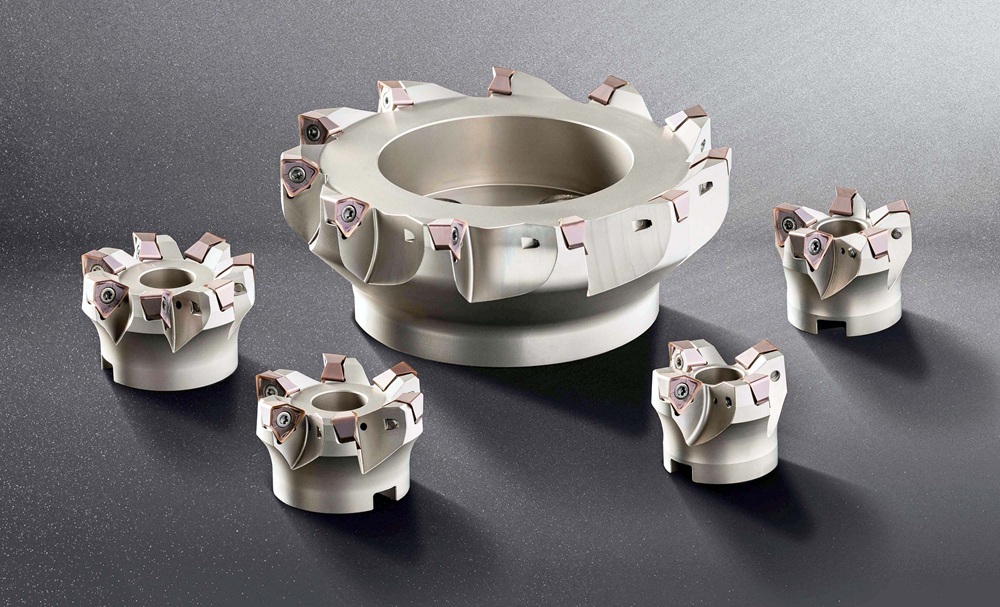
Tooling manufacturer Seco says its new generation of Round 20 copy mills and inserts offers excellent performance in a wide range of applications, including face, side, slot, plunge and ramp milling. Round 20 inserts are compatible with cutter bodies from previous generations and provide additional performance in challenging materials.

The new Seco Round 20 cutters and inserts are suitable for productive medium-to-rough milling in steel, stainless steels and heat-resistant superalloys, as well as cast iron and hardened steels. According to the company, the large-diameter inserts maximise material removal rates and offer a cost-effective means to generate an R10 mm radii with 20 mm round inserts.

“The new generation of Round 20 represents a significant step forward from its predecessors,” says Seco product manager Benoit Patriarca. “With today’s Round 20, inserts can be indexed to four, six or eight positions, allowing users to match the insert consumption to the depth of cut being taken. This flexibility also means the new inserts integrate with existing cutter bodies that index to four or eight positions.”

Through the use of insert shims and cassettes, users can maximise the life of Round 20 cutter bodies. With these options, manufacturers reduce the risk of damaging an insert pocket and eliminate the replacement cost and potential downtime that accompany unexpected tool breakage.

Round 20 features 16 available cutter bodies with four shim options and three cassette options, as well as 30 indexable cutting inserts.
More information www.secotools.com

Walter launches two new grooving geometries 

With the arrival of the new UE6 and RE6, Walter is expanding its GD26 grooving portfolio with two indexable insert geometries for medium machining. The cutting tool manufacturer now offers a total of 12 geometries in seven wear-resistant Tiger-tec Gold grades for parting-off, grooving, groove-turning and copy turning.

According to Walter, the new UE6 geometry is characterised by its ability to generate low cutting forces and effective chip control, particularly when grooving and groove-turning. Alongside the UE6 is the new RE6 full-radius range of inserts which Walter says has been designed to generate excellent surface finishes and optimum chip control, especially during dynamic turning.

Thanks to its large chip-breaking range, UE6 geometry enables reliable chip evacuation in all grooving operations. Complementing this capability, RE6 geometry offers the best conditions for copy and relief turning. Both variants are suitable for use with the Groov-tec GD grooving system, the stability of which further enhances the potential of the inserts.

Fitted with Tiger-tec Gold Indexable inserts, the Groov-tec GD can be used universally for all ISO material groups. The patent-pending double serration profile is central to the high stability of the system. It prevents the cutting insert from being pushed out of the insert seat from the side. A raised centre tooth serration also secures the insert against incorrect engagement into the pocket.

In addition to the increased stability compared with standard prism clamps, the serrations on the Groov-tec system minimise wear and dampen micro-vibrations during the cut. This capability increases tool life by up to 50%. When combined with the optional precision cooling system, machining applications can benefit from shorter cycle times, higher productivity levels and improved process reliability, reports Walter. Further to the advantages gained during demanding machining operations, Groov-tec GD offers conditions conducive to unmanned and high-volume production.

More information www.walter-tools.com

GEWEFA UK Adds Tool-Holder Range for Turning Centres

Under a sole agency agreement, GEWEFA UK has been appointed to sell and service in Britain and Ireland the driven and static tool holders, both standard and special, manufactured in Germany by Wendel Tools.

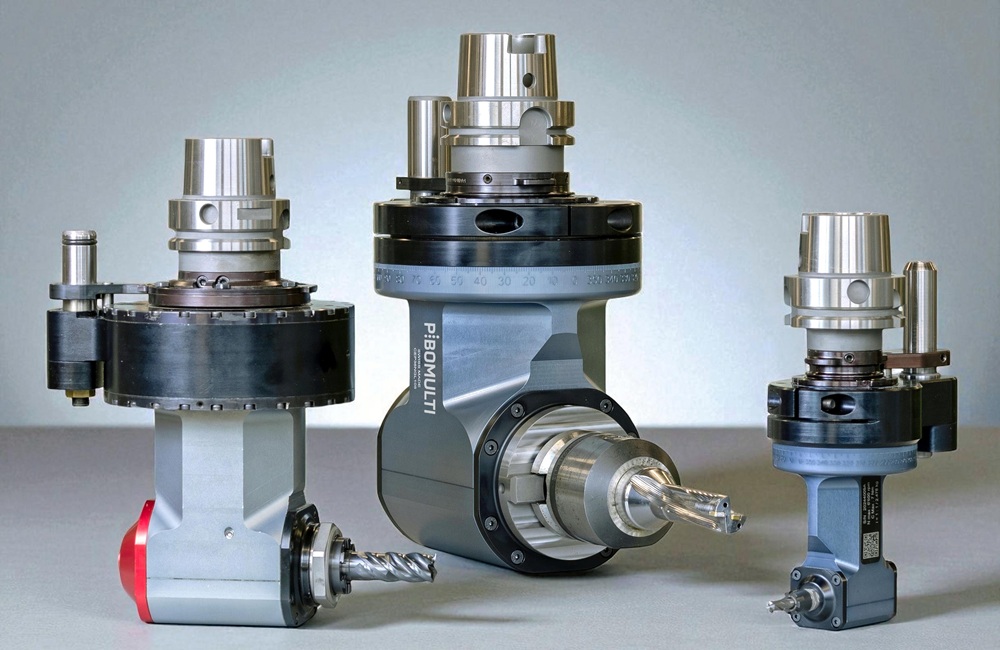
It means that the UK subsidiary of GEWEFA, also a German manufacturer of tool-holding and allied products, now probably offers the most comprehensive range of such equipment. The company arrives at this understanding because it also sells the products of six other partner firms, all but one being German: EWS (driven and static turning tool holders); Fahrion (chucks and collets); Nann (standard and special collets); Ott-Jakob (tool clamping systems); Pibomulti (a Swiss manufacturer of angle heads, speeders and multi-spindle heads); and Rineck (heat-shrink tool holders and machines).

Nicole Lloyd-Foxe, managing director of GEWEFA UK, says: “We regularly receive enquiries from manufacturers seeking bespoke driven and static tooling for very specific production applications on turning centres. However, our parent company and other principals either do not include them in their portfolios, or are unable to supply them quickly enough and at reasonable cost.”

She continues: “This is exactly where Wendel scores highly. Following my visit to their stand at the AMB machine tool show in Stuttgart last September, where we discussed adding their products to our portfolio, we have now been appointed to represent them exclusively in the UK and Irish markets.”

Lloyd-Foxe adds that the manufacturer’s products are known to be of high quality and robust, while the ‘specials’ in particular benefit from a knowledgeable and experienced design team in Germany.

More information www.gewefa.co.uk

Universal tap facilitates easy chip removal

LMT Tools says its new EASYTap “combines outstanding performance, maximum flexibility, and highest efficiency in one product range, enabling powerful thread machining in a wide range of materials”.

EASYTap was developed with the key challenges in thread production in mind, offering characteristics for chip removal, long tool life, a wide range of applications, process reliability, and a reduction in time and costs in production.

Manufactured from HSS-E material and finished with a TiN coating, LMT Tools says EASYTap guarantees maximum precision and durability. A newly developed lead geometry, optimised flutes and a helix angle of 45° ensure stable and efficient chip formation without chip wrap. The uniform and low torque has a positive effect on tool life.

The EASYTap produces threads containing gauges up to 3xD and covers a wide range of applications. It is suitable for blind holes and through holes, can be used in almost all materials – be it steel, stainless steel, cast iron or aluminium – and enables the production of all common thread types such as metric standard and fine threads, UNC, UNF, NPT (blind hole), G and EG-M.

As standard, the range covers diameters from 1 to 30 mm. Larger diameters or other lengths are available upon request. The EASYTap can be used universally in synchro and compensating chucks or collets and is compatible with oil, emulsion and MQL (minimum quantity lubrication).

a blind hole application with a thread depth of 12 mm in martensitic steel, the tap achieved a tool life of 26,500 threads.

More information www.lmt-tools.com