
Helix Tools makes debut appearance at MACH exhibition

Helix Tool is making its debut at MACH 2026 (NEC Birmingham, 20-24 April), the UK’s premier manufacturing event. The company is sharing stand 20-440 with Floyd Automatic Tooling.

For Helix, the move represents a significant step in bringing the company’s product lines, vending solutions and technical application expertise to a wider audience. Helix says it is regarded as an expert in problem-solving and delivering measurable results for manufacturers across all industry sectors and applications.

Paul Lynch, managing director of both Floyd Automatic and Helix Tools, says: “MACH has always been an important event for Floyd, and it’s fantastic to bring the two businesses together on a joint stand this year. For me, it’s an opportunity to meet customers from both companies, share our combined expertise and offer practical advice that helps manufacturers get the most out of their operations. Sharing a stand with Floyd allows us to bring genuinely complementary strengths together.”

Visitors can explore the full breadth of what Helix has to offer. Central to this is the company’s expanding tool management and vending solutions, which provide manufacturers with secure access, real-time usage tracking and automated stock control. Designed to turn tooling into a managed, measurable asset, these systems help manufacturers to gain greater visibility over consumption, reduce waste, costs and improve accountability across the shop floor.

At MACH, Helix Tools has experts on hand to guide manufacturers to the optimal solution for their processes. Regardless of whether exhibitors are machining steel, stainless, aluminium or aerospace-grade materials like titanium and high-performance super alloys, such as Inconel, Helix says it has solutions on its stand.

More information www.helixtools.co.uk

MACH 2026: Rainford showcases micro-tooling portfolio

Rainford Precision is showcasing an extensive portfolio of cutting tool solutions at MACH 2026, taking place at the NEC Birmingham on 20-24 April. Visitors to stand 6-112 can explore advanced tooling from brands including Union Tool, Louis Bélet, IWATA, Hufschmied and others at the forefront of micro-machining technology.

Highlights from Union Tool include the new HGLB, HWLB, HWLB-S and CWLB two-flute ball-nose end mills. Designed for hard material machining above 60 HRc, the HGLB range features optimised geometry and HMGCOAT technology for extended tool life, alongside tight tolerances and high radius accuracy. The versatile HWLB and HWLB-S series target materials from 40-70 HRc, while the CWLB variant is optimised for softer materials, delivering smooth surface finishes across a range of alloys.

Also featured is the CLRS long-radius end mill series for extended-reach machining, enabling deep-cavity work with reduced deflection and vibration. For aluminium applications, the DLC-ALES three-flute end mills provide efficient chip evacuation and high material removal rates, while the DLCES 2000/4000 series offers sharp-edge performance for the burr-free machining of copper electrodes.

From Louis Bélet, the new Excalibur PCD range will make its MACH debut. Designed for non-ferrous materials, these tools combine laser-machined helical geometries with brazed PCD cutting edges to deliver extended tool life compared with carbide, reports Rainford. The Cyclon X micro-tool range will also be on show, offering high performance across stainless steel and other demanding materials.

Additional highlights include IWATA’s Toglon deep-hole drills for precision holes in hard materials, and Hufschmied’s Graftor tools for graphite machining. Rainford will also present its tool analysis and consultancy services, supported by advanced digital microscopy, alongside a range of high-precision machine tool technologies.

More information www.rainfordprecision.com 

Guhring presents new turning tool lines at MACH 2026

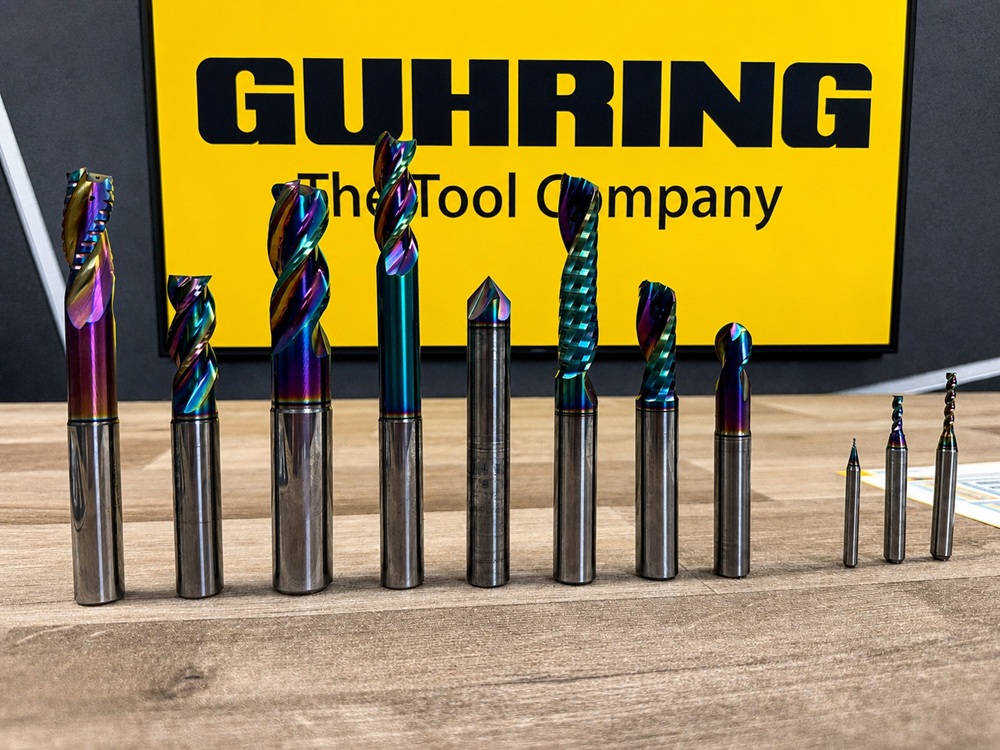
Guhring is presenting a range of cutting tool innovations at MACH 2026 (NEC Birmingham, 20-24 April) on stand 20-362. Alongside established milling, threading and drilling ranges, the company is highlighting new product lines, including its PCD and micro tool portfolio.

A key exhibit is the System 208 grooving platform, developed for sliding-head lathes and the machining of complex micro-turned components. Featuring indexable, precision-ground inserts with two cutting edges, the system delivers high accuracy in confined spaces, making it well suited to medical, electronics and micro-component applications. With a maximum grooving depth of 8 mm, it supports parting off, grooving and turning operations. Field trials have demonstrated tool life improvements of up to 30%, while a high-precision interface ensures repeatable insert positioning with changeover accuracy of ±0.015 mm.

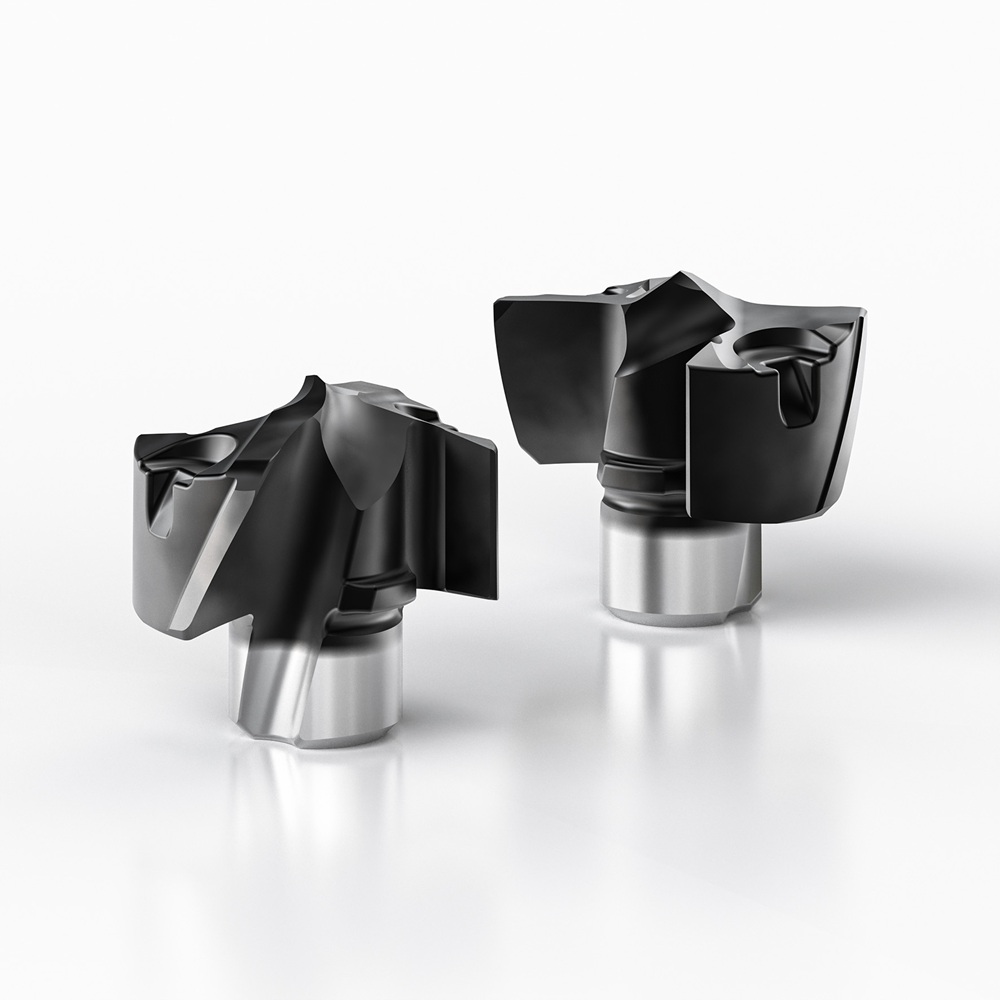
Also on show is the FT 200 U solid-carbide drill. This three-fluted design enables cost-efficient drilling up to 12xD without pilot drilling, thanks to its pyramid tip geometry and optimised web thinning for precise self-centring and strong material penetration. A modified flute profile improves chip control, while the Spiropoint geometry enhances spot drilling accuracy. The result is high hole quality and extended tool life across a wide diameter and length range.

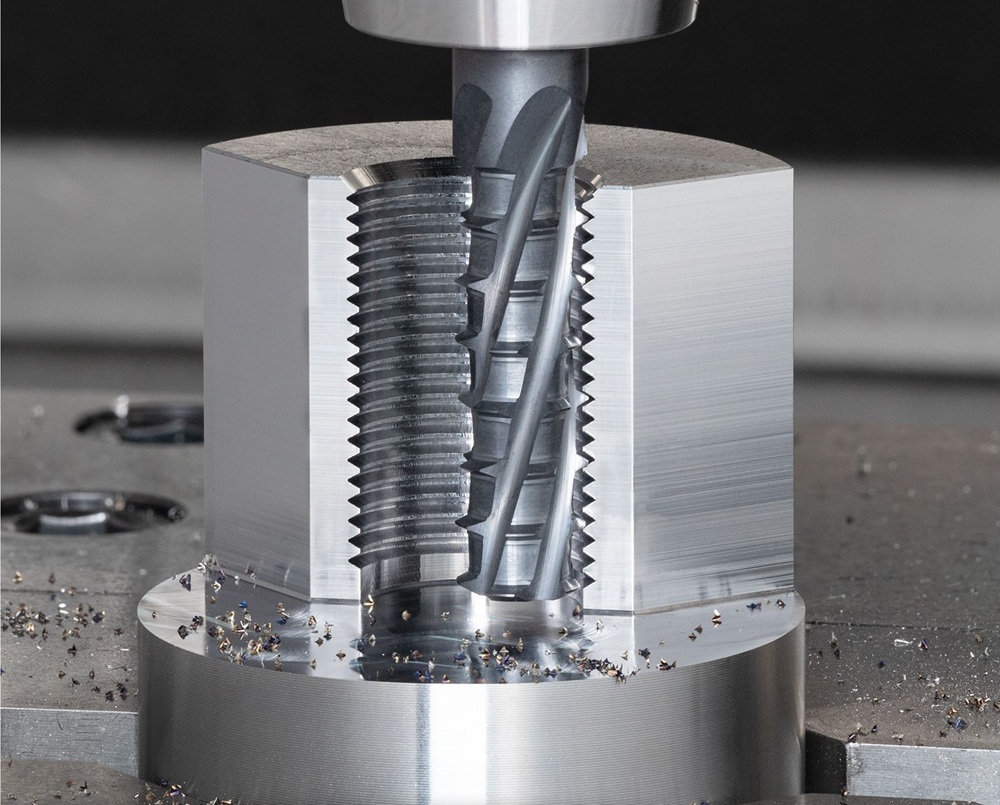
Complementing the drilling portfolio is the RT 100 U step drill, designed to produce holes with a 90° countersink in a single operation, reducing tooling requirements and associated costs. The Pionex thread milling range is also on the stand, offering expanded geometries and coatings to suit diverse threading applications.

Guhring is additionally demonstrating its GTMS-enabled tool management systems, providing secure, efficient storage and dispensing to support productivity on the shop floor.

More information www.guhring.co.uk
Productivity and process stability in cast-iron machining

As global manufacturing continues to face pressure from raw material volatility and supply chain concentration, machine shops are reassessing how critical tool materials are deployed within their processes.

Tungsten carbide remains indispensable across a wide range of applications. However, its reliance on tungsten, a strategically sensitive material, is prompting manufacturers to reconsider where it delivers maximum value and where alternatives can offer distinct technical advantages.

With expertise in ceramic material engineering and application development, NTK continues to advance cutting tool performance in demanding environments. In cast-iron machining, engineered ceramic grades provide a highly robust solution for high-temperature applications.

Machining cast iron generates extreme cutting temperatures, particularly in dry and high-speed operations. Under these conditions, alumina- and silicon-nitride-based ceramics retain hardness and wear resistance beyond conventional carbide limits. In stable, heat-dominated processes, they enable higher cutting speeds, shorter cycle times, consistent wear behaviour and reliable dry machining performance – benefits grounded in material science and proven in production environments.

Ceramics are not intended to replace carbide across all operations. Carbide remains the preferred choice for heavy interruptions, unstable set-ups and applications requiring maximum edge toughness. The opportunity lies in identifying operations driven primarily by thermal load rather than mechanical shock. In these conditions, ceramic grades can deliver measurable productivity gains, while carbide continues to excel where toughness is critical.

NTK’s ceramic portfolio includes SP9, SX6 and HC1/HW2 grades, developed specifically for cast-iron machining. Widely used across automotive, heavy equipment and industrial casting sectors, these solutions have demonstrated increased cutting speeds and productivity in components such as wheel hubs and structural housings, while supporting more efficient, lower-resource manufacturing.

More information www.ntkcuttingtools.com

Horn stresses economy of sintered chip-breaker geometries

Horn is presenting no fewer than 20 new or recently introduced cutting tool products on its 232m² stand (6-210) at MACH 2026 (NEC Birmingham, 20-24 April). A key focus is the company’s carbide inserts featuring chip-breaking geometry pressed directly into the green blank before sintering, delivering high-speed, repeatable and cost-efficient production.

This approach removes the need for post-sintering laser cutting or grinding, traditionally required for miniature inserts due to the difficulty of maintaining precision during heating. With these challenges now overcome, new Supermini type 105 GM (geometry moulded) inserts are priced comparably to standard versions without chip breakers.

As with machined geometries, the sintered designs eliminate long, stringy swarf that can damage tools or workpieces. Suitable for boring and internal threading in holes down to 4 mm diameter, the inserts use teardrop-shaped blanks to maximise contact area in the holder, improving rigidity, preventing twist and maintaining accurate centre height. This design enhances stability, particularly in long overhang applications.

Available in TH35 and IG35 grades, the inserts are compatible with a wide range of holders and support internal coolant delivery. The Supermini system comprises around 2500 standard variants.

Further highlights include new GM inserts for metric ISO internal threading, first shown at EMO 2025, delivering reliable chip control in hole diameters from 5 mm. The Mini 114 system for deep axial grooving (up to 10 mm) and Mini 111 and 108 inserts with sintered I-geometry also feature, enabling effective chip breaking in finishing applications. Also on show is the six-edged 66T grooving system, offering increased depth capability and competitive cost per edge, alongside the S234 system for parting off to depths of 33 mm with high process reliability.

More information www.horn-group.com