
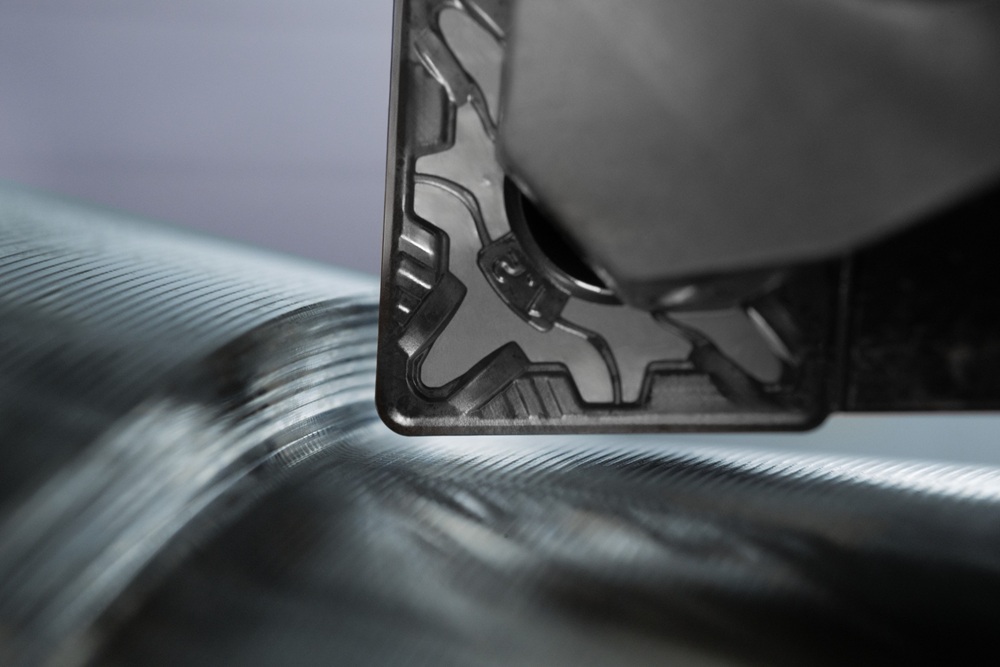
Walter Launches Two New Tiger·tec Gold Turning Grades

Whether for offshore applications, oil and gas production, food manufacturing or the defence, chemical or energy sectors, the new Tiger·tec Gold MT-TiCN-CVD turning grades WMP20G and WMP30G can make a difference. With this product line, Walter is responding to growing global demand for stainless steel components. 

The WMP20G universal grade is now Walter’s first choice for traditional applications involving ISO M materials. Thanks to its hardness, it is suited to high cutting speeds and mass production. The grade is designed to deliver maximum productivity and long tool life when machining austenitic, ferritic, martensitic and duplex materials up to ISO P.  

Walter’s tougher WMP30G grade is a problem-solver, particularly for large and expensive components and in single-part manufacture, where maximum reliability is paramount. The company cites turning weld seams in armour plating as a typical example that demonstrates its durability. 

The most significant special feature is the new gradient substrate. Thanks to localised cobalt insertions, it is particularly tough at the cutting edge yet hard at the core. Such a design protects the cutting edge from chip impact and helps minimise fractures. A double post-treatment of the cutting edge further reduces friction.  

This completely new type of indexable insert design is rounded off by a Tiger·tec Gold coating specially adapted for ISO M machining, as well as the stable RM7 roughing geometry.  

The coating is particularly suitable for machining forged parts or for standard geometries that are prone to fracture when turning against a shoulder. Together, they form a solution package that Walter says is unique on the market to date, offering high levels of reliability and wear resistance, and suitability for the entire range of stainless steels. 

More information www.walter-tools.com 
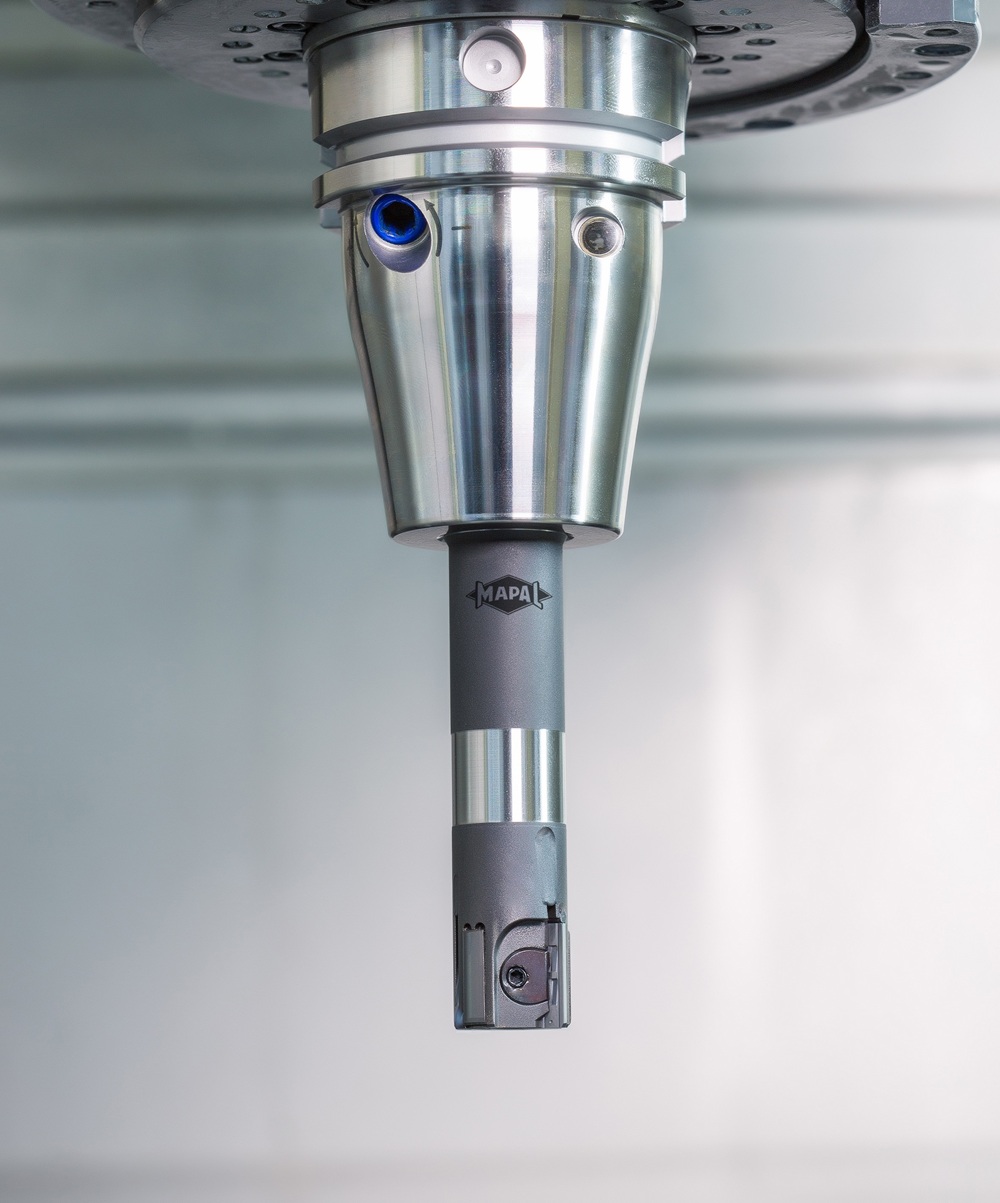
MAPAL Unveils Technological Breakthrough in Fine Boring

According to MAPAL, the company’s new EA-Performance-System sets a new benchmark in fine boring, bringing one-screw setting to the demanding 10 to 19 mm diameter range for the first time. The system reduces setting effort while maintaining high precision, surface quality and process reliability. 

Conventional fine-boring tools use two adjustment elements to set diameter and cutting-edge taper, making the process sensitive and dependent on operator expertise. MAPAL’s EasyAdjust-System, previously available from 20 mm diameter, simplifies this process with a single adjustment screw for diameter and a back taper permanently integrated into the cartridge system. 

MAPAL has now transferred this principle to the 10 to 19 mm range, using a new design configuration suitable for a broad spectrum of materials. The stable insert fixation required at these small diameters places high demands on system design, manufacturing precision and stability. MAPAL has addressed this by adapting the connection between the indexable insert and clamping system. 

At the heart of the EA-Performance-System is a newly developed indexable insert with defined contact geometry. Combined with a matching clamping jaw, this provides positive-locking, reproducible insert positioning. The clamping mechanism transfers the setting movement precisely while maintaining secure fixation under process load. 

The system enables micrometre-precise setting with simplified handling, helping to minimise correction effort and reject rates while supporting stable machining processes. This capability makes it suitable for applications including high-precision fit and bearing bores in transmission housings, cylinders, crankshafts and camshafts. 

MAPAL’s EA-Performance-System is already in use at selected customers, with ongoing production confirming stable setting behaviour and reproducible machining results. 

More information www.mapal.com

Introducing the CoroMill MR20 for Controlled Profile Milling

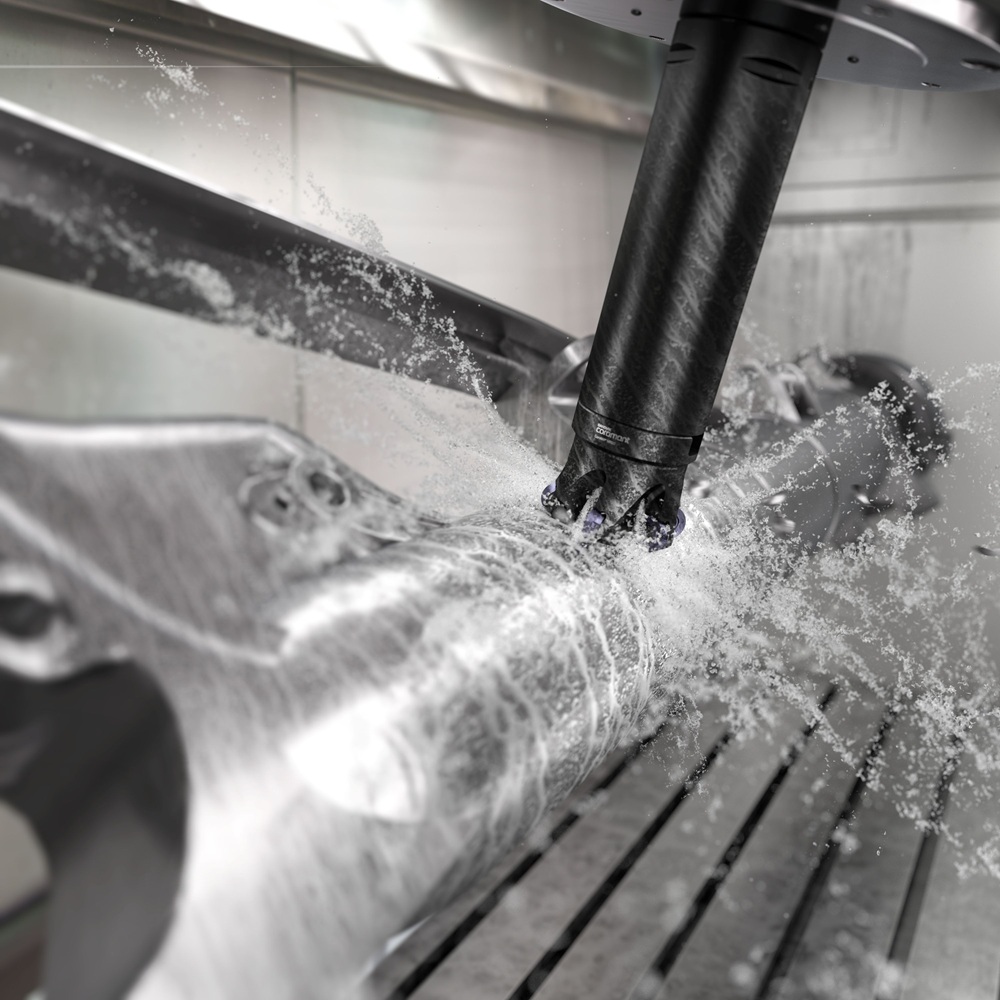
Sandvik Coromant says its new indexable milling concept combines stability, predictable performance and high metal removal rates across demanding materials and applications. CoroMill MR20 is a single-sided round-insert milling concept developed for secure, high-performance profiling and face milling. Optimised for ISO M, ISO S and ISO P materials, it is suited to pocketing and complex profiling in titanium and other HRSA materials. 

CoroMill MR20 also provides reliable roughing and semi-finishing in ISO P die and mould applications, while its high metal removal capability makes it suitable for pump and valve components in ISO M materials. 

“Our goal while developing CoroMill MR20 was to create a polyvalent cutter that offers the highest level of process security,” reveals Alvaro Ruiz, global product application specialist at Sandvik Coromant. “Customers machining high-value components need predictable, repeatable performance, and CoroMill MR20 delivers exactly that.” 

The cutter features an optimised insert seat with a large contact area between the insert and cutter body, minimising micro-movement for greater stability. An advanced cutter body design provides resistance to fatigue and deformation, while an integrated under-coolant system supports performance in long-chipping and difficult-to-machine materials. 

The six-edged insert has a thick, robust body for high bulk strength and edge-line security. Tight manufacturing tolerances promote gradual, predictable wear, supporting unmanned production, reduced scrap and high uptime. 

CoroMill MR20 can also contribute to more sustainable machining. Higher feed-per-tooth capability can reduce machining energy requirements, while long tool life means fewer inserts are consumed, reducing waste and associated carbon emissions. 

“Increasing feed capability while extending tool life means fewer resources used and less waste generated,” adds Ruiz. “It’s a win for productivity and for sustainability.” 

More information www.sandvik.coromant.com 

New Ball-Nose End Mills For Machining Bearing Tracks

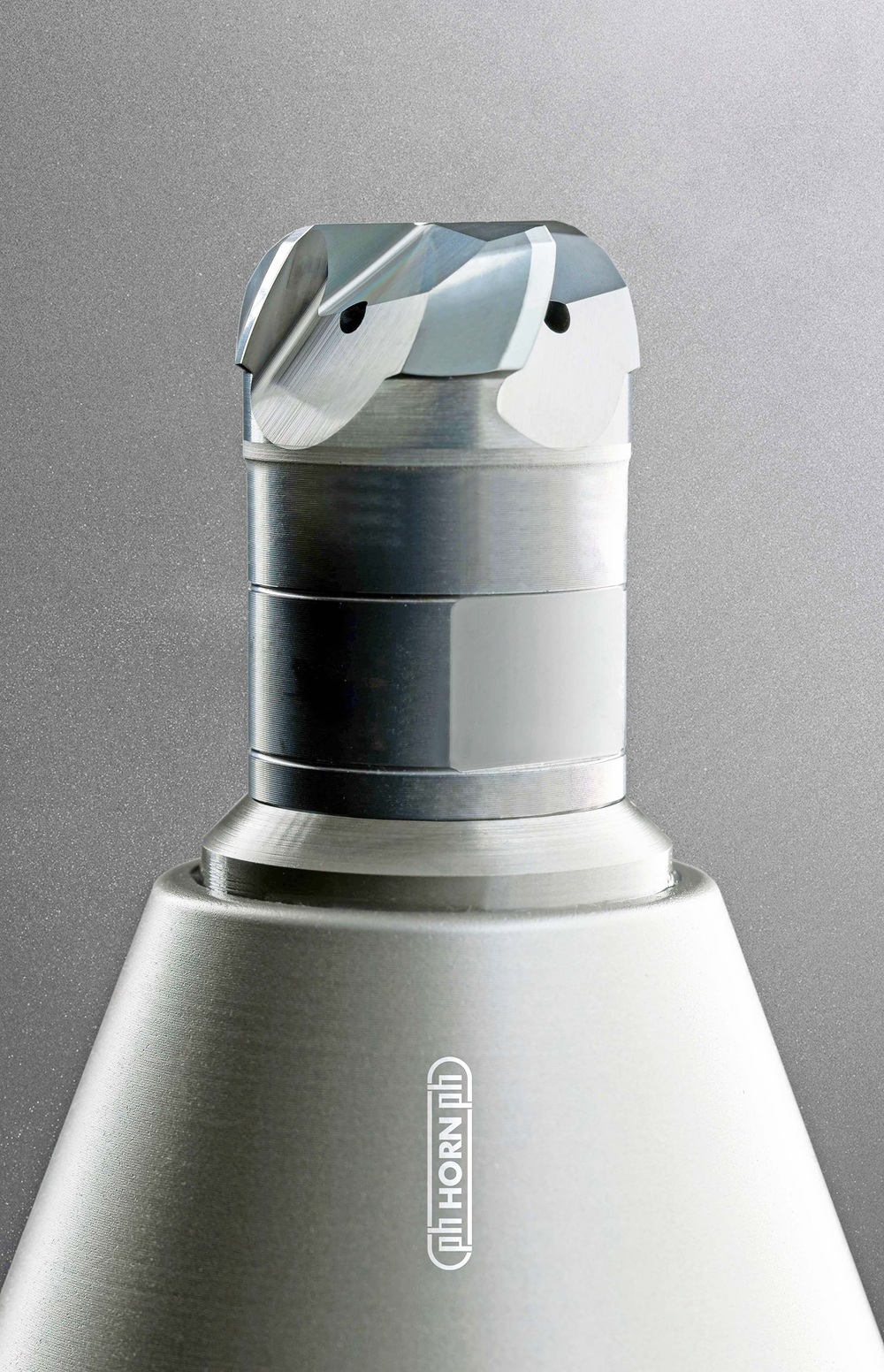
A high-performance solution for the economical and reliable machining of ball bearing tracks has been introduced by German cutting tool manufacturer, Horn. Available in the UK and Ireland through the group’s subsidiary in Ringwood, Hampshire, the new KX range of ball-nose end mills meets increasing demands for precision, flexibility and productivity in the manufacture of constant velocity (homokinetic) joints, used for transmitting smooth power to a vehicle’s drive wheels when cornering.

The bearing tracks in these joints have very tight dimensional tolerances, form tolerances to within microns and a high surface finish. The manufacturing quality, which determines the service life of the joint, is a direct result of the performance of the cutting tool, hence Horn’s decision to develop a top-end product for this application.

Available in three sizes, the precision-ground, solid-carbide, interchangeable heads have a rigid threaded connection to a modular cutter body. Flexible machining strategies enable cutting of material in either the soft or hardened state and operations span roughing and chamfering through to finish milling. Customers can therefore adapt the machining strategy precisely and hence cost-effectively to their process requirements. 

The edge preparation ensures soft-cutting performance to enhance reliability. Cutting values can be significantly raised, reducing cycle times. Benchmark tests confirm the high level of productivity that is possible. Depending on the component, machining time may be shortened by several seconds per workpiece. Moreover, the KX design is capable of milling deep tracks, extending the range of production applications.

More information www.horn-group.com

TaeguTec Goes Deep With New VNGX-ST Chip Breaker

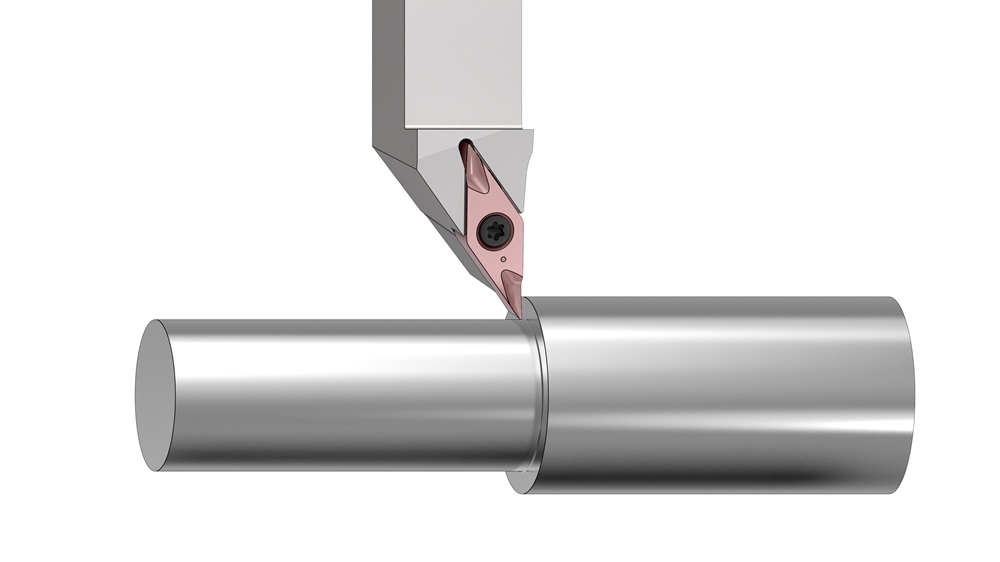
TaeguTec has expanded its Rhino-Turn range with the introduction of the VNGX-ST chip breaker, a double-sided, four-corner insert developed for heavy-duty turning applications. The latest addition is designed to increase productivity, extend tool life and reduce tooling costs by maximising insert utilisation.

Joining the company’s recently introduced ST chip breaker family, the VNGX-ST combines advanced chip control with the versatile VNGX platform to deliver faster machining while maintaining excellent surface finish and dimensional accuracy.

Compatible with Rhino turning holders, the insert features four indexable cutting edges, doubling the usable corners compared with conventional two-edge heavy-duty turning inserts. The result is fewer insert changes, reduced downtime and lower carbide consumption, helping manufacturers improve overall machining efficiency.

Despite its 35° rhombic geometry, typically associated with finishing operations, the VNGX-ST is capable of handling depths of cut up to 3 mm. This capability enables the insert to perform everything from finishing through to heavy roughing, reducing the need for multiple tooling changes and improving process reliability.

A high 25° rake angle lowers cutting forces, minimising vibration while allowing higher cutting parameters and improved surface quality. Reduced mechanical and thermal loading also extends tool life and enhances component accuracy by limiting tool deflection.

TaeguTec recommends the VNGX-ST for use on Swiss-type sliding-head lathes, particularly machines equipped with servo oscillation technologies such as Citizen’s LFV and Star’s HFT or SCP systems, where effective chip control is critical for precision machining.

Available in six variants with either sharp or micro-honed cutting edges, the insert is suitable for machining steel, stainless steel and more demanding alloys. PVD-coated TT9020 and TT4430 grades provide high wear resistance, making the VNGX-ST well suited to high-volume production in sectors such as medical, aerospace and automotive manufacturing.

More information www.taegutec.com