
Pushing the boundaries of machining accuracy

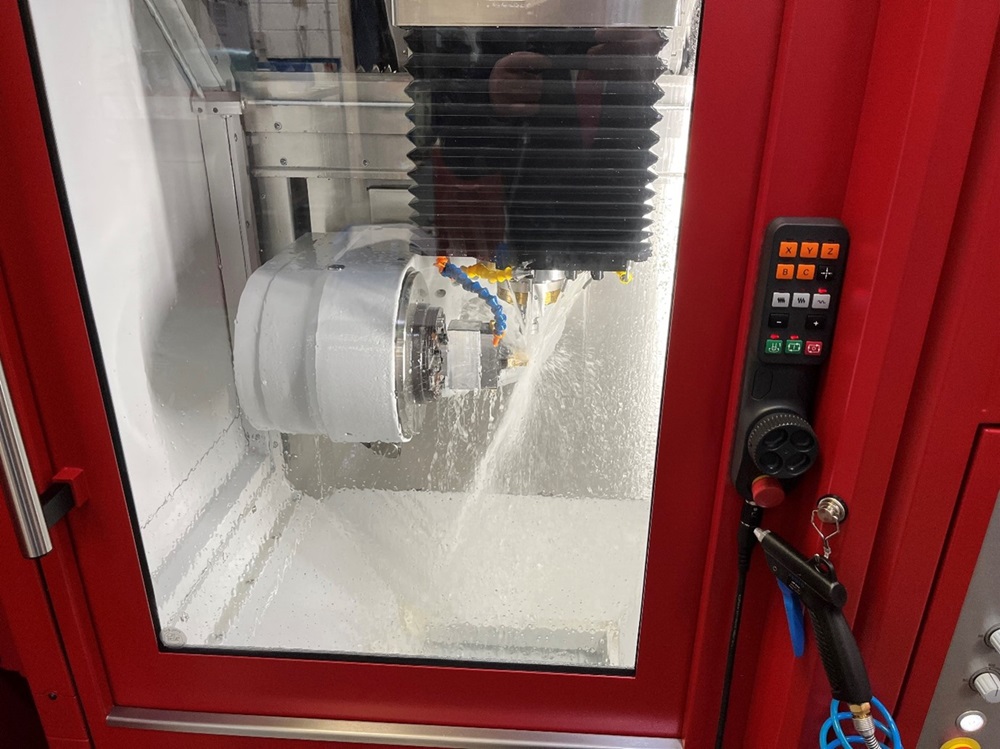
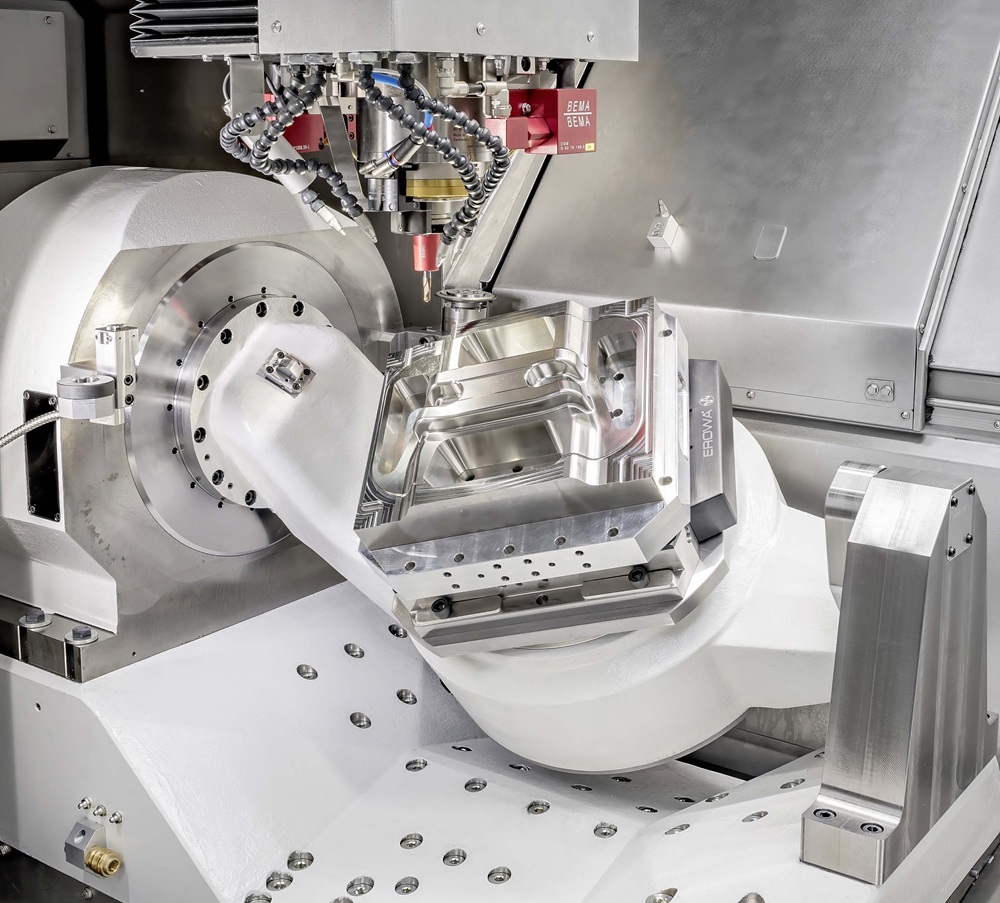
German vertical machining centre manufacturer Roeders, whose machines are sold into the UK and Irish markets exclusively by Hurco Europe, is rolling out a new range of milling platforms. The machine feature optional integral grinding capability that can achieve extraordinarily tight workpiece tolerances.

The RPT series of three- and three-axis VMCs is said to achieve tolerances half those obtainable using Roeders’ established RXP machines. Roeders’ latest VMCs can remain geometrically stable to within ±1 µm, even if the ambient temperature fluctuates as much as 3°C.

Achieving this level of precision would normally require housing the machine tool in an air conditioned environment. Roeders concentrated instead on holistic temperature management within the machine, integrating PreciTemp technology to achieve a high level of consistency and repeatability.

Customers can specify three increasingly sophisticated levels of temperature compensation and sensor feedback to the CNC, according to requirements. It can involve a combination of some or all of the following cooling measures: temperature control of the machine table and rotary axis bearings; temperature control of the torque motors in the trunnion-type five-axis machines; and temperature control of the air in the working area, surrounding the axis drives and in upper part of the machine guarding.

Thermal stability of the portal structure and machine bed is maintained by embedded pipework carrying chilled water. There is similar circuitry for the spindle and its surrounding sleeve to prevent growth in the Z axis, which is monitored to sub-micron accuracy by an external, non-contact sensor. Software algorithms derived in the course of machine development compensate for any remaining minimal residual errors.

More information www.hurco.co.uk
DMG Mori releases new five-axis machine

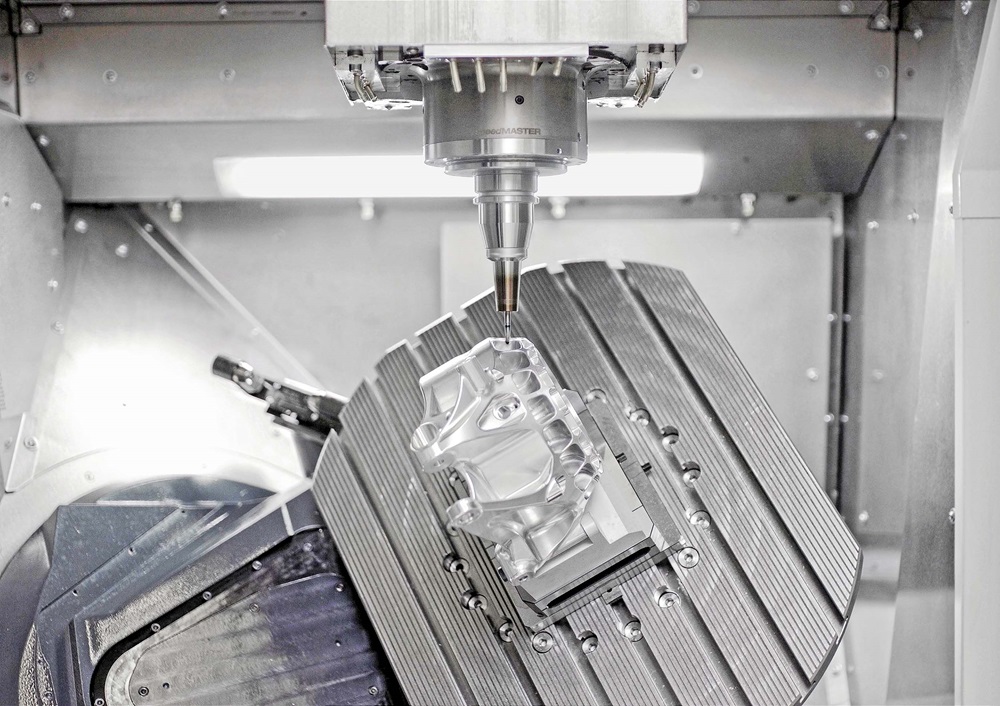
A second-generation DMU 60 eVo five-axis vertical machining centre of swivelling rotary table design (featuring thermo-symmetrical gantry configuration and optimised kinematics), is now available from DMG Mori. The machine has been developed to meet increasing demands for precision, dynamics and flexibility, and utilises the manufacturer’s MX concept for process integration, automation, digital transformation and green transformation.

The platform integrates various manufacturing processes including milling, turning at up to 1,200 rpm, gear skiving using a proprietary technology cycle, and grinding. Inclusion of these additional metal-cutting possibilities transforms the production centre into a multi-functional machining solution that can flexibly adapt to a range of requirements and industries. Various automation options maximise machine utilisation, around the clock if required.

Compared with its predecessor, the machine has a working volume 40% larger at 750 x 550 x 550 mm. Direct-drive ballscrews in the linear axes are standard, but linear motors are an option offering 80 m/min rapid traverse. The table swivel range is -5/+110° and the maximum table load has increased by 100 kg to half a tonne. Steeply inclined, stainless steel interior surfaces and a 20% wider conveyor ensure effective chip evacuation and reliable production.

The machine bed is a hybrid mineral casting combining stiffness, strength, vibration damping and thermal stability, while comprehensive cooling keeps critical components at a constant temperature. The second-generation DMU 60 eVo is also available in a µPrecision version, enabling it to machine demanding components to accuracies measured in low single figure microns.


The spindle portfolio includes versions capable of speeds up to 40,000 rpm or a torque of 200 Nm. Tool storage with 30, 60 or 120 pockets is within the machine’s 9 m² footprint, which is 20% smaller than before.

More information www.dmgmori.com

Aerospace manufacturer clear for take-off

In the aerospace industry, compliance with standards is not just a requirement in manufacturing, but a culture embedded in every aspect of a business. With accreditations that include ISO 9001, ISO 14001, ISO 45001 and AS 9100, as well as multiple OEM approvals, Senior Aerospace Weston places significant importance on workplace standards. For this reason, the Lancashire company has installed more than 50 Filtermist oil mist filters on its machine tools.

Working primarily with OEMs like Rolls-Royce, Airbus, MTU Engines, Spirit Aerosystems and many other prestigious clients, Senior Aerospace Weston manufactures a variety of aerofoil and aerostructure components for different platforms in the commercial aviation market.

Gary Bell, HSE manager at Senior Aerospace Weston, says: “A clean working environment is essential to ensure that we produce our high-specification components for different aircraft programmes. We have lots of different types of CNC machining centres, with three-, four- five-axis models on site from brands including Matsuura, DN Solutions, Grob and Hermle.”

With Filtermist extraction units, including the FX6002 and FX7002 on 58 of the company’s machine tools, it is imperative that oil mist is extracted from the machines.

“The type of high-speed machining we undertake produces oil mist that needs removing from the working environment,” he says. “Our first thought was to look at the industry-leading standards, and Filtermist was the name that first came up. We engaged with them straight away, and they came on-site to specify exactly what equipment would be available to support our needs.

“Despite our huge variety of machines, the Filtermist units are flexible enough to accommodate the different types, sizes and requirements of those machines.”

More information www.filtermist.co.uk

Kern machine automates production at WLR

With a skills shortage in the manufacturing industry, WLR Precision Engineering had a burning desire to automate its high-precision production while maintaining the skill levels of its qualified engineering team. The opportunity to increase throughput, precision, quality and consistency prompted the Wilford-based subcontractor to purchase a five-axis Kern Micro Vario machining centre with an Erowa Compact 80 automated pallet loading system from Rainford Precision.

Located just south of Nottingham, WLR undertakes everything from prototype work to small and medium batches for manufacturers in the oil exploration, medical and pharmaceutical sectors, to name but a few. As a company ‘dedicated to precision’, the ISO9001-certified manufacturer is already an existing Kern user, installing a Pyramid Nano machining centre in 2013.

Discussing why WLR invested in its second Kern machine, the automated Kern Micro Vario, WLR managing director Kevin Callon says: “One of my regrets was not having some form of automation on the Pyramid Nano when we first bought it, despite having the option. There was no way we would have bought another Kern without some form of automated loading to maximise the running hours of the machine.”

With an 80-component Erowa pallet loading system and a 90-position automatic tool change, the Kern Micro Vario was the perfect solution. It enables WLR to run production continuously ‘lights-out’ while utilising the existing Pyramid Nano for smaller batch runs and one-offs during daytime working hours.

“The consistency of the components produced on the new Kern is amazing, with repeatability to the micron,” states Callon. “In fact, the precision is so impeccable that we now channel as much work as possible through the Kern Micro Vario.”

More information www.rainfordprecision.com

Pentzold opts for Heckert machining centres

Holger Pentzold, who learnt his trade at Heckert, has since remained loyal to the Heckert brand in his own company: “I know what Heckert machines are capable of, and I can rely on them 100%.” His company, Pentzold Metallbearbeitung und Musterfertigung (PMM), a service provider for precision machining, is based at the ITC – the Chemnitz Industry and Technology Centre near Heckert’s parent company Starrag GmbH.

“We primarily manufacture series parts with varying batch sizes of 10 to 15,000, but also prototypes,” says Pentzold. “Our in-house fixture and tool construction and a modular system for clamping fixtures allow us to react quickly and flexibly to customer requirements.”

He adds: “We mainly machine gearbox housings, chassis and engine parts, and hydraulic components made of steel and cast materials, so we need very stable, reliable machines. As a contract manufacturer, flexibility and long-term accuracy are paramount.”

The reason the machining professional repeatedly buys Heckert machining centres is quite apparent. PMM has been located the Chemnitz Technology Park (ITC) since 1999, right next to the Starrag plant.

“Nevertheless, we research the market for alternatives before almost every investment,” explains Pentzold. “But it’s all in vain – we have repeatedly decided on universally applicable Heckert horizontal machining centres.”

This was also the case in 2018 when the entrepreneur started automated production with the then newly developed Heckert H50 compact machining centre with an integrated six-pallet system. In 2022, Pentzold and his team invested in a Heckert HEC 630, automated with an Erowa Loadmaster shelving system with 21 pallets.

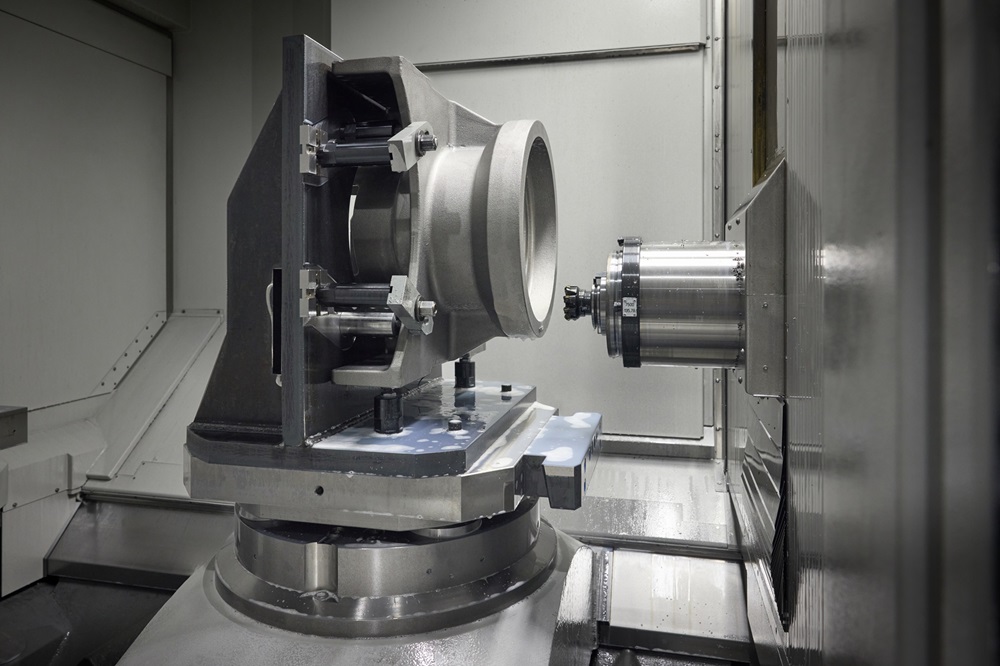
It is a significant purchase in every respect. The HEC 630 works with 630 mm pallets and produces components up to 1500 kg in weight, up to 1550 mm in diameter and up to 1250 mm in height.

More information www.starrag.com