
Five-axis travelling-column machine offers versatility

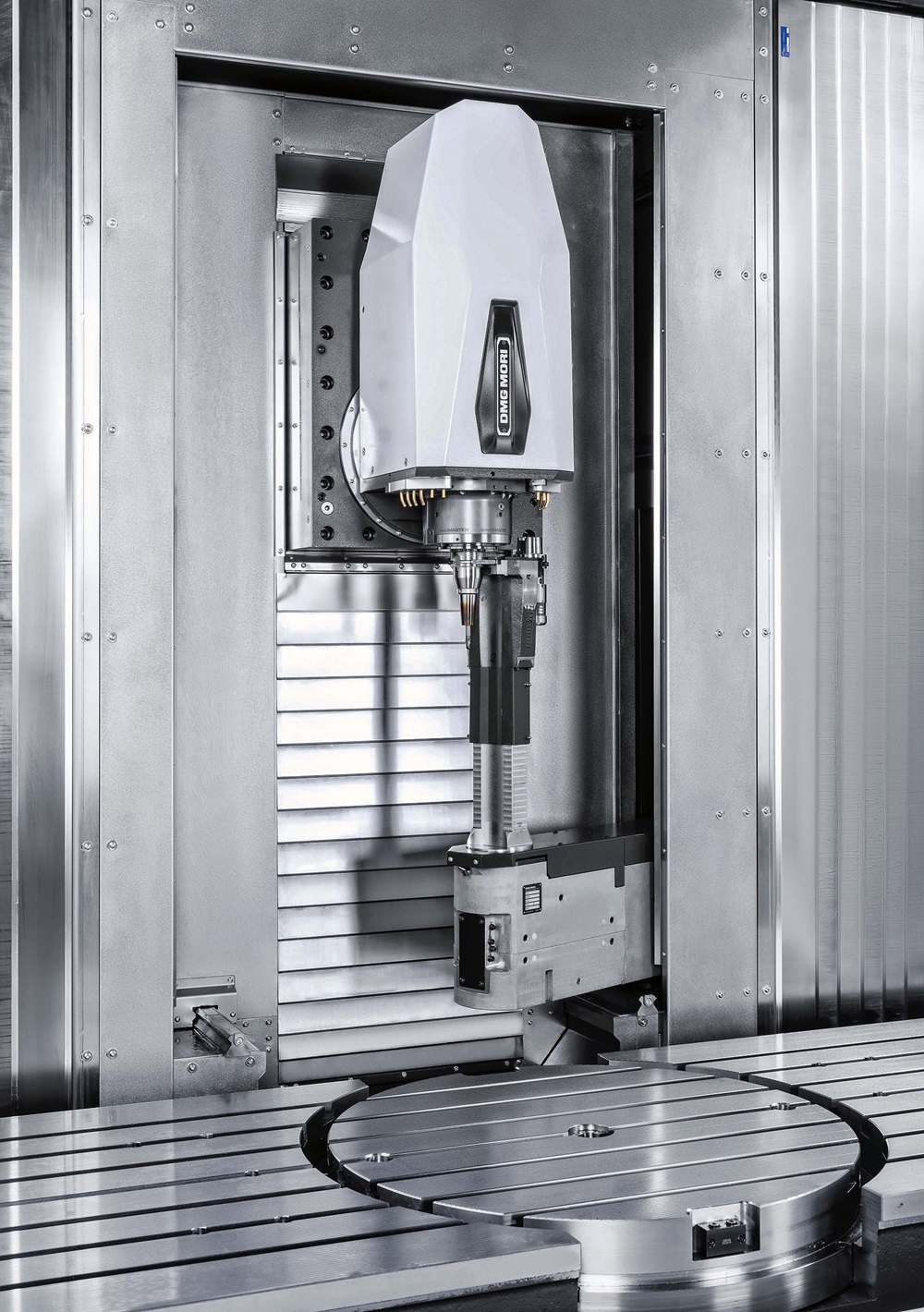
A new, larger size of travelling column machining centre in the DMF range manufactured by DMG Mori is now available to provide even more versatile production opportunities within a machining envelope of 3000 x 1100 x 1050 mm. The modular DMF 300|11 with B-axis swivelling spindle head represents a redesign of the established configuration that, compared with the previous series, has seen a 40% expansion in working volume and a 20% increase build rigidity.

The ±120° B-axis houses an integrated 15,000 rpm speedMASTER HSK-A63 spindle as standard, but is available with a 20,000 rpm version, or with a 12,000 rpm powerMASTER spindle offering 288 Nm torque.

The rigid table running the length of the DMF 300|11 accepts workpieces weighing up to 5000 kg for the three- and four-axis machining of large components. Alternatively, it is possible to insert an optional partition in the centre to allow safe pendulum machining of smaller parts.

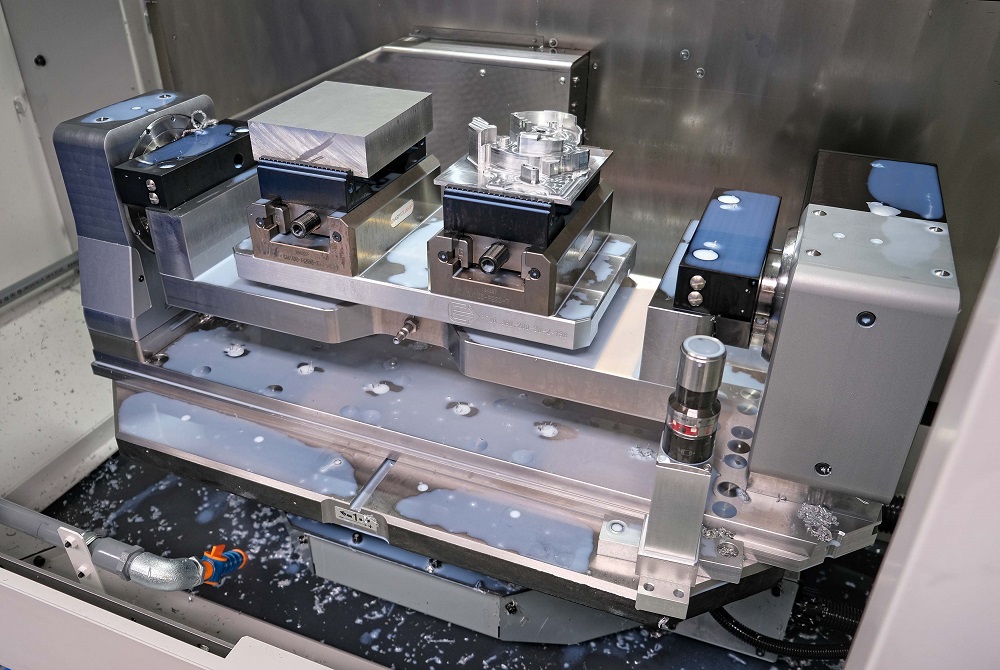
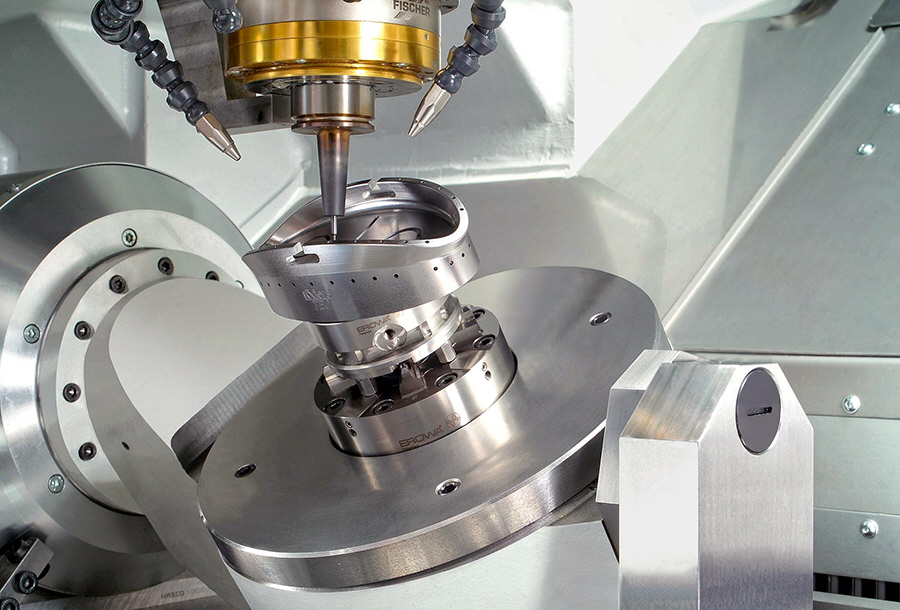
Fully interpolative five-axis machining can take place at either or both ends, or else in the centre, following the addition of one or two optional rotary tables set flush into the main table surface. The machine can accommodate components weighing 1200 kg, while each C axis is available with a torque drive to provide the possibility of in-cycle turning operations at up to 700 rpm.

In some cases, it may be more expedient to add one or more A-axis rotary tables to enable five-axis operations on horizontally-mounted parts weighing up to 500 kg. It is equally feasible to mount a static column or tombstone on the table for work holding, swing the spindle head through 90° and use the DMF 300|11 as a horizontal machining centre with the added benefit of B-axis motion.
For further information www.dmgmori.com
Mouldmaker adopts automated five-axis machining

Established in the west of Ireland in 1984, Lawrence Engineering specialises in the manufacture of injection mould tools, extrusion tooling, jigs and fixtures for global suppliers in the medical device industry. At its factory in Loughill, County Sligo, the business also builds special-purpose equipment and provides contract manufacturing services, while at another facility in nearby Collooney, medical component manufacturing takes place in a Class 8 cleanroom.

Precision, quality and rapid turnaround times are hallmarks of the family-owned company’s success. Commitment to constant investment in cutting-edge machinery keeps it ahead of the competition. This philosophy is immediately evident when visiting the Loughill site. Purpose-built in 1995, the facility houses an impressive range of machine tools, including machining centres from Hurco and Roeders. Hurco Europe supplies both brands in the UK and Ireland.

In the Hurco cell are a three-axis VM10i vertical machining centre and a larger VM20i, with capacity for machining components up to 1 m long by 500 mm. Lawrence Engineering selected the machines as much for their reliability and ease of programming, as for their metal-cutting capabilities in tool steels.

Managing director James Lawrence says: “We try to keep everything in-house. When we consider the next investment, we’re looking to increase our capabilities, filling any gaps in capacity and aiming to achieve constant improvement.”

A prime example of this is one of two five-axis Roeders RXP500DS high-speed machining centres with linear motors driving all axes. The bridge-type design includes features necessary for ensuring component accuracy and high-speed dynamic motion. The 42,000 rpm spindle enables Lawrence Engineering to machine mould tools directly in hardened metals, often with cutters less than 1 mm in diameter. Moreover, it removes the need for time-consuming electrode manufacture, EDM and subsequent hardening.
For further information www.hurco.co.uk

Tooling Intelligence moves to new facility

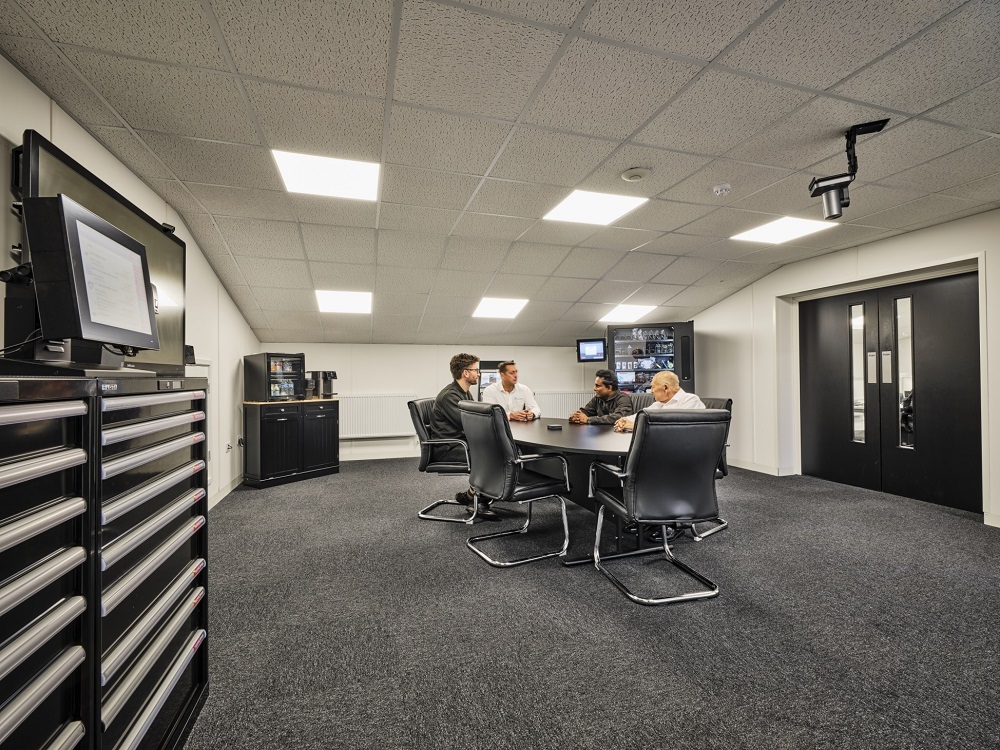
Tooling Intelligence, a specialist in industrial inventory and asset management, has moved to a new cutting-edge facility in Honiley, Warwickshire as part of strategic expansion plans. Previously operating from three different sites, the expansion almost doubles the floor area to 5000 sq ft with an additional 3000 sq ft of offsite warehousing.The relocation facilitates increased assembly capacity and improved workflow to streamline production, better serving the company’s growing customer base. Furthermore, the facility provides a demonstration area and customer meeting suite, supported by a service and support hub.
For further information www.toolingintelligence.co.uk

Investment at Ficep UK

Ficep UK is investing in its offices and stockholding capacity as a direct response to growing demand from clients who rely on the company’smachines. Newly added storage space holds more stock by introducing 44 pallet spaces to its 17,000 sq ft warehouse in West Yorkshire. The installation of an additional carousel system will double holding capacity, ensuring that essential components and spare parts are readily available to meet customer requirements. Ficep UK has also created new office space, located within the warehouse, to serve as a hub for the company’s tooling and consumables service team.
For further information www.ficep.co.uk

30-taper machine is clear choice for SPE

These days, 30-taper machining centres are more robust and fast than formerly, and can also cut tough materials. One company discovering the merits of this type of prismatic machining equipment is Staffordshire Precision Engineering (SPE) of Newcastle-under-Lyme. The subcontractor recently purchased a Brother R650X2 30-taper four-axis machining centre with a table-mounted indexing trunnion from the Japanese manufacturer’s sole sales agent in the UK and Ireland, Whitehouse Machine Tools. Programming support and unlimited training formedpart of the deal.

The machine is the subcontractor’s first 30-taper machine and is today producing aluminium parts for the aerospace, Formula 1, high-end automotive, scientific, medical and other industries. The material currently accounts for about 60% of prismatic component production in the factory. However, it so happened that the first job put on the Brother involved the production of a batch of 304 stainless steel pivot blocks for an aerospace customer.

It was at this point that Phil Smith, joint managing director of SPE (alongside brother Gary), realised that he had been harbouring an incorrect view that 30-taper machines are unable to cut tough metals productively. He is now convinced that modern Brother machines, with their high-torque spindles, are far more robust than he thought.

There are numerous 40-taper VMCs on site that are between 10 and 15 years old.The company will gradually replace these machines with more capable and productive plant. Smith predicts that the four-axis Brother will do the work of two of these older models. For instance, the R650X2 produced the aerospace pivot block in just two operations in a cycle time of 15 minutes, whereas one of the older machines took 38 minutes to produce the part in four operations. Moreover, there is now far less workpiece handling and work-in-progress.
For further information www.wmtcnc.com