
End mills ease hard-part micro-machining

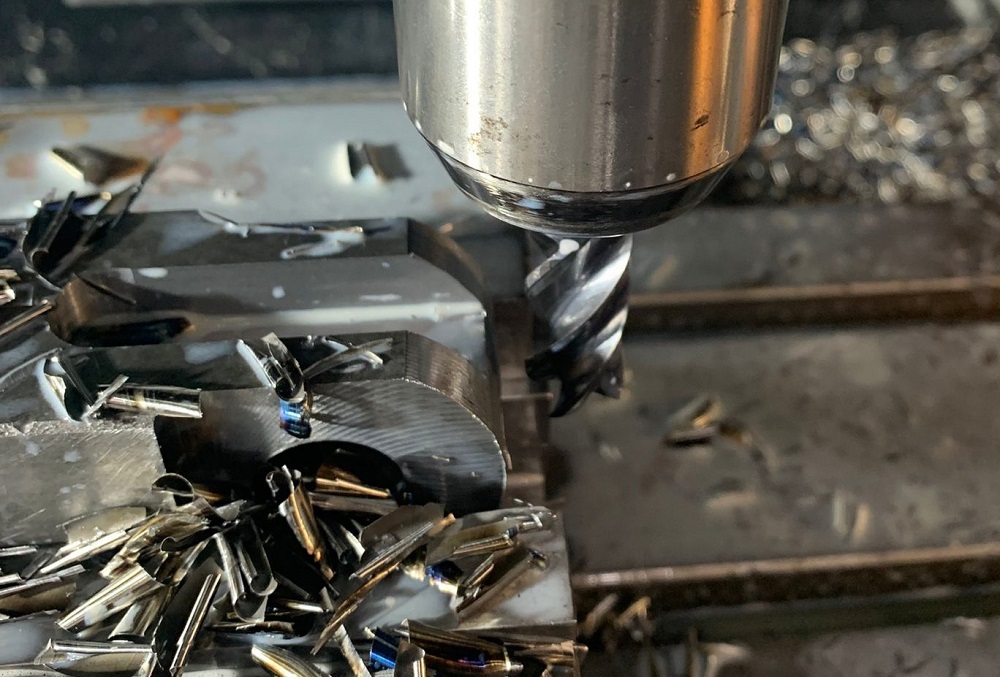
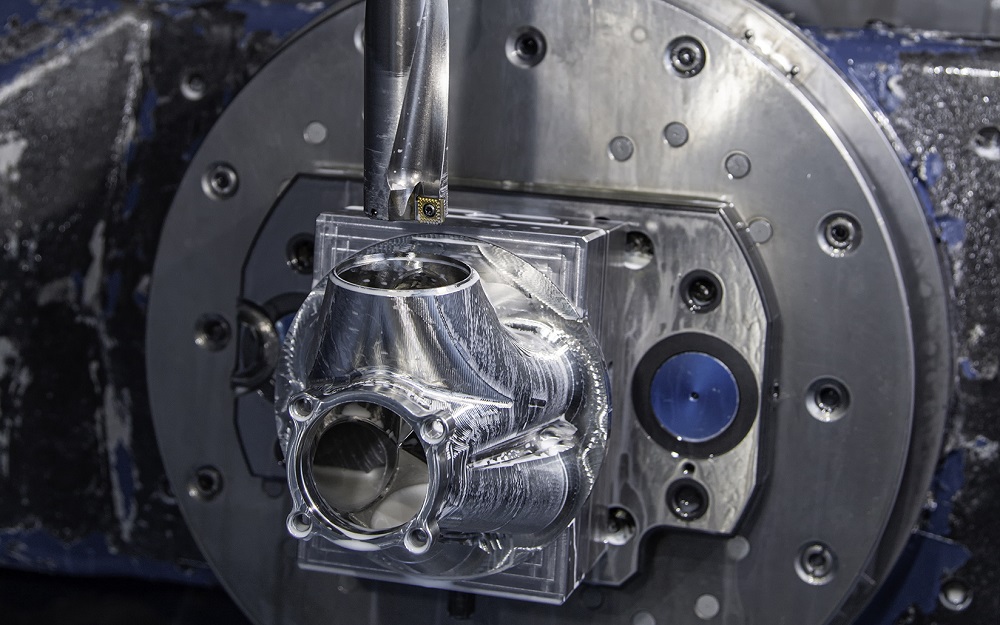
Kyocera has launched of its 2KMB solid-carbide ball-nose end mill for high-hardness material processing and micro-machining. Used in the fine machining of precision parts and metallic moulds, this new solid-carbide round tool product is now available globally from Kyocera.

2KMB is the second product launch in Kyocera’s K-series solid-carbide line, which combines new coating technology with a proprietary shape for the effective micro-machining of various high-hardness materials such as alloy tool steel, stainless steel and high-speed steel (HSS).

Kyocera’s new wear-resistant coating, MegaCoat Hard Ex, features a special two-layer structure to ensure stable processing with high toughness and chipping resistance. The wear resistance and chipping resistance both contribute to higher quality and longer tool life. According to Kyocera, the coating facilitates long tool-life processing due to its superior oxidation resistance and wear resistance. Notably, the coating supports quenched hardened steel processing from tempered steel up to 70 HRc.

The newly developed S-shaped cutting edge with high levels of sharpness deliver a high-quality surface finish on the component and maintain wear resistance. Here, a wide core thickness increases tool rigidity, which prevents collapse and ensures stable processing. As another stand-out feature, point cutting (strong back taper) reduces collapse and prevents chattering, while the novel cutting edge shape gradually changes rake angle and clearance angle, compatible with high blade edge strength and low resistance.
For further information www.kyocera.co.uk

PCD line for high-speed milling

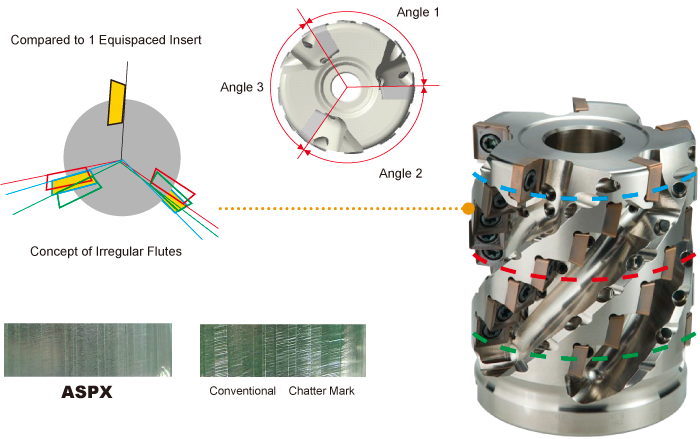
Tungaloy has introduced its TungRec DX110 series of PCD insert grades for high performance when machining aluminium alloy components. The Tungaloy TungRec milling range has been an established performer with its innovative tool bodies and insert geometries, but now this line is set to take aluminium machining to a new level with the new DX110 PCD insert grade.

Developed for the finish-machining of ISO N materials, the DX110 grade incorporates an ultrafine micro-grain structure that the company says provides outstanding surface finishes and component quality while also demonstrating exceptional cutting edge integrity. This ability to maintain edge sharpness over a prolonged period ensures that end users benefit from long tool life and extended periods of unmanned running, with the economic benefit of reduced insert consumption.

DX110 is first PCD solution incorporated into the TungRec line, offering existing TungRec users the facility to enhance aluminium machining capabilities with existing tool bodies. At present, the PCD inserts are available for TungRec 11 size tool holders, offering the facility for improving small diameter milling tools where vibration and excessive tool overhang are commonplace. Furthermore, the insert geometry and composition reduce cutting forces to generate a smooth cutting action that rapidly removes chips from the work area, while further reducing vibration and improving surface finishes.

Suitable for the machining of aluminium components in the aerospace, automotive and general subcontract sectors, the DX110 insert grade and TungRec tool holders for insert size 11 provide manufacturers with an indexable cutting tool solution from as small as 12 mm diameter. With tool diameter bodies extending up to 100 mm diameter, this new arrival to the TungRec range complements the existing TungSpeed-Mill PCD series, where the smallest diameter tool body is 50 mm.
For further information www.tungaloy.com

Turning tools switch up flexibility

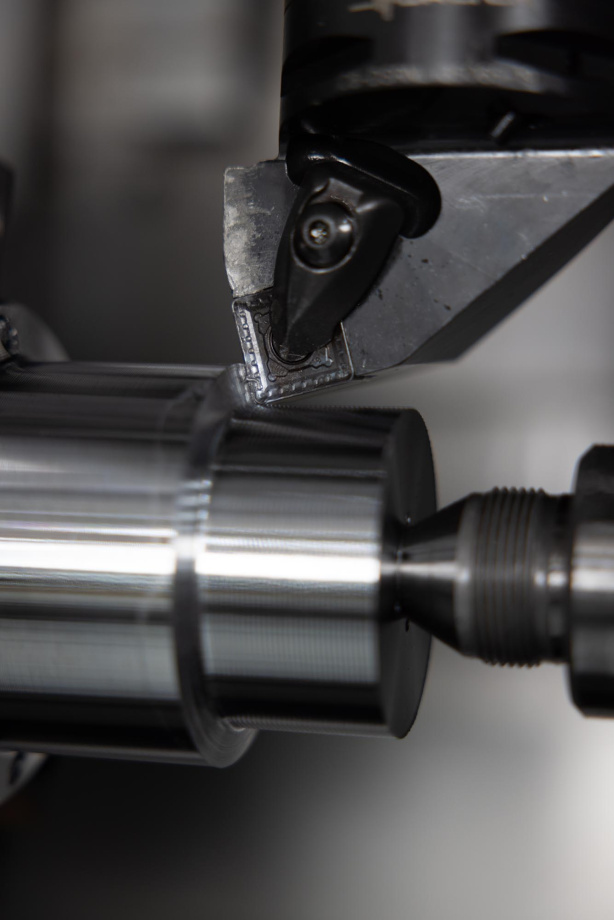
Floyd Automatic Tooling has introduced the new Switch-Line series of interchangeable turning tools from Applitec. Developed to deliver fast, easy tool changeovers with precision, repeatability and consistency, the Switch-Line series is for use with standard tool platens on turning centres.

Applitec has created the new line in response to customers that require quick and easy insert and tool changeovers with accuracy and reliability, which derives from a new ‘face and taper’ location system that not only improves positioning and accuracy, but also stability and cutting performance. Furthermore, the design characteristics see the Switch-Line provide ease of use and affordability, reports Floyd Automatic.

The interchangeable heads are available for all Applitec insert lines, including the Top-Line, Turn-Line and ISO-Line. With the Top-Line catering for parting, grooving and intricate form machining applications, and the Turn-Line and ISO-Line meeting the diverse turning requirements of any machine shop, Floyd Automatic says that the new Switch-Line is now the product of choice for manufacturers looking to improve productivity and performance with the added benefit of reducing machine downtime and tool changeovers. With a comprehensive range of insert dimensions, geometries and coatings to suit all material and application types, the new Switch-Line will benefit any users of sliding-head turning centres.

To improve handling and tool changeovers, Applitec has developed the system with a single-screw release system that demonstrates ease of changeover. The programme also incorporates a range of cylindrical tool holders with interchangeable ER collet holders and HSK designations for quick tool changes, further expanding the flexibility of the series. In addition, the Switch-Line series allows for through-tool coolant and high-pressure coolant facility via the Applitec Jet-line or HEB Mini Plug system.
For further information www.floydautomatic.co.uk

Simplifying gripper configuration and integration

The task of configuring bespoke vacuum gripper systems that will meet the specific requirements of individual applications has never been easier thanks to the comprehensive digital configuration services now available from Schmalz. This range of digital services helps end users, machine builders and system integrators to achieve quick configuration of products such as Schmalz SLG lightweight gripping systems for individual applications. Tools such as filters, configurators, ordering aids and apps simplify the process – regardless of the stage of the project, whether it’s product design, procurement or operation.

A simple and highly intuitive six-stage process guides users through steps such as: selecting the workpiece; defining the application; selecting the type, number, size and positions of vacuum cups; and finally choosing a vacuum generator and robot mounting flange. The proposed SLG lightweight gripper then generates automatically and is shown in 3D on the basis of users input and responses to this series of intuitive choices.

At the end of the process, a summary of all of the information used to specify the gripper is available for download, together with valuable information for the end user or machine builder covering gripper dimensions, weights, air flow and gripping force.

Additional digital services available from Schmalz make it possible to simulate your handling process with a digital twin of the products selected, and test the function of the system long before it is actually built. For example, it is even possible to obtain information about the behaviour of a suction pad in its operational state. There are also a series of software and function modules that help integrate Schmalz products even more quickly into the end user’s process and control system.
For further information www.schmalz.com

Robot tool changing transformed

Whether it is for a high payload robot changing spot welding guns in the automotive sector, or smaller robot systems performing multiple handling or assembly operations, today’s tool-changing technology makes it possible to maximise robot flexibility.

Stäubli says that its MPS series robotic tool changers increase productivity for robots in all payload categories from all major manufacturers. Compared with the limited functionality of early-day tool changers, Stäubli’s latest-generation systems offer numerous different modules for the transmission of pneumatics, vacuum, signals, data transmission up to 10 Gbit/s, shielding, earthing, RFID tool coding and data storage.

The ability to combine these different technologies and modules makes it possible to configure a solution for a wide range of applications. Notably, the location of the transmission modules is highly flexible, allowing users to position them as required to suit the individual robot’s cable package. The robot-mounted component of the MPS tool changer incorporates all the services required to provide functionality for the various tools that the robot might use in production. On the tool-change element, the only transmission modules required are those relating to the operation of specific tools, which makes it possible to use multiple, individually configured tool elements with one robot mounted element, optimising the return on investment.

Cross-shaped guide surfaces combined with a spring-loaded ball locking system facilitate interconnection between the robot and tool sides of the MPS tool-changer system. This feature makes it possible to maintain the highest levels of precision throughout its entire product lifecycle. The tools always return to their original insertion position with a repeat accuracy of ±1.5 µm.

Stäubli tool-changing systems are available for robot payloads up to 1530 kg.
For further information www.staubli.com