
ABB launches next-generation OmniCore control

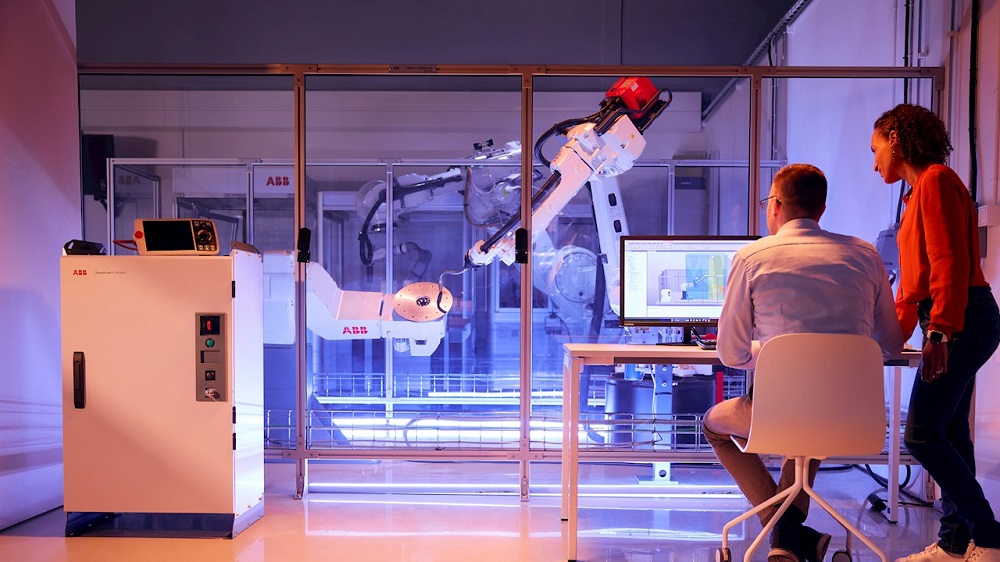
ABB Robotics has launched OmniCore, an intelligent automation platform that is faster,
more precise and more sustainable, to empower, enhance and futureproof businesses.
The company says that its OmniCore platform, the result of more than $170m of investment
in next-generation robotics, is a step-change to a modular and futureproof control
architecture that will enable the full integration of AI, sensor, cloud and edge computing
systems in the most advanced and autonomous robotic applications.
“For our customers, automation is a strategic requirement as they seek greater flexibility,
simplicity and efficiency in response to the global megatrends of labour shortages,
uncertainty and the need to operate more sustainably,” says Sami Atiya, president of ABB’s
Robotics & Discrete Automation Business Area. “Through our development of advanced
mechatronics, AI and vision systems, our robots are more accessible, capable, flexible and
mobile than ever. But increasingly they must also work together seamlessly, with us and
each other, to take on more tasks in more places. That’s why we are launching OmniCore, a
new milestone in our 50-year history in robotics; a unique, single control architecture – one
platform, and one language that integrates our complete hardware and software range.”

OmniCore’s motion performance delivers robot path accuracy at a level of less than 0.6 mm,
with multiple robots running at high speeds of up to 1600 mm per second. Thes capabilities
open new automation opportunities in precision areas such as arc welding, mobile phone
display assembly, gluing and laser cutting. Overall, OmniCore enables robots to operate up
to 25% faster and to consume up to 20% less energy compared with the previous ABB
controller.
More information www.go.abb/robotics

Electric robot lifts large loads at longreach

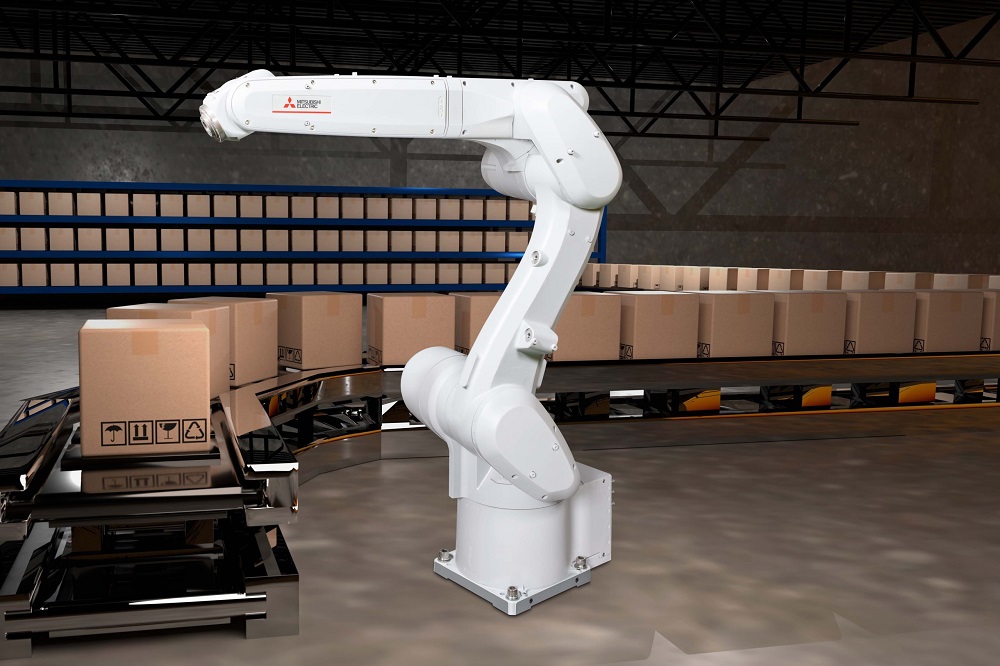
Mitsubishi Electric is launching itsMelfa RV-12CRL vertical articulated robot, which offers 1504 mm reach and 12 kg payload capacity. The robot’s wide effective working area makes it suitable for a variety of processes and industries, includingmachine tending, automotive and lithium-ion battery manufacturing. Users will also be able to take advantage of built-in functions that streamline implementation, enhance safety and reduce downtime.

The high payload capacity and long reach means the latest Melfa robot can deliver high levels of versatility in pick-and-place and assembly applications. Performance is also enhanced by the RV12CRL’s ability to operate at high speeds, with the arm designed to accommodate high inertia and momentum. This resilience means the robot can support precise positioning even when handling heavy loads, maintaining accuracies of ±0.04 mm.

Users of Mitsubishi Electric’s newsix-axis robot can equip it with Melfa SafePlus for extended safety functions. This technology uses sensors such as light curtains to limit speed, torque and reach upon detecting human workers nearby, allowing it to operate without safety cages. The ability to safely work in shared spaces without having to stop whenever a worker approach makes it effective in flexible production environments.

The robot uses next-generation servo motors with battery-less encoders that eliminate the need for battery replacements or back-ups, reducing both maintenance costs anddowntime.

Barry Weller, product manager -mechatronics at Mitsubishi Electric Automation Systems UK, says: “Thanks to its innovative features and performance of the Melfa RV-12CRL robot, this latest addition to our range offers a cost-effective and efficient solution for repetitive handling operations involving large and heavy items.”

For further information www.bit.ly/3Qg93wU

Kuka KR Fortec has dynamic performance

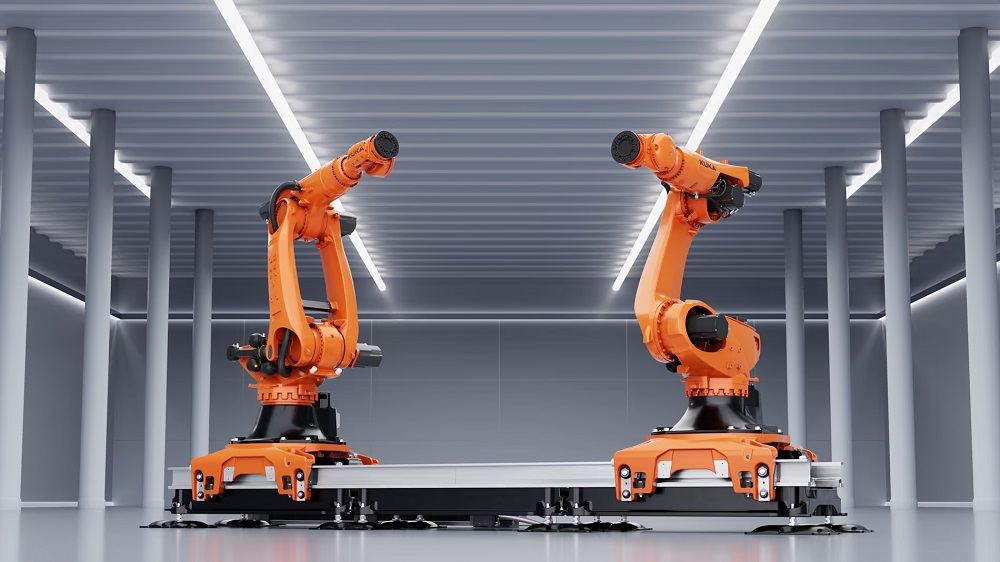
Kuka says that its new KR Fortec industrial robot delivers versatility in a small footprint. Dynamic performance results in short cycle times,whilea compact shape makes it suitable for tasks such as handling and spot welding. Moreover, the fast KR Fortec tackles all this with low energy consumption.

The KR Fortec is available now, including with an extended arm that handles loads of 240 kg across a reach of 3700 mm. Technically, this heavy-duty robot fits between the KR Quantec and KR Fortec ultra. Cross-model modularisation ensures high transfer of robot series components.

Maximilian Pettkuhn, portfolio manager at Kuka, says:“We developed the KR Fortec to achieve a lower TCO and launch a resource-saving, lightweight product. The new robot is up to 700 kg lighter than its predecessor.”

According to Kuka, the KR Fortec is reliable with a long, trouble-free service life and low maintenance requirements. Furthermore, optimised accessibility makes maintenance work easy and quick. The two in-line wrists adopted from the KR Quantec and KR FortecUltra models are waterproof and dustproof as standard. Beyond that, the KR Fortec can operate between 0-55°C. Several foundry variants are available for harsh and dirty environments.

The working envelope of the KR Fortec is expandable with the KL 4000 linear unit, which is modularly adaptable between 1.5 and 30 m. A further advantage: the KR Quantec also fits on the KL 4000. For co-operation with the KR FortecUltra on the same linear unit,customers shouldselect the KL 5000. This allows users to continue adapting and combining products easily to meet individual requirements.

For further information www.kuka.com

SCOPE aids zero downtime for robots

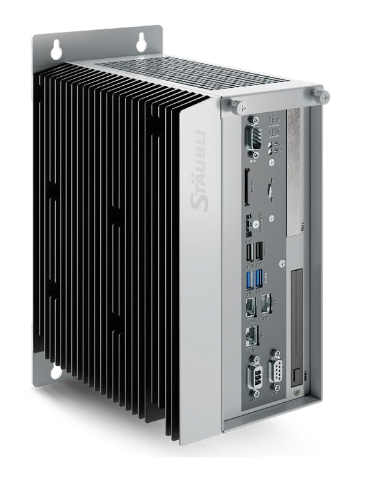
The new SCOPE system from Stäubli will bring many benefits to users of the company’s robot systems. By analysing robot health and stress on the fly, SCOPE produces notifications on upcoming maintenance, thus offering an overview of production assets and delivering better control of OEE.

In short, SCOPE is Stäubli’s secure solution for continuous edge data mining. Edge data is obtained as a result of edge computing processes, performed at or near the physical location of the data source, in this case the customer’s robot fleet.

A solution to monitor, review and analyse production, plus optimise automation and maintenance processes, SCOPE makes it possible to anticipate breakdowns and move closer to achieving the ultimate objective of zero downtime. SCOPE integrates the latest Stäubli technologies, improving the performance of production processes and extending the lifetime of the robot fleet within a single platform.

As a decentralised edge solution, SCOPE ensures that users retain ownership of their data. Stäubli’s open data routing functionalities, via HTTP, WebSocket or MQTT, offer full connectivity to any compatible MES (manufacturing execution system) or ERP (enterprise resource planning) layers for further local investigation or informative tasks such as e-mail or SMS notifications.

In practice, data generated by the robot is recorded and sent to SCOPE 250 times per second. Following data analysis, SCOPE produces an easy-to-understand report. Analysis results are logged to create timelines and trend charts on the SCOPE dashboard. In the event of any deviations in the results, SCOPE can be programmed to send alerts to existing MES or ERP software solutions. Offering the capability to connect with and monitor up to 50 robots, users can view and interrogate status through a series of intuitive dashboard displays.

For further information www.staubli.com

Lights-out machining a reality with AMRs

GF Machining Solutions says that its autonomous mobile robots (AMRs) deliver a smart, unmanned and automated factory solution that enhances production processes. The milling, EDM and laser ablation machine tool specialist, and tooling and automation solutions provider, has introduced an automatedsystem to help manufacturers reduce production lead times and improve operational efficiencies.

The company’s AMRs streamline materials handling and the transfer of workpieces, tooling and electrodes between individual cells such as milling, wire EDM, die-sink EDM, parts washing and inspection. This capabilityensures production processes operate smoothy and more effectively, facilitating light-out operations.

Says Martin Spencer, UK managing director for GF Machining Solutions: “AMRs automate and connect different manufacturing processes. They interfaceseamlessly with other robots, automation systems and manufacturing cells, and are specifically aimed at manufacturers operating in high-mix, low-volume environments.”

As the name suggests, AMRs operate autonomously. They can navigate their way around uncontrolled environments without the need for fixed paths or tracks. Using cameras, sensors, laser scanners and sophisticated software to create maps, AMRs can detect obstacles and safely manoeuvre around them by choosing the best alternative route. The result? Accident-free environments, uninterrupted material flow and optimal productivity.

AMRs can perform a variety of tasks at different locations with simple software adjustments. Controlis via the interface or is configurable through fleet control software, which can prioritise orders and assign tasks to AMRs based on their position and availability.GF Machining Solutions says AMRs deliver a safe, flexible and efficient automation solution that can help manufacturers capitalise on lights-out operations.For further information www.gfms.com