
Claas Mmbraces Bending Automation in Agricultural Machinery

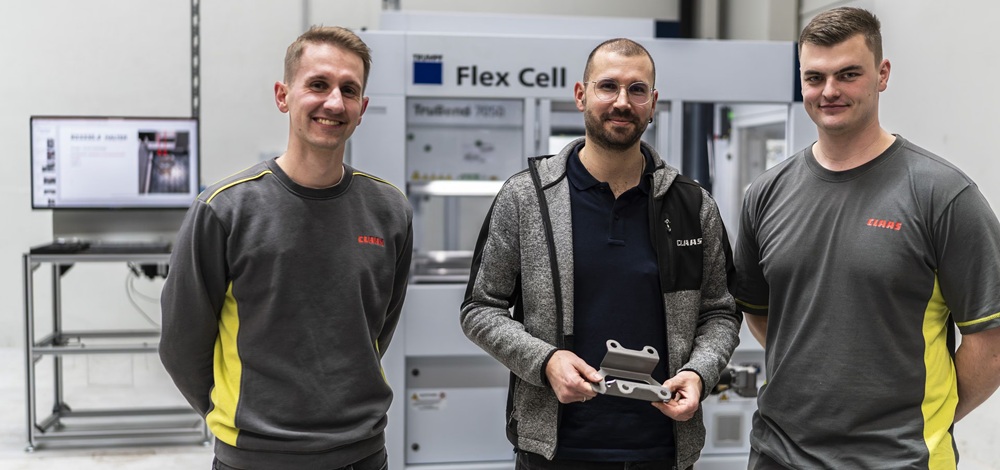
Claas is using automation not only in its state-of-the-art forage harvesters, but also in manufacturing, where two Trumpf bending machines are helping the company improve flexibility, ergonomics and productivity. 

At its Bad Saulgau site, Claas produces components for harvesting machinery and forage-harvester attachments in lot sizes of 50 to 200. Parts range from simple bends to complex components with up to 13 bends, often requiring tolerances of just ±0.25°. 

“Automation should not be an end in itself,” says Marco Schwab, head of sheet metal Processing at Claas in Bad Saulgau. “It has to be a good fit for our components, our lot sizes and, above all, our employees.” 

The company replaced an older press brake with a Trumpf TruBend 5000 featuring the ToolMaster automatic tool changer. This technology eliminates the physical strain associated with repeatedly handling tools up to 3 m long, while also removing a previous production bottleneck. Claas can now manufacture large components in parallel on two machines, improving planning flexibility. 

The bigger step towards automation came with a TruBend 7050 equipped with Trumpf’s FlexCell. The flexible, retrofittable system can be connected or disconnected in just a few steps, allowing the machine to operate as either an automated bending cell or manual press brake. 

This flexibility enables Claas to process larger batches automatically, including unattended production during off-peak and night shifts, while retaining manual operation for complex parts or short-notice capacity requirements. 

The investment has also delivered financial benefits. With the TruBend 5000, Claas has reduced production from three shifts to two. Further automation projects are already being evaluated, demonstrating the company’s pragmatic approach to adopting technology where it improves productivity, quality and working conditions. 

More information www.trumpf.com 
Double-Sheet Sensors Bring Protection to Metal Forming 

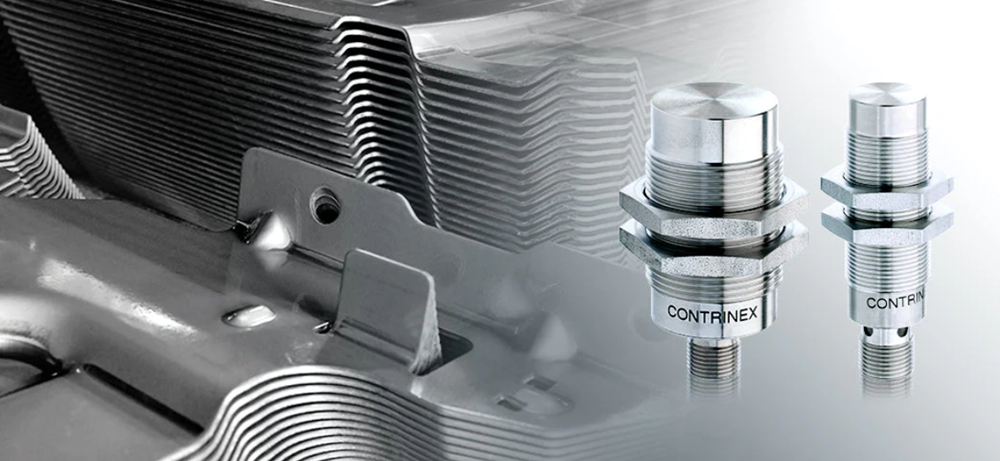
In metal forming, feeding two sheets into a press instead of one can cause severe tool damage and costly downtime. Historically, double-sheet detection has often been associated with complex and expensive systems designed for high-volume automotive production. Contrinex is changing that with its smart double-sheet sensors, combining affordability with the flexibility required by modern manufacturing. 

Based on the company’s smart measurement technology, the sensors can be reconfigured to detect different metal types and sheet thicknesses, enabling manufacturers to process materials ranging from steel to aluminium without changing sensors. 

Configuration is equally flexible. Using the PocketCodr configurator and dedicated mobile app, technicians can enter the sheet material and thickness and set switching points within minutes, without programming. This approach is suitable where production involves consistent materials and rapid set up is necessary. 

Alternatively, the latest sensor version can be configured directly via any IO-Link Master. This allows detection parameters to be adjusted from the production system when changing between different materials, making the sensors particularly suitable for automated lines and mixed production. 

Contrinex has also designed the sensors to withstand the harsh conditions associated with stamping and forming. Its ‘Full-Inox’ technology uses a one-piece V2A (AISI 304) stainless-steel housing, providing resistance to chemical cleaning and physical impact. For particularly demanding applications, ActivStone-coated versions feature a rugged ceramic shield for additional protection against wear. 

By combining non-contact detection with flexible configuration, robust construction and multi-channel monitoring, Contrinex smart double-sheet sensors provide an economical way to protect valuable tooling and reduce unplanned downtime. 

PLUS Automation holds more than 2000 sensors in UK stock, supporting engineers with factory automation, process automation and machine safety solutions from Contrinex, Satron Instruments and ReeR Safety. 

More information www.plusautomation.co.uk

Gresham Brings Metal Furniture Production in-House

One of the UK’s largest independent workspace furniture designers and manufacturers, Gresham Office Furniture operates from a 200,000 sq ft factory on a 14-acre site in Bolton. In early 2025, the company installed three machines from BLM Group UK, including an electric press brake. 

The investment has enabled Gresham to bring all metal furniture component manufacture in-house, having previously outsourced around two-thirds of production. 

“The BLM acquisitions were part of a £7m investment last year that also included a new enterprise resource planning system and a Homag line for processing wood-based panels,” explains operations manager David Openshaw. “Insourcing all of our metal component manufacture has been a major benefit, as Brexit, swiftly followed by Covid and then war in Ukraine, all played into lengthening lead times from our subcontractors.” 

He continues: “We pride ourselves on quick deliveries to customers in 10 to 15 days from receipt of order, so we wanted total control over the supply of all office furniture components. Our latest investments have delivered exactly that.” 

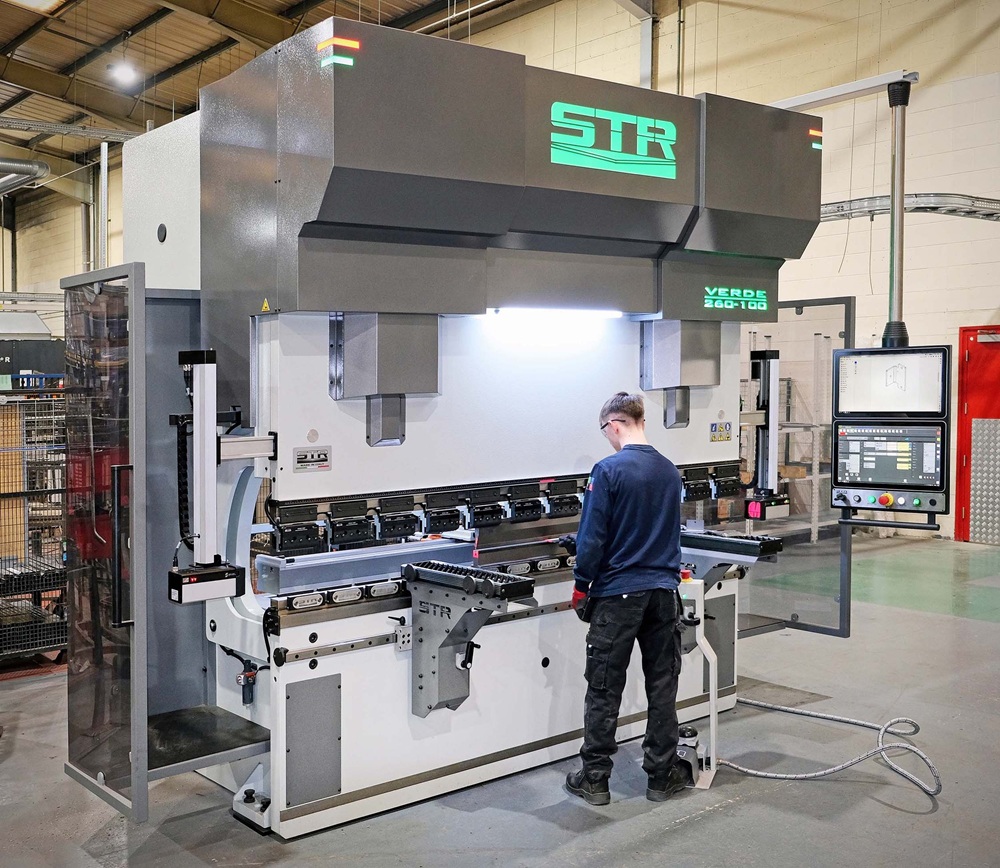
The BLM STR Verde 2.6 m/100 T press brake features LED-guided tool positioning, with lights along the upper beam indicating precisely where punches and dies should be placed. The system also guides operators during sequential bending operations, reducing set-up times and errors. 

An infrared laser measures bend angles in real time, automatically compensating for spring-back and material variation. Optimised parameters can then be saved for future production. 

The press brake’s integrated EsaBend 3D software also accepts STEP files generated from Gresham’s Autodesk Inventor CADCAM system. EsaBend identifies available tooling, applies crowning and spring-back adjustments, and generates the G-code, helping ensure the first component is right-first-time. 

More information www.blmgroup.com 

UK plant boosts production with SafanDarley

SafanDarley says one of its UK customers was facing a major problem. Its existing press brakes were struggling with certain parts and new product lines. The issues were causing downtime, production delays and higher costs. A new solution was therefore necessary to help the facility increase capacity, flexibility and precision.

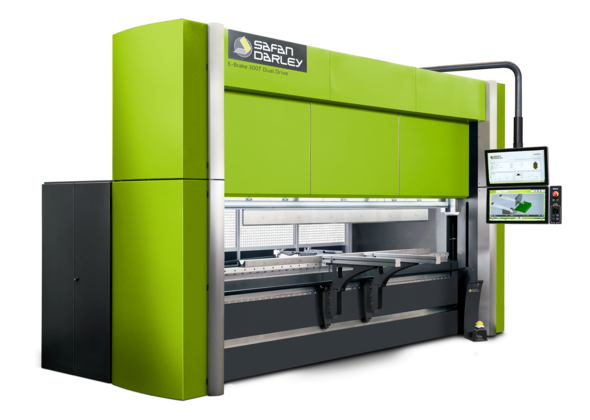
After close collaboration with SafanDarley, the plant chose a 300-tonne E-Brake Ultra with a 790 mm Q and 400 mm stroke. According to SafanDarley, the machine is both powerful and reliable, with Wilson Tools designing specialised tooling to handle complex folds and ensure optimal performance.

The SafanDarley E-Brake delivers 300 tonnes of pressing force through a patented dual-drive double pulley system. This capability ensures fast cycles and energy-efficient operation. Servo motors drive the press beam via a double-pulley system. A balanced interplay between fixed and flexible rollers and flexible belts ensures an even distribution of forces over the entire press beam. Even with 300 tonnes of pressing force the deflection of the beam is minimal. 

Bending aid tables make handling heavy plates easier and remove the need for a second operator, while laser angle measurement guarantees error-free results. SafanDarley’s AutoPOL software allows seamless transfer of bending programs to the new machine.

At the customer, the new solution will ensure reliable and uninterrupted production. Urgent orders can be processed immediately, and products will meet the highest quality standards with minimal rejects. Operators can enjoy a modern, easy-to-use machine. The 300T E-Brake not only solves current challenges but also prepares the company for future growth.

More information www.safandarley.com

Olicana builds success on tube benders from BLM

Ilkley-based subcontractor Olicana Products provides components to customers involved in the manufacture of commercial seating, as well as the medical, education and bathroom sectors. Central to the company’s offer is its use of tube bending machines from BLM since 2001.

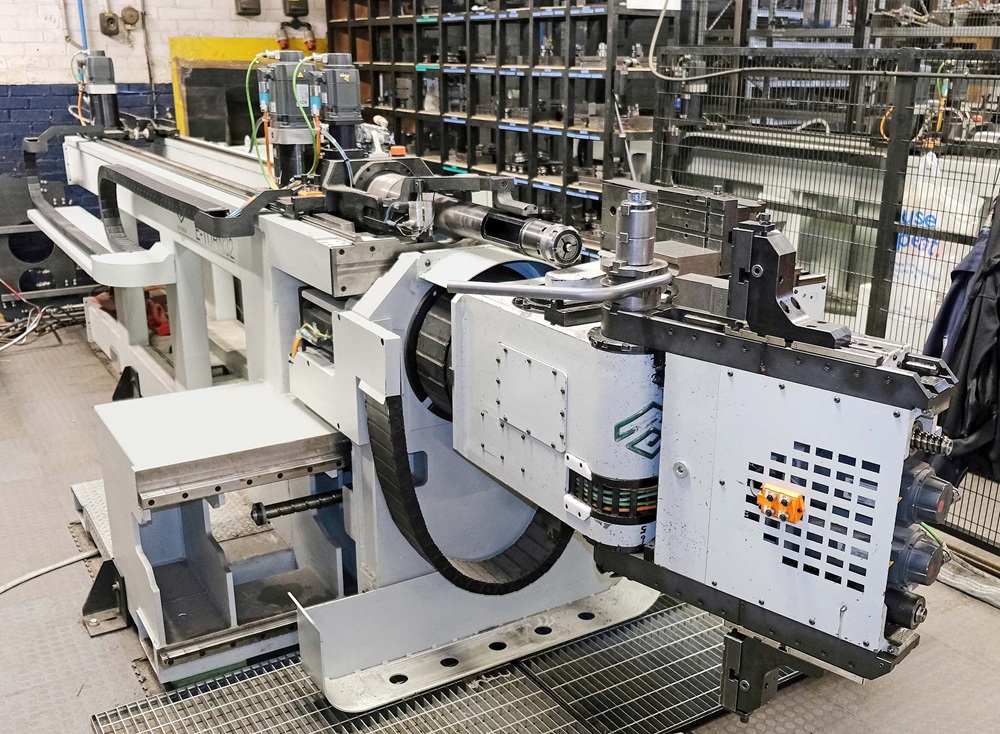
The first BLM tube bending machine on site, an E-TURN 52, could process tube up to 52 mm outside diameter. It was the first electric tube manipulator in the Ilkley factory, the pre-existing three being hydraulically actuated, and was able to execute a wide range of functions such as variable radius bending.

Notable also is that all-electric tube benders have better accuracy than their hydraulic counterparts and are also more environmentally friendly. It is due to the absence of hydraulic fluid, which rises in temperature during operation, leading to thermal expansion. They also tend to leak.

Most significantly, however, the 15-axis E-TURN employs a double head with a novel swinging action, enabling both right- and left-hand bends to be accomplished in the same automatic cycle. It deskills the creation of highly complex tubular geometries and avoids the need for a second operation on the same length of tube, although for some applications that is not possible anyway.

Such was the success of the E-TURN 52 installation that a further two machines, both new but of smaller, 32 mm diameter capacity, were purchased in 2021 and 2023 directly from BLM.

The machine supplier’s offline VGP3D software simplifies operation of all three electric tube bending machines. On receipt of a customer order and component drawing, Olicana simulates the bending sequence on-screen to detect any potential collisions or other problems.

More information www.blmgroup.com