
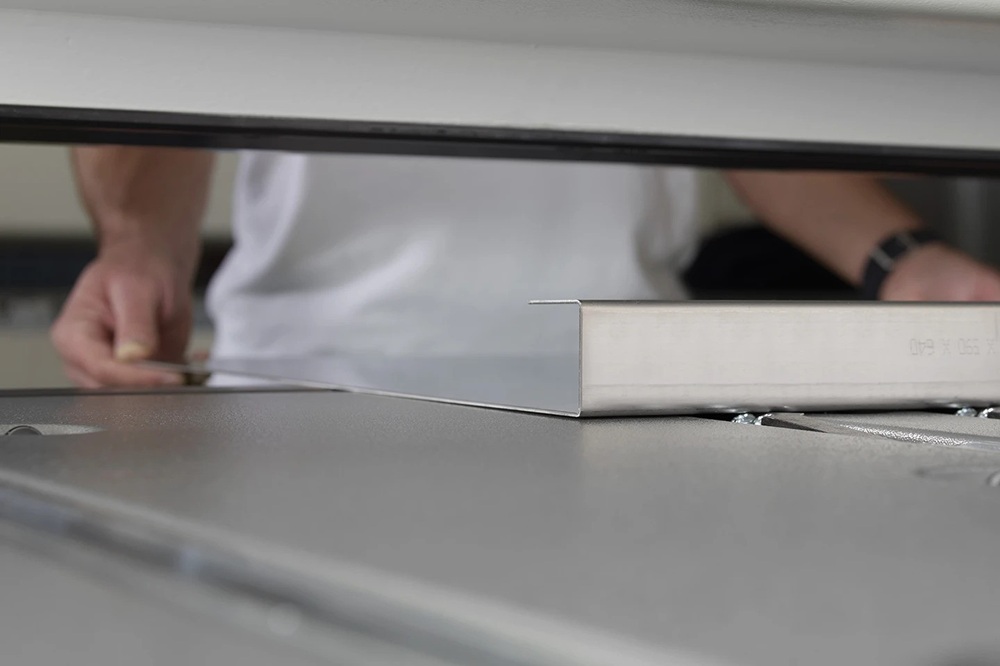
Questions to Ask Before Investing in a New Folding Machine

Investing in a new folding machine is an important decision for any sheet metal company. The right machine should handle today’s work while providing the flexibility to accommodate new materials, larger projects, different profiles and growing demands for efficiency. The wrong choice, however, can create bottlenecks, increase manual work and restrict future growth, as Cidan Machinery sets out in this article. 

Material is a logical starting point. Steel, aluminium, zinc, copper, stainless steel and coated sheet all place different demands on machine capacity, precision and handling. Thickness, surface finish and sensitivity should also be considered, particularly when processing materials that can be easily marked or damaged. 

Folding length is another fundamental consideration. A machine that is too short can restrict the work a company is able to undertake, while greater capacity can open opportunities for larger projects. It is important to consider future requirements as well as current workloads. Longer folding lengths can reduce the number of joints required for applications such as roofing, façades, doors and gates. 

Opening height and working space are equally important when producing complex profiles, high edges and components requiring multiple folds. Generous working space makes larger or awkward components easier to position and handle. 

The machine should also be assessed as part of the entire production workflow, from material storage and cutting through to folding and delivery. Identifying existing bottlenecks can help ensure the investment improves overall productivity. 

Ease of use and ergonomics are additional considerations. An intuitive control system can reduce errors and training requirements, while good access and handling arrangements can minimise operator fatigue. 

Finally, consider the support available after installation. Training, servicing, spare parts and technical assistance all influence uptime and machine life. 

More information www.cidanmachinery.com 
New Partnership for Advanced Bending Automation Solutions

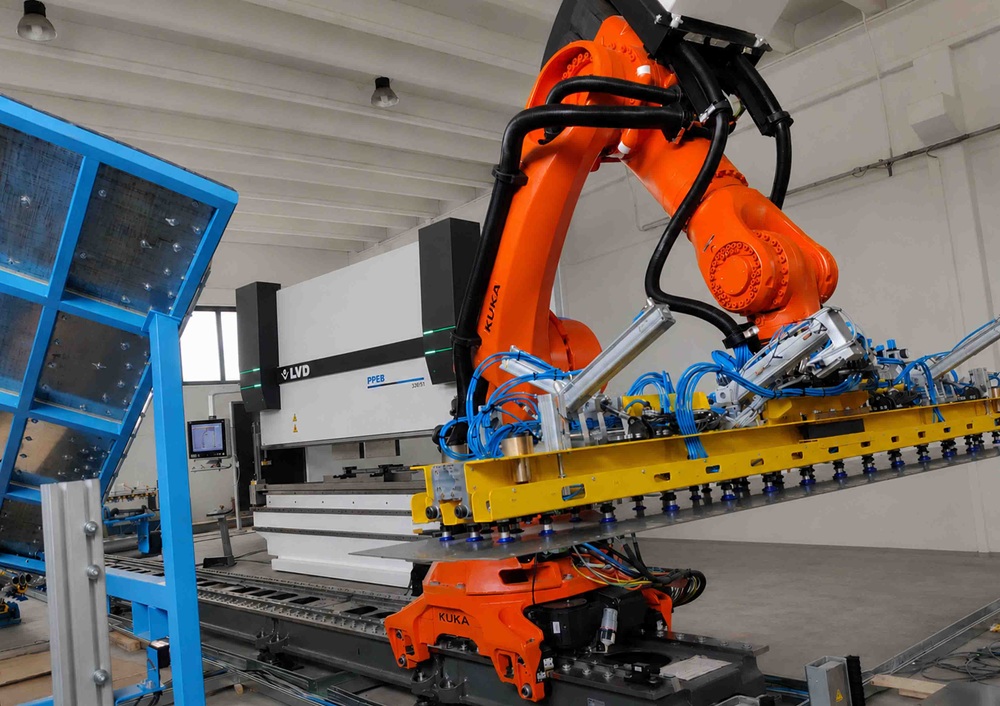
LVD, a global supplier of press brakes and bending automation systems, has formed a strategic partnership with REA Robotics, an industrial automation and robotics specialist based in Veggiano, Italy. The companies will jointly develop customised, heavy-duty robotic bending cells for complex fabrication projects. 

The alliance expands LVD’s robotic bending offering and supports its ambition to provide metal fabricators with advanced, single-source bending automation solutions. For REA, the partnership opens access to new markets through LVD’s global sales network. 

The collaboration combines REA’s specialist automation and custom engineering capabilities with LVD’s extensive bending process expertise. REA has decades of experience developing robotised solutions for industries including sheet metal fabrication, with field-proven systems incorporating heavy-duty handling lines, multi-gripper robots and advanced tracking technology to synchronise robots with press brakes. 

“As automation continues to transform manufacturing and bending applications grow in complexity, we’re meeting critical industry challenges with specialised automated solutions,” says Carl Dewulf, CEO of LVD Group. “REA’s bending automation expertise alongside LVD’s high level of bending know-how will help us bring to market the customised automated bending systems that our customers want and need.” 

The two companies will also work closely on engineering and R&D, accelerating development through closer integration of press brakes and robots, control-interface synchronisation, software validation, and system compatibility. 

For fabricators, the partnership is intended to deliver faster deployment, greater production flexibility, a more efficient machinery footprint and shorter installation times. 

LVD will continue to engineer, develop and sell its robotic bending systems and LVD robotic solutions products, including the Ricobb cobot, alongside its specialised profile bending systems.  

More information www.lvdgroup.com

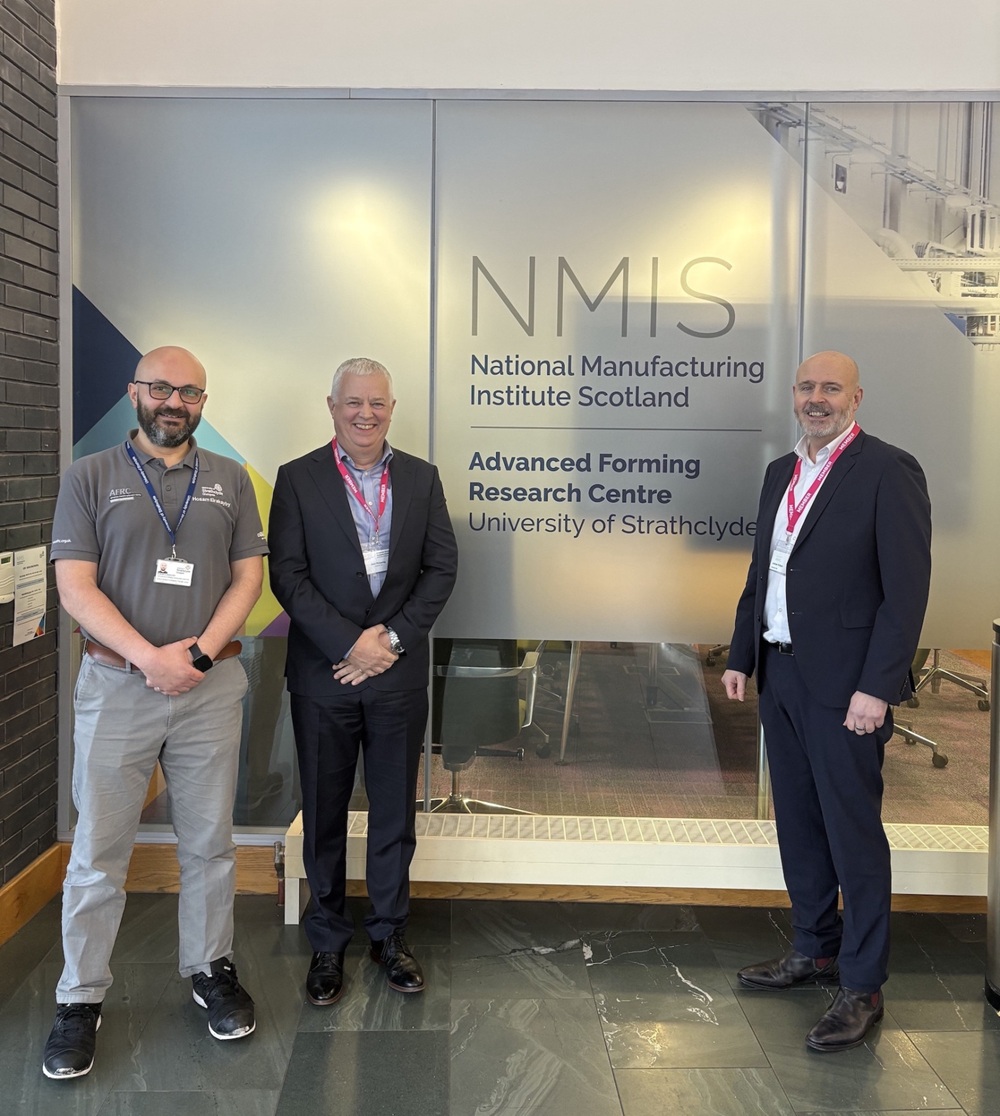
Unison Becomes Official Tube Bending Partner of the AFRC

Unison Ltd, a UK-based manufacturer of tube and pipe bending machines and inventor of precision all-electric tube manipulation, has joined the University of Strathclyde’s Advanced Forming Research Centre (AFRC). 

A specialist centre within the National Manufacturing Institute Scotland (NMIS), the AFRC provides member organisations with access to advanced equipment and technical expertise covering manufacturing, material behaviour and processing. 

As the only tube bending machinery manufacturer within the AFRC, Unison will provide specialist consultancy and technical support across tube manipulation processes, while contributing to collaborative research projects. 

“We’re delighted to have been invited to join the AFRC,” comments Unison joint managing director Alan Pickering. “Our tier-two membership will enable us to support even more of the world’s leading companies with their tube manipulation, wire and end-forming challenges. At the same time, we look forward to utilising the AFRC’s technical forming and modelling expertise to assist in developing several new tube forming technologies currently in the pipeline, particularly for the aerospace sector.” 

AFRC director Brad Wynne adds: “As the UK’s leading manufacturer of ultra-precise tube-bending machinery, Unison will work with us to extend our research into rotary draw tube bending. We envisage that initial projects will explore areas such as tooling, process modelling, physical trials and material analysis, helping unlock rotary draw bending for higher-integrity applications across defence, aerospace, energy and other advanced manufacturing sectors.” 

Tracy McCarroll, head of membership and strategic relations at NMIS, says the partnership will also provide opportunities to combine Unison’s expertise and equipment with the capabilities of other AFRC members: “We look forward to involving Unison in suitable R&D proposals that would benefit from their considerable knowledge and input.” 

More information www.unisonltd.com 

Sielaff Continues Investing with Another RAS Multibend-Center

The coffee machine in the office, the snack vending machine at the train station or the bottle reverse vending system at the supermarket: Sielaff machines form part of everyday life more often than many people realise. 

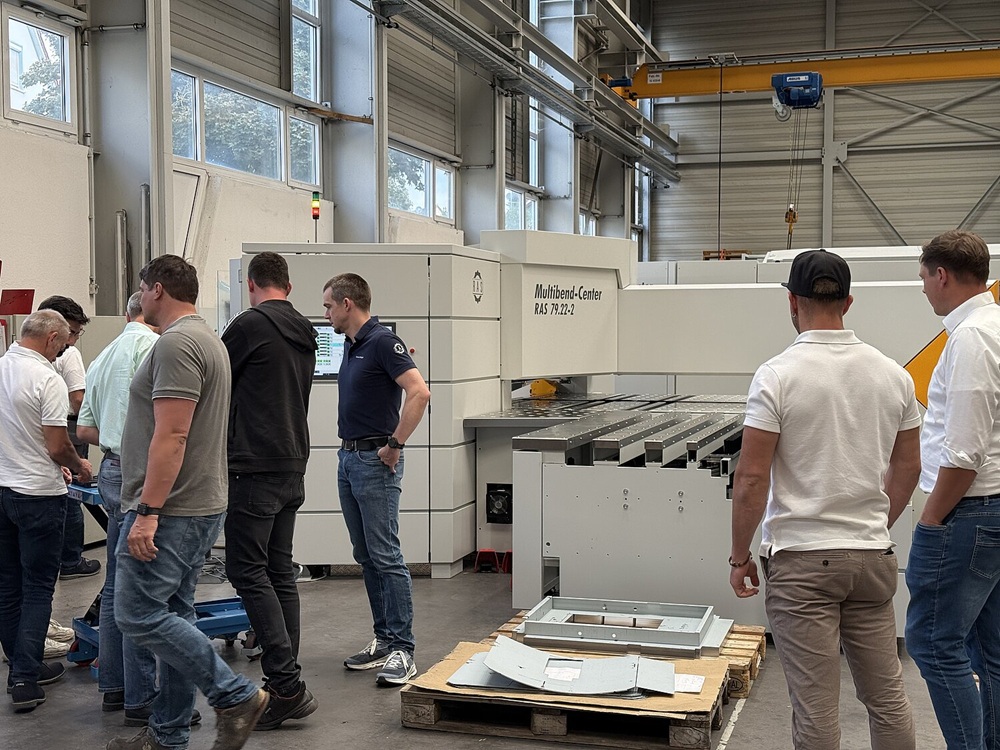
Since 1886, Sielaff has been developing and manufacturing vending machines that have become an integral part of daily living. For the production of its precise enclosures, the company has relied on RAS machines for many years. With another RAS Multibend-Center, this successful partnership continues. 

Final acceptance of the latest Multibend-Center took place at the RAS facility in Sindelfingen. Together with the Sielaff team, demonstration parts were inspected and the machine was thoroughly tested. 

During final acceptance procedures at RAS, all important functions and processes are carefully checked. The aim is not only to ensure that the machine operates reliably. It is equally important that the manufactured components meet customer standards and can be safely integrated into existing production processes. 

This was not the first joint acceptance for Sielaff and RAS. The long-standing partnership between the two manufacturing companies stands for mutual trust, technical expertise and a shared commitment to quality. 

For RAS, final acceptance is more than a formality. It is an important part of the company’s commitment to quality. After all, when high-quality vending machines are built for everyday use, every detail matters. 

RAS thanks Sielaff for its long-standing trust and successful collaboration. The company now looks forward to the next projects involving Sielaff. 

More information www.ras-online.de/en

Clad4orm Builds on Quality and Uptime with SafanDarley

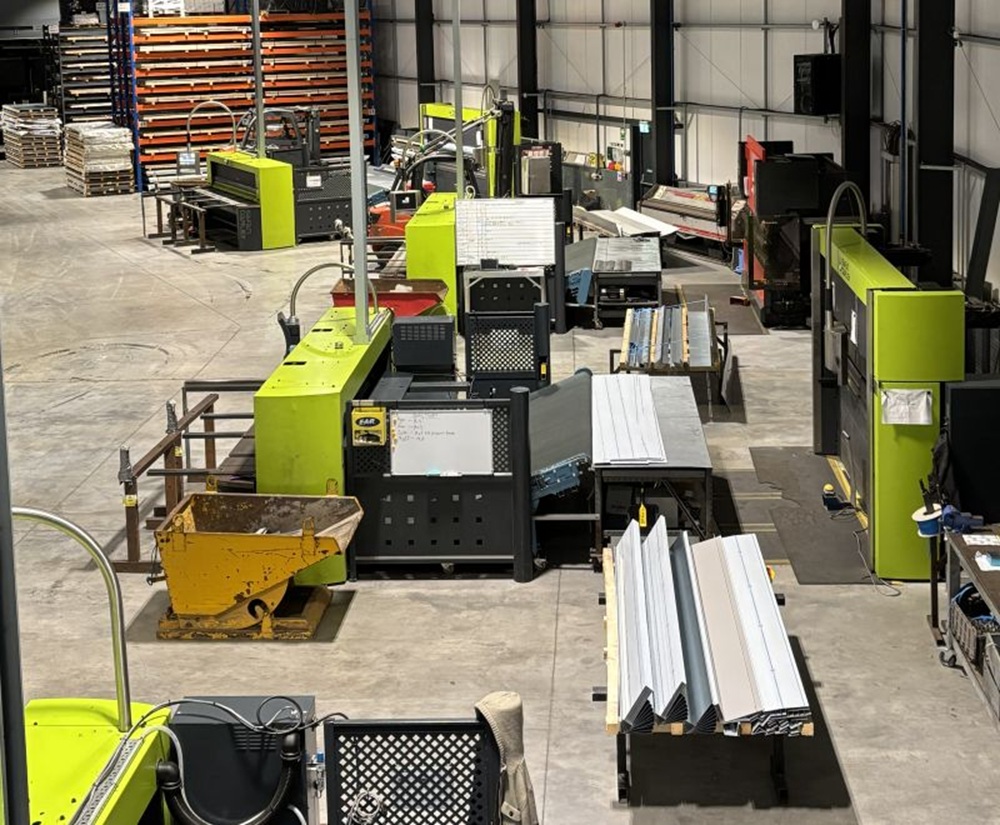
For Clad4orm, production reliability is not a luxury; it is the foundation of the business. Based near Chester, the company designs and manufactures roof and wall cladding products, supplying the roofing, cladding and wider construction sectors nationwide. 

As production has grown, so has the need for reliable machinery and consistent output. Today, Clad4orm operates six SafanDarley machines across four production lines: two E-Brake 3 m/100 T press brakes and four M-Shear M310-6 guillotine shears. Each line combines a shear with a press brake, creating a structured workflow that helps minimise bottlenecks and maintain predictable output. 

Uptime is particularly important because delays in production can have a direct impact on installation schedules. For Clad4orm, the durability and consistent performance of the SafanDarley machines provide the reliability needed to keep production moving. 

The original investment was driven by machine quality, but the relationship has developed through more than machinery alone. Proven durability, high service levels, fast support and a relationship built on trust have all contributed to SafanDarley remaining Clad4orm’s preferred supplier. 

This factor is particularly important for the company’s bespoke flashing and fabrication work, where precision and repeatability are essential. E-Brake press brakes provide the control and consistency required to produce high-quality custom components. 

With further projects and innovations planned, Clad4orm is also preparing for increased production capacity. Additional investment with SafanDarley is already being considered, reinforcing the long-term partnership between the two companies. 

For Clad4orm, the approach is straightforward: maintain the same standards and reliability while scaling production to meet future demand. When uptime matters, investing in machinery that simply keeps working makes sound business sense. 

More information www.safandarley.com