
Renishaw updates manufacturing data platform

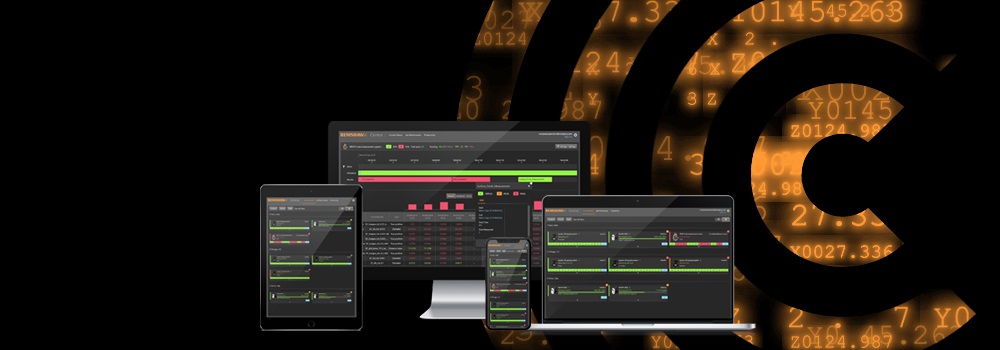
To help manufacturers improve production efficiency and monitor their additive manufacturing (AM) performance in real-time, Renishaw has updated its ‘Renishaw Central’ manufacturing data platform. Using feedback from sensors fitted to AM systems, the software gathers and displays machine process data from across production facilities, including AM systems. Users can therefore track machine status and the execution of jobs, as well as pinpoint errors and act on them before they impact process efficiency.

Using Renishaw Central, manufacturers can now capture data throughout the AM process chain and view machine and process analytics in realtime. The software displays several parameters including build traffic, job progress and recent build history. Users can also sort and select jobs based on name, the number of runs passed, the number of fails and other parameters. If the machine sensors detect a problem, it will feed this back to the platform and Renishaw Central will display an error message informing the user.

Renishaw Central can also provide manufacturers with access to time series data, environmental insights and the results of any process changes. By capturing this data and comparing it over different periods, users can optimise production by introducing process changes based on prior performance.

“Unlike machining, the AM process involves putting materials through phase changes, so manufacturers must keep a close eye on build performance to avoid any anomalies,” explains Ben Diaz, senior product manager at Renishaw. “Renishaw Central enables operators to connect multiple systems with one manufacturing data platform, improving communication across the shop floor. The platform streams data seamlessly, allowing users to see real-time data from AM systems, CNC machines and other systems at a glance, as well as receive live machine and data analytics that can inform predictive maintenance.”

More information www.bit.ly/3VL6Lc8

100 different 3D printed parts on show

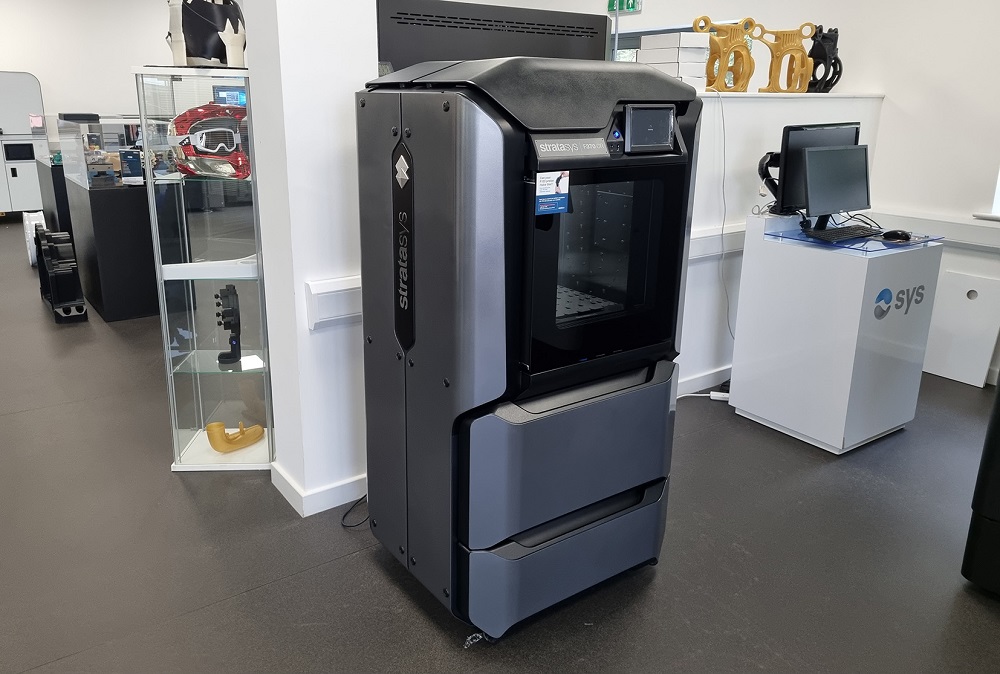
SYS Systems says that visitors to TCT 3Sixty earlier this month could witness the power of Stratasys 3D printing solutions after it showcased two of its latest products and more than 100 different components – including a 3D printed Mars Bar and a human heart. The company, which is part of the Carfulan Group, shone the spotlight on the J55 Prime desktop 3D printer and the F370 CR carbon-fibre 3D printer. There were also hundreds of 3D printed parts of varying sizes, complexities, finishes and end-use applications for visitors to explore.

“We’re passionate about driving the potential of 3D printing to continue pushing the boundaries of design and innovation across a range of industries and applications,” explains Rob Thompson, group sales director of Carfulan Group.“The best way of showcasing the capabilities of the Stratasys technology is to let people get up close and personal with the multitude of products we can make on our machines. This opens eyes to what is possible and stimulates conversations around cost savings, component strength, speed and how additive manufacturing can now make production-ready components in low to medium volumes.”

The Stratasys J55 Prime allows companies to go beyond visual printing by adding tactile, functional and sensory capabilities to the in-house design process. Its small footprint means facilitates easy installation in design and engineering offices.

Joining this compact technology on SYS Systems stand was the F370 CR, which is engineered to create high quality parts, from superior materials, which have a high-tensile strength and are chemical and heat resistant. The carbon-ready model can also make 3D prints in chopped carbon fibre for best-in-class components.

More information www.sys-uk.com

High-temperature 3D print filtration launched

BOFA is reinforcing its position in portable fume and particulate filtration systems for additive manufacturing with its latest generation 3D PrintPRO technology designed specifically for high-temperature processes.

The 3D PrintPRO HT focuses on 230V markets and filters high-temperature particulate, gases and nanoparticles emitted during the processing of polymers in print chambers. It operates at up to 100°C, enabling manufacturers to work high-performance functional materials, while protecting the print head and working environment from airborne contaminants. It is particularly suited to fused deposition modelling (FDM), stereolithography and digital light processing.

The machine’s performance arrives via the application of advanced electronics, thermal insulation, a highly insulated connection kit, smart airflow management and an advanced filtration architecture – ensuring energy efficient, low heat loss emissions extraction in higher temperature chamber environments.

BOFA’s modular design approach makes the 3D PrintPRO HT suitable for closed-loop continuous operation, delivering a maximum airflow rate of up to 100 m³h to filter particulate during the print process. There is also an open-loop intermittent operation (purge cycle) at a fixed airflow of 30 m³h, which filters both particulate and gases. Both demands can be met via a pairing kit. The technology also features filter exchange indicators and incorporates filter status communication to the host machine.

Arran Morgan, senior product manager at BOFA, says: “This latest generation of our 3D PrintPRO HT system demonstrates how BOFA is reflecting a constantly evolving additive manufacturing marketplace. It means that manufacturers are able to benefit from working high-performance polymers that require elevated chamber temperatures, while helping safeguard both the workplace atmosphere and their investment in expensive equipment through portable extraction.”

More information www.bofainternational.com

First infinitely reusable manufacturing mould

Fyous is launching the world’s first infinitely reusable moulding technology, known as PolyMorphic moulding, at this week’s RAPID + TCT event in Los Angeles. Fyous’ technology can shapeshift in under 20 minutes, producing zero tooling waste and making usable parts 14 times faster than 3D printing.

The technology, devised and engineered by Fyous’ co-founders Joshua Shires and Thomas Bloomfield, features more than 28,000 densely packed pins that create the mould. Once the pins are in position, the mould can withstand 6 tonne of distributed pressure. Metamorphic by nature, Fyous says that patent-pending PolyMorphic moulding has the potential to transform the manufacturing industry, reducing waste generated through tooling amends, coupled with faster production times in comparison to 3D printing and traditional mould-making.

By inputting a 3D CAD model, Fyous software generates the PolyMorphic mould shape. The PolyMorphic machine then shapeshifts the mould to create the intended product. On completion of production, the PolyMorphic mould returns to the machine ready for the next shapeshift.

“Our mission is to deliver a revolutionary moulding technology that will disrupt prototyping and manufacturing sectors worldwide,” says Shires. “Using PolyMorphic moulding to create fast, accurate moulds for tooling will reduce time to market for a huge array of products and unlock commercial viability for desirable products which currently have no cost-effective manufacture method.”

He adds: “PolyMorphic moulding is a zero-waste technology where raw materials are conserved and the moulds can be used repeatedly. We will remove not only physical waste in the form of materials and tooling, but also remove wasted time by accelerating product development, prototyping and manufacture efficiencies.” 

More information www.fyous.com