
Latest AM solutions enable pioneering research

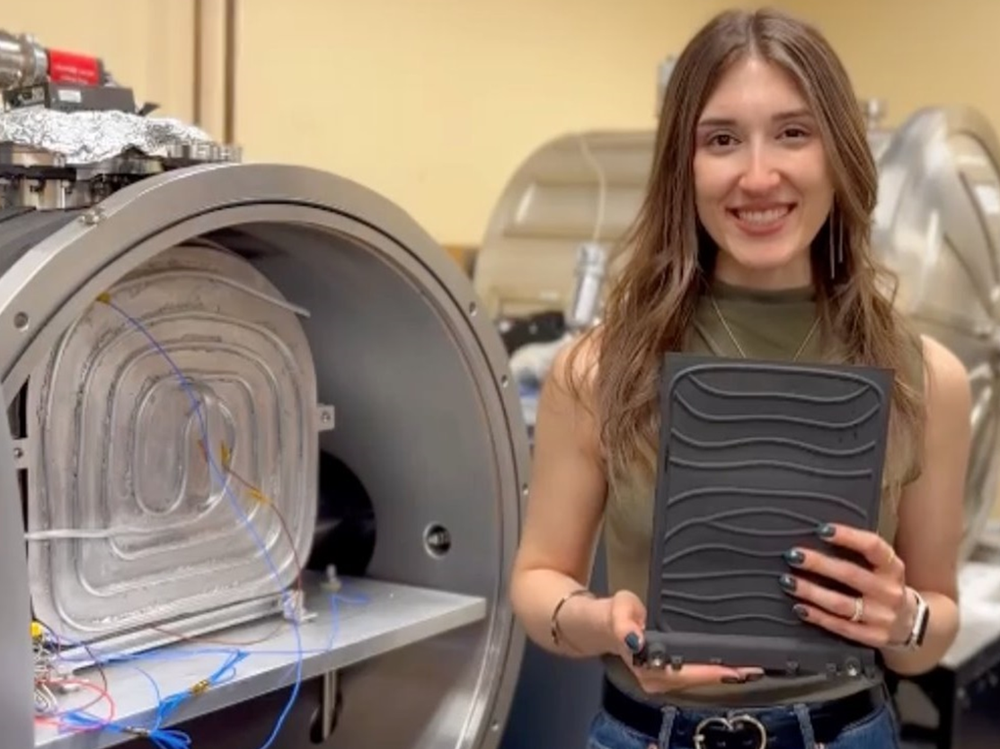
3D Systems is collaborating with researchers from Penn State University and Arizona State University on two projects sponsored by NASA intended to enable ground-breaking alternatives to current thermal management solutions for space exploration.

Severe temperature fluctuations in space can damage sensitive spacecraft components, resulting in mission failure. By combining deep applications expertise with 3D Systems’ additive manufacturing (AM) solutions comprising Direct Metal Printing (DMP) technology, tailored materials and Oqton’s 3DXpert software, the teams are engineering sophisticated thermal management solutions for the demands of next-generation satellites and space travel.

The project has resulted in processes to build embedded high-temperature passive heat pipes in heat rejection radiators that are additively manufactured in titanium. These heat pipe radiators are 50% lighter per area with increased operating temperatures compared with current state-of-the-art radiators, allowing them to radiate heat more efficiently for high-power systems.

Another AM project yielded a process to produce one of the first functional parts using nickel titanium (nitinol) shape memory alloys that can be passively actuated and deployed when heated. This passive shape memory alloy (SMA) radiator is projected to provide a deployed-to-stowed area ratio that is six times larger than currently available solutions, enabling future high-power communications and science missions in restricted CubeSat volume.

“Our long-standing R&D partnership with 3D Systems has enabled pioneering research for the use of 3D printing in aerospace applications,” says Alex Rattner, associate professor at Pennsylvania State University. “The collective expertise in both aerospace engineering and additive manufacturing is allowing us to explore advanced design strategies that are pushing the boundaries of what is considered state-of-the-art.”

More information www.3dsystems.com
Metal 3D printer with 12x larger volume

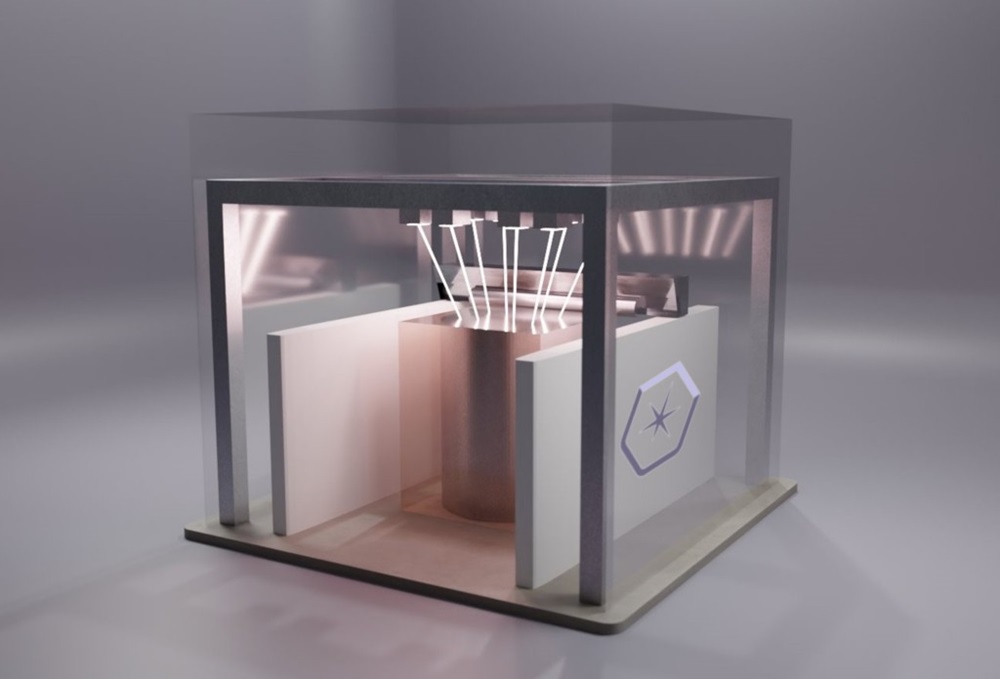
AddUp’s MASSIF (Metal Additive System, Sustainable, Industrial, Eco-Friendly) project supports a broader strategy to drive the next wave of industrial and technological innovation around large-format powder-bed fusion (PBF) metal additive manufacturing (up to 1.5 x 1.5 x 2 m). The project is designed to boost productivity, reduce costs and meet evolving sustainability goals. The first PBF machine developed around these concepts features a print volume of 750 x 750 x 1000 mm high.

The new machine will leverage the robust foundation of AddUp’s FormUp 350, a platform currently in use at customers across the aerospace, medical and other high-precision industries. According to AddUp, its MASSIF machine is set to increase productivity by 300%, drastically reducing part costs by 50-70%. Furthermore, with the capability to manufacture parts 12 times larger than current AddUp machines, the machine pushes the boundaries of scale for metal additive manufacturing.

Further benefits include powder waste below 10% and best-in-class surface finishes that minimise or eliminate the need for costly and time-consuming post-processing. Additionally, its in-process monitoring instils confidence that parts are printed correctly from the start, reducing the need for expensive QA testing.

The machine series will be developed in collaboration with companies that include Cailabs, CETIM, Dassault Systèmes, ISP Systems and Vistory. It has already been selected as the winner of the #France2030 ‘Robots and Intelligent Machines of Excellence’ programme. The first machine will be installed at CETIM’s Printing Bourges centre, where it will undergo further validation.

More information www.addupsolutions.com

3D printing an incredibly expensive metal

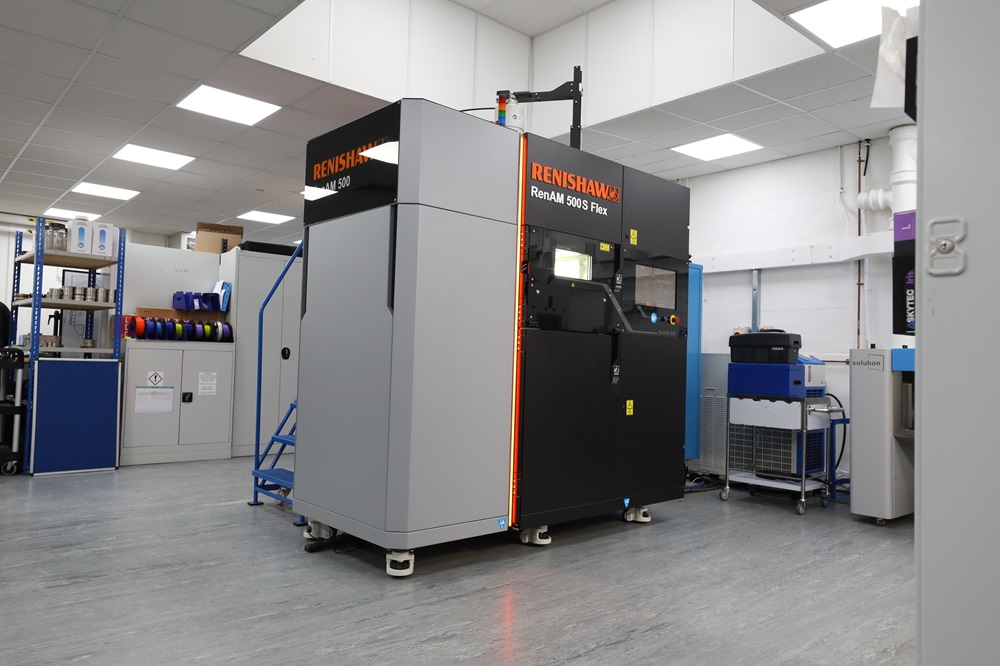
Renishaw has enabled Cookson Industrial, a UK-based specialist in precious metal additive manufacturing (AM), to reduce the cost of 3D printing platinum rhodium, one of the world’s most expensive metals. Cookson Industrial can now efficiently produce platinum rhodium components on Renishaw’s RenAM 500S Flex AM system.

Cookson Industrial, a division of Cooksongold and a subsidiary of HM Precious Metals, brings over 30 years of expertise in the design and production of precious metal alloys. The company set out to redefine platinum rhodium’s use in additive manufacturing. However, with platinum rhodium prices averaging £80,000 per kg, minimising material waste was crucial to making production commercially viable.

To meet this challenge, Cookson Industrial selected Renishaw’s RenAM 500S Flex, a laser powder-bed fusion system for R&D applications. Renishaw’s AM engineering team worked closely with Cookson Industrial to adapt the system to the specific demands of platinum rhodium production. As standard, the RenAM 500S Flex is capable of achieving powder waste levels as low as 1.5%. However, to align with Cookson Industrial’s requirements, customisations were needed to reduce it to less than 0.5%.

“Achieving near-zero wastage of platinum rhodium powder was a top priority,” explains Jason Morgan, senior applications engineer at Renishaw. “We collaborated with Cookson’s engineers to identify and eliminate potential ‘powder traps’ within the system, followed by rapid testing and redesigns to minimise waste while maintaining performance.”

Renishaw’s customisations included modifying internal system components to prevent powder accumulation, such as removing overflow bellows and optimising the rear overflow vent. Additional measures included chamber redesigns and the creation of specialised casings and covers, resulting in a 95% reduction in powder waste.

More information www.renishaw.com

SYS Systems hosts roadshow for new machine

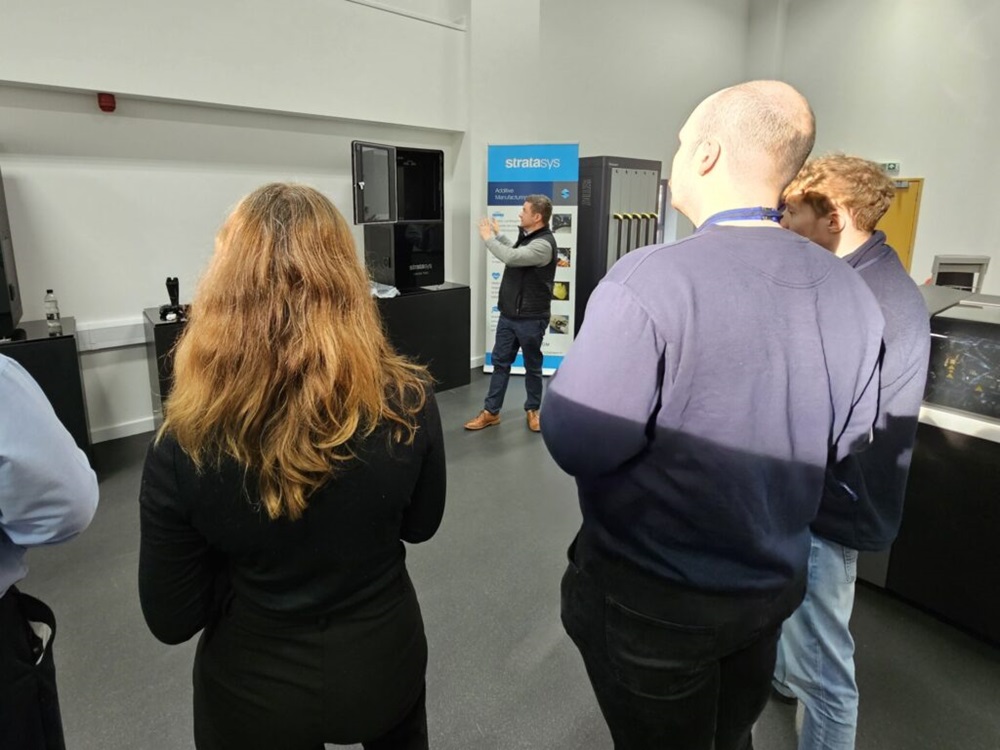
The new Stratasys Origin Two 3D printed was introduced to the UK market with a roadshow event hosted at SYS Systems in Derby earlier this month. Visitors could get up close to the Origin Two and witness P3 technology in action, with live prints showcasing speed of production and ease of use. They could also get hands on with finished components, to emphasise accuracy and surface quality, as well as the benefits of utilising Origin machines for low-volume production. 

Stratasys applications engineer Lauren Grundy delivered an insightful presentation into the latest technological advancements in the Origin Two and how it offers benefits to users, while senior applications engineer Matt Jones took a deep dive into the machine itself, showing off the key features.

Rob Thompson, group sales director of SYS Systems’ parent company Carfulan Group, says: “The Origin Two UK roadshow event was a great success and provided our visitors with invaluable knowledge to take away about this new machine. While FDM and PolyJet 3D printing are long-standing features of our offering at SYS Systems, we’re finding that P3 and Origin is becoming an increasingly viable option for manufacturers requiring detailed low-volume parts such as connectors, housings and similar components.”

Powered by a new 5K DLP projector, the heart of any DLP system, SYS Systems says that Origin Two delivers the highest accuracy and smoothest surface finish of all resin technologies. It combines 38.5 µm pixel size and tight 2.5 standard deviation projector uniformity, to deliver accuracies up to ±50-100 µm consistently across builds and printers.

More information www.sys-uk.com

Sauber Motorsports steers towards 3D printing

Sauber Motorsports, a Swiss motorsport engineering company, has selected 3D Systems’ latest polymer 3D printing technologies to accelerate innovation. Sauber intends to add 10 3D printers from 3D Systems – eight SLA 750 Dual and two PSLA 270 models – to its manufacturing workflow. The combination of these technologies – along with 3D Systems’ Accura Composite PIV, Accura Xtreme and Figure 4 ceramic-filled materials – will increase Sauber’s production capacity for wind tunnel parts.

3D Systems says that its SLA 750 Dual is the fastest stereolithography (SLA) solution available. The platform delivers a combination of print size, speed, accuracy and resolution. The two-laser configuration of this printer provides increased throughput in a smaller footprint, delivering a higher return to Sauber on its investment. 

The PSLA 270 is a high-speed, projector-based SLA additive manufacturing solution that produces high-quality parts with stable mechanical properties. Sauber is the first Formula 1 team to incorporate the recently released PSLA technology, delivering the flexibility needed to execute quick, time-sensitive changes to wind tunnel parts.  

“As a race team, Sauber is driven by its desire to win and we want to work with the latest and most innovative technologies,” says Marco Gehrig, head of mechanical & AM production at Sauber Group. “3D Systems is a pioneer in additive manufacturing, and the inventor of SLA. The benchmarks conducted on the SLA 750 yielded parts with better surface quality and required less post-processing than the current machines in use. Our team is looking forward to using the industry’s most advanced SLA technology to increase our production speed, quality and flexibility for wind tunnel parts, and accelerating our speed to track.” 

More information www.3dsystems.com