Kerf Machine Brings Next Phase Of Evolution At JW Laycock

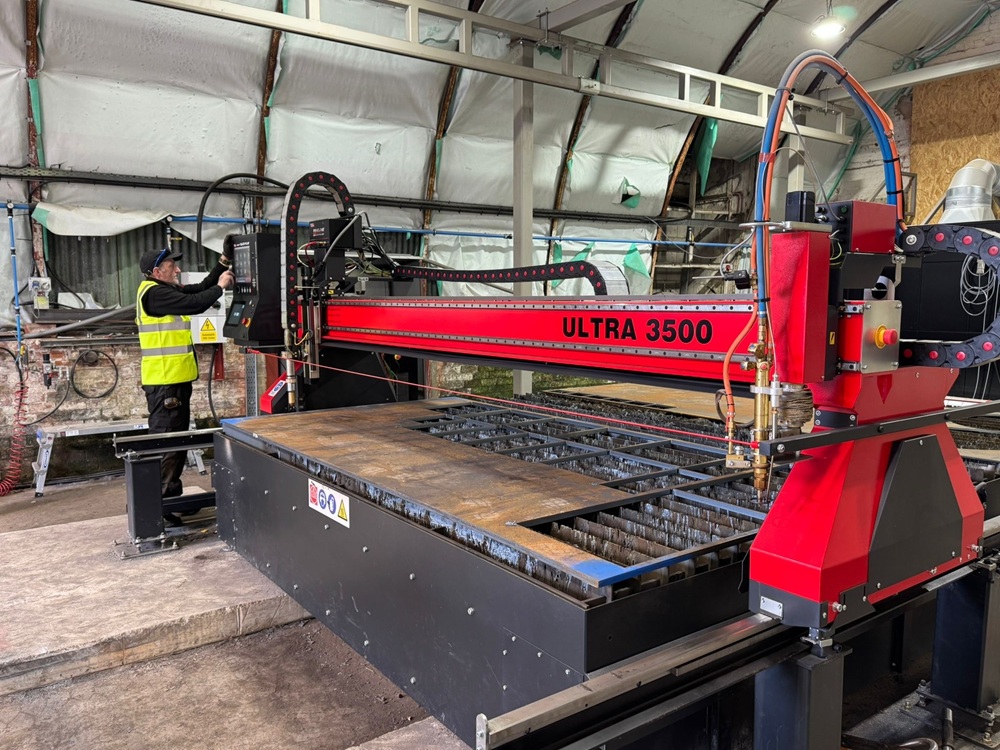
JW Laycock has transformed its plate profiling capability with an Ultra 3500 combination plasma and oxy-fuel cutting machine from Kerf Developments, reducing subcontract profiling lead times from four or five days to just hours. 

The Keighley-based steel stockholder, which traces its origins back to the 1740s, has progressively brought more processes in-house, including sawing, angle-cutting, guillotining and drilling. Profiling was the final piece of the jigsaw. 

“Our business is very much built on being reactive,” explains managing director Mark Sugden. “We could supply 9.7 tonnes of a 10-tonne order immediately, but a few profiled parts meant relying on a subcontractor and subsequently delaying delivery.” 

Installed in December 2025, the Kerf Ultra 3500 features a 3 x 4 m bed and both plasma and oxy-fuel cutting heads. Its 300A Lincoln Electric FineLine plasma technology handles the majority of JW Laycock’s work, typically 8-30 mm plate, while oxy-fuel cutting  accommodates thicknesses up to 150 mm. 

A Burny CNC controller simplifies operation through its integrated shape library and process database, automatically configuring cutting parameters for different materials and thicknesses. Automatic nesting also helps minimise material waste. 

Installation and training were completed smoothly, providing a welcome contrast to the company’s previous machine experience.  

“The Kerf experience has been seamless,” states Sugden. “I’ve handed responsibility to my team, and they have just got on with it.” 

The machine now operates around 10 hours daily, delivering at least 10% material savings and improving responsiveness. Sugden expects the investment to pay for itself within 12 months. 

With profiling now firmly under its control, JW Laycock has also recovered customers lost through previous delays. Turnover is forecast to increase from just over £2m to approximately £3.5m. 

More information www.kerfdevelopments.com

TYKMA Electrox Unveils Four Laser Marking Systems At IMTS

The recent IMTS 2026 exhibition in Chicago provided TYKMA Electrox with an opportunity to showcase four new laser marking systems, an updated large-format workstation and live automation demonstrations, highlighting the latest developments across its product portfolio. 

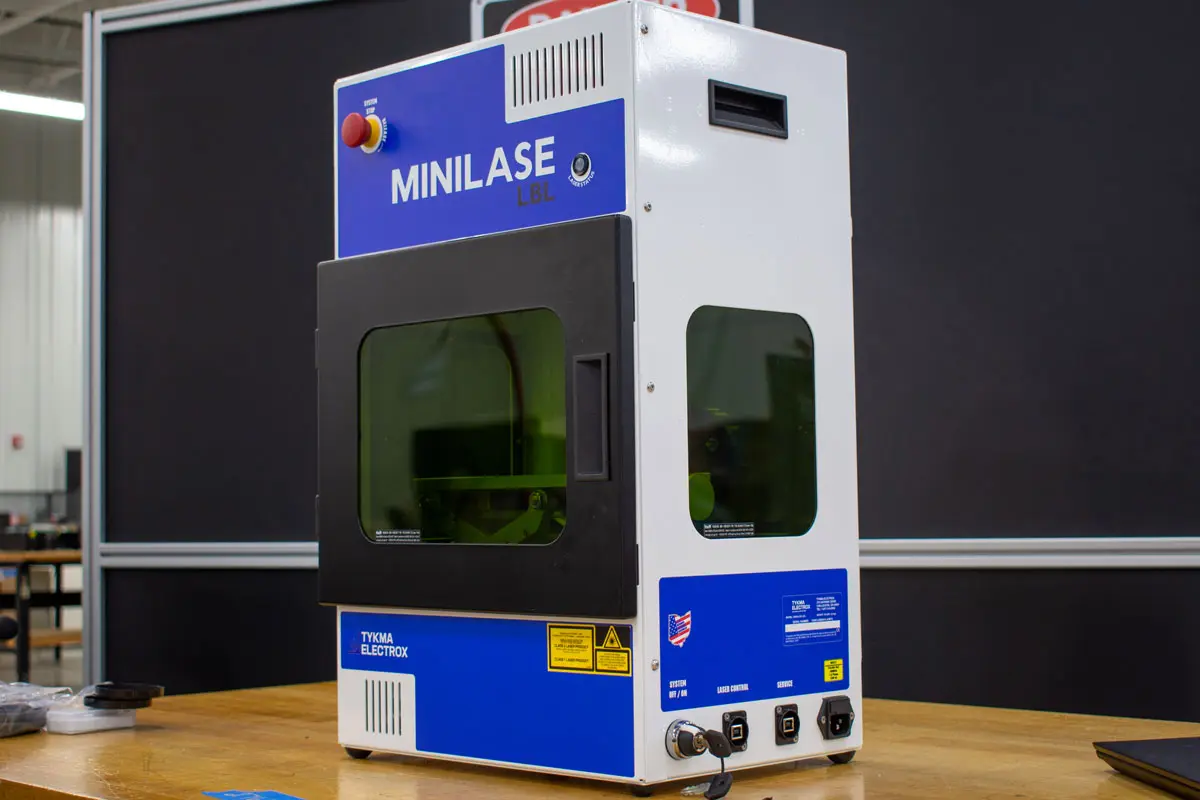
Making their show debuts were the Zetalase CK, Minilase Max, updated Minilase LBL and LaseNGo handheld mobile laser marking system. 

The Zetalase CK is a large-format workstation designed for flexible production and automation. Its spacious enclosure and pass-through openings accommodate long components, extrusions and conveyor systems. Optimised for Cerakote laser imaging, it comes with preconfigured laser settings and can be specified with fibre, MOPA, CO2, UV or picosecond laser sources. 

The compact Minilase Max offers an enlarged standard work area, with an optional 300 x 300 mm marking field through the MFSS configuration. Available with 30 and 60 W fibre lasers, it provides additional capacity for larger components and multi-part fixtures without requiring a full-size workstation. 

The updated Minilase LBL now features a standard 30 W MOPA fibre laser, offering greater marking and engraving flexibility. Relocated external connections also simplify cable management, while its compact footprint makes it suitable for production environments and mobile customisation applications. 

LaseNGo introduces handheld mobile laser marking, combining a cart-mounted MOPA laser platform with a portable scanning head. A contact-based marking nozzle and monitoring system maintain sealed surface contact, while integrated controls and status lighting give operators direct control. The system is designed for large components, assemblies and applications where moving the workpiece is impractical. 

TYKMA Electrox also presented an updated Zetalase XL, featuring redesigned cabinetry and larger side access doors. Equipped with a 100 W CO2 laser, the system featured in a live robotic automation demonstration at IMTS. 

More information www.permanentmarking.com

Boosting Tube-Cutting Efficiency With Integrated Workflows

Bodor Laser has officially launched Z, its flagship two-chuck integrated laser tube-cutting machine. The Z tube-processing system combines cutting, drilling tapping and automated material handling on one platform, helping manufacturers reduce workpiece transfers, repeated clamping and production delays. The machine is available in the UK from Bodor representative World Machinery. 

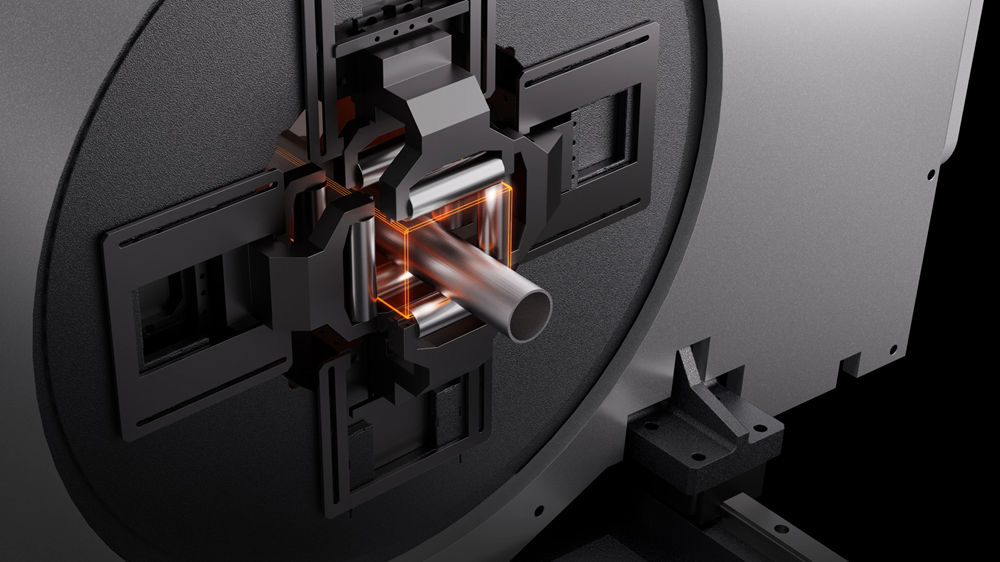
An optional drilling and tapping module, equipped with a 14-tool magazine, enables drilling, milling, tapping and friction drilling alongside laser cutting. Automatic tool changes allow multiple operations without moving components between machines, reducing handling, secondary processing and positioning errors. 

Suitable for round tubes, square/rectangular tubes, channels, I-beams and other profiles, Z serves sectors like structural steel, construction/agricultural machinery, elevators and fitness equipment. 

Intelligent sensing maintains accuracy throughout production. Chuck sensors adjust clamping force according to material, diameter and wall thickness, preventing thin-walled tubes from deforming while securing heavier sections. The system also checks clamping status and compares tube dimensions with the processing drawing, stopping if material is missing or incorrect. 

Laser scanning detects tube contours and tracks the centreline, compensating for rust, deformation and positioning deviations. A vision camera identifies weld seams, enabling the machine to avoid them or adjust its cutting path. After cutting, a 3D laser sensor checks that each section has separated completely. 

A high-speed laser-head motion axis improves cutting performance on thin-walled and small tubes, while bevel cutting up to 45° reduces grinding and preparation before welding. 

Optional automation manages loading, replenishment, unloading and sorting, with interfaces for wider production-line integration.  

Bodor Laser, which serves customers in more than 180 countries, says it ranked first globally in sales of laser cutting machines rated at 1 kW and above for seven consecutive years, from 2019 to 2025.  

More information www.worldmc.co.uk 

FIVES HPM TRANSFORMS LARGE-PART MACHINING WITH HIGH-PRECISION ROBOTICS

Machining large components requires a large CNC machine tool, right? Well, not always. What happens when the required tolerance is measured in tenths rather than hundredths of a millimetre? For some applications, investing in a CNC machine results in paying for unnecessary capability. Fives High Precision Machines (Fives HPM) says it provides a different and more effective approach with the Liné Machines RoboTDM, a high-precision robotic machining solution that brings direct milling, trimming, and drilling to large workpieces. 

With RoboTDM, set up is quicker and programming is easier, all while negating the cost and footprint of a large CNC machine. 
 
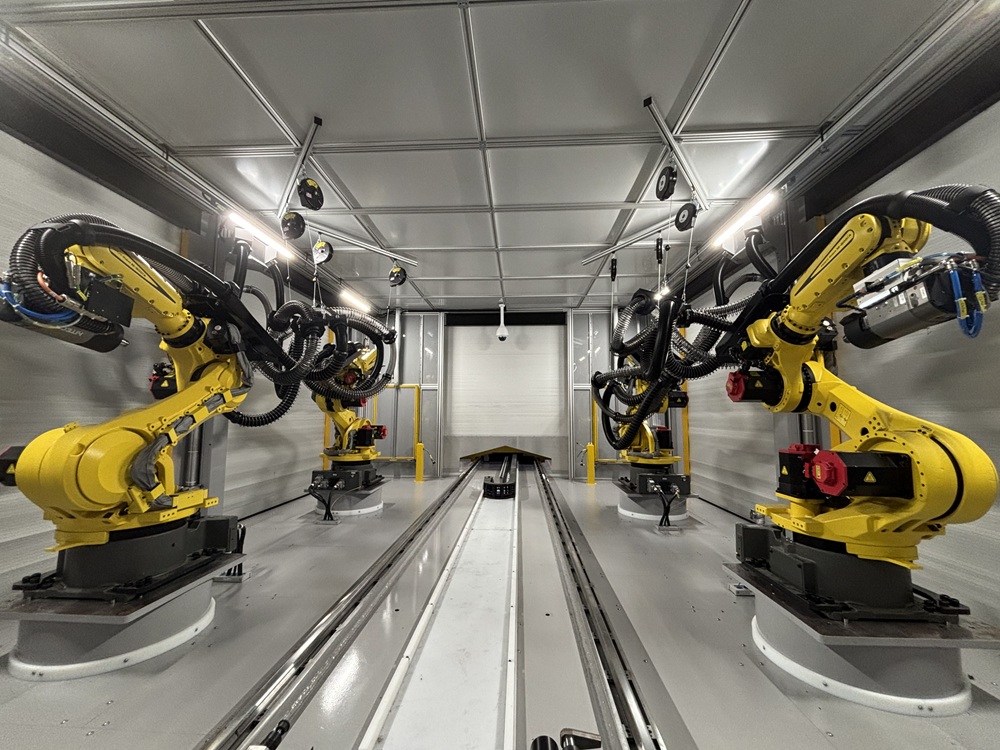
Not every large component demands ultra-high precision. For applications where tolerances down to approximately 0.1 mm are acceptable, the Liné Machines RoboTDM provides a highly attractive alternative. By equipping an industrial robot with a specialised end effector incorporating a spindle, toolholder and cutter, the system can perform material removal directly on the workpiece. 
 
The result is a flexible approach to large-part machining that reduces equipment requirements while delivering productivity gains. Potential operations include metal face milling or deburring, such as removing burrs from castings and trimming excess weld beads. It could also include drilling pilot holes on large aerospace panels or automotive body parts, as well as trimming, routing, drilling, edge contouring and pocketing on large composite or thermoplastic fabrications. 
 
Using a CNC machine tool for these applications will typically involve substantial set-up time and programming. The Liné Machines RoboTDM, part of Fives’ Material Removal (MR) business line, changes the equation. Rather than bringing the entire component into a large machine envelope, the machining capability is brought directly to the workpiece. 
 
For suitable applications, this strategy can deliver major advantages in flexibility, cost and cycle time. A Fives’ R&D project and development trials spanning several years have demonstrated cycle time reductions of up to 70% in trimming and milling, with some individual applications achieving even greater savings. 
 
The technology therefore addresses a simple but increasingly important manufacturing question: does the application actually necessitate a large CNC machine, or does it simply require a reliable and accurate way of putting a cutting tool in the right place? 
 
Industrial robots have traditionally struggled to answer that question. Their inherent flexibility comes at the expense of positional accuracy, with conventional systems typically achieving tolerances of around 0.3 mm – insufficient for many machining applications. 

The development work for RoboTDM focused on closing the accuracy gap through high-precision robotic machining (HPRM). Here, robot calibration techniques, together with advanced look-ahead and motion-planning algorithms, allow the processing of programs containing more than one million points without the latency that can otherwise compromise robot motion. The result is smoother trajectory execution, supporting multi-axis contouring and complex machining operations in a way that is more closely comparable with CNC machining. 
 
RoboTDM can reduce machining deviation up to 100 μm (0.1 mm). This represents a threefold improvement over conventional robotic accuracy and changes the range of applications for which robotic machining becomes viable. 
 
It is possible to configure the machining end effector with different spindle sizes, power ratings, torque and speed according to the task. Available systems can provide spindle power of up to 125 kW, torque of up to 80 Nm, and speeds reaching 30,000 rpm, with HSK A63, HSK F63 or HSK A100 taper tool holders. 
 
In addition, RoboTDM can incorporate automatic tool changing, tool measurement, tool-breakage detection and part probing, while a vision system can support drilling applications. 
 
However, machining is not the only technology suitable for integration. RoboTDM systems are also configurable for processes including waterjet cutting, laser profiling and ultrasonic cutting. 
 
The physical flexibility of a robot is again valuable when manufacturing components that are too large or awkward to justify moving through a conventional machine tool. 
 
RoboTDM is configurable with multiple workstations and customised peripheral equipment, while its relatively modest foundation requirements simplify installation compared with a large CNC machine tool. This factor can prove particularly attractive in sectors such as aerospace, defence, maritime and energy, where component dimensions can be substantial and production requirements vary considerably. 

Of course, the technology does not pretend to solve every machining challenge. Where tolerances tighter than 0.1 mm are necessary, a high-precision CNC machine remains the appropriate choice. In this respect, RoboTDM is complementary to Liné Machines and the wider Fives HPM portfolio of high-precision machine tools. 
 
RoboTDM represents another interpretation of Fives HPM’s ‘precision at scale’ cross-brand mantra. In this case, scale means finding a smarter way to manufacture large components while applying precisely the level of accuracy demanded by the application. 
 
The technology also illustrates the value of bringing specialist capabilities of many individual brands together under the newly unified Fives HPM banner. Here, the Liné Machines brand contributes decades of expertise and pioneering in large-scale milling and material-removal processes. 
 
As a point of note, the development of RoboTDM originated directly from the requirements of customers. It reflects Fives HPM’s approach to engineering solutions around specific manufacturing challenges rather than forcing applications to fit standard equipment. 
 
Notably, Fives Liné Machines Inc, now parts of Fives HPM, has had a strong presence on the North American continent for almost 50 years with its facility in Granby, Quebec, Canada. The manufacturing plant produces both Liné CNC machine tools and robotic solutions, including the RoboTDM. The site also provides access to support activities that include engineering, integration, automation, service, training and more across equipment lifecycles. 
 
Ultimately, by achieving a level of accuracy that is sufficient for a range of large-part applications, RoboTDM gives manufacturers another option between conventional robotics and the cost of a large CNC machine tools. For the right component, it can mean lower capital investment, simpler installation, greater flexibility and shorter cycle times. 

More information www.fivesgroup.com 
Open House

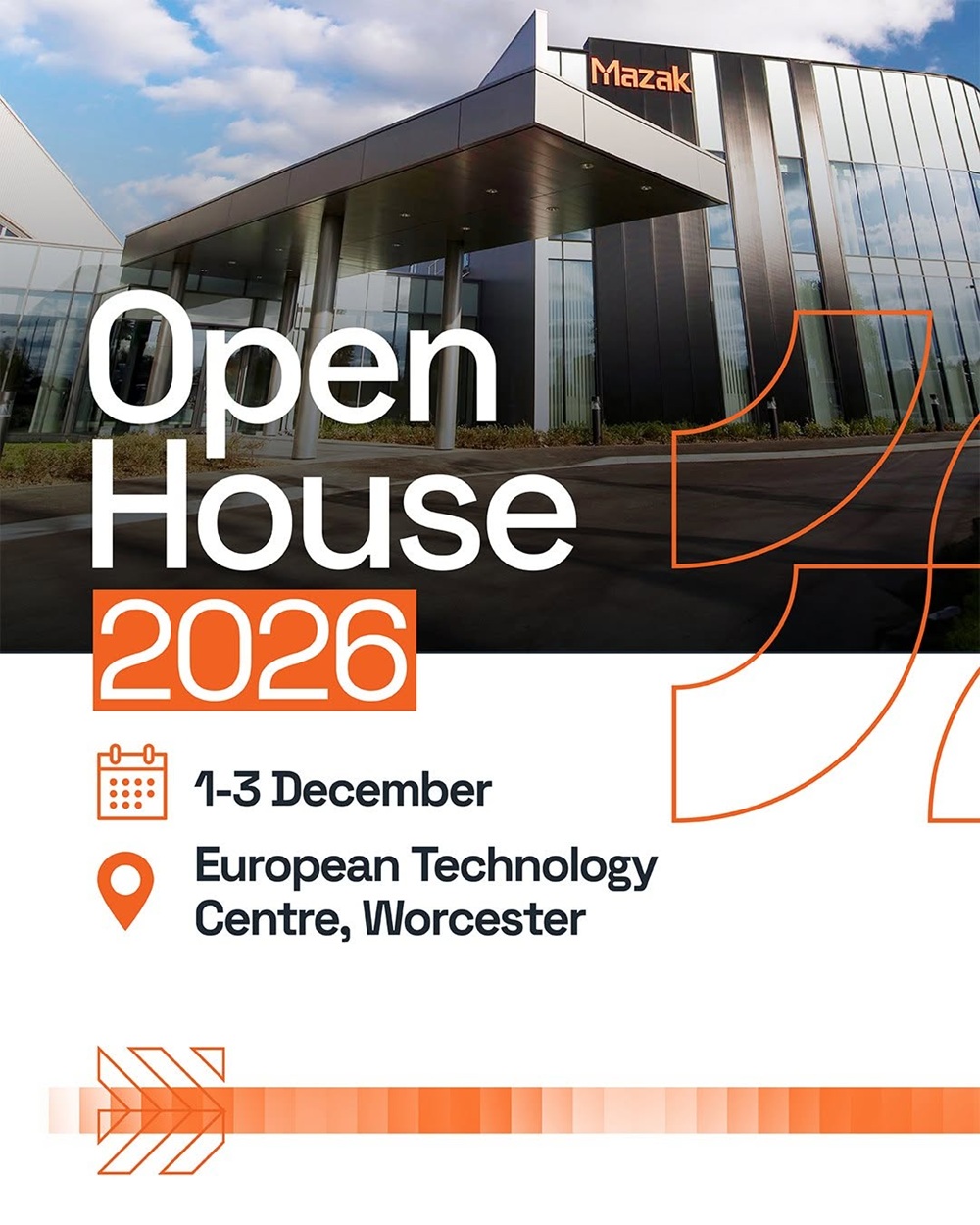
Registration is now open for Mazak’s 2026 open house at the company’s European headquarters in Worcester, UK. Visitors to the three-day event on 1 to 3 December will be able to see 19 CNC machine tools and laser cutters performing live demonstrations. Whether visitors are looking to increase capacity, improve efficiency or solve production challenges, Mazak experts are ready to help. Step inside an actual UK machine tool manufacturer from 09:00 to 15:00 each day. Mazak will provide a welcome breakfast, guided factory tours and lunch. 

Register at https://bit.ly/4hUDWnq