
Productivity and process stability in cast-iron machining

As global manufacturing continues to face pressure from raw material volatility and supply chain concentration, machine shops are reassessing how critical tool materials are deployed within their processes.

Tungsten carbide remains indispensable across a wide range of applications. However, its reliance on tungsten, a strategically sensitive material, is prompting manufacturers to reconsider where it delivers maximum value and where alternatives can offer distinct technical advantages.

With expertise in ceramic material engineering and application development, NTK continues to advance cutting tool performance in demanding environments. In cast-iron machining, engineered ceramic grades provide a highly robust solution for high-temperature applications.

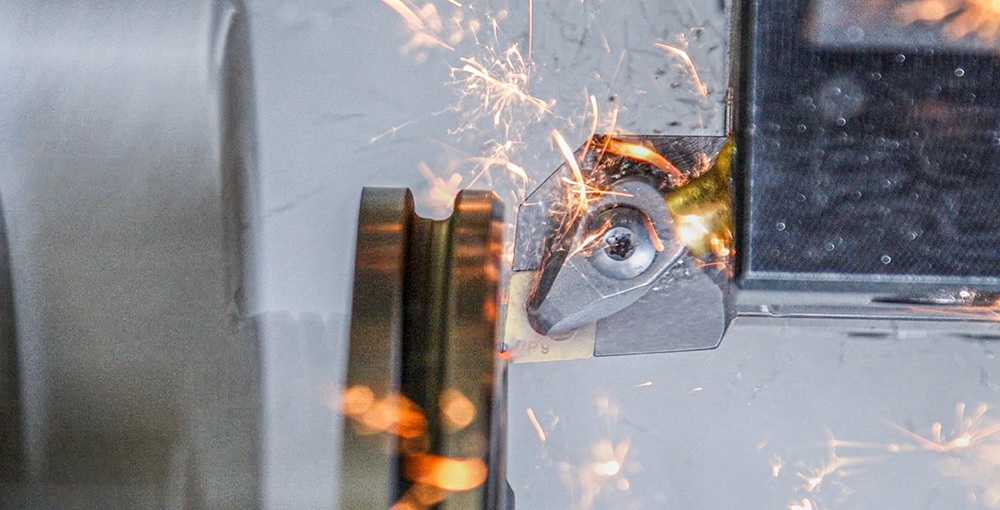
Machining cast iron generates extreme cutting temperatures, particularly in dry and high-speed operations. Under these conditions, alumina- and silicon-nitride-based ceramics retain hardness and wear resistance beyond conventional carbide limits. In stable, heat-dominated processes, they enable higher cutting speeds, shorter cycle times, consistent wear behaviour and reliable dry machining performance – benefits grounded in material science and proven in production environments.

Ceramics are not intended to replace carbide across all operations. Carbide remains the preferred choice for heavy interruptions, unstable set-ups and applications requiring maximum edge toughness. The opportunity lies in identifying operations driven primarily by thermal load rather than mechanical shock. In these conditions, ceramic grades can deliver measurable productivity gains, while carbide continues to excel where toughness is critical.

NTK’s ceramic portfolio includes SP9, SX6 and HC1/HW2 grades, developed specifically for cast-iron machining. Widely used across automotive, heavy equipment and industrial casting sectors, these solutions have demonstrated increased cutting speeds and productivity in components such as wheel hubs and structural housings, while supporting more efficient, lower-resource manufacturing.

More information www.ntkcuttingtools.com
Horn stresses economy of sintered chip-breaker geometries

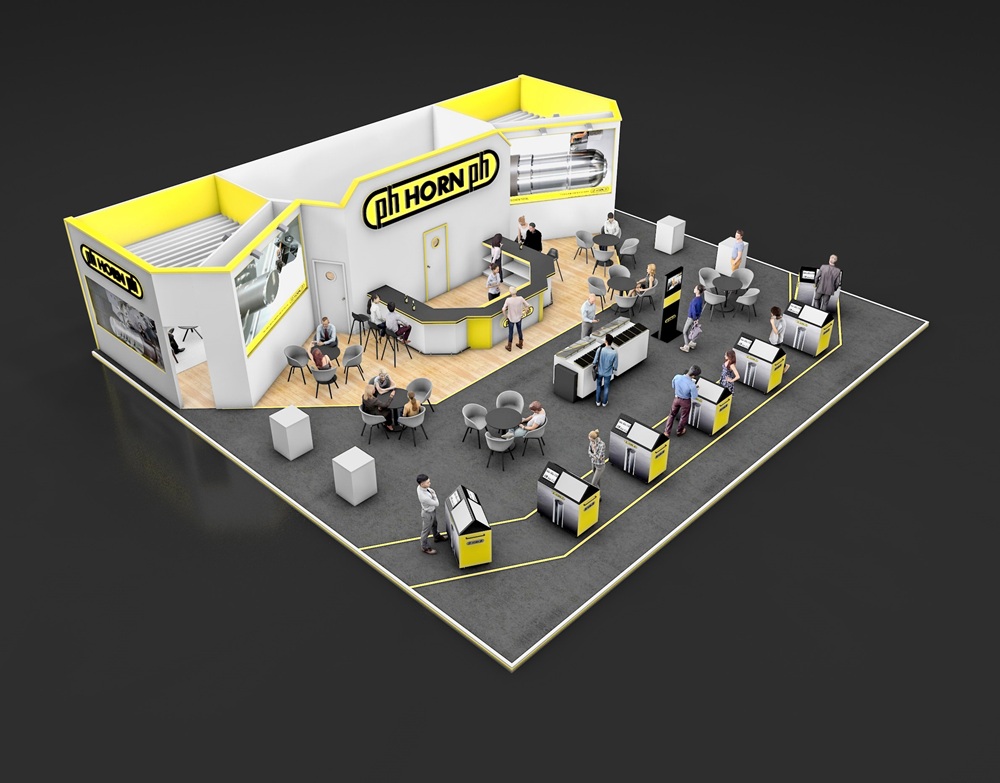
Horn is presenting no fewer than 20 new or recently introduced cutting tool products on its 232m² stand (6-210) at MACH 2026 (NEC Birmingham, 20-24 April). A key focus is the company’s carbide inserts featuring chip-breaking geometry pressed directly into the green blank before sintering, delivering high-speed, repeatable and cost-efficient production.

This approach removes the need for post-sintering laser cutting or grinding, traditionally required for miniature inserts due to the difficulty of maintaining precision during heating. With these challenges now overcome, new Supermini type 105 GM (geometry moulded) inserts are priced comparably to standard versions without chip breakers.

As with machined geometries, the sintered designs eliminate long, stringy swarf that can damage tools or workpieces. Suitable for boring and internal threading in holes down to 4 mm diameter, the inserts use teardrop-shaped blanks to maximise contact area in the holder, improving rigidity, preventing twist and maintaining accurate centre height. This design enhances stability, particularly in long overhang applications.

Available in TH35 and IG35 grades, the inserts are compatible with a wide range of holders and support internal coolant delivery. The Supermini system comprises around 2500 standard variants.

Further highlights include new GM inserts for metric ISO internal threading, first shown at EMO 2025, delivering reliable chip control in hole diameters from 5 mm. The Mini 114 system for deep axial grooving (up to 10 mm) and Mini 111 and 108 inserts with sintered I-geometry also feature, enabling effective chip breaking in finishing applications. Also on show is the six-edged 66T grooving system, offering increased depth capability and competitive cost per edge, alongside the S234 system for parting off to depths of 33 mm with high process reliability.

More information www.horn-group.com

MACH 2026: Mapal presents latest tooling solutions

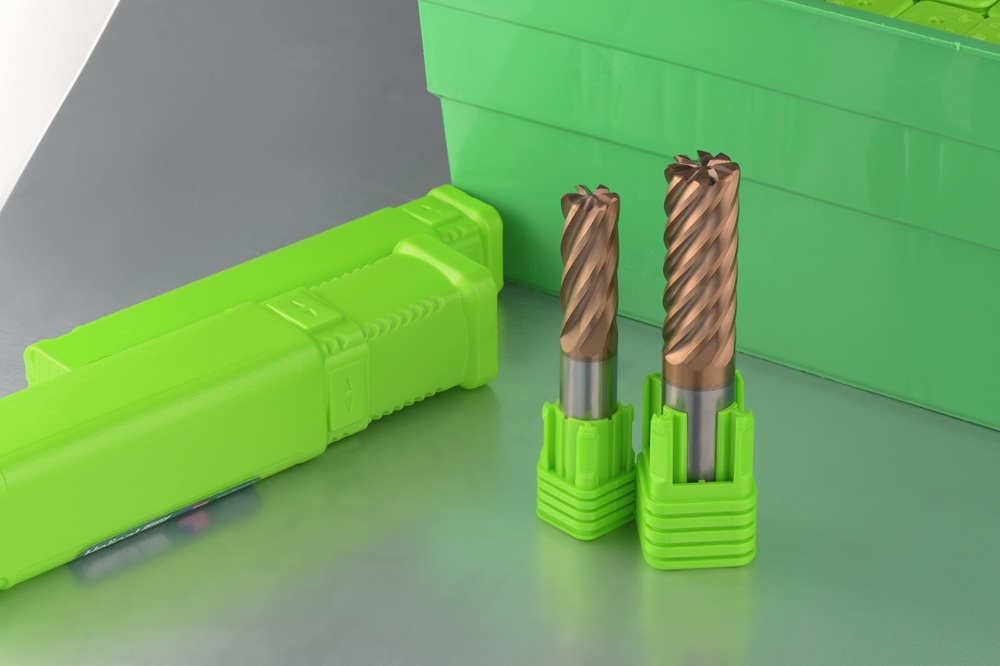
Tooling specialist Mapal is attending MACH 2026 (NEC Birmingham, 20-24 April), highlighting its latest and most innovative solutions. Among many highlights is the OptiMill-Uni-HPC, the third generation of the Mapal solid-carbide milling cutter. Optimised for automated manufacturing environments, the company says this high-performance tool delivers high cutting efficiency, making it suitable for demanding machining operations.

Also on stand 20-340 is the new NeoMill-16-Finish milling cutter, developed to meet tough requirements for surface finish and dimensional accuracy in the series production of steel and cast materials. The NeoMill-16-Face proves an economical tool for pre-machining milling applications, suited to machining cast and steel parts. Equipped with 16 cutting edges on the indexable insert, it enables low cost per part while maintaining stable and reliable machining processes, reports Mapal.


Elsewhere on the stand is the NeoMill-Alu-Rough, a milling solution developed specifically for roughing aluminium components. Tailored to the requirements of the automotive and aerospace industries, this tool is both effective and productive, even at very high chip volumes.


A focus within fluid power and hydraulic manufacturing sectors are two new spool bore solutions. A pilot drill with three or five cutting edges for different casting properties, enables efficient and economical component piloting, reducing machining steps and saving tool changes. While the three-lipped core drill is used for stable raw parts, the option with five cutting edges offers precise results at high feeds in unstable casting conditions.

Like the pilot drill with three cutting edges, the solid-carbide boring tool with three cutting edges is based on Mapal’s patented multi-chamfer technology. This design ensures clean chip removal and no ring formation in the cavities due to special bore geometry, including at drilling depths up to 10xD.

More information www.mapal.com

Harvey Performance introduces Helical Solutions at MACH

Harvey Performance Co, a provider of specialised cutting tools for precision machining applications, has announced that Helical Solutions, its leading North American end mill brand, is exhibiting at MACH 2026. The move follows the launch of its European operations and a European-inspired product range in January. The brand can be found on stand 20-448.

Helical has earned a reputation in North America for advanced machining, delivering material-specific, high-performance end mills trusted by manufacturers in aerospace, automotive, medical and other production-driven industries. This portfolio of products is making its MACH exhibition premiere at the NEC in Birmingham on 20-24 April.

With its European exhibition debut, Helical is presenting proven innovations from across the Atlantic with a product line up fully re-engineered for European applications. Produced locally in the Netherlands and supported by rapid regional fulfilment, this next generation of Helical tooling ensures machinists gain category-defining performance while strengthening the competitiveness of European manufacturing.

“Helical has proven its performance across North America, and this launch will ensure machinists in Europe experience the same advantages,” says Jerry Gleisner, senior vice president of sales at Harvey Performance Co.

John Gibbons, president of Harvey Performance Co Europe, adds. “By producing locally and partnering closely with distributors, we’re not just bringing Helical to Europe, we’re giving European manufacturers the same competitive edge trusted by the world’s most advanced industries, with the speed and support that only local presence can provide.”

The European launch has already commenced with a curated portfolio of Helical Solutions’ most in-demand high-performance end mills, specifically engineered in metric dimensions. These are being presented for the first time at MACH.

More information www.helicaltool.com/find-a-distributor

Launching CoroMill MR20 for controlled, stable profile milling

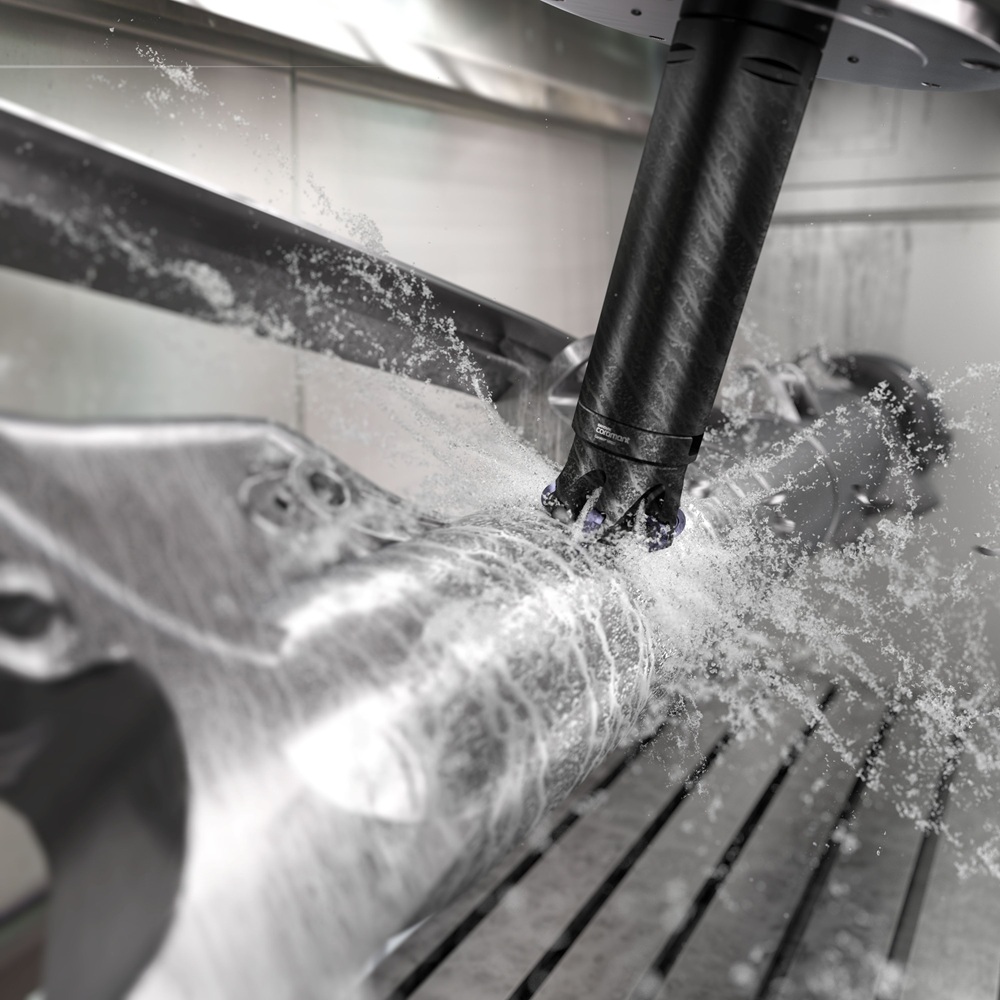
Cutting tool specialist Sandvik Coromant has launched its CoroMill MR20, an indexable milling concept engineered to deliver stability, predictable performance and high metal removal rates across demanding materials and applications. Designed for manufacturers that require process security, the new indexable-insert cutter brings both confidence and productivity to profiling and face milling operations, reports the company.

CoroMill MR20 is a single-sided round-insert concept for ISO M, ISO S and ISO P materials. Its combination of security and versatility makes it suitable for pocketing and complex profiling in titanium and other HRSA materials used for aerospace and oil and gas components. The tool also excels in ISO P mould and die applications, delivering reliable roughing and semi-finishing performance. In ISO M materials, it handles heavy metal removal for pump and valve components with the high predictability and productivity these industries demand. CoroMill MR20 is now Sandvik Coromant’s first-choice solution for these applications.

“Our goal while developing CoroMill MR20 was to create a polyvalent cutter that offers the highest level of process security,” says Alvaro Ruiz, global product application specialist. “Customers machining high-value components need predictable, repeatable performance, which CoroMill MR20 delivers.”

CoroMill MR20 is engineered not only for performance but also for more sustainable machining. By enabling higher feed per tooth, the tool reduces the energy required during machining. Its long tool life means fewer inserts are consumed, lowering the overall carbon footprint associated with production.

“Increasing feed capability while extending tool life means fewer resources used and less waste generated,” confirms Ruiz. “It’s a win for productivity and for sustainability.”More information www.sandvik.coromant.com