
New horizons in aerostructure machining

Today, more than half a century after singer Gene Pitney put America’s southern central state of Oklahoma on the world map with his hit song ’24 hours from Tulsa’, another phenomenon is bringing global recognition to the area – Orizon Aerostructures.

Orizon Aerostructures is a manufacturing and technology company that is building something unique in the Midwest with six locations and 763 employees dedicated to aerospace manufacturing and complex sub-assemblies. The company has almost 780,000 sq ft of production space at sites in Kansas and Missouri, as well as Oklahoma, including four machining locations which between them utilise 100 CNC machines (50 of which have five axes or more). But it is the company’s newest plant in Grove, a little under a 90-minute drive from Tulsa, where a new tune in manufacturing excellence is being played.
In a purpose-built factory that is part of a total investment of $50m in 10 Ecospeed F2060 machines, Orizon has installed a flexible manufacturing system (FMS) based around nine Starrag five-axis Ecospeed machining centres. And it is setting new standards in the machining (predominantly milling) of aerostructures.
The FMS – the largest integrated system of its type in the western hemisphere – is enabling the company to achieve: at least a 30% reduction in machining times across all the parts, compared to former methods; a massive improvement in surface finish with much less deburring and polishing requirements; and a good revenue-to-capex ratio.
Using the Ecospeed, it is possible to convert a 550 kg aluminium billet into a 24 kg complex structural part in less than four hours when the machine is running at a maximum cutting volume of
up to 10,000 cm3/min.

Incorporating the nine high-speed (50 m/min traverse rate) Ecospeeds that are fed by an automated rail-guided, 18-station pallet system and completed by an integrated washing/drying cell, the FMS is manned by just five people on each of the two daily shifts (for 24/7 operations). A range of aerostructures is produced, primarily wing spars, skins and bulk heads.
CEO Charlie Newell says: “In October 2016, we began dreaming of building something unique, and building it in just 12 months: a new factory to house a new FMS that would produce machining efficiencies to surpass anything we’d ever encountered. Working from the start with Starrag, together we have created an unbelievably formidable and highly successful partnership for the world-class machining of aerostructure parts. It was clear, even before the first machine sale, that Starrag was willing to listen and to share and support our vision. Starrag has done this by, for example, offering excellent levels of knowledge transfer and assisting us to develop the appropriate processes around our business systems.
“These include standardising machining operations across all the parts and, for instance, the use of online diagnostic tools that enable us to ‘interrogate’ the system or individual machines via smartphones, iPads or desktop computers at any time of the day or night,” he adds.
Online diagnostics are just one aspect – and benefit – of Starrag’s Integrated Production System (IPS), a modular digital platform that offers users a suite of functionality to meet individual tasks, including: cloud-based solutions help users analyse and optimise processes more specifically to further increase productivity; and a machine production system that monitors manufacturing in real time and protects against incorrect operation/collisions.
“We chose Starrag Ecospeed F2060s, each with a Sprint Z3 parallel kinematic machining head and an angular milling head, because the machine produced everything Starrag said it would in terms of metal removal, reliable uptime and excellent surface finishes,” says Orizon president Henry Newell.
It was not, however, a case of Orizon simply placing an order for the initial six machines for the FMS. The company first installed a stand-alone Ecospeed with the Z3 head to test the machine’s effectiveness and efficiency on production parts.
Orizon’s original Ecospeed F2060 sits alone in its own area, enabling the factory floor to host the FMS, which began development as a six-machine system. The first F2060 for the FMS was installed in January 2017, followed two months later by the pallet changer, and the system was in production by October 2017. A year later, three additional Ecospeeds were added and, importantly, these latter three machines did not add any labour overhead to the system; just revenue.

Starrag’s Ecospeed F2060 has travels in X, Y and Z of 6300 x 2500 x 670 mm (spindle in horizontal position) and traverse rates of 50 m/min in each axis. In addition, the ±45° A/B axis is complemented by a 30,000 rpm, 120 kW spindle that offers a torque of 83 Nm. The specification is additionally enhanced on the highly dynamic machine by acceleration rates of up to 1 g in all five axes, and jerk up to 200 m/s³.
The load/unload station sees the parts loaded manually and clamped by a mixture of vacuum and mechanical clamps, with the pallet in the horizontal position. Once loaded, the pallet is tilted 90° and moved into the 270-ft long FMS, with the cell controller ‘deciding’ which machine will process which pallet.
With common tooling held by each of the Ecospeed’s 129-station tool changers, meaning that any F2060 can machine any part in any order, the cell control system provides for flexible manufacturing. Orizon worked closely with Starrag to standardise the tooling and machining speeds and feeds, as well as programming routines, to enable this high-level flexibility.
After machining, the pallet moves to the wash/dry station where high-pressure wash nozzles direct angled jets to reach every corner of a part before an air blast is used for drying. That said, by using MQL, workpieces enter the wash station bearing a relatively low amount of swarf/cutting fluid. Upon unloading, the pallet returns to the horizontal and each part is removed from the system for deburring, then on to a CMM for 100% inspection.
Orizon operators undertake basic maintenance routines, which are complemented by Starrag’s Service Plus preventative maintenance scheme, where an annual fee covers every eventuality and guarantees service response times, inspection and repair.
For further information www.starrag.com

Hurco machines help Cowie double in size

Over the past eight years, Cumbernauld-based contract machining specialist Cowie Engineering has doubled annual turnover, increased headcount from 13 to 24, and acquired (in 2013) an adjacent factory unit of equal size to the original, raising the total floor area to 9500 sq ft. During this time, the number of vertical machining centres on the shop floor, all of which are from Hurco, has also doubled, to 10. Additionally, a Hurco 10” chuck CNC lathe has been on-site since 2011.

The latest Hurco addition is a VMX60SRTi five-axis VMC with swivelling spindle head and flush rotary table, a design that is providing maximum working volume for the single set-up machining of larger parts used in the oil and gas industry. This machine is also allowing the subcontractor to gain extra contracts from the motorsport sector, particularly for high-tolerance components produced in one hit from materials such as from stainless steel and steel alloys, through to aluminium and plastics. The use of linear scales rather than encoders for positional feedback from the linear axes, together with Renishaw part probing and tool length setting, provide the elevated levels of precision demanded in race-car construction.
Typical tolerances held are from ±0.05 mm, down to 8 or 9 µm total. This demand has necessitated the installation of a new CMM, an Aberlink Axiom Too, in a temperature-controlled room. In addition, a full-time inspector has been appointed to verify that Formula One components coming off the Hurco machines, and others, are compliant.
Prior to the arrival of the VMX60SRTi, the most recent VMC additions (in 2018) were two of the manufacturer’s latest generation VM10i machining centre, one of which has a 4th-axis. These models were preceded by the arrival of a VMX42T and a VM2, both of which were installed in 2016 equipped with Hurco 4th-axis rotary tables. Other equipment in use includes seven more lathes and a Sodick CNC
wire-erosion machine.

Ross and Grant Cowie, sons of company founder Rodger, together with his wife Cathie and daughter Julie (who has just qualified as a chartered accountant), all work full-time in the business. Cowie Engineering was established in 1999 and, at the start, all machining was carried out on manual mills and a lathe. However, it was less than two years before the first CNC machine arrived, a second-hand Hurco BMC25 with a 1050 x 500 mm table, which allowed larger and more complex components to be produced.
The North Lanarkshire company has standardised on this make of VMC ever since, due to the reliability of that early model together with the speed and user-friendliness of the conversational control, originally Ultimax and now called WinMAX. It was and still is ideal for producing the subcontractor’s small batches of one-off up to 50-off.
Other Hurco machines followed: a VMX30 in 2011 which replaced the original VMC; a Hurco BMC4020 with 1220 x 510 mm table in 2004; a VMX64 with an even larger table and 4th axis in 2009; and a pair of smaller VM1 models shortly afterwards.

The type of work undertaken by the ISO9001-accredited firm has changed over time. Early contracts were mainly in mining, defence, construction and bottling, as well as in food and switchgear, but more business today comes from the latter two sectors, along with motorsport, the electrical industry and, increasingly, oil and gas, which now appears to be emerging strongly from a marked and sustained downturn.
New also in Cumbernauld in the past couple of years has been the installation of an offline CADCAM system from OneCNC. Previously, all programs for the VMCs were created at the Ultimax/WinMAX controls using touchscreen conversational menus, sometimes with direct input of DXF data to describe more complex geometry.
Now, with the arrival of the CAD package, sections of ISO blocks can be extracted and inserted anywhere within a conversationally created cycle, any number of times, to stitch together a complete part program using the NC Merge feature within WinMAX. This capability considerably advances the subcontractor’s programming capability.
Further useful features within the latest version of the Windows-based WinMAX software exploited by Cowie Engineering include: ‘Mill Polygon’, which facilitates milling a multi-sided contour with equal-length sides; and ‘Mill Slot’, which creates a slot defined by a line or an arc segment and a width, the slot ends being round or square. ‘Swept Surface’ functionality built into the control also continues to be used frequently. This function allows a 2D surface to be moved along a contour to create smooth 3D geometries within one conversational data block.
Company director Ross Cowie says: “We have historically machined a lot of stainless steel, particularly for the food industry, and the material still accounts for around a fifth of throughput. Lately, new contracts have introduced diverse engineering steels as well as challenging alloys such as Duplex, Inconel and titanium, plus more aluminium and plastics.

“We use our Hurco 4th axis tables regularly to gain access to parts for machining on multiple sides, hopefully in one hit,” he continues. “We position them individually with or without a tailstock, or alternatively mount multiple parts on a trunnion for indexing. Sometimes we machine components requiring full simultaneous 4-axis cycles.”
Today, the subcontractor is renowned for its quick turnaround and high-quality work. The third trainee since 2011 has started his apprenticeship and the first two are established members of staff, helping to assuage a lack of skilled operators in Scotland. Continued success in the future will be secured by the firm’s track record of business retention, some current customers having been served by the subcontractor since the very early days.
For further information www.hurco.co.uk

Investment cuts process time by 60%

Axminster Tools has established itself as a market leader in the mail order tools and machinery industry, having supplied premium quality products throughout Europe for over 45 years. This family-built business based in Devon has a proud heritage of UK manufacturing operations, and recently invested in a new sliding-head lathe from Star GB to expand upon its already impressive array of machines.

Axminster sources products from all over the world, as well as supporting a number of specialist UK companies. With over 17,000 products lines, a multitude of brands and ranges are brought together on the company’s website and in its stores. Boasting steady year-on-year growth through product innovation, competitive pricing and a commitment to customer satisfaction, Axminster’s management team recently decided to further enhance business by investing in the company’s manufacturing processes. The upgrades would allow Axminster Tools to become more efficient, increase productivity and open new opportunities to develop its product range.
With an SR-32J and SR-38 Type B from Star already on-site, and a relationship with the machine-tool supplier dating back over five years, Axminster’s supply chain director Andrew Parkhouse had no question of where to place his trust for guidance on the company’s latest project.
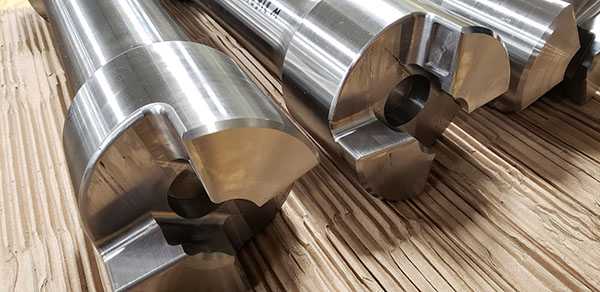
The project focused on a chuck jaw (pictured) for a woodturning lathe, originally produced locally in small quantities over 30 years ago. As demand increased, the company began sourcing the parts overseas to cope with growing volumes, but was faced with quality concerns that led Axminster to bring the component back in-house, where it has since remained for several years.
With production demand in the region of 25,000 units per annum, and current methods of manufacture requiring five operations, including milling, grinding and finishing, the company challenged Star to produce the jaw in a single operation.

The applications team at Star was confident the project was well-suited to a sliding-head lathe and set about selecting the ideal machine for the job. Star was then able to provide a competitive cycle time estimate which would allow Axminster to produce the components more efficiently and increase profitability.
Star’s SV-38R, with its capabilities and flexibility, made the machine a firm favourite for the project. Axminster commissioned a turnkey package and began building an extension to its facility to accommodate the new machine upon completion.
The high-specification machine chosen combines the fast processing ability of a traditional platen-type sliding-head lathe with the flexibility of a turret machine, to enable simultaneous machining operations. The turret allows for a substantial number of tools to be mounted and includes an independent Z3 axis, enabling two different features to be machined at the same time using Star’s ‘super-position’ control mode.
Fanuc’s 31i-B5 control delivers full five-axis capability, permitting complex components to be processed. In addition, the B-axis tool holders on the turret enable angular features to be machined on both the main and sub-spindle.
A sub-spindle with independent eight-station platen increases overlapped machining possibilities, while the Y2 axis on the sub-spindle platen allows both cross working and front-facing power tools to be mounted in any station. The flexibility of the Star SV-38R is further enhanced by its ability to switch between guide bush mode (Swiss type) and non-guide bush mode.

Through combining the machine’s balanced milling capability, specialist tooling up to 75 mm diameter and comprehensive process development, the final manufacturing time was reduced by 60% in comparison with the existing method. In addition to a faster cutting cycle, component quality has also significantly improved as a result of ‘one-hit’ machining, reducing the process down from the previous five operations.
Parkhouse says: “The SV-38R is a significant investment and we are confident that it will allow Axminster to progress to the next level. Our new machine will only run these parts for the majority of its service, however, we highly value the additional capabilities it gives us to develop other products in the future.
“At present, the machine also significantly releases capacity on our other machines to truly maximise the machining potential of our business,” he adds. “There are exciting times ahead for Axminster and we can’t wait to further reap the benefits of our continued investment in Star and its technology.”
Following the successful pass-off and delivery of the new machine, Axminster’s engineers underwent programmer training at Star’s UK headquarters in Derby followed by on-site setting and operation training. Included in the package was Star’s programming software, PU-JR. This editor makes programming the three-channel machine more efficient, allowing Axminster’s setters to generate complicated programs quickly and easily.

Says Parkhouse: “Our machinist, Marika, is particularly excited about the new machine. She has been with us a relatively short amount of time but took a liking to the Star sliding-head machines very early on. Marika joined us with little machining experience but is now operating, setting and programming all of our machines. With Star’s help, she will be up to speed with the SV-38R in no time.”
Moving forward, Axminster is forecasting continued growth with an ongoing investment strategy to keep up with the fast-moving industry it supplies. The company and its employees have consistently been nominated for awards, and several prizes have been won for customer service, alongside recently achieving high rankings on major consumer choice platforms in its business category.
For further information www.stargb.com

Die-casting shop begins switch to automation

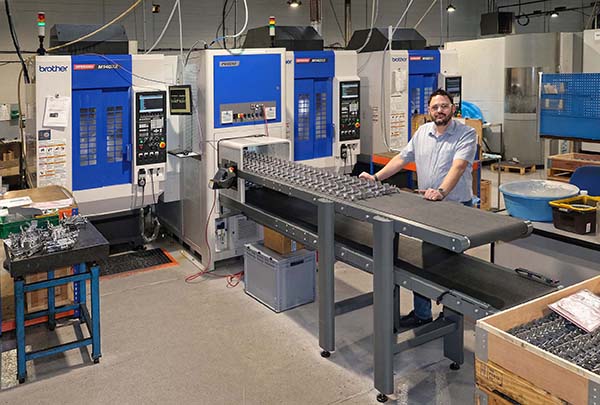
Andover-based MRT Castings, which has long used robotic systems in its aluminium die-casting foundry, has started to introduce automation in the machine shop following the arrival of a Japanese-built Brother Speedio M140X2 five-axis mill-turn cell. The cell is fed automatically with raw material from an interlinked Feedio robotic handling system from the same manufacturer, the first to be installed in the UK. MRT’s turnkey cell was supplied by sole sales and service agent Whitehouse Machine Tools.

One-hit machining is the watchword at the die-casting firm to keep production costs down and remain competitive on world markets, as well as to avoid tolerance build-up and hence maximise component accuracy. A user of Brother 30-taper, four-axis machining centres since the early 1990s, the company now operates 20, half of which are equipped with a pallet changer. In addition, there are three twin-spindle CNC lathes with driven tooling on the shop floor.
MRT’s managing director Phil Rawnson says: “Our pursuit of single set-up production means that we sometimes find ourselves processing parts on our lathes that entail only one-third turning, with the remainder of the cycle taken up by prismatic machining using live tools in the turret. It is an inefficient method of milling and drilling, as the rotational speed and power of the limited number of tools in a lathe are considerably lower than those of the spindle on a machining centre, which also has the benefit of access to more tools.
“So we decided to invest in a mill-turn machine and identified the Brother M140X2 as ideal for our needs,” he adds. “It has a 16,000 rpm, face-and-taper contact spindle and a 22-tool magazine, plus a turning table with a 55 Nm direct-drive motor powering a 2,000 rpm turning table. When not performing a turning function, the C-axis table together with the A-axis trunnion can be employed to position a component in the two rotary axes for 3+2 prismatic machining, which is needed for most of our components.”

To leverage the productivity potential of the M140X2, the plan is for any rotational part that requires a majority of milling and drilling in its cutting cycle, whether machined from a casting, billet or bar, to be assigned to the five-axis machine. The Feedio system, equipped with a six-axis ABB robot, is capable of handling billets up to 80 mm diameter, or aluminium castings up to 120 mm diameter, and delivering them to a hydraulic chuck on the machine table.
A vision system and built-in PC allows the robot to detect where on the upper inlet conveyor of the Feedio the raw material has been placed, so the billets or castings do not have to be aligned on a grid or in a tray. After machining, components are returned to an output conveyor that, to minimise the footprint, is positioned below the first rather than to the side.
Rawnson says: “Until recently, we operated a day shift with a few hours’ overtime in the early morning and evening. The new Brother cell has added to this by allowing us to run lights-out for up to eight hours, depending on component size and cycle times, as well as unattended during the day.”
The first contract to be fulfilled in the automated cell is a family of aluminium bodies for a range of LED light fittings. Prototypes were produced on twin-spindle lathes with live tooling, but as only around 30% of the machining is rotational, it is better suited to production on the M140X2 mill-turn. Cycle time has been almost halved from 15 to 8 minutes, thanks to the higher power of the 16,000 rpm milling spindle and its rapid acceleration and deceleration, tool change in less than one second, up to 30 m/min cutting feed rate, and 50 m/min rapids.
MRT’s production team had been looking for some time at different possibilities for automating its Brother machining centres to increase the efficiency of producing parts in batches of typically 500 to 1,000-off. According to Rawnson, such medium size volumes do not lend themselves readily to automated solutions, which normally require expensive, dedicated, hydraulic clamping fixtures in the machine tool. However, he points out that the M140X2 already has a hydraulic chuck and, therefore, the work-holding function is already in place, so no extra fixtures are needed. It is thus a suitable machine to trial automation in this type of production environment.

To assist in finding the best robotic handling configuration to go with the machine, MRT enlisted the help of the Manufacturing Technology Centre (MTC) in Coventry. After researching the market, its advisers concluded that a conveyor system and a teach-in programmed, vision-enabled, six-axis robot with interchangeable 3D-printed grippers would best suit the types of components produced and machines in use at Andover.
“It was a perfect fit for our needs, which was to acquire a standard, compact, entry-level cell that does not need complex robot programming or workpiece trays, delivered and commissioned by a single-source supplier, in this case Whitehouse Machine Tools,” says Rawnson. “Feedio is suitable for retrofitting to all our Brother machining centres, both non-APC and twin-pallet types, allowing us to reduce operator attendance and maximise production hours during the day. Quality is enhanced, as workpiece loading is more consistent.
“In addition, we are able to extend our single day shift by taking advantage of lights-out running into the evening or even overnight, raising output without increasing our headcount,” he adds. “Importantly, all our operators are supportive of introducing new technology like this.”
He goes on to cite other advantages of the automation system. At present, the LED lighting components are still produced by first completing Op 10 and then reloading them for Op 20. However, they could be produced in one hit if a turnover station was to be introduced. Alternatively, one Feedio could serve two machining centres carrying out both operations simultaneously. There are also possibilities to integrate other functions such as component deburring and washing.
Rawnson concludes: “We see automation as the future for our company. Aluminium billets have been machined so far but the suitability of automatically handling castings is being investigated. We plan to target a wide range of different components for production in the new mill-turn cell, and will be looking in particular at parts where turning content is less than half of the cycle time.”
For further information www.wmtcnc.com

Digital ecosystem drives lights-out production

A sheet-metal specialist is providing the perfect example of how a small company can build a successful digital ecosystem, bringing its factory in line with the Industry 4.0 philosophy of smart production. Laser subcontractor AFDL operates with between five and eight employees at any one time, and has installed the WorkPlan MES job management solution, which connects seamlessly with its Radan sheet-metal CADCAM system. Both products are from the Hexagon portfolio, geared towards supporting data-driven smart factories.

Installing the WorkPlan job management and quotation with Radquote module has allowed AFDL (Atelier Forezien de Découpage Laser) to become completely autonomous, from quotation through to invoicing, by providing a full overview of orders received, outstanding and delivered, and of the company’s turnover.
Site Manager Stéphane Noailly says: “Previously, we didn’t have production management software, and invoicing was managed by our parent group, Decofor, involving double entry of all our delivery notes.
“We needed to invest in this type of software because of strong growth, and more employees,” says Noailly. “It was becoming too complicated to manage the company’s activities with Excel files. We opted for WorkPlan as it comes from the same stable as Radan, which we’ve used as our sheet-metal production software for over 10 years.”
Focusing on both thick and thin laser cutting, from 0.2 to 25 mm, across a range of steels, stainless steel and aluminium, AFDL has also developed its activities in bending and welding, producing stainless steel tables for the furniture industry, and working for pharmacies and the public sector.

The company has grown recently, and now produces up to 50 orders a day, comprising individual unit parts, through to large series. Prior to installing WorkPlan, Noailly managed everything from order entry to manufacturing, but since the installation and deployment of the software he has been able to free up time to develop the company’s activity.
Combining the WorkPlan and Radquote interface with the automated system for time analysis, production cost estimation, and quotation generation for sheet-metal parts and assemblies, means AFDL has become more responsive, accurate and fair in terms of price, compared to its competitors, says Noailly, which has allowed the company to successfully manage an increase in demand.
AFDAL was created at the end of 2013 with Decofor being its only customer, yet today half of its customers are external.

“I use WorkPlan to generate precise quotations in connection with Radquote, and either duplicate or modify them for similar new orders; quickly transform them into orders; view all orders at any time; or give autonomy to the workshop to generate delivery notes by simply entering the order number, which also avoids missing invoices.
“Recurring orders from Decofor are now managed with just a few clicks,” he continues. “The file is sent in CSV format, and WorkPlan transforms it into a command – no more re-entries or errors. It’s a real time saver, as production can commence immediately.”

AFDL inherited a CNC machine tool which had originally been purchased at auction by Decofor with Radan already installed, and Noailly decided he wanted to continue using the software. Production is now carried out 24 hours a day, seven days a week, with Radan currently powering two Trumatic 3050 laser-cutting machines and an Amada HFT press brake. There are plans to replace one of the laser machines with a Trumatic 3030 automated fibre laser profiling centre, which will enable the company to move into copper and brass cutting for the electrical sector.
According to Noailly, Radan makes the production process as simple and efficient as possible.
“Customers provide us with files in a variety of formats, including: a DXF 2D plan, which we can use immediately; a 3D STEP file which we open in Radan 3D to unfold before working on it in 2D; PDF files which we have to completely redesign; or directly with parts to reproduce them identically. As soon as the file is validated it’s imported into Radan 2D or 3D to be nested and put into production.
“The drawing features built into our Radan 2D module mean we can efficiently design a 2D part,” explains Noailly. “The software also gives us a quick and simple method to repair or simplify geometries from other systems.”
With around 20 regular products to redesign, or files to use, production is divided 50/50 – firstly, a series of parts, comprising more than 50 pieces; and secondly, individual units.
“Thanks to Radan we can produce up to 30 pieces on the same day that the order is placed, which means we can readily adapt to our customers’ urgent demands when they require something immediately,” says Noailly.
“We are only a small company, but the integrated solution of WorkPlan and Radan has brought our factory in line with the Industry 4.0 philosophy of smart production adopted by companies many times our size.”
For further information www.workplan.com www.radan.com