
3D printing entrepreneur secures two King’s Awards

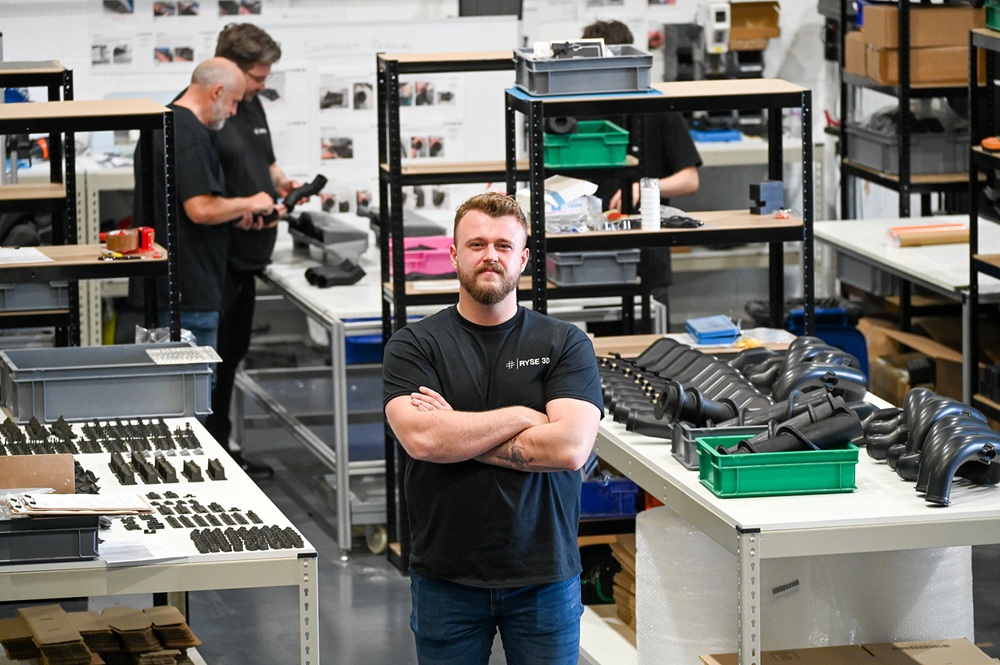
A Warwickshire entrepreneur who once replaced his mother’s dishwasher with a homemade 3D printer has become one of the youngest recipients of two King’s Awards for Enterprise. Mitchell Barnes (pictured), founder of Shipston-on-Stour-based RYSE 3D, launched the business in 2017 after recognising the potential of additive manufacturing (AM) to move beyond prototyping and into production.

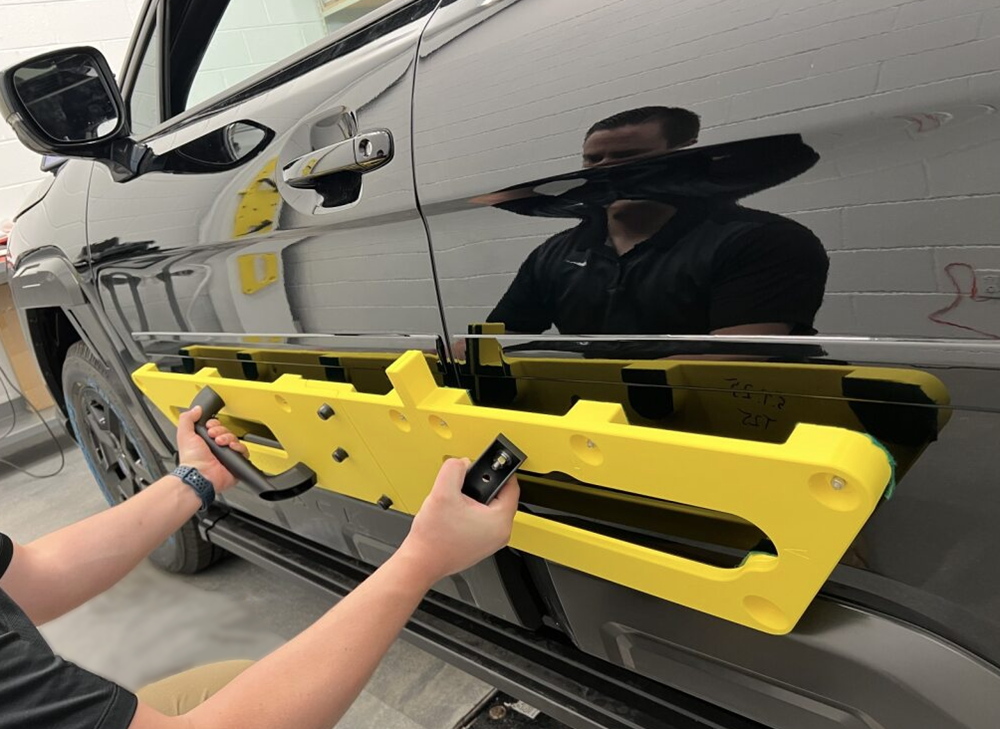
Today, the company supplies high-performance components to 23 hypercar projects worldwide, while also supporting customers in the aerospace, defence and energy sectors. Its growth has helped drive annual turnover close to £5m, with international sales accounting for almost half of revenue.

That success has now been recognised with a King’s Award for International Trade, following the company’s King’s Award for Innovation in 2024.

“To win one King’s Award is special, but to receive a second for growing our business overseas is incredible,” says Mitchell, who runs the company alongside his brother Cameron. “When we started, we wanted to prove that AM could be used for series production. Today, we’re supplying complex components in volumes ranging from thousands to tens of thousands, while exporting UK-developed technology to customers around the world.”

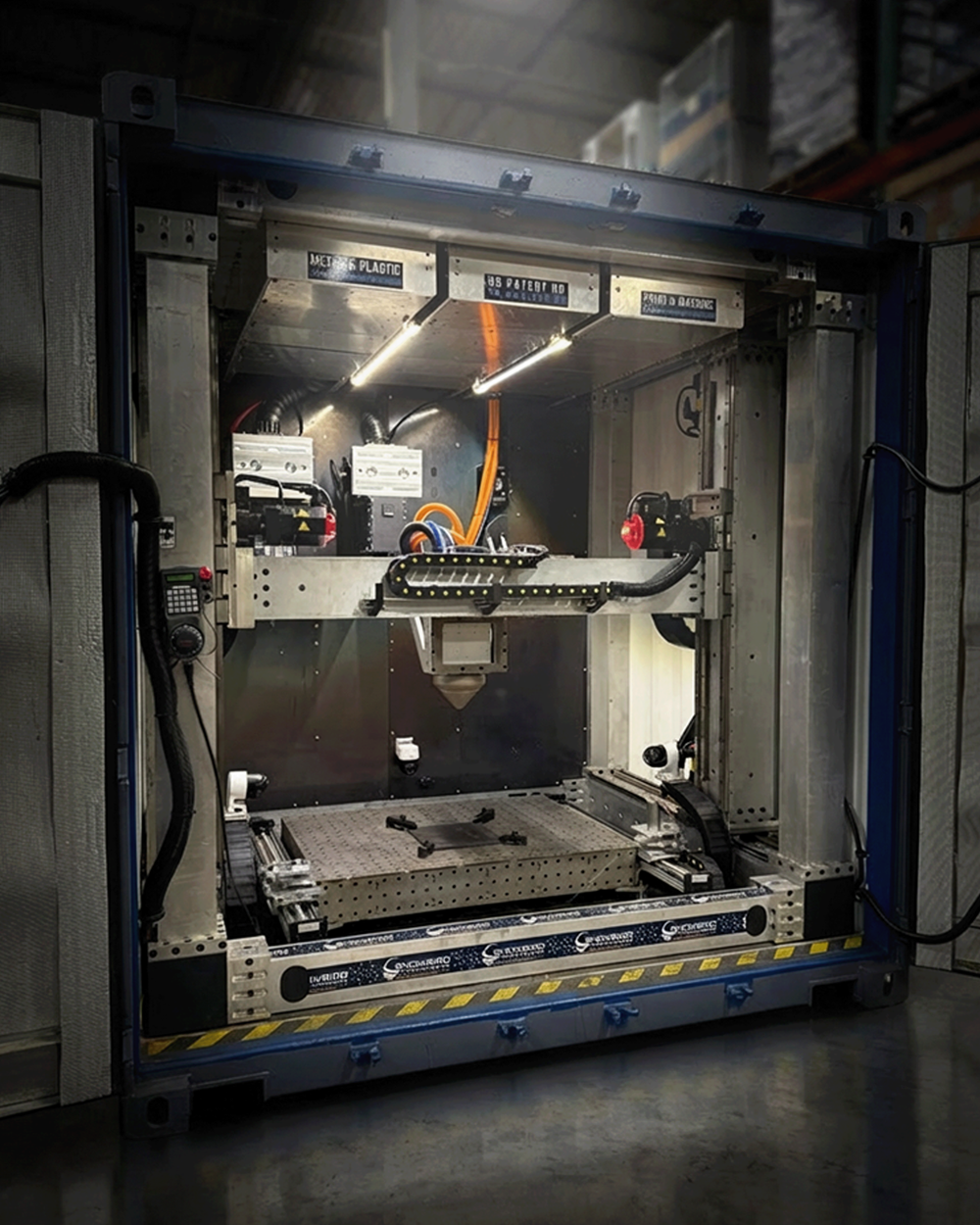
Over the past three years, RYSE 3D has invested more than £1m in new equipment, R&D, advanced materials, and the launch of its UK-engineered LANDR 3D printer. The workforce has also grown to 18 employees.

The company’s scalable production process requires no tooling investment and uses widely available engineering polymers, helping manufacturers reduce costs, increase flexibility and strengthen supply chains.

While automotive and motorsport remain important markets, RYSE 3D is increasingly applying its expertise across aerospace, construction, energy, medical and defence applications as demand for production-ready additive manufacturing continues to grow.

More information www.ryse3d.com

New production centre for AM and subtractive machining

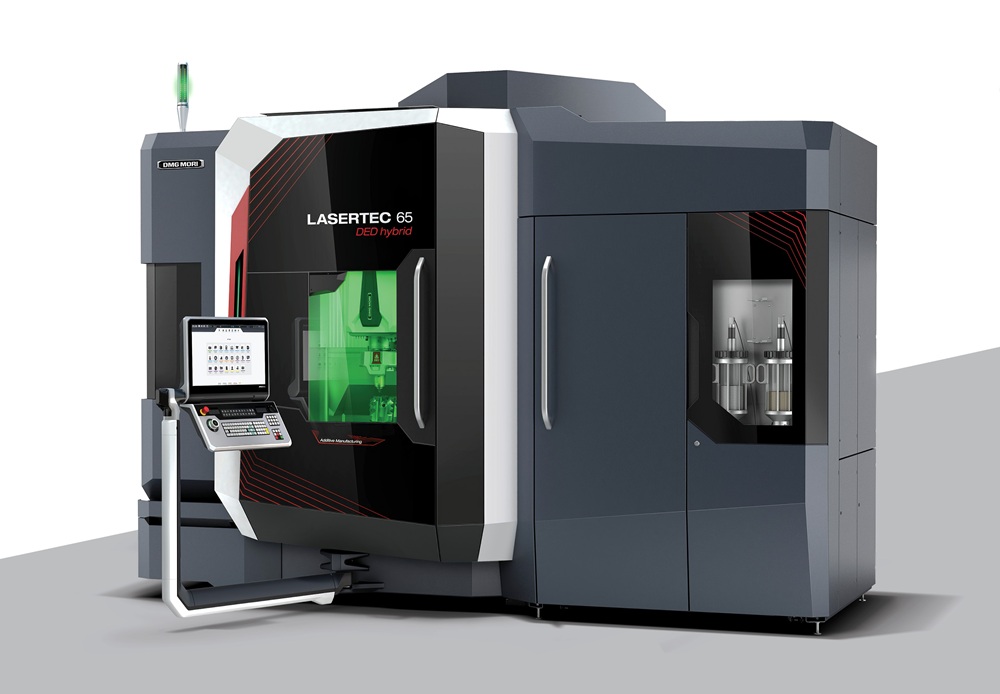
Offering laser deposition welding (DED), machining and inspection in a single set up, DMG Mori says its new LaserTec 65 DED hybrid 2 provides a cost-effective solution for producing complex components, repairing worn parts and applying highly durable surface coatings.

Combining additive and subtractive manufacturing in one platform, the machine integrates milling, drilling, turning, grinding, laser pre-heating, powder-based additive manufacturing and 3D scanning. The result is improved process integration, higher productivity and greater process stability, helping to bring additive manufacturing into series production environments.

A key development is DMG Mori’s latest MultiJet nozzle, which enables five-axis material deposition with consistent powder distribution regardless of orientation. The innovation increases build rates by 35% compared with the previous generation, while a 170% larger build volume accommodates workpieces up to 840 mm in diameter and 350 mm high.

In addition to infrared laser technology, the machine can be equipped with a blue laser source, expanding processing capability to reflective materials such as copper. This enables graded material transitions and the production of highly functional components. For example, copper can be selectively deposited to enhance cooling performance in injection moulding and die-casting tools, while hard-facing materials above 60 HRc can be applied without subsequent heat treatment.

Comprehensive process monitoring is provided through cameras and sensors that track temperature, powder flow, melt pool behaviour and nozzle positioning. AM Evaluator software creates a time-sequenced digital twin, mapping process data directly onto a 3D model of the component.

Built around DMG Mori’s rigid monoBLOCK platform, the machine delivers positioning accuracy of 4 microns. Wide access doors simplify loading, unloading and future automation integration, supporting efficient operation in demanding manufacturing environments.

More information www.dmgmori.com

Cold spray to be new standard for aircraft wing skin repair

Aircraft operate in demanding environments that can compromise the integrity of wing skins. Corrosion remains one of the aviation sector’s most persistent and costly challenges, driving downtime, repeated maintenance interventions and disruption to operational schedules. Here, Calum Hicks (pictured), senior technologist at the Digital Factory, National Manufacturing Institute Scotland (NMIS), explains the importance of moving to cold spray application for wing skin repair. 

Traditional repair methods, including epoxy fillers and doubler plates, can extend component life through reinforcement and material replacement. However, these approaches often require ongoing repairs, limiting long-term efficiency. As modern aircraft are designed with strict safety requirements and low tolerance for material degradation, the industry needs a more durable and resilient approach to wing skin restoration.

Cold spray manufacturing offers that solution.

This additive manufacturing process rebuilds damaged components by accelerating metallic powder at supersonic speed to restore material without melting it. By replacing corroded areas with new aluminium alloy, cold spray restores wing skins to their original dimensions while providing a more corrosion-resistant and longer-lasting repair than conventional epoxy-based methods.

Unlike many additive manufacturing technologies, cold spray can be deployed directly inside maintenance hangars thanks to its low operating temperatures and portable equipment. This enables rapid access to damaged structures and significantly expands the scope of repairs that can be completed on-site. Corrosion-affected areas can often be restored within hours, compared with traditional methods that may require days due to preparation and curing times.

Cold spray also supports aviation sustainability goals. By restoring existing components rather than replacing them, the process reduces material waste and extends service life, helping to lower the environmental impact of maintenance activities.

More information www.nmis.scot

Caracol showcases AI-driven software at Formnext

Caracol, one of Europe’s fastest-growing deep-tech companies and a pioneer in large-format robotic additive manufacturing (AM), presented a major leap forward in its mission to redefine industrial production at the Formnext 2025 exhibition in Frankfurt last week.

At the show, the company presented the new evolution of its Eidos manufacturing software suite — the intelligent backbone of Caracol’s connected manufacturing ecosystem. Eidos introduces next-generation features that integrate AI, as well as other manufacturing processes, and advanced sensing to enable more autonomous, adaptive and high-performance production across its platforms.

Building on a year of significant growth — including the acquisition of Hans Weber Maschinenfabrik GmbH’s AM assets and a $40m Series B funding round — Caracol further consolidated its position as a global specialist in digital and automated manufacturing. The latest Eidos manufacturing software suite – developed for Caracol’s robotic platforms in collaboration with leading software and AI companies – integrates new manufacturing processes, AI and advanced sensing to enable smarter and more autonomous production.

Eidos Builder goes beyond printing to combine Caracol’s advanced slicing, simulation and AM capabilities with other processes such as scanning and milling in fully automated workflows. Eidos Nexus, the IoT and control brain of the platforms, is now powered with AI control, introducing intelligent features to introduce sensing, learning and smart control.

Visitors to the show had the opportunity to delve into the Eidos software experience, see Heron AM and Vipra AM robotic platforms live, and touch real-world industrial large-scale parts manufactured by leading companies globally such as Alstom, NP Aerospace and the UK Digital Manufacturing Centre, JOME and the CPC Group

Caracol also presented the world’s first 3D-printed catamaran, created with V2 Boats using its Heron AM platform through a continuous 120-hour build.

More information www.caracol-am.com

Defence-grade 3D printer now available from Ultimaker

UltiMaker, a global specialist in 3D printing technology, has unveiled its Secure Line of 3D printing products for defence and high-security environments. Leading at launch were the UltiMaker S6 Secure and UltiMaker S8 Secure, two robust solutions designed to deliver reliable, on-demand production capabilities across land, sea and air operations.

With rising demand for secure, resilient and decentralised manufacturing, the Secure Line marks a major step forward in turning additive manufacturing (AM) into a deployable tactical asset. Built on UltiMaker’s established platform, the S6 Secure and S8 Secure combine industrial performance with hardened security features designed to meet modern defence IT standards.

“The Secure Line represents a strategic leap in making AM a trusted and deployable asset for defence organisations,” says Andy Middleton, SVP EMEA and global marketing at UltiMaker. “By combining industrial-grade 3D printing with uncompromising security, the Secure Line enables the production of mission-critical components at the point of need, safely, reliably and with full control over their data and infrastructure.”

Designed for operations in extreme and temperate conditions, Secure Line printers offer air-gapped, USB-only workflows, with no Wi-Fi, no external cameras and no unverified third-party devices, eliminating common vectors for espionage, data theft or remote intrusion.

Key security features include: factory-flashed, tamper-resistant firmware; encrypted and auditable file handling; hardware-sealed components for field integrity; and no cloud dependencies or external attack surfaces. These features ensure full operational control and auditability, empowering defence forces to manufacture mission-critical components while maintaining the highest levels of data control, protection and system security.

The S6 Secure and S8 Secure are engineered to take industrial AM capabilities from the lab to the field.

More information www.bit.ly/4pkGKMV