
MAKING AUTOMATION MORE AFFORDABLE: REFRAMING THE COST OF ROBOTICS

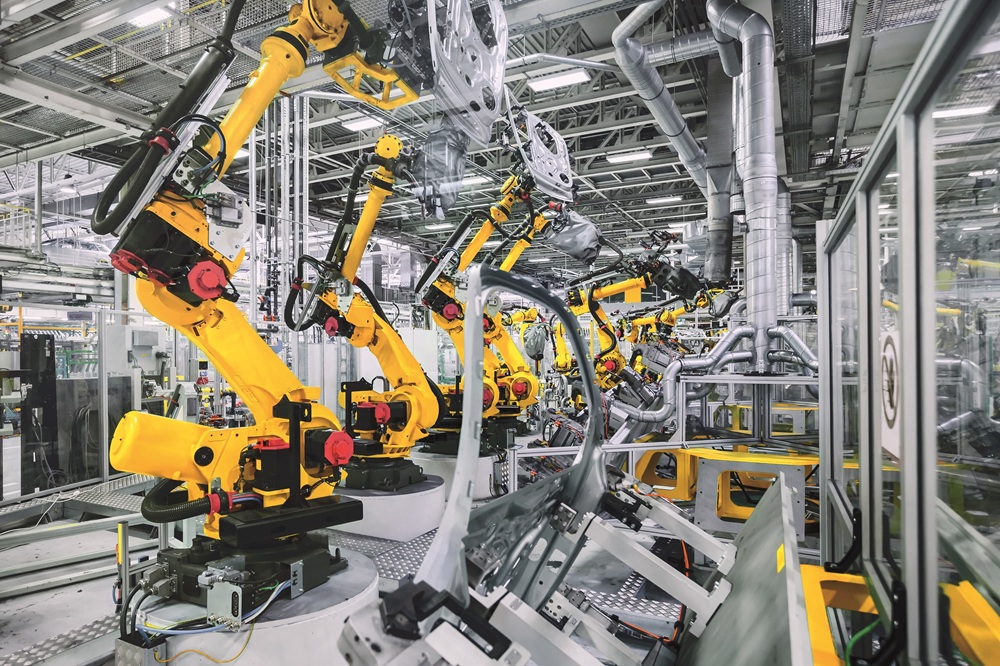
Automation and robotics have the potential to solve many of the challenges facing manufacturers today, from rising labour costs and staff shortages to the need for higher production efficiency and build resilience. But although the case for investment in industrial automation is strong, in the current climate of corporate belt-tightening, many automation projects do not make it off the drawing board because of the perceived high upfront investment. In this article, Oliver Selby, head of sales at FANUC UK, looks to reframe the cost of robotics and demonstrate its affordability.

Increasingly, capital decisions are evaluated in terms of ‘freeze, flee or build’: pausing or deferring a decision until key assumptions stabilise (freeze); redirecting capital away from an area of exposure (flee); or accelerating an investment to capture an opportunity or establish a competitive advantage (build). All too often, automation projects get ‘frozen’, not because the rationale is flawed but because they are deemed unaffordable or non-urgent at a time when cash is in short supply. However, choosing this option can lead to considerable inefficiencies and strategic disadvantages, putting manufacturing businesses in a vulnerable position.

Therefore, when constructing a justification for investing in automation, it is important to demonstrate why the project should be treated as a priority, and how it will be financed. By moving the focus from well-trodden arguments to reframing the economics of robotics – and showing why the cost of waiting is usually higher than the cost of taking a decision now – project managers can make the case for immediate investment irrefutable.

Here are six points that manufacturers can draw on to build an automation investment proposal that stacks up.

First and foremost, robots are today more affordable than ever before.The cumulative UK inflation rate over the past 20 years (2006-2026) is approximately 70-80%, based on Consumer Prices Index (CPI) data. Yet over this same timeframe, the average purchase price of an industrial robot has only increased 20%. Investing in equipment that has registered price growth lower than the general rate of inflation can be a strategic move, as it effectively makes it cheaper in real terms. If robot prices are rising by 1% while the overall inflation rate is 3%, manufacturers are purchasing a productive asset that is decreasing in relative cost compared with other investments.

The second point is the emergence of multiple finance options that open up access to robotics. Historically, most automation projects were funded via high street bank loans. Today, there are many finance routes, some of which offer far more flexibility.

Recent years have seen some robotics integrators partner with finance providers to offer flexible funding options, such as staged payments and asset finance, helping manufacturers invest in technology without heavy upfront costs. Asset-based lending has also become more common as a flexible alternative to traditional high-cost bank loans, allowing businesses to acquire new equipment or technology by using assets such as receivables or inventory as collateral. FANUC would advise any company embarking on an automation project to speak to their integration partner or OEM supplier about available finance.

Third on the list is assurance schemes, which build trust for lenders. Trust in robotic systems is growing, driven by a maturing assurance ecosystem, and this confidence is starting to filter through to lenders. Earlier in 2026, Automate UK launched the UK’s ‘Robot Integrator Standard’ in association with BARA (British Automation and Robot Association). Designed to ensure that integrators follow best practice, the standard provides assurance of safe, high quality, and reliable robotic and vision solutions, thereby reducing the risk associated with automation projects.

FANUC UK has also built up its own network of trusted authorised system integrators; partners selected for their ability to provide specialised, low-risk automation. It is expected that such schemes will translate into more favourable financing arrangements for borrowers through reduced risk for lenders.

A fourth point worthy of consideration is the transfer of costs from CapEx to OpEx. While robotics investments are traditionally structured as CapEx – a large outright purchase of a piece of equipment – over time, service has become an increasingly critical element of these projects.

As automation technology has advanced, service has gone from being a post-installation afterthought to a fundamental pillar of success. Most installations today incorporate simulation, training (of both AI systems and human operators), and ongoing servicing and support. From a financial perspective, this workflow has created an opportunity to move some project costs from CapEx to OpEx, converting them into ongoing, manageable and flexible expenses. Taking this strategic decision can help make automation more affordable by reducing the upfront investment, preserving cash flow and enable the apportioning of costs to different cost centres.

Point number five: robots are becoming maintenance-free. Traditionally thinking accepts that annual maintenance costs for an industrial robot will run to 3-10% of the original purchase price. This estimate is dependent on the size of the robot, with maintenance costs for larger robots typically coming in at the lower end of the range. Finance providers have accounted for these costs by bundling them into monthly payments. However, technological advancements such as predictive maintenance, accelerated life testing and grease-less components are moving robots into a new ‘maintenance-free’ paradigm.

Among robot manufacturers, FANUC is leading the way here, with its reliability and eight-year maintenance-free promise. This pledge is making robots more affordable over their lifetime. Such savings will soon be reflected in the structure of finance deals, as robots can be guaranteed to run maintenance-free for the duration of the financial agreement.

Last but not least, automation helps reduce manufacturing overheads.The argument that investing in automation allows businesses to produce more with less has never been stronger. Industry is entering an era of precision manufacturing with technologies such as robotics, AI and sensors enabling real-time monitoring and optimisation of production parameters, quality metrics, material usage and energy consumption. The net result is that manufacturing has the potential to be leaner, more productive and more resource-efficient than ever before.

These advancements are strengthening the economic case for automation. For example, FANUC systems feature AI-driven diagnostics, power regeneration and IIoT solutions that enable intelligent energy recovery, reduce waste and improve uptime.

With 2025-2006 the most expensive period on record for UK businesses, a growing number of manufacturers are turning to automation as a strategy for futureproofing against inflation and maintaining a competitive edge. Reduced risk for lenders is translating to more favourable packages from finance providers. Technological advancements are continuously improving robot productivity, reliability and resource utilisation to drive a structural decline in cost per unit of output. Moreover, in real terms, robots are getting cheaper. For manufacturers, these factors make automation an increasingly powerful lever for expanding margins and scaling production efficiently and flexibly.

More information www.fanuc.eu
Questions to Ask Before Investing in a New Folding Machine

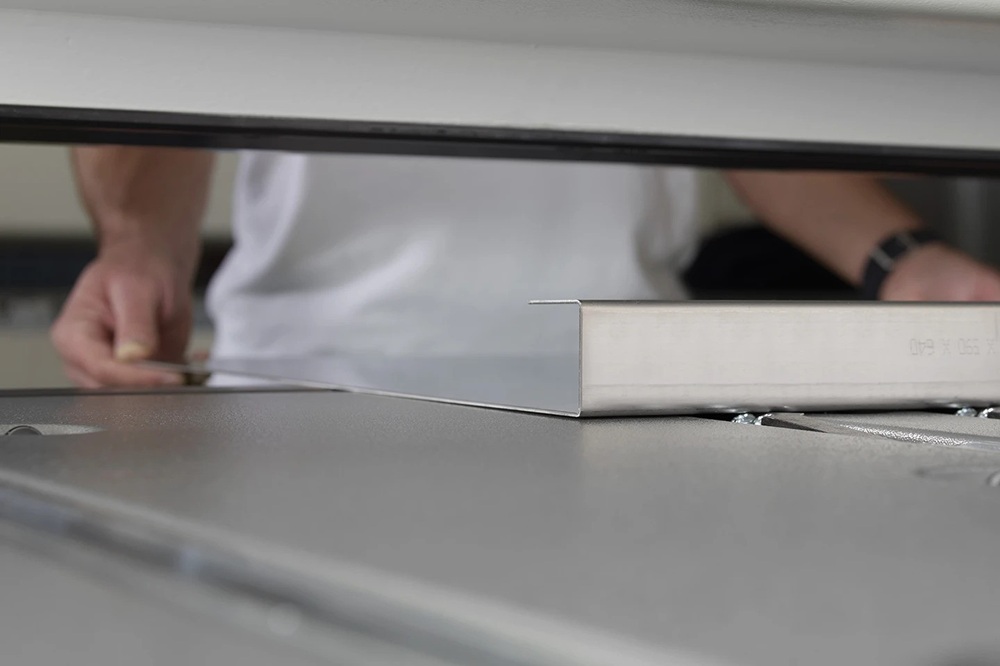
Investing in a new folding machine is an important decision for any sheet metal company. The right machine should handle today’s work while providing the flexibility to accommodate new materials, larger projects, different profiles and growing demands for efficiency. The wrong choice, however, can create bottlenecks, increase manual work and restrict future growth, as Cidan Machinery sets out in this article. 

Material is a logical starting point. Steel, aluminium, zinc, copper, stainless steel and coated sheet all place different demands on machine capacity, precision and handling. Thickness, surface finish and sensitivity should also be considered, particularly when processing materials that can be easily marked or damaged. 

Folding length is another fundamental consideration. A machine that is too short can restrict the work a company is able to undertake, while greater capacity can open opportunities for larger projects. It is important to consider future requirements as well as current workloads. Longer folding lengths can reduce the number of joints required for applications such as roofing, façades, doors and gates. 

Opening height and working space are equally important when producing complex profiles, high edges and components requiring multiple folds. Generous working space makes larger or awkward components easier to position and handle. 

The machine should also be assessed as part of the entire production workflow, from material storage and cutting through to folding and delivery. Identifying existing bottlenecks can help ensure the investment improves overall productivity. 

Ease of use and ergonomics are additional considerations. An intuitive control system can reduce errors and training requirements, while good access and handling arrangements can minimise operator fatigue. 

Finally, consider the support available after installation. Training, servicing, spare parts and technical assistance all influence uptime and machine life. 

More information www.cidanmachinery.com 

New Partnership for Advanced Bending Automation Solutions

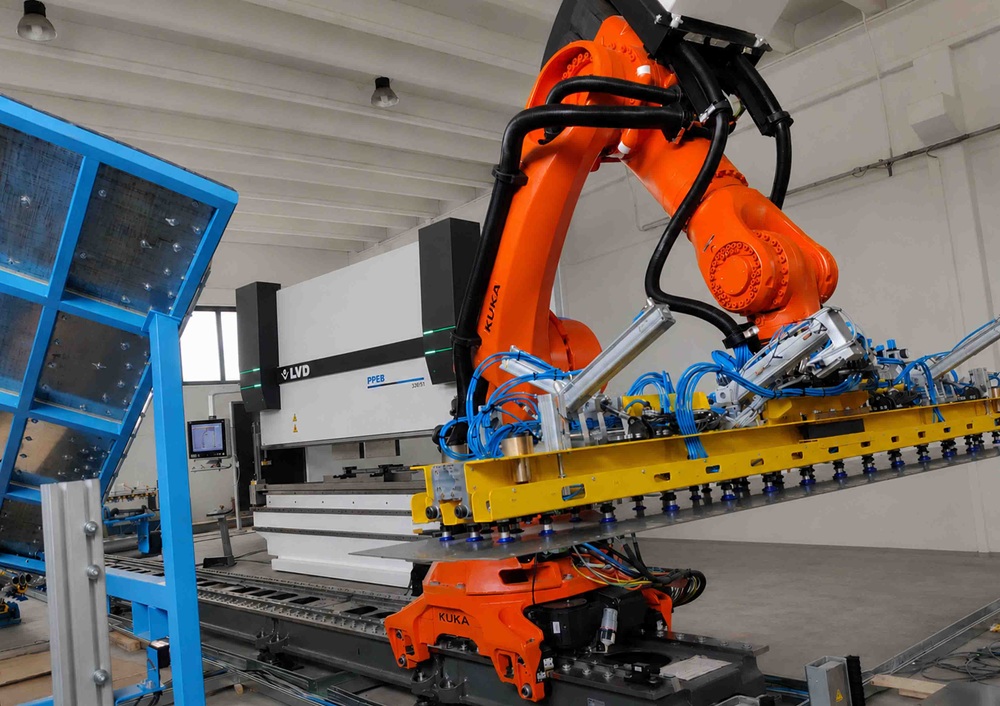
LVD, a global supplier of press brakes and bending automation systems, has formed a strategic partnership with REA Robotics, an industrial automation and robotics specialist based in Veggiano, Italy. The companies will jointly develop customised, heavy-duty robotic bending cells for complex fabrication projects. 

The alliance expands LVD’s robotic bending offering and supports its ambition to provide metal fabricators with advanced, single-source bending automation solutions. For REA, the partnership opens access to new markets through LVD’s global sales network. 

The collaboration combines REA’s specialist automation and custom engineering capabilities with LVD’s extensive bending process expertise. REA has decades of experience developing robotised solutions for industries including sheet metal fabrication, with field-proven systems incorporating heavy-duty handling lines, multi-gripper robots and advanced tracking technology to synchronise robots with press brakes. 

“As automation continues to transform manufacturing and bending applications grow in complexity, we’re meeting critical industry challenges with specialised automated solutions,” says Carl Dewulf, CEO of LVD Group. “REA’s bending automation expertise alongside LVD’s high level of bending know-how will help us bring to market the customised automated bending systems that our customers want and need.” 

The two companies will also work closely on engineering and R&D, accelerating development through closer integration of press brakes and robots, control-interface synchronisation, software validation, and system compatibility. 

For fabricators, the partnership is intended to deliver faster deployment, greater production flexibility, a more efficient machinery footprint and shorter installation times. 

LVD will continue to engineer, develop and sell its robotic bending systems and LVD robotic solutions products, including the Ricobb cobot, alongside its specialised profile bending systems.  

More information www.lvdgroup.com

Unison Becomes Official Tube Bending Partner of the AFRC

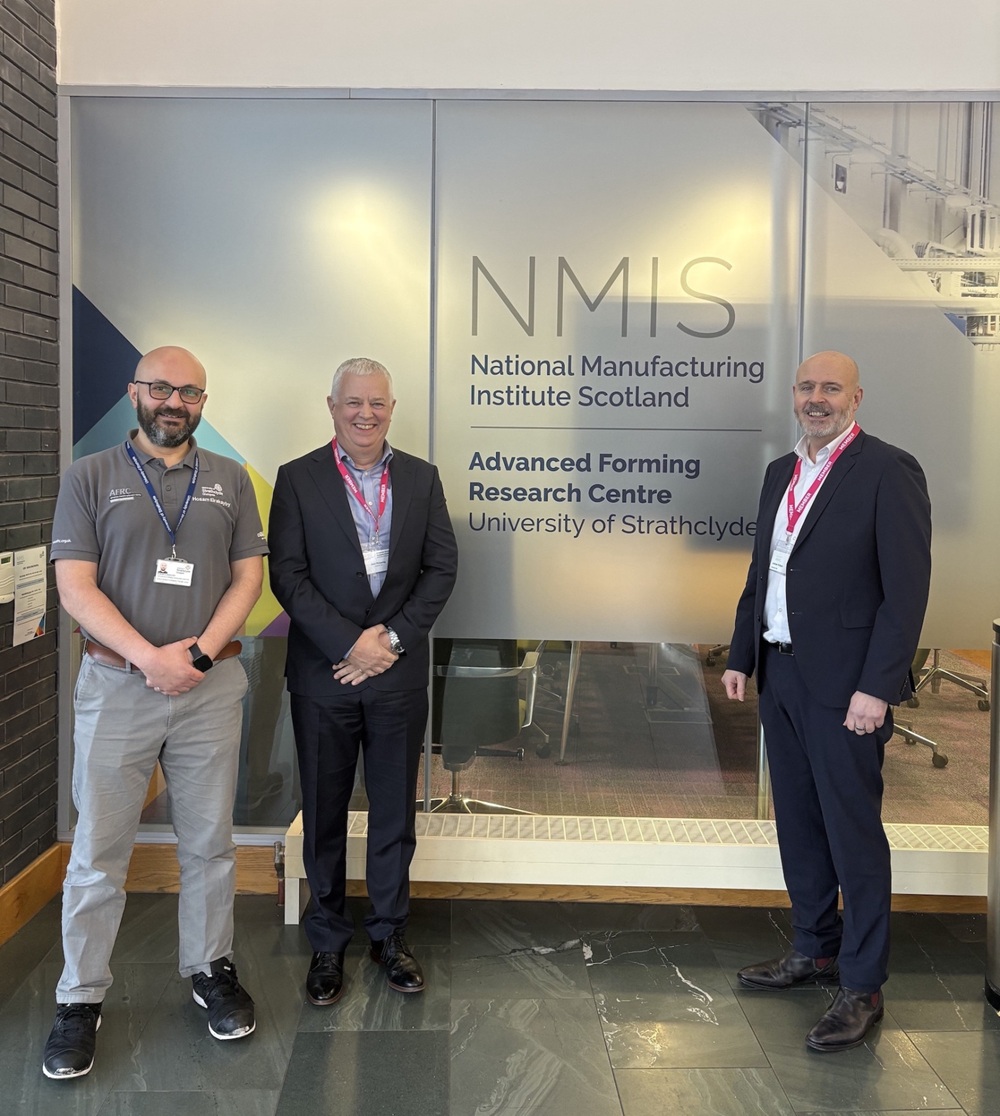
Unison Ltd, a UK-based manufacturer of tube and pipe bending machines and inventor of precision all-electric tube manipulation, has joined the University of Strathclyde’s Advanced Forming Research Centre (AFRC). 

A specialist centre within the National Manufacturing Institute Scotland (NMIS), the AFRC provides member organisations with access to advanced equipment and technical expertise covering manufacturing, material behaviour and processing. 

As the only tube bending machinery manufacturer within the AFRC, Unison will provide specialist consultancy and technical support across tube manipulation processes, while contributing to collaborative research projects. 

“We’re delighted to have been invited to join the AFRC,” comments Unison joint managing director Alan Pickering. “Our tier-two membership will enable us to support even more of the world’s leading companies with their tube manipulation, wire and end-forming challenges. At the same time, we look forward to utilising the AFRC’s technical forming and modelling expertise to assist in developing several new tube forming technologies currently in the pipeline, particularly for the aerospace sector.” 

AFRC director Brad Wynne adds: “As the UK’s leading manufacturer of ultra-precise tube-bending machinery, Unison will work with us to extend our research into rotary draw tube bending. We envisage that initial projects will explore areas such as tooling, process modelling, physical trials and material analysis, helping unlock rotary draw bending for higher-integrity applications across defence, aerospace, energy and other advanced manufacturing sectors.” 

Tracy McCarroll, head of membership and strategic relations at NMIS, says the partnership will also provide opportunities to combine Unison’s expertise and equipment with the capabilities of other AFRC members: “We look forward to involving Unison in suitable R&D proposals that would benefit from their considerable knowledge and input.” 

More information www.unisonltd.com 

Sielaff Continues Investing with Another RAS Multibend-Center

The coffee machine in the office, the snack vending machine at the train station or the bottle reverse vending system at the supermarket: Sielaff machines form part of everyday life more often than many people realise. 

Since 1886, Sielaff has been developing and manufacturing vending machines that have become an integral part of daily living. For the production of its precise enclosures, the company has relied on RAS machines for many years. With another RAS Multibend-Center, this successful partnership continues. 

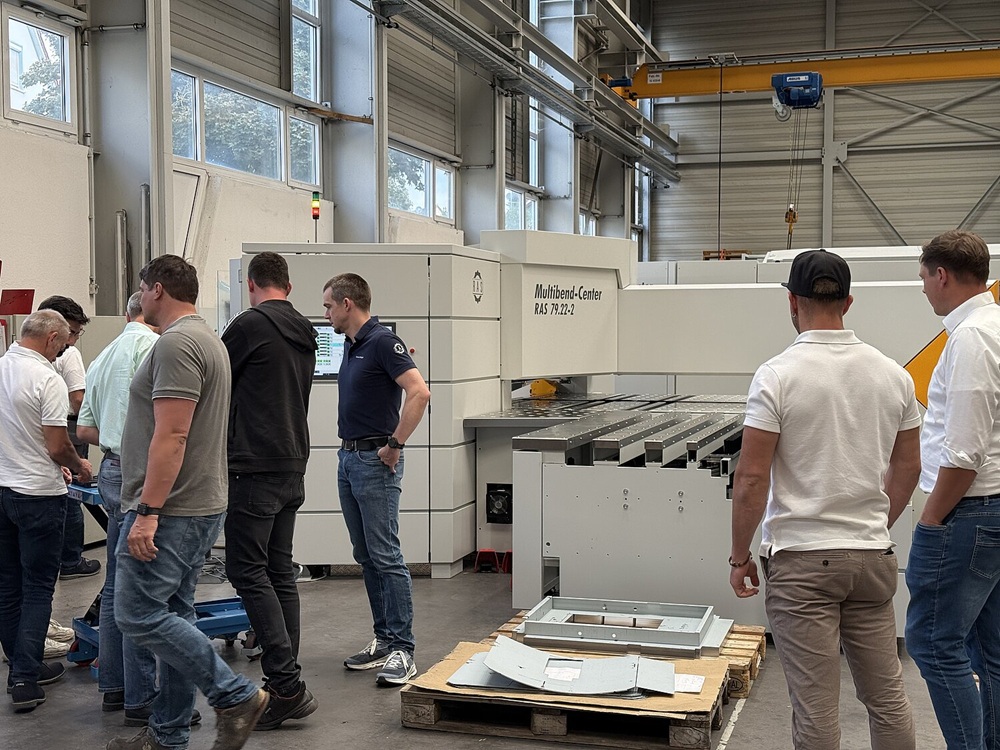
Final acceptance of the latest Multibend-Center took place at the RAS facility in Sindelfingen. Together with the Sielaff team, demonstration parts were inspected and the machine was thoroughly tested. 

During final acceptance procedures at RAS, all important functions and processes are carefully checked. The aim is not only to ensure that the machine operates reliably. It is equally important that the manufactured components meet customer standards and can be safely integrated into existing production processes. 

This was not the first joint acceptance for Sielaff and RAS. The long-standing partnership between the two manufacturing companies stands for mutual trust, technical expertise and a shared commitment to quality. 

For RAS, final acceptance is more than a formality. It is an important part of the company’s commitment to quality. After all, when high-quality vending machines are built for everyday use, every detail matters. 

RAS thanks Sielaff for its long-standing trust and successful collaboration. The company now looks forward to the next projects involving Sielaff. 

More information www.ras-online.de/en