
Cold spray to be new standard for aircraft wing skin repair

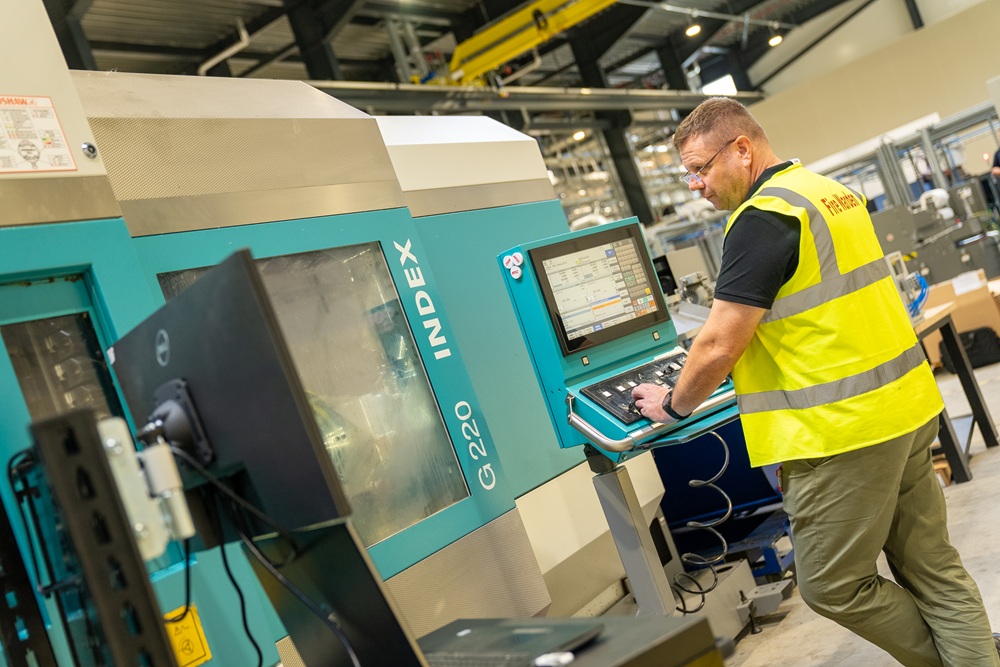
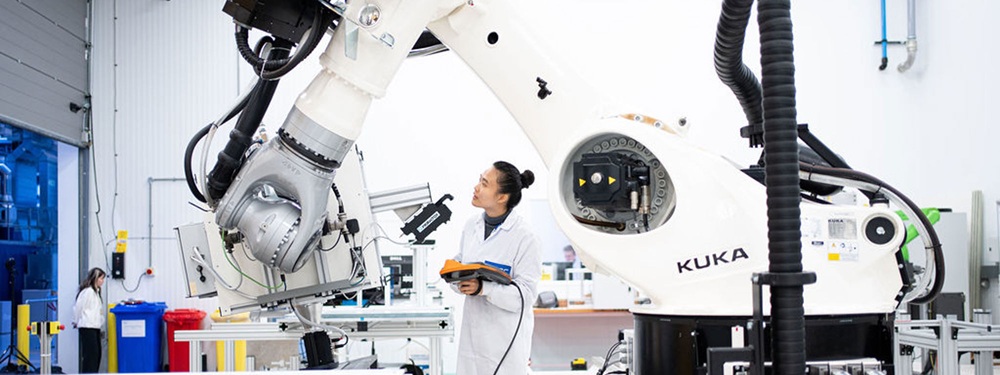
Aircraft operate in demanding environments that can compromise the integrity of wing skins. Corrosion remains one of the aviation sector’s most persistent and costly challenges, driving downtime, repeated maintenance interventions and disruption to operational schedules. Here, Calum Hicks (pictured), senior technologist at the Digital Factory, National Manufacturing Institute Scotland (NMIS), explains the importance of moving to cold spray application for wing skin repair. 

Traditional repair methods, including epoxy fillers and doubler plates, can extend component life through reinforcement and material replacement. However, these approaches often require ongoing repairs, limiting long-term efficiency. As modern aircraft are designed with strict safety requirements and low tolerance for material degradation, the industry needs a more durable and resilient approach to wing skin restoration.

Cold spray manufacturing offers that solution.

This additive manufacturing process rebuilds damaged components by accelerating metallic powder at supersonic speed to restore material without melting it. By replacing corroded areas with new aluminium alloy, cold spray restores wing skins to their original dimensions while providing a more corrosion-resistant and longer-lasting repair than conventional epoxy-based methods.

Unlike many additive manufacturing technologies, cold spray can be deployed directly inside maintenance hangars thanks to its low operating temperatures and portable equipment. This enables rapid access to damaged structures and significantly expands the scope of repairs that can be completed on-site. Corrosion-affected areas can often be restored within hours, compared with traditional methods that may require days due to preparation and curing times.

Cold spray also supports aviation sustainability goals. By restoring existing components rather than replacing them, the process reduces material waste and extends service life, helping to lower the environmental impact of maintenance activities.

More information www.nmis.scot

Kanav Jain wins big

The winners of The Big Bang UK Young Scientists & Engineers Competition have been named. The Big Bang Competition, run by EngineeringUK, is a national competition for young engineers, scientists and technologists aged 11 to 18. The top three winners each receive £1000 prize money. Kanav Jain, a student from Broxburn, Scotland is crowned UK Young Engineer of the Year 2026, supported by Thales, for his project ‘AeroAid: Autonomous VTOL quadplane’. Kanav is currently in S4 and entered via community group, First Step Robotics.

More information www.bit.ly/3QHkot6

NCC names advisors

The NCC (National Composites Centre) has appointed Mark Garrett and Tim Minshall as non-executive advisors.The organisation is entering a period of sustained expansion, with growing demand for its expertise from businesses of all sizes. With its strengthened board, the NCC will provide independent oversight and strategic challenge as it continues to scale delivery and impact.CEORich Oldfield says:“Our mission is to translate advanced research into real industrial capability. Mark and Tim’s experience across innovation, governance and academia bolsters our ability to do that at pace and with national reach.”

More information www.nccuk.com

ARMC sets out to de-risk hydrogen switching

The University of Sheffield’s Advanced Manufacturing Research Centre (AMRC) has secured £1m funding to establish HyDecarb, a first-of-its-kind, open-access research capability dedicated to the decarbonisation of industrial natural gas. It provides a real-world, industrial-scale testbed for manufacturers to trial hydrogen fuel-switching in a controlled environment. The AMRC’s open-access infrastructure removes the technical and financial barriers that have traditionally made the transition to low-carbon energy too risky for individual manufacturers to attempt alone.

More information www.amrc.co.uk

Record entries for manufacturing festival awards

A record number of entries have been received for this year’s Leeds Manufacturing Festival Awards, as manufacturers across the region continue to invest in young talent at a time when employers in other sectors warn entry-level roles for young people are disappearing. The awards, which take place next week, attracted 45 nominations from 19 companies, up from 38 entries from 18 businesses last year. Organisers say the increase reflects growing recognition of the role manufacturing can play in providing long-term career opportunities for young people.

More information www.leedsmanufacturingfestival.co.uk