Multi-purpose cutting fluid

Industrial lubrication expert Rocol has launched UltraCut 370EP, a semi-synthetic fluid that can be utilised as a coolant for both cutting and grinding operations.

Developed in the UK, the new coolant contains Rocol’s proprietary EP (Extreme Pressure) additive package, ensuring it enhances medium to heavy-duty machining performance, while simultaneously offering surface finish and component quality enhancements, and extending tool life. Furthermore, the semi-synthetic, water-miscible metalworking fluid has been formulated for application on ferrous and non-ferrous materials, meeting stringent industry requirements and minimising the corrosion and staining of components with its residual corrosion protection. Featuring a special blend of additives, UltraCut 370EP is tolerant to tramp oil, retains a low level of foaming and is durable for use in both hard and soft water environments.

When mixed with water, UltraCut 370EP forms a translucent blue micro-emulsion that provides a clear view of both the component and work envelope during machining and grinding applications. The fluid can be applied in dilution ratios from 30:1 to 75:1, with ratios adjusted depending on the machine tool, workpiece material, water hardness, application and severity of operation.
With high dilution ratios possible, Rocol says that UltraCut 370EP will provide significant cost savings, with a single barrel capable of providing up to 15,200 litres of fluid. For grinding processes, the advised dilution with water should be 50:1 to 75:1, depending on operation severity.

UltraCut 370EP is free from components such as bactericides, chlorine, formaldehyde, nitrites, silicone and any animal-derived materials.

For further information
www.rocol.com

New CNC internal grinding machine

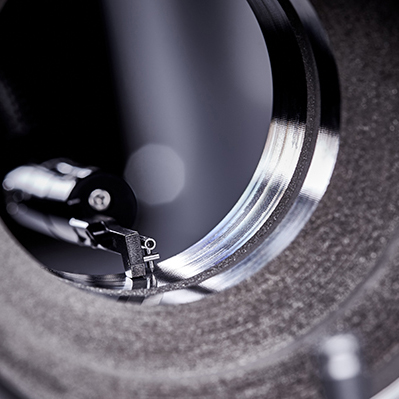
Recently made available by Hardinge is the new Voumard 1000 Universal CNC internal grinding machine. A primary design feature is the use of hydrostatic guideways, which are standard on all axes to offer high performance across all ID grinding applications. The hydrostatic guideways are said to provide excellent damping, as well as stick and slip-free operation, resulting in high surface quality and more reliability without any friction loss or wear.

Hardinge believes the machine’s characteristics set a new standard in ID grinding, providing customers with the ultimate combination of precision and performance in an affordable machine. The design optimises production costs when manufacturing high-precision parts for industries ranging from aerospace to medical, with typical applications including grinding operations on hydraulic components, spindles, bearings and gears.

For over 80 years, Voumard has specialised in ID/OD grinding with almost 10,000 installed machines around the world, a large number of which are designed for machining workpieces with large diameters and/or lengths. Acquired by Hardinge in 2014, Voumard is now an integrated part of Hardinge Inc’s grinding group alongside Jones & Shipman Hardinge, Kellenberger, Hauser, Tschudin and Usach. Voumard’s production and support facility is now back to its roots in Switzerland, where it is located within the Kellenberger operations.

Commenting on the new Voumard machine, Mike Duignan, managing director of Jones & Shipman Hardinge, states: “We’ve introduced a new grinding system that incorporates features resulting from customer feedback. These range from the rigid base to the hydrostatic guides, to the new user interface on our controls. The result is a CNC machine that exceeds the most demanding of today’s grinding requirements.”

For further information www.hardinge.com

Manufacturing centre unveiled

Daventry has been unveiled as the new home for an advanced engineering and manufacturing centre of excellence.

JRM, a company founded in 2007 and noted for its international success on the racetrack, has received funding of more than £1.6m from South East Midlands Local Enterprise Partnership (SEMLEP) to extend and remodel one of its existing sites in Daventry. Staff have already started to migrate into the new centre, while a new DMG Mori 3D printer (first in the UK) has also been installed. Building work is set to begin on what will become the UK’s Centre of Excellence (CoE) for Low-carbon Automotive Technologies.

JRM managing director Jason King says: “With the CoE we will become a company able not just to design and manufacture products, but test and approve them in our QC department. This means we’ll bring together under one roof all our capabilities as an advanced engineering company and, at the same time, bring in new ones – for industries locally and oversees.”

For further information www.semlep.com

TDT boosts sales force

TDT Machine Tools has signalled its intentions for growth by further strengthening the company’s sales team.

Mark Hone, who has around 15 years of experience in the machine-tool sector, has been appointed primarily to spearhead the sales of high-quality CMZ lathes and turning centres across the central England region. TDT was appointed a UK sales partner for Spain-headquartered CMZ in January 2020.

Hone arrives at TDT following extensive periods at a number of established competitors. His central England sales area for CMZ is extensive, running coast-to-coast from Lincolnshire in the east, to Wales in the west, taking in the East and West Midlands, including Hereford and Worcester, and extending as far north as Sheffield. Hone’s past experience will also be useful for TDT’s larger machine-tool products, from principals such as Kafo, You Ji and Lagun.

For further information www.tdt-machinetools.co.uk

Turning stainless steel made easy

For turning stainless steel components – regardless of whether they be cast, forged or semi-finished parts – Ceratizit says it now has the optimum insert in its range.

The established CTPM125 carbide grade has been joined by two new cutting materials to complete the product range: the more wear-resistant CTCM120 and the tougher CTCM130. Both feature the latest Dragonskin coating.

The arrival of these two new carbide grades, which are recommended for turning austenitic stainless steels, coincides with the publication of the new Ceratizit Up2Date supplementary catalogue. Development was focused on the most frequently used stainless steels – V2A (e.g. 1.4301) and V4A (1.4545) – with the aim of providing a wider selection of inserts to cover every application from roughing to fine machining.

CTCM120 is said to allow high cutting speeds on austenitic stainless steels and boasts a smooth cut. According to Ceratizit, the grade also impresses with its long tool life, which in some cases was double that of the competition in benchmark tests.

The tough CTCM130 carbide grade is recommended for interrupted cuts. If cutting speeds need to be kept low and conditions are unstable, the attributes of CTCM130 help to increase process security.

Ceratizit’s complete range for austenitic stainless steels is characterised not just by the precise co-ordination of the three grades, but by the free selection of different chip breakers. Depending on the application, customers can choose from three geometries for negative indexable inserts, or two for positive inserts.

For further information www.cuttingtools.ceratizit.com/gb/en.html