
Integrated machining, automation and digitalisation on show

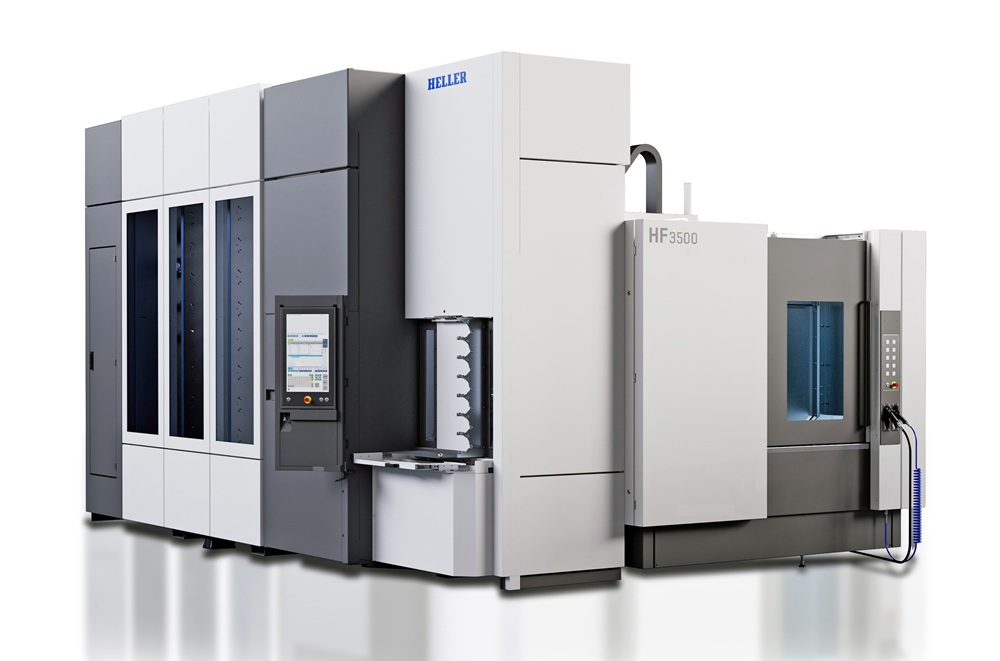
Heller will demonstrate its expertise in high-precision component machining for the aerospace sector at the Farnborough International Airshow 2026 (20-24 July), where the company will exhibit as part of the Midlands Aerospace Alliance in Hall 1. The event will provide an opportunity for the horizontal machining centre specialist to engage with manufacturers in the industry and highlight technologies and engineering capabilities that support the production of complex aerospace components.

As global aircraft demand continues to drive growth across the sector, manufacturers are increasingly seeking solutions that deliver greater productivity, process reliability and cost efficiency. Heller has established a strong position in this market by combining advanced machine tool technology with extensive application knowledge and digital engineering expertise.

A key area of focus is the machining of challenging aerospace materials, including titanium, Inconel and other heat-resistant superalloys commonly used in structural and engine components. These materials present significant machining challenges, requiring a high degree of process stability and precision to achieve consistent results, while minimising production costs.

At Farnborough, visitors will learn how Heller’s machining platforms are designed to meet these requirements through elevated levels of rigidity, accuracy and dynamic performance. The company’s production systems help manufacturers maintain reliable production while meeting the stringent quality standards demanded throughout the aerospace supply chain.

Alongside its machine tool technology, the supplier will explain its capabilities in digital engineering and process simulation. By creating digital representations of complete machining environments, the company enables customers to validate production strategies, optimise fixtures and toolpaths, identify potential process issues and confidently quote for contracts. The approach helps to reduce development time and improve production planning.

Process optimisation is also part of Heller’s aerospace offering, where the company supports manufacturers with integrated automation solutions.

More information www.heller.biz
Mikron is a driving force behind impeller manufacture

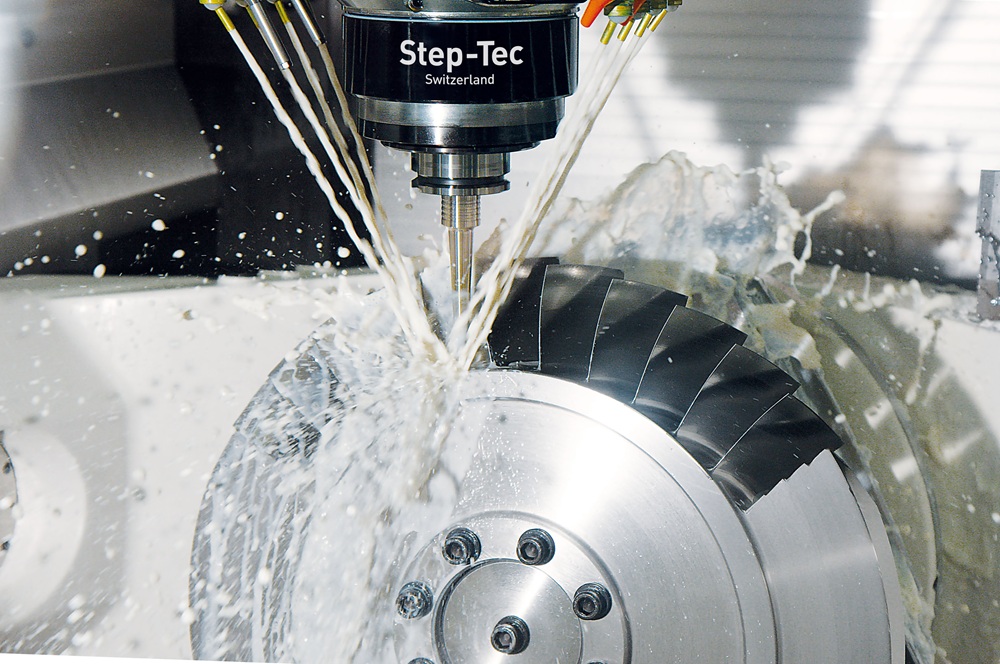
United Machining says its Mikron Mill P U range of simultaneous five-axis machining centres provides manufacturers with an advanced solution for the efficient production of complex open, semi-open and closed impellers.

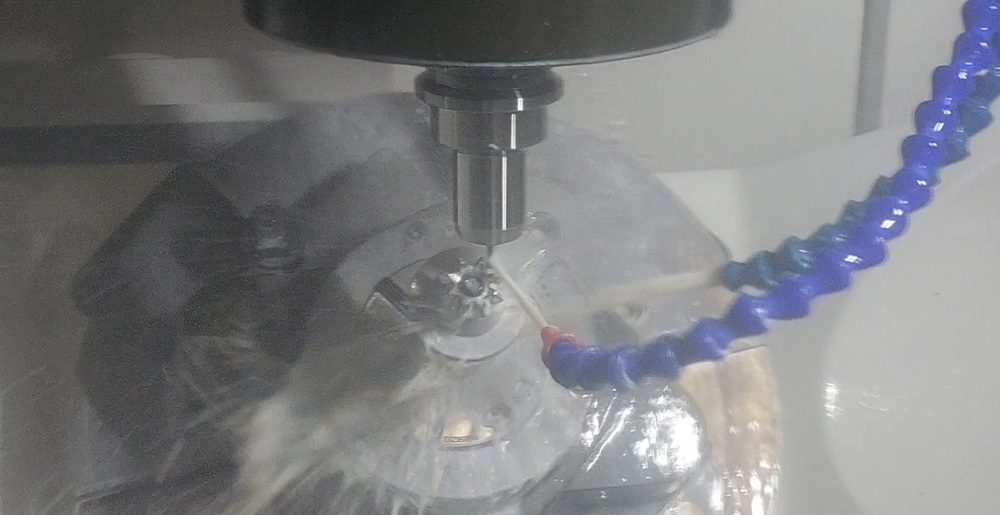
Impeller machining is a demanding process that requires precise control of complex blade geometries through roughing, semi-finishing and finishing operations. Achieving the required dimensional accuracy and surface finish, particularly on thin-walled and highly contoured blades, depends on the seamless integration of machine tool performance, cutting strategies and toolpath optimisation.

The rigid design of the Mikron Mill P U series, combined with high-torque motors, direct-drive Step Tec spindles, advanced thermal compensation and automated calibration systems, enables manufacturers to machine complex impellers faster and more accurately. During roughing, advanced five-axis strategies optimise tool engagement and maximise material removal rates, while semi-finishing creates a consistent stock allowance for stable finishing operations.

Finishing remains the most demanding stage, requiring uninterrupted toolpaths and precise tool orientation to achieve high-quality blade surfaces. The machine’s simultaneous five-axis capability ensures smooth, continuous movement, reducing vibration, improving surface finish and shortening cycle times.

Torque motors fitted as standard provide exceptional rigidity, stability and vibration damping, while eliminating mechanical wear associated with conventional drive systems. Automated Machine Calibration (AMC) further enhances accuracy by simplifying machine calibration and reducing the potential for human error.

To minimise downtime, Machine Spindle Protection (MSP) instantly detects collisions and safely stops the machining process, helping to prevent spindle damage and preserve machine geometry. High-performance Step Tec spindles deliver the speed, power and reliability required for both aluminium and titanium machining applications.

Together, these technologies enable the Mikron Mill P U series to provide the stability, precision, productivity and process security required for modern impeller manufacturing.

More information www.gfms.com

Paragon supports Datum Tool Design with £1.6m funding

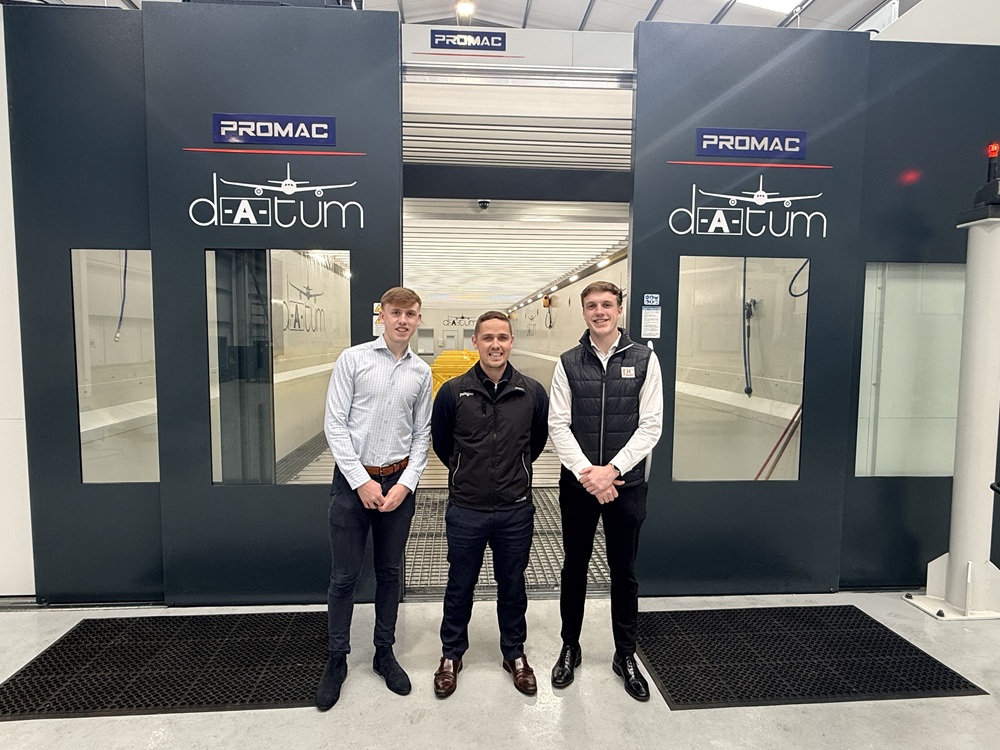
Paragon Bank has provided £1.6m of funding to Northern Ireland-based Datum Tool Design to support the purchase of a new five-axis CNC machining centre, helping the aerospace tooling specialist expand its manufacturing capabilities.

Founded in 1996 and based in Lisburn, Datum Tool designs and manufactures high-precision tooling for major aerospace programmes. The company works with leading manufacturers and supply chains, including Airbus, Bombardier and BAE Systems, delivering composite tooling, assembly fixtures, trimming and drill tooling, as well as build-to-print solutions.

The funding enabled Datum to acquire a Promac Sharav HGVT 4.0, a 22 m five-axis machining centre and the largest machine of its type in Ireland. The investment will allow the company to manufacture larger and more complex tooling in-house, increasing capacity while providing greater control over quality, scheduling and delivery.

Datum’s purchase forms part of a wider growth strategy that also includes a new facility and support from the Aerospace Technology Institute.

The deal was introduced to Paragon by Paul Close Finance and led by business development manager Joe Blanthorn, who says: “Datum Tool Design has built a strong reputation supporting technically demanding aerospace programmes. This investment enhances its ability to undertake larger, more complex projects while demonstrating how asset finance can help established manufacturers invest in productivity and long-term growth.”

Michael Maguire, director at Datum Tool Design, adds: “This new machining centre represents a major investment in the future of our business. It gives us greater capacity, increased flexibility and the ability to manufacture larger, more complex tooling in-house. Paragon and Paul Close Finance understood the importance of the project and collaborated closely with us to deliver the right funding solution.”

Paragon provides asset finance to SMEs across the UK, supporting investment in business-critical equipment, vehicles and machinery.

More information www.paragonbank.co.uk

The long-term partnership behind Notthoff’s success

California-based aerospace subcontractor Notthoff Engineering has strengthened its high-speed machining capacity with the purchase of a second Starrag Ecospeed horizontal machining centre, building on more than a decade of success with its original Ecospeed F 2060.

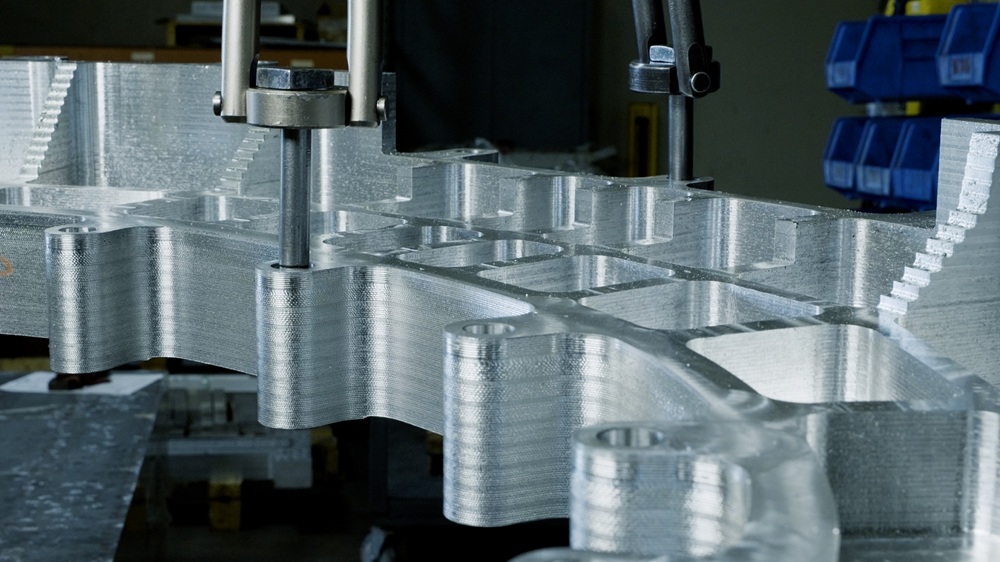
Founded in 1941 as a wartime job shop, Notthoff Engineering has evolved into a specialist manufacturer of structural aerospace components for major defence programmes, including the F-35, F-47 and F-16. Operating from a 65,000 ft² facility in Huntington Beach, the company machines predominantly aluminium components, often removing up to 95% of the original billet material.

The company’s first Ecospeed F 2060 was installed in 2013 following an extensive evaluation process. According to COO Arnie Juarez, the machine’s patented Sprint Z3 parallel-kinematic head proved decisive: “Most large horizontal machines have heavy rotating heads that limit speed and productivity. The Z3 head accelerates incredibly quickly, allowing us to machine parts much faster than other machines on the market.”

More than 13 years after installation, the original machine continues to hold tolerances within one-thousandth of an inch without major overhaul. The latest addition, an Ecospeed F 1540, provides complementary capacity for smaller components, enabling the more efficient utilisation of both machines.

Both feature dual-pallet configurations to maximise spindle uptime and support around-the-clock production. The Ecospeed platform also enables the completion of complex machining operations in a single set up, helping Notthoff meet increasingly demanding aerospace specifications.

Juarez also highlights Starrag’s aftersales support as a key factor behind the repeat investment: “They’ve always stood behind their product. When support is needed, they respond quickly and understand that machine uptime is critical to our business.”More information www.starrag.com

Holistic approach to gears on five-axis CNC machining centre

For decades, precision gear production has relied on highly specialised machines and dedicated tooling, limiting flexibility, increasing costs and restricting innovation. Dontyne Gears is challenging that model through a combination of advanced software and an Okuma Genos M460V-5AX machining centre supplied by NCMT.

The company’s objective was to develop software capable of generating machining strategies and NC code directly from gear design data, enabling complex gears to be produced on a standard five-axis machining centre using readily available tooling. The Okuma Genos M460V-5AX provided the platform required to turn that vision into reality.

“The machine gave Dontyne the flexibility and precision needed to validate its software,” says Andrew Skee, sales manager at NCMT. “It demonstrates that aerospace-level accuracy and repeatability can be achieved on a versatile machining platform rather than dedicated gear-cutting equipment.”

According to Dr Michael Fish, director of Dontyne Systems, the machine has transformed the company’s ability to prove and refine its technology: “Having the Okuma machine in-house allowed us to validate our software on real components. We can generate machining code for complex gear forms in seconds and, with integrated Renishaw Sprint measurement technology, verify results directly on the machine. After extensive development work, we are often achieving ISO 4-5 gear quality on the first attempt.”

Dontyne’s Gear Production Suite creates a digital twin of a gear design, automatically generating manufacturing and inspection data. The system has successfully produced a wide range of gear forms, including spiral bevels, hypoids, helicals and internal gears, all on a single five-axis platform.

Supported by research funded through the British Gear Association, the project is demonstrating that complex gears can be produced more quickly, economically and flexibly than traditional methods.

More information www.ncmt.co.uk