
Demonstrating Flexible Production For Large-Scale Manufacturing

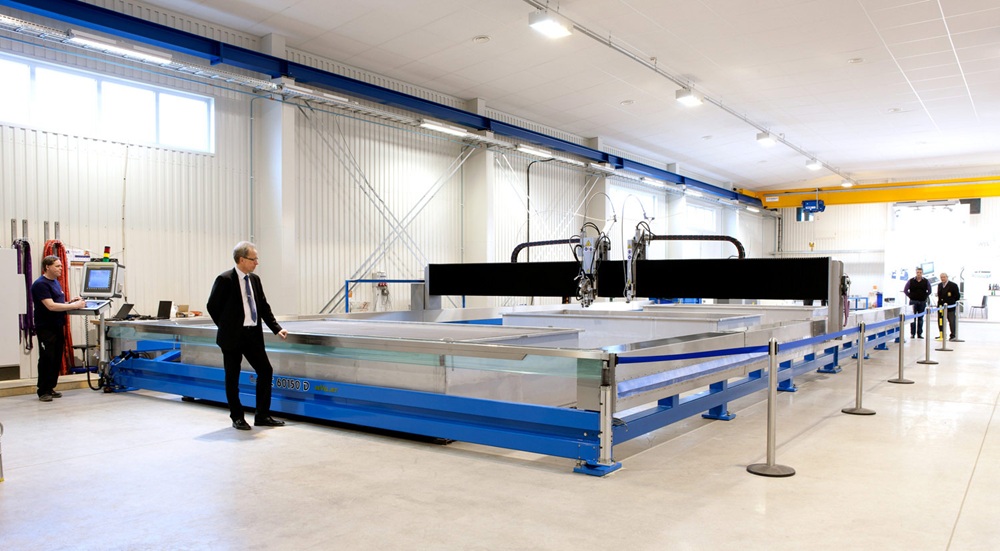
Water Jet Sweden continues to demonstrate how advanced waterjet technology can help manufacturers respond to increasingly varied production demands. A Grand Twin system is soon to be delivered to a customer in the Nordics, showcasing a machine concept designed to offer high levels of flexibility, efficiency and reliability.

Featuring two separate X-beams with individual control systems, the Grand Twin configuration gives manufacturers the ability to manage different production requirements on the same machine platform.

One of the key advantages of the Grand Twin concept is the flexibility it offers in day-to-day production. Operators can cut and load at the same time, helping to improve workflow efficiency and reduce non-productive time. Alternatively, the full table area can be used when producing extra-large parts, allowing manufacturers to maximise the available cutting space when required.

For companies working with a wide range of materials, part sizes and batch requirements, this type of adaptability is increasingly important. Production schedules are rarely static, and manufacturers often need equipment that can switch between different priorities without compromising performance or machine utilisation.

The Grand Twin concept supports this by giving users more ways to configure production around their specific workload. Where throughput is the priority, simultaneous cutting and loading can help keep jobs moving. Where component size is the challenge, the entire table area can be used to accommodate larger parts.

This combination of workspace utilisation and process flexibility makes the concept particularly relevant for manufacturers producing large-format components, managing varied customer requirements, or looking to improve overall cutting efficiency.

For manufacturers considering how to increase capacity, improve production flexibility, or handle larger and more varied cutting requirements, the Grand Twin concept is a useful example of what is achievable with a tailored waterjet system.

More information www.waterjetsweden.com
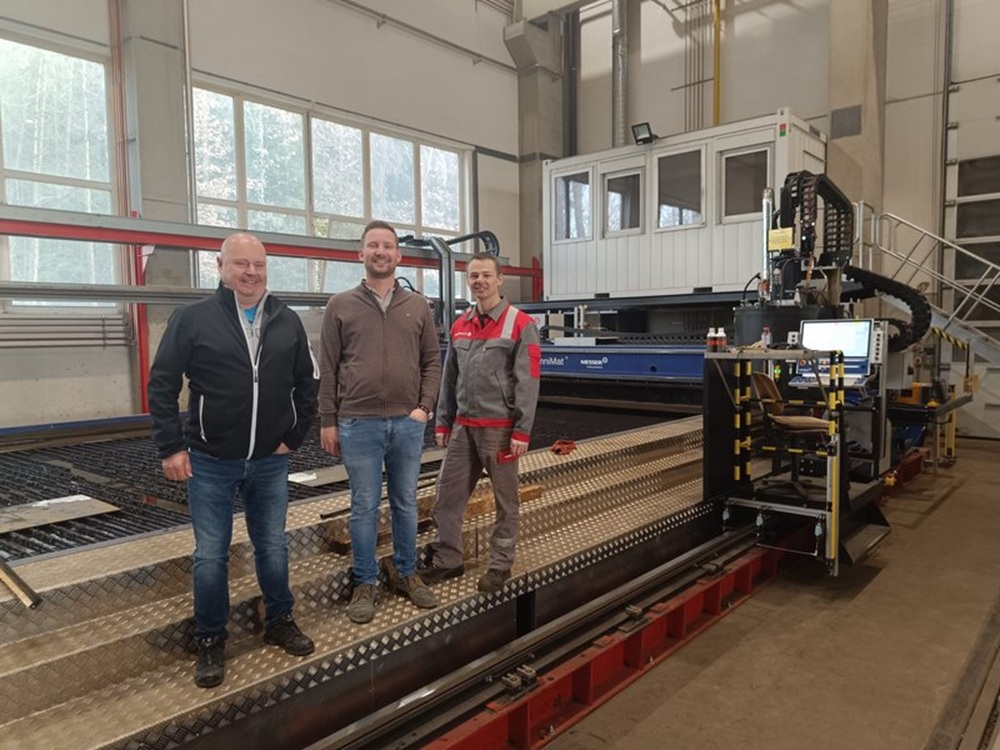
Modernising Plant Engineering With Messer Cutting Systems

Greater precision, increased added value and independence: A strategic investment in advanced cutting technology is helping Austrian plant engineering specialist Kremsmüller Industrieanlagenbau strengthen productivity, expand in-house manufacturing capabilities and improve long-term competitiveness.

The family-owned company, which employs around 2300 people, provides engineering, fabrication and installation services for sectors including energy, petrochemicals, pharmaceuticals, food and manufacturing. Seeking to replace an ageing flame cutting system, Kremsmüller selected the OmniMat CNC cutting platform from Messer Cutting Systems to improve precision, increase flexibility and reduce reliance on subcontract machining.

“We wanted more than a replacement machine,” explains Hannes Gattermayer, head of production. “Our objective was to improve cutting accuracy, increase vertical integration and introduce new machining capabilities.”

The new system combines oxy-fuel and plasma cutting, bevel cutting, pipe processing, boiler end machining, and automated marking on a single platform. Integrated OmniWin CADCAM software simplifies programming while supporting efficient production of both one-off components and small batches typical of plant engineering.

Among the new capabilities are in-house machining of boiler ends up to 4200 mm in diameter and processing of pipes up to 6 m long with weld bevels, reducing dependence on external suppliers while improving lead times and quality control.

The installation also incorporates ergonomic features, including a water cutting table with automated water level control, conveyor-based slag removal and plate cleaning, helping to reduce manual handling while improving working conditions.

Completed in mid-2025, the project was delivered through close collaboration between the two companies, with the first production cut completed just three and a half weeks after installation began.

“The new system represents a genuine technological leap for us,” says Gattermayer. “We’ve increased our vertical integration, stabilised our processes, improved working conditions and strengthened our competitiveness for the future.”

More information www.messer-cutting.com

Prática’s Recipe For Innovation: Drive Success With Prima Power

Founded in 1991, Brazilian bakery and kitchen equipment manufacturer Prática has grown from a small family business into an international supplier, supported by continuous investment in advanced manufacturing technology. Central to that growth has been a long-standing partnership with Prima Power, helping the company improve productivity, automate production and expand into global markets.

Based at a 20,000 m² manufacturing facility in Pouso Alegre, Prática was established by brothers Luiz and Andre Rezende to produce energy-efficient bakery equipment for the Brazilian market. As demand increased, the company sought manufacturing technologies that would support higher output and improved quality.

The partnership with Prima Power began in 2004 with the installation of a CO2 laser cutting system, followed by a C5 turret punch press to accelerate punching operations for holes, vents and louvers. Continued growth led Prática to make a major leap in automation in 2012, installing a fully integrated production system comprising a Night Train FMS, FBe Bending Centre, LPe laser/punch combination machine and Shear Genius. The installation was the first of its kind in Brazil.

According to Luiz Rezende, the automated system delivered significant gains in production speed, material handling, storage control and employee safety, while supporting the company’s expansion into international markets, including subsidiaries in Chile and the United States.

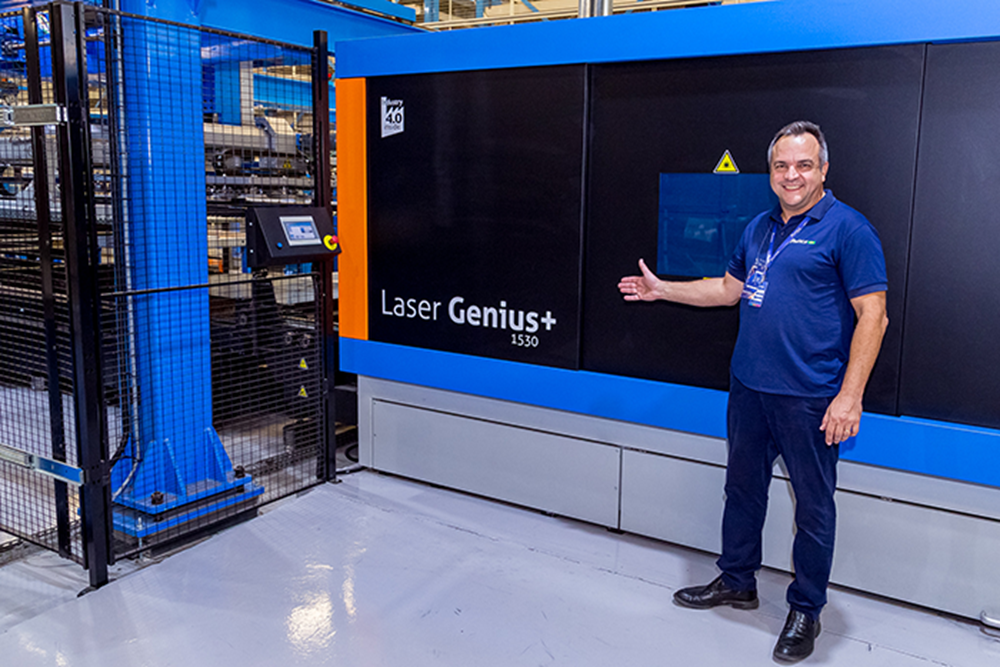
More recently, Prática has continued to invest in upgraded Night Train software and hardware, additional manufacturing capacity and new Prima Power equipment, including a Laser Genius+ fibre laser and servo-electric press brakes. The company also works closely with Prima Power’s local service team to maximise machine uptime through preventive maintenance and technical support.

Today, Prática combines advanced automation with sustainable manufacturing to strengthen its competitive position while continuing to develop innovative food processing equipment for customers worldwide.

More information www.primapower.com

Metalworking Entrepreneur Makes Sparks Fly With Trumpf

At just 18 years old, Peter Götzl founded a one-man metalworking business in Erbendorf, Germany. Two decades later, he leads one of the country’s most advanced contract manufacturers, with a fully automated, digitally connected sheet metal production facility built around Trumpf laser cutting technology.

After qualifying as a master craftsman, Götzl established the business in 2005, initially producing railings and fences. As demand grew, outsourcing laser-cut components created production bottlenecks, prompting him to explore laser cutting technology for himself.

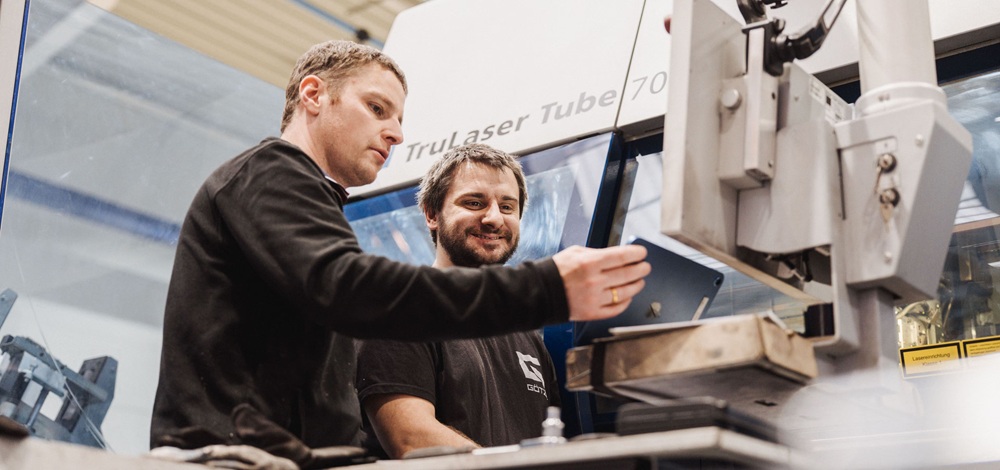
A demonstration of a Trumpf TruLaser Tube 7000 convinced him that laser tube cutting could dramatically increase productivity and precision while opening new business opportunities. The investment required a new production hall and additional staff, but the gamble paid off. Installed in 2014, the machine nearly doubled production speed and transformed the company from a traditional metalworking shop into a modern subcontract manufacturer.

Growth accelerated further as Götzl expanded into high-volume production for industries including automotive, storage systems, furniture and renewable energy. A second TruLaser Tube 7000 followed in 2017, supported by responsive Trumpf service that minimised downtime and reinforced confidence in the partnership.

Inspired by a visit to Trumpf’s Smart Factory in Chicago, Götzl embarked on an ambitious digitalisation programme. Since 2019, he has invested around €25m in an automated production facility, including seven laser tube cutting machines, TruBend press brakes, TruDisk lasers, a 24 kW flat-bed laser, automated storage from Stopa and Oseon production control software.

Around €12m of that investment has been in Trumpf technology. Designed with future growth in mind, the facility provides the capacity, flexibility and automation to serve increasingly demanding manufacturing requirements while positioning the company for the next decade of expansion.More information www.trumpf.com

Partnership Powered by Innovation: Schuhmacher Metalltechnik

Since 2007, Schuhmacher Metalltechnik and LVD have worked side by side to optimise performance on the shop floor. Beginning with LVD press brakes, the co-operation has evolved into a journey of transformation, including two Taurus 24-m laser cutting machines and an Ulti-Form robotic bending system.

As a trusted name in sheet metal fabrication, Schuhmacher Metalltechnik offers end-to-end expertise, from concept development to full-scale series production. A renowned neighbour and key customer is Liebherr, a global manufacturer of construction machinery, cranes, and industrial equipment.

“We’re a family-owned company, founded in 1953, with over 70 years of experience in sheet metal processing,” says Stefan Zimmermann, managing director of Schuhmacher Metalltechnik. “As a subcontractor processing metal blanks from 1 to 200 mm thick, we combine expert advice, efficient execution and high-tech production.” 

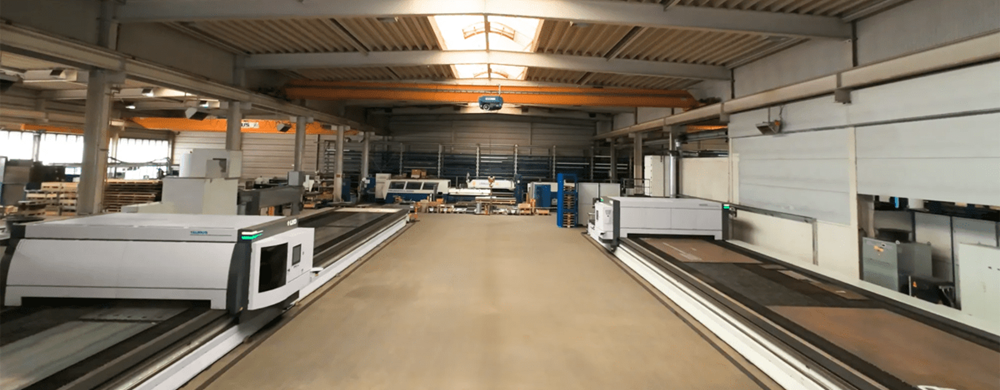
In 2022, Schuhmacher Metalltechnik took a bold step forward with the Taurus FL, a fibre laser cutting system designed for big ambitions. The system features a cutting length of 24 m and processes sheets up to 3.3 m wide and 30 mm thick with ease. No more time-consuming repositioning, just pure efficiency at scale. One of the Taurus’ key advantages is its bevel cutting capability.

“With the Taurus, we can integrate weld seam preparation quickly and precisely during cutting,” states Zimmermann.

This feature delivers a major competitive advantage: secondary steps are eliminated and automation takes over. The impact was so significant that the company ordered a second Taurus shortly after, doubling capacity and unlocking new levels of flexibility.

To tackle the shortage of skilled labour and optimise production, Schuhmacher has also invested in a robotic bending cell. Powered by the CADMAN®-SIM software, Ulti-Form automates programming and opens doors to new possibilities.

More information www.lvdgroup.com