

£2.5bn for prototype fusion plant

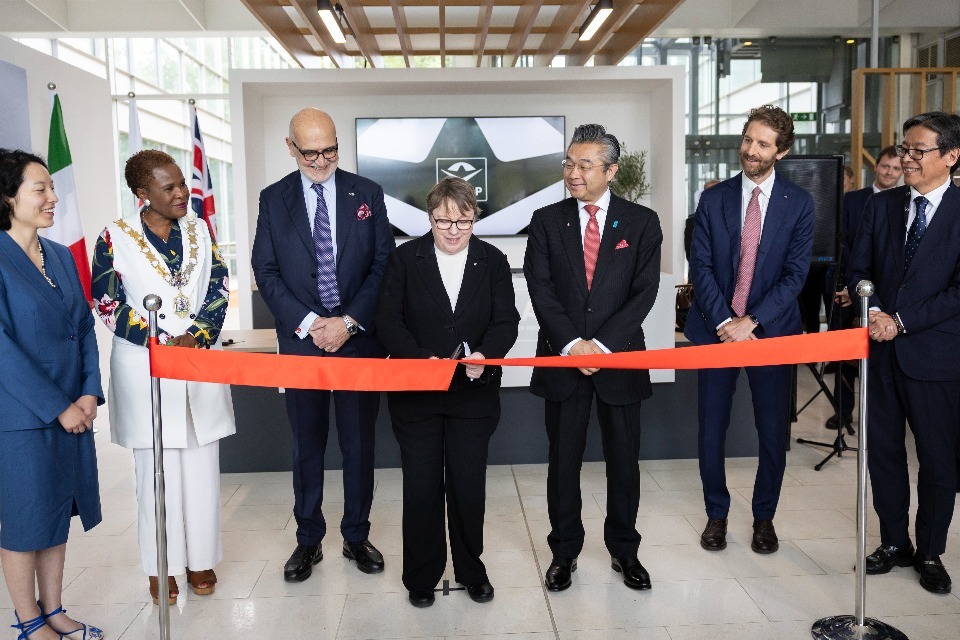
The Government has announced a record £2.5bn investment in fusion energy, which includes support for a new prototype fusion energy plant in Nottinghamshire. The prototype plant, known as STEP (Spherical Tokamak for Energy Production), will be built at the site of the former West Burton A coal power station near Retford and Gainsborough. The project’s delivery is expected to create over 10,000 jobs.

A groundbreaking and world-first scientific endeavour, STEP works by combining hydrogen gases, deuterium and tritium, which are heated to over 150 million degrees Celsius and confined within a powerful magnetic field. The energy produced can be used to create steam and turn a turbine, ultimately generating electricity.

More information https://step.ukaea.uk/

University of Surrey partners with SYS Systems

Listed among the leading universities in the UK, the University of Surrey is committed to innovation and maintaining its position as a top institution for higher education. At the forefront of that ambition is the Faculty of Engineering, which continues to enhance its offering to students by integrating the latest technological advancements into its teaching. By partnering with SYS Systems, the University of Surrey has invested in Stratasys additive manufacturing technology to provide learners with state-of-the-art equipment for producing realistic, functional components.

While a selection of desktop 3D printers had previously provided students with some exposure to the technology, but both staff and students were looking for a more professional solution.

The University of Surrey invested in two Stratasys 3D printing systems, initially the Objet30 Prime as part of a trade-in for a legacy machine, followed by the J55, both of which use PolyJet technology to deliver high levels of part accuracy and full-colour printing.

Design and engineering manager Myles Jenkinson says: “Our department is the School of Engineering, but the whole university makes use of the 3D printer. We’ve produced parts for the vet school based on MRI scans of animal skulls and created moulds for other departments. The smooth surface finish from the PolyJet printer is perfect for those kinds of applications. Additive manufacturing here is not just about supporting the university; we also have companies reaching out to us to access the technology because what we have is genuinely state-of-the-art. I would definitely recommend SYS Systems to other universities.”

More information www.sys-uk.com

Latest AM solutions enable pioneering research

3D Systems is collaborating with researchers from Penn State University and Arizona State University on two projects sponsored by NASA intended to enable ground-breaking alternatives to current thermal management solutions for space exploration.

Severe temperature fluctuations in space can damage sensitive spacecraft components, resulting in mission failure. By combining deep applications expertise with 3D Systems’ additive manufacturing (AM) solutions comprising Direct Metal Printing (DMP) technology, tailored materials and Oqton’s 3DXpert software, the teams are engineering sophisticated thermal management solutions for the demands of next-generation satellites and space travel.

The project has resulted in processes to build embedded high-temperature passive heat pipes in heat rejection radiators that are additively manufactured in titanium. These heat pipe radiators are 50% lighter per area with increased operating temperatures compared with current state-of-the-art radiators, allowing them to radiate heat more efficiently for high-power systems.

Another AM project yielded a process to produce one of the first functional parts using nickel titanium (nitinol) shape memory alloys that can be passively actuated and deployed when heated. This passive shape memory alloy (SMA) radiator is projected to provide a deployed-to-stowed area ratio that is six times larger than currently available solutions, enabling future high-power communications and science missions in restricted CubeSat volume.

“Our long-standing R&D partnership with 3D Systems has enabled pioneering research for the use of 3D printing in aerospace applications,” says Alex Rattner, associate professor at Pennsylvania State University. “The collective expertise in both aerospace engineering and additive manufacturing is allowing us to explore advanced design strategies that are pushing the boundaries of what is considered state-of-the-art.”

More information www.3dsystems.com

XYZ MACHINE TOOLS AND CERATIZIT WORK IN UNISON TO ENSURE AWINNING COMBINATION

For over 15 years, XYZ Machine Tools and Ceratizit have engaged in a partnership where
they support each other’s activities with shared values, vision and thinking. The
collaboration, which began with a chance meeting at Edinburgh Airport between Glenn
Stanton, sales manager at Ceratizit UK and Ireland, and Nigel Atherton and Mike Corbett of
XYZ Machine Tools, continues to help customers of both businesses.
Says Stanton: “Chatting with the guys from XYZ at the airport, we spotted a synergy
between the companies in several areas, one of which was the typical customers that
purchased from both businesses. Another common theme was the focus and drive we had
to help customers become more efficient at a great price point. Over the past 15 years it has
proved to be the perfect partnership.”
A machine tool is never going to perform without cutting tools or work holding and, during
its formative years, XYZ had never really aligned with a dedicated tooling supplier. At the
start of the relationship, Ceratizit, which was branded as WNT at that point, provided XYZ
with tooling that allowed the company to demonstrate its machines to their full capability
and show production gains to customers at the XYZ showrooms around the country.
“High-feed milling and the development of variable helix/variable pitch solid-carbide milling
cutters were really starting to make an impression in machine shops around the country
when the partnership began,” explains Corbett. “It was ideal that XYZ had access to this
latest generation of tools. We were able to show customers how to reduce cycle times and
improve machine efficiency with the technical back-up of a company that was at the leading
edge of cutting tool performance.”
The partnership took a giant leap forward following the opening of the Ceratizit Sheffield
Technical Centre. With Ceratizit’s business model evolving, space that was once used for
holding tooling stock in the Sheffield Airport Business Park facility, became available for XYZ
to install a range of its machines. This in turn created a demonstration/training facility in the
north of England.
A by-product of having these machines in Sheffield was it allowed the showroom to become
the training hub for Ceratizit technical and sales staff – not only the UK but also from other
countries around Europe. It allowed customer-facing employees to see how they could get
the best from their products.
Ceratizit has subsequently moved its Technical Centre to a dedicated building on the AMRC
complex just down the road from the company’s main offices. However, the facility still

houses XYZ machines, including ProtoTRAK-controlled mills and lathes, an 800 HD vertical
machining centre, and a UMC5X simultaneous five-axis machining centre. The tooling
specialist continues to use the XYZ machines to deliver technical training to both staff and
customers, while another application is the manufacturing of bespoke work holding and
fixtures marketed under the ‘Made In Sheffield’ brand.
Both businesses are seeing a change in the landscape of machine shops around the country,
where gaining access to tooling as quickly as possible is becoming increasingly important.
XYZ is also witnessing this trend, and one of the advantages of its association with Ceratizit
is continuous access to the latest TOM 80 vending machine.
“As customers adapt to the changes that Brexit has brought, many are now taking
advantage of having a vending machine installed on their shop floors if they meet certain
criteria we set,” explains Stanton.
To highlight the benefits the vending machine brings to the XYZ showroom near Tiverton,
Devon, Corbett adds: “Both our production team and applications department use this
machine to dispense Ceratizit tooling. We have full traceability of who vends the tools and
re-stocking takes place without any intervention from XYZ. This facility ensures tooling is
always available to our staff without needing to call upon Ceratizit’s next-day delivery
service, adding to our efficiency.”
When asked about the future of the partnership, Stanton says: ”As we develop new tools,
grades of carbide, and add to our existing five-axis vices and zero-point work-holding
systems, XYZ will always be involved in the development of these products. It allows
customers to see first-hand in any of the XYZ showrooms around the country the latest
technologies we offer.
Corbett closes by adding: “Both Ceratizit and XYZ feel that everybody is a winner with this
arrangement. XYZ get tooling and work holding provided to show the power and robustness
of the products. Ceratizit wins because they can show their cutting tools and work holding in
action to prove the performance gains available from investing in their equipment.
However, as far as both companies are concerned, the main winner has to be the customer,
who can produce parts as efficiently as possible and reduce the cost per part by tapping into
this long-established partnership.
More information www.xyzmachinetools.com

Transforming Wind Turbine Repairs

A research collaboration between Renewable Parts Ltd (RPL), SSE Renewables and the National Manufacturing Institute Scotland (NMIS) has demonstrated the potential to remanufacture critical onshore wind turbine components – restoring worn or damaged parts to their original specification or better. The outcomes could drastically cut waste, reduce carbon emissions and extend part life.

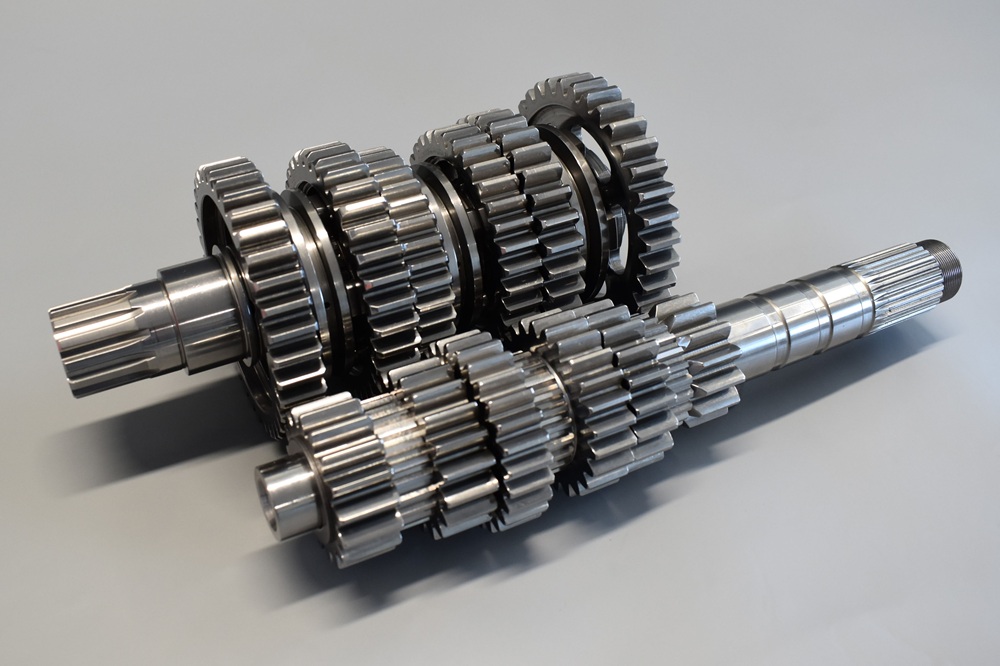
Using additive manufacturing, analysis and inspection techniques, the team successfully restored damaged pinion shafts from a wind turbine yaw gearbox, a key component that keeps turbines facing into the wind to maximise energy capture. Early trials showed that remanufactured parts could perform to original specifications following machining and NDT, saving up to 84 kg of CO2e per remanufactured component.

More information www.nmis.scot