

Improved results with live tools from Heimatec

The desire to save time and the related cost benefits has always existed. However, in the past, lathes – or the turrets mounted on them – were limited in their maximum rotation speed, subsequently restricting the achievable cutting speeds. In order to produce higher quantities in a shorter time, attention was paid directly to the live tool and, where possible and sensible, speeders were designed and produced. Gear ratios up to 1:4 result in a speed increase of 48,000 rpm.


In the meantime, there are some machine tools with turrets that achieve higher rotation and thus higher cutting speeds. This adaptation results in higher requirements on the mounted live tool units mounted. Wear parts such as bearings and seals are more stressed and must be replaced more frequently. Likewise, when using tools that are not designed for such high rotation, there is a risk that the gears of the tools will overheat, spindles will be overstressed and, as a result, tools will be damaged.

To counteract these problems, Heimatec – available in the UK from Hyfore – has adapted some products and designed them to be suitable for extra high rotation (up to 15,000 rpm). Thus, axial drilling and milling heads – as well as radial drilling and milling heads – for selected machine manufacturers are already available with these specifications. In use by customers, these prove the design measures implemented to achieve high speeds with the predictable wear and service life.

The advantage of the Heimatec high-speed tools is that they also operate smoothly at lower rotation over the speed range available from the machine tool turret.

More information www.hyfore.com

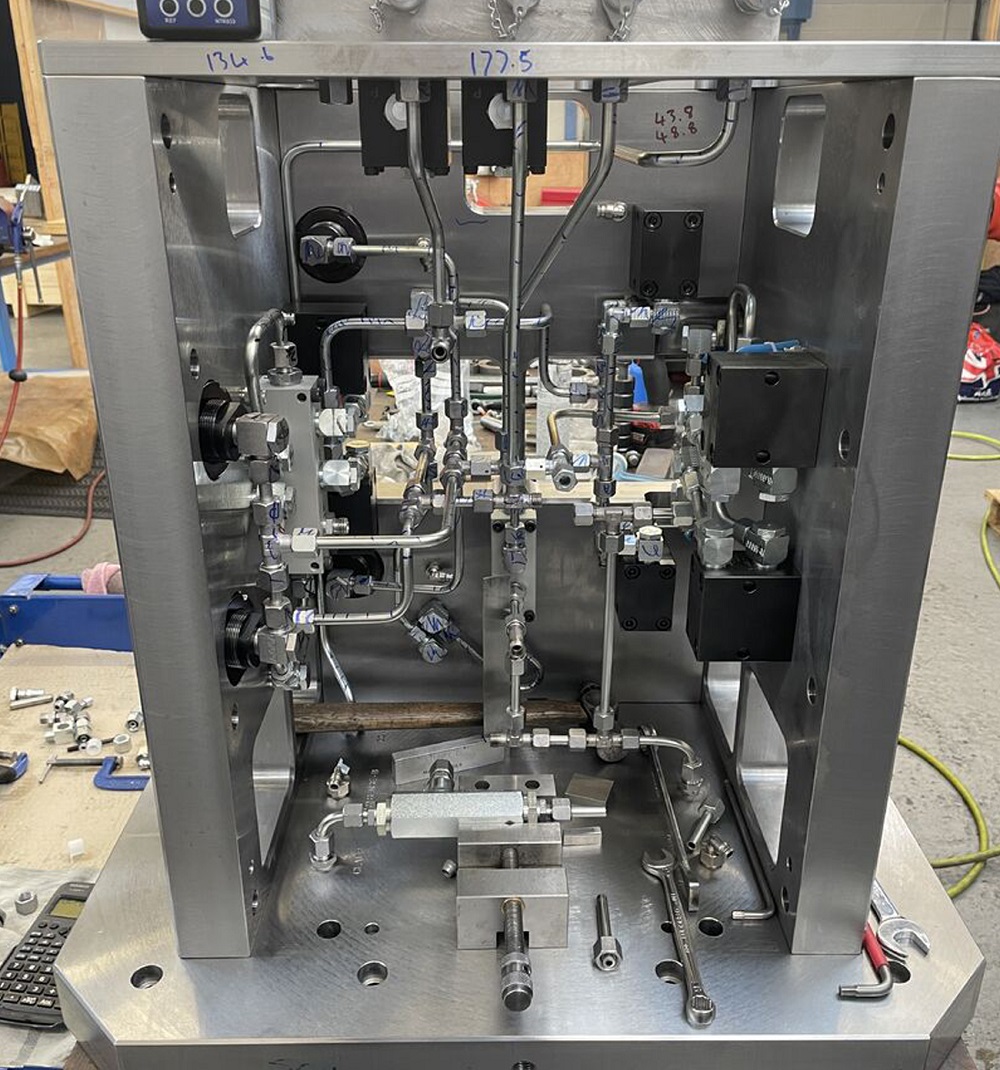
SW Sfix for modular and automated clamping

At this year’s EMO exhibition in Hanover this September, Schwäbische Werkzeugmaschinen (SW) is presenting the new Sfix system (Smart Fixture). Sfix is capable of automatically assembling modular clamping fixtures for workpieces, enabling efficient and precise clamping even for small batch sizes.

“Especially outside the automotive industry, we see great potential for optimisation in medium- and small-series production, which requires greater flexibility and modularity from manufacturers,” says Michael Kreuzberger, product manager at SW. “To address this, our new Sfix system transforms clamping technology: through automation, it enables higher productivity even in production lines with smaller batch sizes.”

The Sfix system offers a solution to one of the machining industry’s biggest time wasters: the clamping of small- to medium-sized product series. Sfix provides a flexible solution to this challenge: it automates the assembly of the appropriate clamping technology for each workpiece – and provides users with a virtually unlimited number of clamping fixtures for a one-time investment. At the core of the system is SW’s patented Sfix plate, which features retractable pins that allow for flexible positioning of components. Various clamping modules can then be attached to these pins to build the individually required fixture.

The advantages of the Sfix system extend beyond its modular mechanical design: in the so-called S-cell, which SW is presenting at its EMO booth, the clamping fixture is assembled quickly and fully automatically. The cell is equipped with all necessary clamping components and workpiece carriers as well as a robot. Users only need to define the clamping points within the CAD model and configure the fixture set up.

More information www.sw-machines.com

Micro VC Holder provides pinpoint precision

Nikken is releasing its Micro VC Holder, a micro-tooling range designed for high precision, reliability and high-performance micro-machining. According to the company, the Micro VC Holder offers exceptional precision, balance and efficiency for industries where perfection is paramount. Whether crafting intricate components for luxury timepieces or producing highly detailed medical instruments, the Micro VC Holder ensures results with minimal runout (3 μm at 4xD) and high-speed performance up to 50,000 rpm.

Designed to support the latest generation of micro machine tools and high-speed spindles, the Micro VC Holder is available in monobloc and straight-shank variants. This versatility allows manufacturers to achieve enhanced accuracy and cost savings by eliminating the need for extended length cutting tools, which can be crucial in both watchmaking and medical applications where micro-level precision is essential.

The reduction in vibration, through in-built damping and reduction in tool wear means extended tool life and lower replacement costs – delivering financial benefits that directly impact profitability.

Furthermore, the Micro VC Holder incorporates the HSK-E symmetrical tool-holder shank, which eliminates drive slots, tooling holes and timing notches. This results in superior balance and reduced vibration, critical for maintaining flawless finishes on watch components and ensuring the tight tolerances required for surgical tools and implants. The advanced 8° collet system further enhances grip and stability, reducing tool deflection and extending tool life.

Nikken says that its Micro VC Holder proves that size really does not matter – at least when it comes to tool-holding technology.

More information www.nikken-world.co.uk

Device checks small tool holder pull-in force

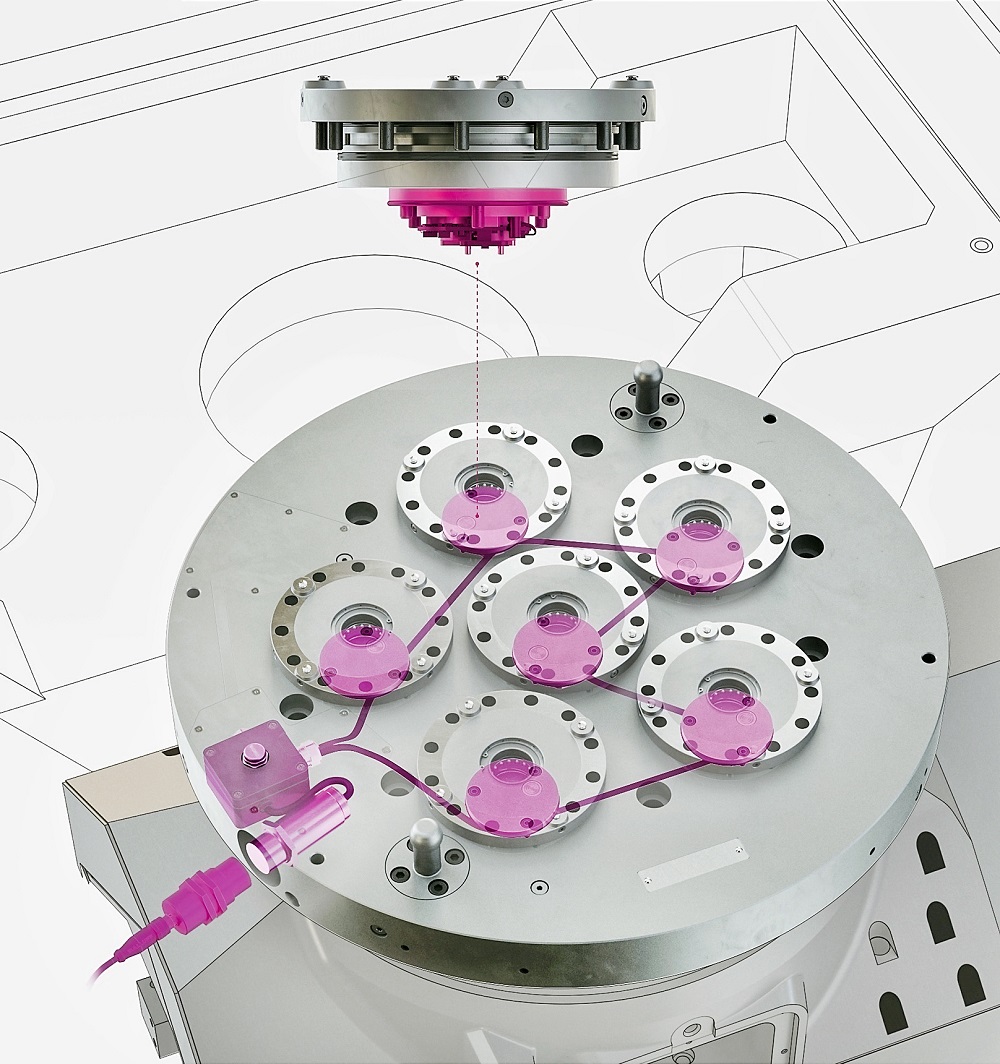
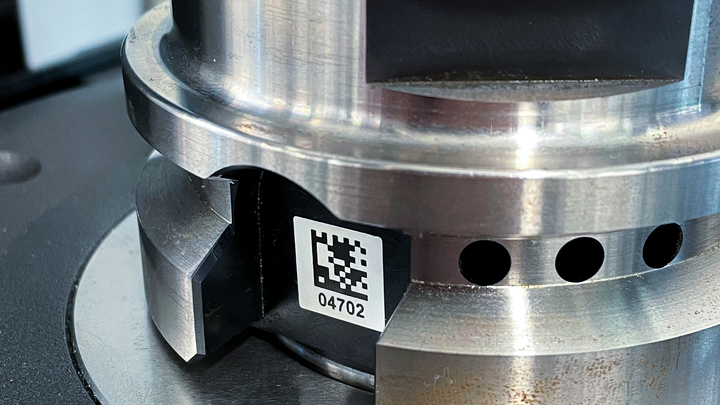
OTT-JAKOB Spanntechnik, a German manufacturer of tool clamping systems for lathes, milling machines and grinders, has launched a spindle clamping force measuring device, the Power-Check Micro. A key component for preventative maintenance, it has been introduced alongside the established Power-Check 2 and Power Check Magazine, which determine the pull-in force with which a tool holder is held in a large diameter spindle taper, whether it is HSK (up to 160), BT (30, 40 or 50), SK, CAT or another type.

In contrast, the Power-Check Micro is designed to perform an equivalent job for more compact HSK E15, E16 and E20 spindle interfaces, which are mainly found on small, precise machine tools intended for high-speed cutting. Such machining platforms are typically utilised in the dentistry and jewellery sectors, as well as for the production of small parts used in electronic and medical products, precision components in aerospace and automotive engineering, and small tools and dies.

These pull force measuring units are exclusively available in Britain and Ireland through sole sales agent Gewefa UK. The company points out that the new device is pertinent to nearly all micro-manufacturing applications, where there is a growing emphasis on process reliability, condition monitoring, preventative maintenance and quality assurance.

The latest drawbar force monitoring system is of compact design, measuring just 48.8 x 43 x 41.5 mm and weighing approximately 200 g, making the unit suitable for use in constrained working areas. Mains-independent, power arrives courtesy of two replaceable lithium batteries capable of up to 1000 hours of continuous operation.

More information www.gewefa.co.uk

Ways to maximise productivity and flexibility

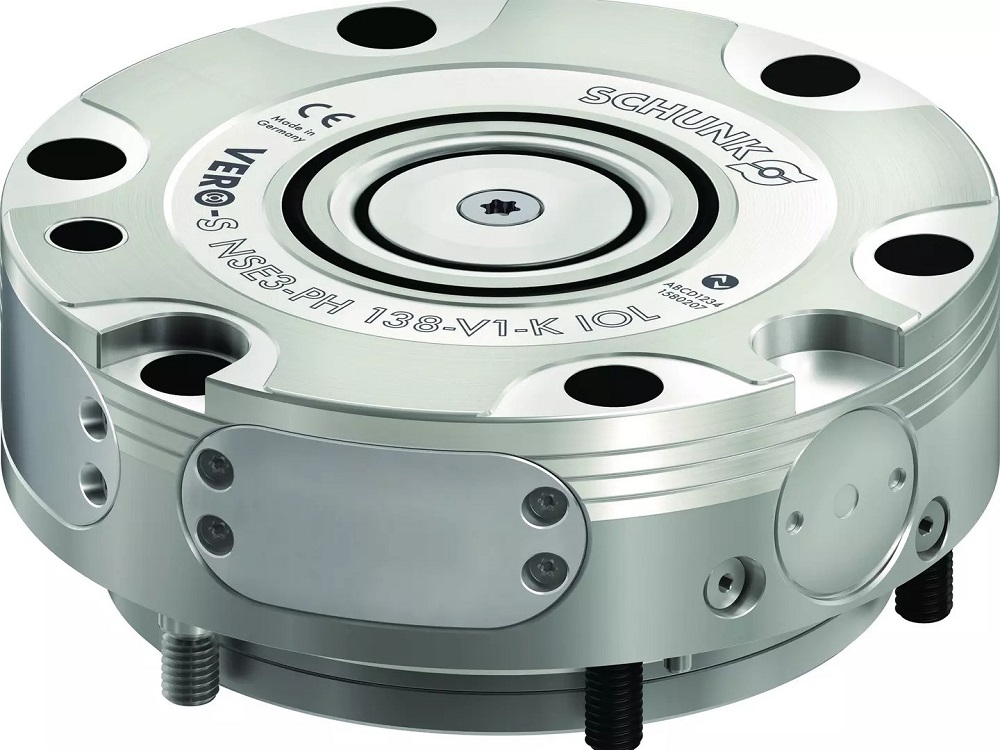
At the Automatica 2025 exhibition in Munich last month, Schunk presented its portfolio for smart automation – from standardised components and complete solutions to customised engineering. The focus was on maximising productivity and flexibility in industrial manufacturing.

Industrial robots and cobots (collaborative robots) in particular – are indispensable for future-oriented automation of production processes. For these systems, as well as for the next generation of robotic systems such as humanoid robots, Schunk offers suitable end-of-arm components with open digital modules.

The anthropomorphic SVH 5-finger gripping hand, for example, is available with open-source software and as a digital twin. Thanks to decades of expertise in flexible gripping technology and strong partnerships with industrial companies, start-ups and research institutions, Schunk is opening up new fields of application that go beyond the scientific environment. An live demonstration at the Schunk booth – developed in co-operation with Neura Robotics – showed what this could look like in practice.

In the field of E-mobility, Schunk develops tailor-made automation solutions for battery cell handling – from the handling of cells in the composition of battery packs to the final assembly in the vehicle. The RCG round cell gripper, for example, is specifically designed for handling 46 mm round cells – both individual battery cells and the precise assembly of complete cell clusters.

Schunk’s engineering offering is complemented by digital tools such as a digital twin for planning and simulation. Customers can virtually plan, simulate and optimise their automation tasks. Partnerships with technology companies like NVIDIA support the simulation and design of complex automation projects.

More information www.schunk.com