
Advanced work holding for digital manufacturing

At the recent EMO 2025 exhibition in Hanover, work-holding equipment manufacturer Roemheld presented its suite of digitalised work-holding solutions, which allow manufacturers to integrate their clamping processes into an Industry 4.0 factory environment.

The focus was on innovations like STARK.intelligence and the Hilma AS-E electromechanical machine vice series, which can transform traditional workholding into a vital source of real-time data, enhancing process reliability, efficiency and predictive maintenance.

In today’s rapidly evolving manufacturing landscape, companies face unprecedented pressures: the demand for higher precision, increasing product variants and the need for ongoing cost optimisation. While many metalworking companies still harbour doubts about the value of digitalised workpiece clamping, Roemheld, through its Stark division, demonstrates that these advanced solutions are not just an advantage, but a necessity for future-proofing production.

Martin Greif, Stark’s managing director, said: “We’re committed to making companies fit for the future of smart metalworking by providing solutions that integrate seamlessly, provide invaluable data and dramatically improve process control.While basic pneumatic or sensory monitoring of clamped and unclamped states has been available for years, our latest developments unlock a new dimension of process control and self-diagnosis.Advanced digitalisation of workholding is no longer a concept, but a tangible reality that delivers significant returns on investment, often within a few months.”

STARK.intelligence is a system with modular sensors designed to make hydraulically, pneumatically or mechanically operated zero-point clamping systems digital-ready. Each clamp is equipped with its own multi-sensor unit that continuously collects critical information, such as travel (position), temperature and pressure. The data is aggregated by a master unit and transmitted to various end devices via an IO-Link interface, available in both inductive and wired versions.

More information www.roemheld.co.uk

How tool management can save money and time

The TP32 Tool Management, Tool ID (TiD) and Tool Tracking System (TTS) were developed by Nikken to meet the evolving demands of smart manufacturing and using connectivity between systems to improve information exchange and streamline processes. According to the company, these systems provide system integration, leading to improved visibility and efficiency that empower manufacturers to maximise uptime, reduce waste and centralise critical data.

Built as a comprehensive, fully integrated tool management solution, TP32 brings visibility and data exchange to the shop floor. Designed for connectivity with CAM systems, CNC machines, ERP software, vending systems and more, TP32 manages every tool and resource within a production environment, ensuring nothing is misplaced or overstocked, and all usage and costs are visible.

For manufacturers seeking a reliable entry point into digital tool data management, Nikken says TiD is ideal as a cost-effective, plug-and-play system for managing tool identification and data transfer.

TiD utilises handheld scanners to read a data matrix tag (similar to a QR code) directly from the tool at the presetter and machine. This unique identifier allows specific tool measurement data to be located and loaded directly into a machine’s NC, bypassing the need for embedded RFID chips or costly hardware modifications.

TiD is suitable for manufacturers looking to digitise their tool data without overhauling existing infrastructure. Nikken saysit offers a smart bridge between the physical and digital tool environment, while removing the change of erroneous tool measurements ending up in the machines tool table.

As the manufacturing landscape evolves toward full digitisation, Nikken reports that its TP32 and TiD software platforms provide the critical infrastructure needed for high-efficiency operations.

More information www.nikken-world.co.uk

An important step into an exciting future

At the recent EMO 2025 exhibition in Hanover, Schunk showcased battery-powered electromechanical clamping devices with IO-Link connectivity for the first time – a technology with wireless data transmission between clamping device and machine control. Schunk says this innovation represents an important step to further automation of the clamping process and the implementation of Industry 4.0 principles. Companies benefit from a media-independent clamping position, expanded options for data transmission and increased productivity.

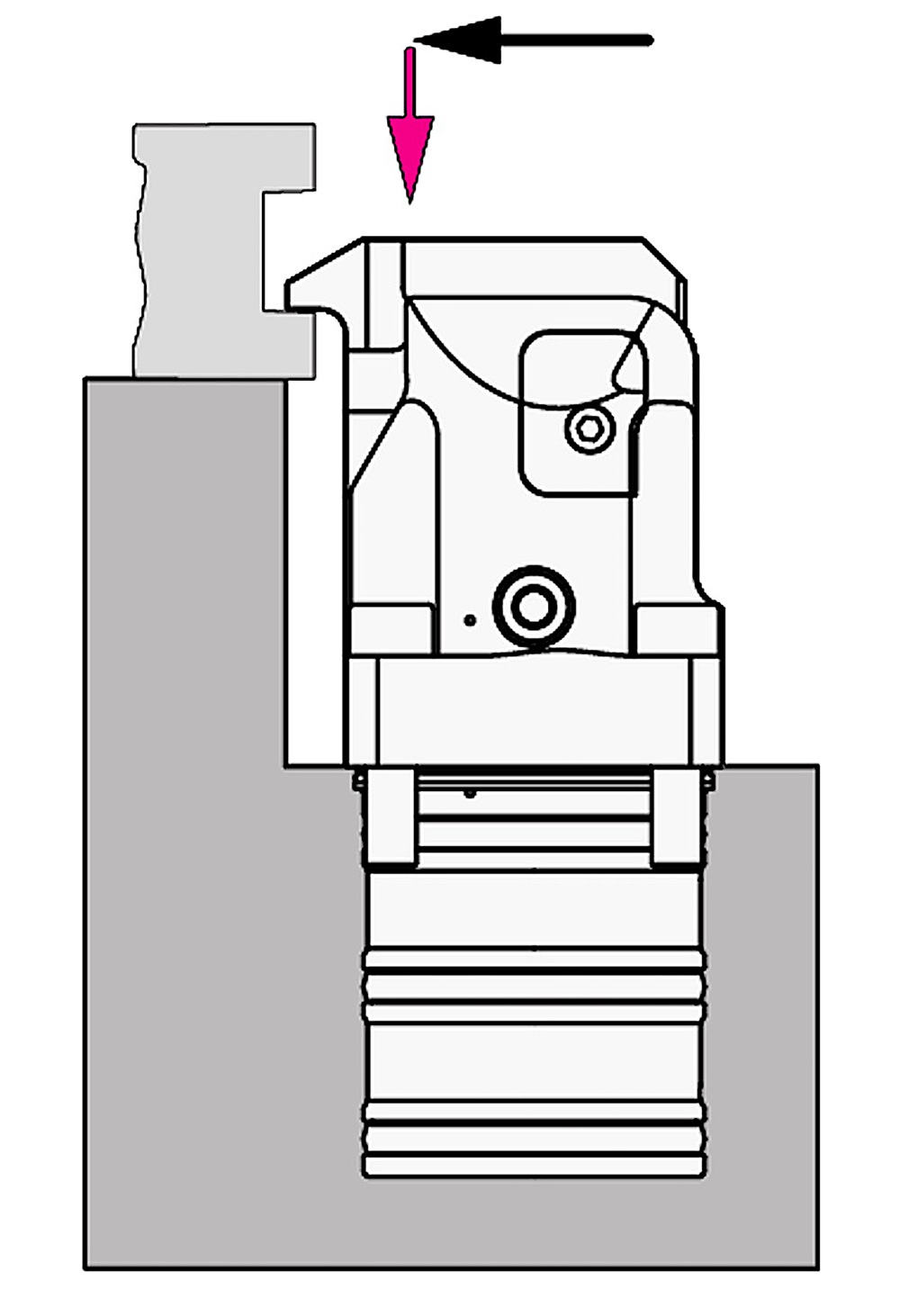
EMO visitors seeking electrically actuated quick-change pallet modules with fully integrated electronics and actuators needed to look no further than the Schunk stand.Thanks to a multitude of interrogation and transmission options, the Vero-S NSE3-PH 138 IOL offers greater transparency during the clamping process, without further interfering contours.

With the new battery-powered clamping device, Schunk says it offers a pioneering solution for companies that want to capture process-relevant statuses in real time and transmit them efficiently to the machine control. The technology is particularly attractive for industries looking to move away from cost-intensive pneumatic and hydraulic solutions – whether to reduce operating costs or to avoid contamination, which is undesirable in cleanrooms or the food industry.

In this new development, Schunk relies on IO-Link for wireless communication between the clamping device and the machine control. For the first time at EMO 2025, battery-powered Tandem clamping force blocks of the KSE3 series – as well as Vero-S quick-change pallet modules – were presented that utilise this technology. The actuation and transmission of the permanently recorded statuses of the clamping devices are carried out via IO-Link Wireless and an IO-Link Master, which then transfer this information to the machine control.

Despite the switch to battery operation, users do not have to compromise on clamping force or pull-down force. On the contrary: the new clamping devices deliver the same performance as pneumatic or hydraulic systems.

More information www.schunk.com

Free-of-chargework-holding seminars available

According to 1st Machine Tool Accessories, workholding may not always be the most glamorous part of machining, but it is one of the most important. For engineers, a strong understanding of work-holding principles is essential asit directly influences product quality, efficiency, safety and overall manufacturing costs.

At its core, workholding ensures that a workpiece is positioned securely and accurately during machining. This stability not only guarantees precision but also enables engineers to optimise operations, reduce waste and design parts that are manufacturable at scale.

Several key reasons exist whyevery engineer should understand workholding.Optimised workholding set-ups not only prevent workpiece movement, ensuring finished parts meet exact tolerances, they can also minimise defects, rework and wasted material, directly reducing manufacturing expenses.

Of course, production efficiency also sees an increase, where quick changeovers and standardised set-ups keep machines producing for longer. Here, the ability to select the optimal device – jig, fixture, vice or chuck – for specific part geometries and production volumes, is paramount. By understanding workholding, engineers can design parts that are easier to hold and machine, even when complex.

Safety is another critical factor. Properly held workpieces prevent dangerous accidents resulting from components that shift from the held position.

1st MTA believes knowledge of workholding is essential to developing skilled, confident engineers. That is why the company is offering free-of-charge work-holding seminars to educational establishments and training centres.These sessions cover best practice, principles and hands-on demonstrations of the latest equipment, helping to bridge the gap between theory and real-world application.

More information www.1mta.com

Metrology specialist brings machining in-house

High-quality fixturing of components under test is a crucial prerequisite to ensuring Sempre Group customers achieve traceable, reproducible and repeatable measurements on the shop floor. To meet the increasing demand for these fixtures from its user base, the metrology specialist made a strategic investment in a Hurco VM10i vertical machining centre, a move that would allow it to design, manufacture, build and test them internally, rather than outsourcing.

Mike John, head of technical delivery at Sempre, says: “The decision was driven by a desire to ensure faster component production and greater flexibility, subsequently addressing the challenges our customers face more effectively. After evaluating several machine tool providers, the Hurco VM10i emerged as the ideal production platform, due partly to the suitability of its working volume, which accommodates 90% of the fixturing components we make. The VMC’s speeds and feeds are appropriate for the materials we primarily machine, namely aluminium, stainless steel and engineering plastics, added to which the price of the machine was competitive.”

The integration of the VMC at Sempre’s Gloucester facility has already yielded tangible benefits. Response times have improved and the quality of manufactured components has increased now that production is handled in-house. The ability to prototype and develop new fixturing solutions rapidly enables faster iteration and testing of complex assemblies, shortening delivery timescales and often enabling the completion of projects ahead of schedule.

Looking ahead, having the Hurco VM10i positions Sempre to support its customers more quickly and efficiently with turnkey solutions, including smart fixtures and other products.

More information www.hurco.co.uk