
Tezmaksan Introduces Automated CNC Vice Loading System

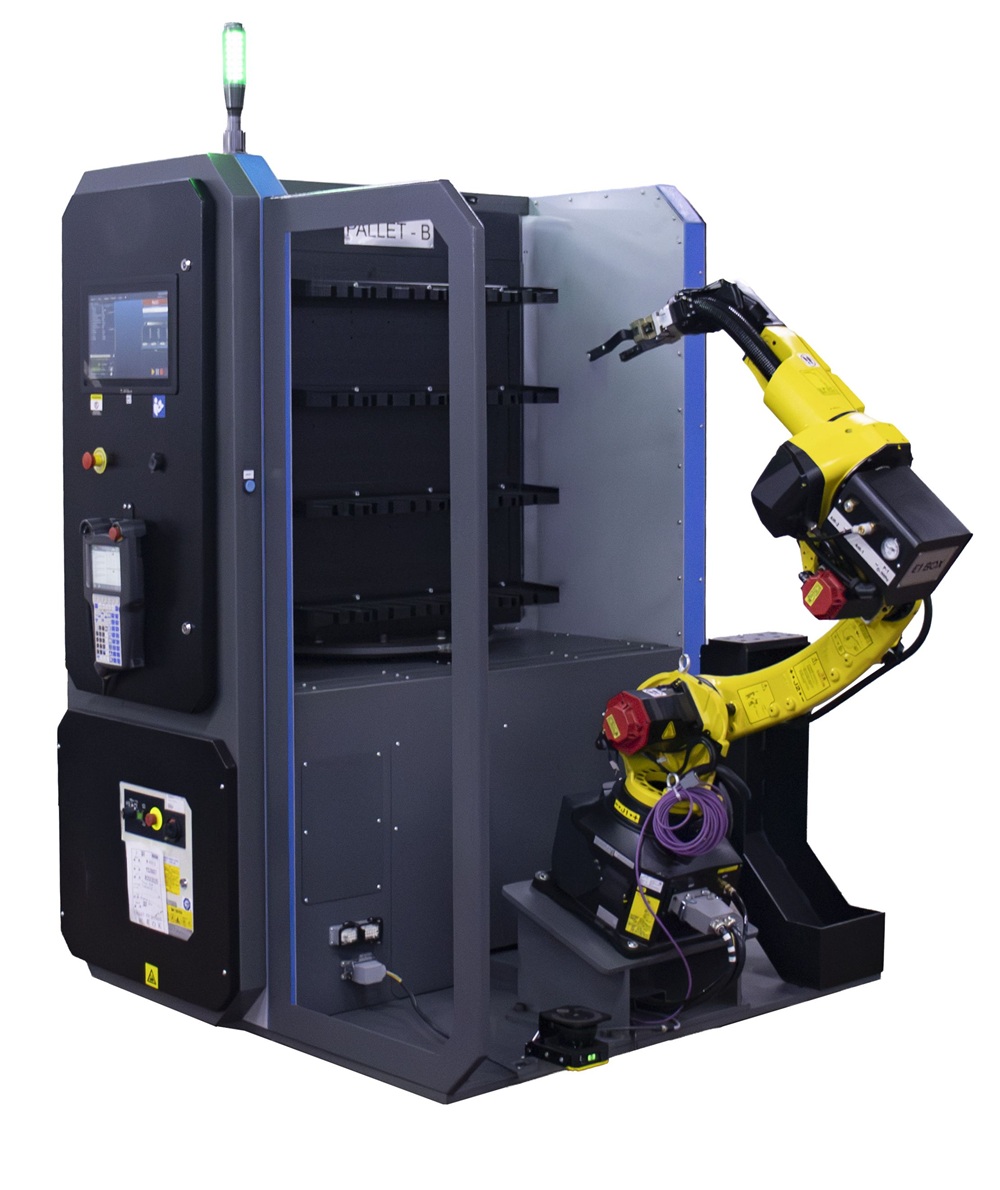
Global manufacturer of CNC automation systems, Tezmaksan, has launched the CubeBOX Blues RT-VISE, a compact automation solution developed for high-mix, low-volume production environments. Designed to automate vice handling and the loading of clamped workpieces, the system helps manufacturers increase machine utilisation while reducing manual intervention.

Built around a six-axis industrial robot and rotary table, the CubeBOX Blues RT-VISE automates vice loading and unloading across one or two CNC machines. Operators can prepare multiple work-holding set ups in advance, reducing downtime, accelerating job changeovers and supporting unattended, lights-out production during breaks, overnight shifts and other non-working hours.

Compatible with a wide range of clamp types, the system accommodates different workpiece geometries without requiring dedicated tooling, making it particularly suitable for subcontract machinists and specialist manufacturers producing small batches of diverse components.

The CubeBOX Blues RT-VISE is supplied with a teach pendant, robot controller and industrial PC running Tezmaksan’s RoboCAM+ software. The intuitive interface enables users to define part positions and handling sequences without complex robot programming.

“RoboCAM+ simplifies how manufacturers move from design to production by translating CAD data directly into robot movements,” says Hakan Aydogdu, CEO at Tezmaksan. “This capability reduces set-up time and helps ensure consistent handling across different parts and batches, particularly in environments with frequent changeovers.”

Designed with a compact footprint, the CubeBOX Blues RT-VISE integrates easily into smaller workshops, while its modular architecture allows it to be adapted to different machine layouts. The latest addition to Tezmaksan’s CubeBOX range provides manufacturers with a practical, flexible route to automation, helping boost productivity without major changes to existing machining operations.

For more information www.tezmaksanrobotics.com
Efficient Die Changing And Clamping For Trimming Large Castings

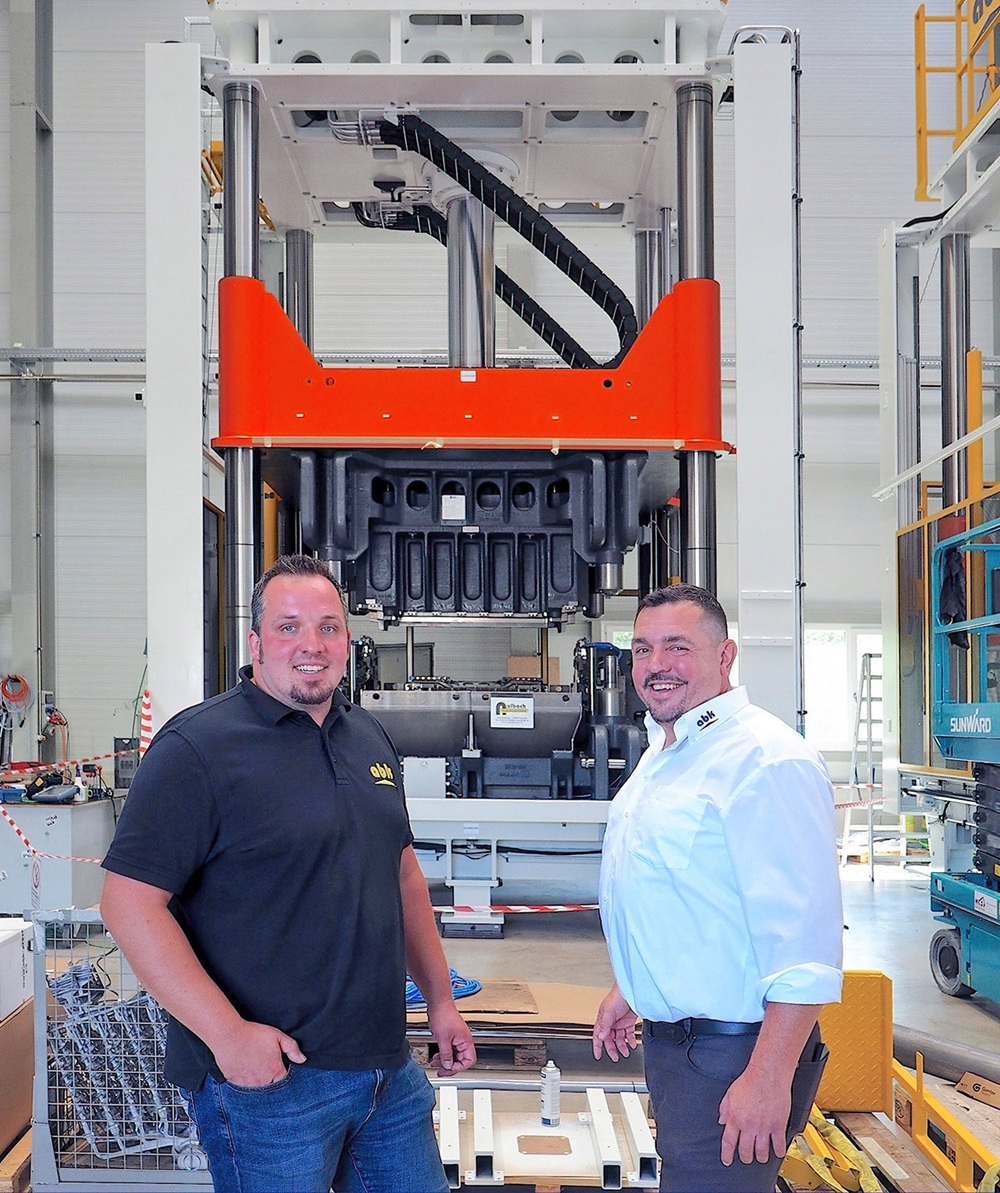
Located in the German municipality of Mömlingen, Aulbach Automation abk Pressenbau is a specialist manufacturer of presses for trimming large castings. For more than a decade, it has relied on powered die changing systems, ball and roller bars, and die clamping elements from Roemheld, which has its UK subsidiary in Cramlington.

Mega- and giga-casting technology produces large, single-piece aluminium structural components that replace dozens of individual welded parts, reducing vehicle weight, simplifying production and improving rigidity. However, the size and weight of these castings place considerable demands on post-processing operations.

Aulbach Automation has specialised in trimming presses for the foundry industry since entering the mega- and giga-casting sector in 2021. By September 2025, it had delivered 23 four-column presses for removing excess aluminium flash from castings measuring more than 3 x 2.5 m.

André Pfeifer, technical project manager at Aulbach Automation, says: “In our view, there’s many reasons to choose Roemheld products, including their precision, reliability and durability. In addition, the co-ordination of the elements is excellent, delivery times are short and the service is impressive.”

Roemheld’s hydraulic transport rails, incorporating ball or roller bars, allow the quick and accurate positioning of heavy die sets before hydraulically actuated swivel clamps secure them in place. Sensors verify correct positioning, while the clamping system accommodates slight misalignment and delivers high clamping forces.

The upper die is secured using hydraulic swivel clamps linked to a central hydraulic unit with electronic monitoring. Inductive proximity switches continuously verify whether each clamp is released, rotated or clamped, instantly locking the press if a fault is detected.

By enabling the exchange of multi-tonne die sets safely and reliably in minutes rather than hours, the Roemheld system helps maximise uptime and productivity.

More information www.roemheld.co.uk

Compact Rotary Tables Offer Large Five-Axis Machining Volumes

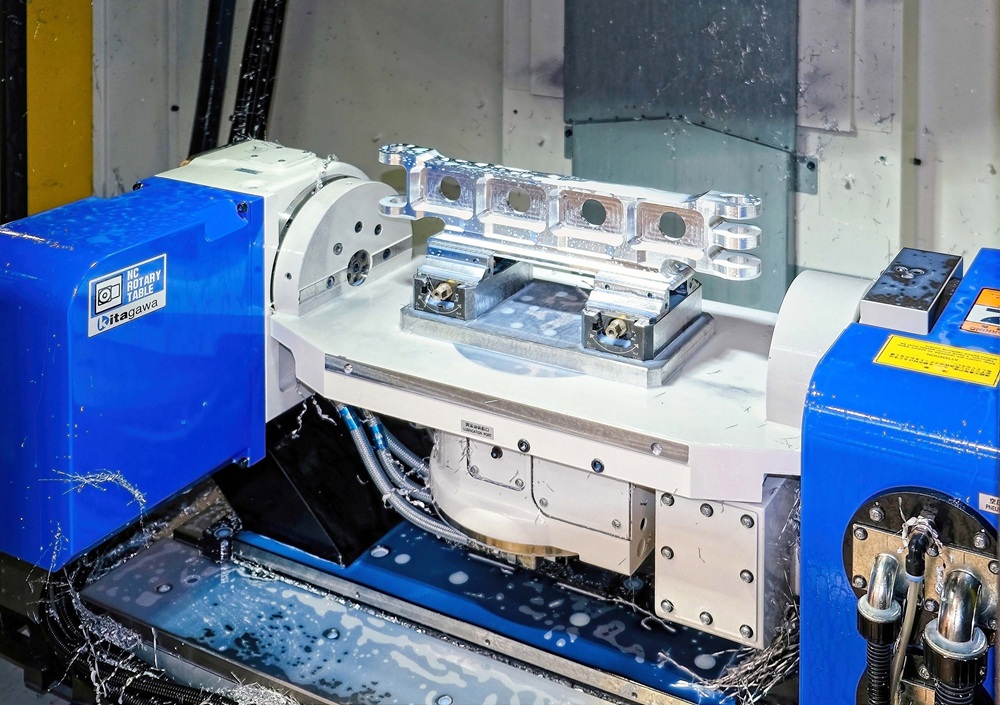
Designed to convert small, three-axis vertical-spindle machining centres (VMCs) into versatile five-axis production centres, while enabling them to machine larger components than their size would normally allow, Kitagawa has launched two new compound rotary tables. The Japanese-manufactured RKT500 and RKT600 are available in the UK and Ireland exclusively through sales agent 1st Machine Tool Accessories.

Developed primarily for the many 30-taper VMCs that offer only linear CNC motion, the rotary tables add two rotary axes to deliver full five-axis capability. They can also be fitted to smaller 40-taper machines and, subject to cutting force limitations, selected 50-taper models.

The RKT500 accommodates workpieces up to 500 mm in diameter and 270 mm high, while the RKT600 increases capacity to 600 mm diameter and 320 mm high. Both models support a combined workpiece and fixture weight of up to 100 kg.

To simplify automated work holding, both tables feature a coolant port, while the RKT500 provides six hydraulic or pneumatic ports and the RKT600 offers 10.

Kitagawa’s patented multi-plate braking technology delivers 740 Nm of clamping torque on the tilting axis and 600 Nm on the rotating axis. Positioning accuracy is within 30 arc-seconds on both axes, with repeatability of ±2 arc-seconds.

The high levels of accuracy and rigidity are achieved using Kitagawa’s roller gear cam mechanism, which eliminates backlash while offering greater torque transmission efficiency, rigidity and indexing speed than conventional worm gear drives.

Once positioned, each axis is securely locked using Kitagawa’s multi-disc braking system. By stacking multiple friction discs, the design achieves high clamping torque without increasing the physical size of the rotary table, maximising performance while maintaining a compact footprint.

More information www.1mta.com

Fast-lane service for Röhm standard power chucks

To enable customers to put Röhm’s standard power chucks into operation on their machine tools as quickly as possible, the clamping and gripping technology specialist is now offering a fast-lane service. In practical terms, the move means that standard chucks can be delivered inside three days together with the corresponding machine‑specific adapter and matching flanges – depending on diameter – within two to four weeks.

The background of the new service is that an individual adapter is often required due to the specific characteristics of each machine on site.

Explains Matthias Volz, head of business development at Röhm: “Every power chuck and every machine has its own interface. To connect the two, you need a draw adapter for the chuck and, if required, a flange to serve as the machine interface.”

Manufacturing and delivering such custom add‑on components would normally take six to eight weeks…until now.

So how it work? Well, the adapter is mounted to the machine’s drawtube, drawbar or directly to the actuating cylinder, and on the other side to the chuck. It transfers the motion from the cylinder to the chuck to open and close it. The flange is required to attach the chuck to the machine spindle.

According to Volz, “because every machine spindle has a different bolt pattern and diameter, a separate flange is usually necessary”.

To ensure fast delivery, the following criteria apply: fast‑lane adapters are available only for standard thread sizes; spindle and chuck data must be provided; and delivery is made as accessory components and must be installed by the customer.

More information www.roehm.biz/en

Hirschmann presents solutions for precise manufacturing

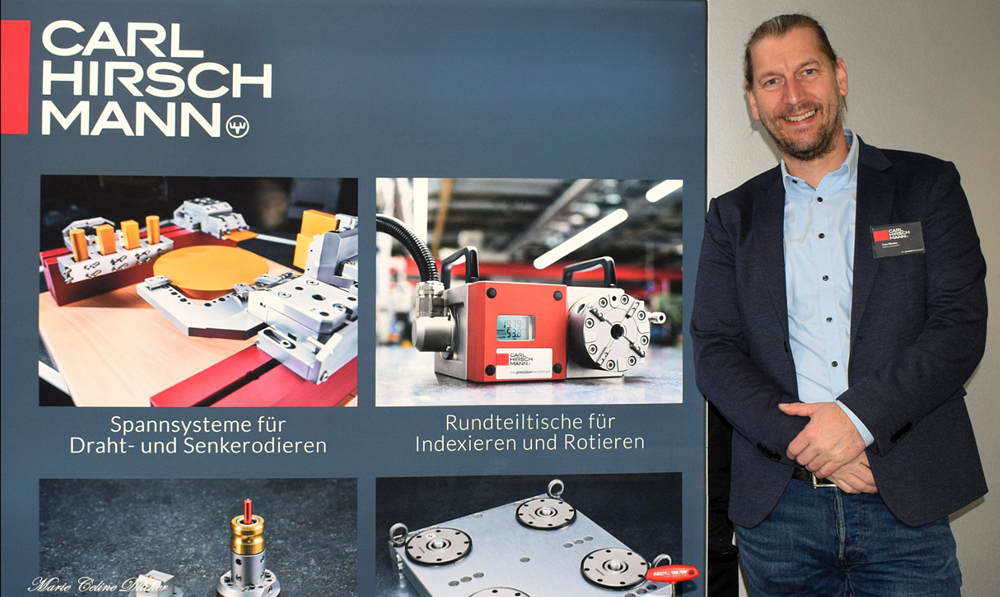
At the 3rd Berlin-Brandenburg Technology Day held recently at the Technical University of Applied Sciences in Wildau, Carl Hirschmann GmbH presented its solutions for precise and efficient manufacturing processes in industrial production. The event once again developed into an important industry gathering for companies from the plastics technology, tool and mould making, and injection moulding sectors in the Berlin-Brandenburg region.

Area sales manager Franz Wiemker represented the company at the event and presented Carl Hirschmann’s technologies. The focus was on rotary tables and clamping systems, which play a central role in automated manufacturing processes in terms of precision, process reliability and productivity.

The Technology Day provided an excellent opportunity to engage in direct dialogue with trade visitors from industry, development and production. Numerous discussions allowed for the exchange of ideas on current challenges in modern machining, automation and series production, as well as the establishment of new contacts with companies from Berlin, Brandenburg and northern Germany. This also led to initial approaches for future joint projects.

Franz Wiemker, regional sales manager at Carl Hirschmann said: “The Technology Day offered an excellent opportunity to talk directly with users and industry experts. The open exchange about challenges and solutions relating to rotary tables and clamping systems was particularly valuable for us.”

Special thanks go to organiser KB Peter Kesterke GmbH for the excellent organisation and successful execution of the Technology Day. The event once again demonstrated the importance of regional technology events in Berlin-Brandenburg for innovation, knowledge transfer and networking in mechanical engineering.

Carl Hirschmann GmbH now looks forward to continuing the discussions it has started with customers, partners and interested parties.

More information www.carlhirschmann.de/en