

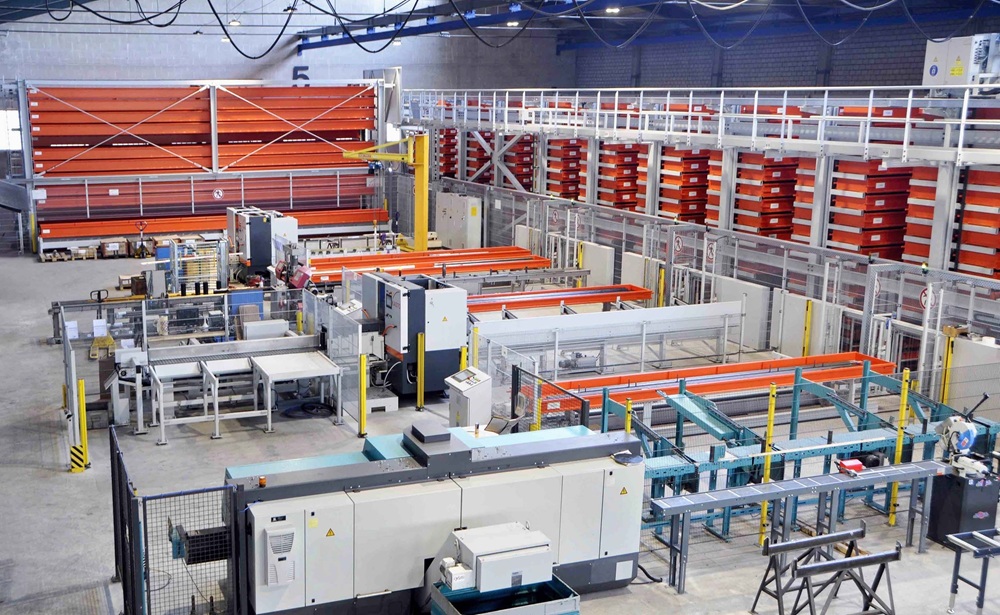
Compact storage and sawing from a single source

To meet growing demand, stockholder, processor and distributor Brütsch/Rüegger Metals AG, located in Regensdorf near Zurich, has upgraded its operations by replacing a semi-automatic honeycomb storage system for housing long stock with fully-automatic Unitop and Unitower storage systems from Kasto.

Brütsch/Rüegger is witnessing significant growth, today stocking 5500 tonnes of metals of 8000 different types and sizes. However, with this higher level of business came challenges. The honeycomb storage system from the 1980s was reaching the limit of its capability.

“Expanding the existing warehouse was not feasible due to infrastructure constraints, leaving only one option – consolidation,” explains Patrick Epp, managing director of Brütsch/Rüegger. “This led to the initiation of a new project to increase storage capacity, modernise the warehouse and enhance process efficiency.”

The metals specialist had complex requirements for the new installation, which needed to offer twice the storage capacity and fit within the 26 m wide hall. Additionally, the system had to be reliable, easy to operate and able to employ seven different storage and retrieval stations, allowing simultaneous processing of materials with multiple saws.

Says Epp: “We’ve been using a KASTOwin A 3.3 bandsaw from Kasto since 2018 and we’re very satisfied with its performance. This was one of the primary reasons we chose to meet with Kasto at a trade fair to talk about our requirements.”

Kasto recommended its Unitop 3.0 overhead, horizontally-moving gantry crane system with 521 storage positions for storing material up to 6.5 m long, and its Unitower 3.0 cassette storage system, with vertically-moving stacker crane, able to accommodate 12 m long material. Both systems are computer controlled by the KASTOlogic warehouse management system. The installation also includes two new bandsawing centres from the KASTOwin series, models F 3.3 and A 3.6.

More information www.kasto.com
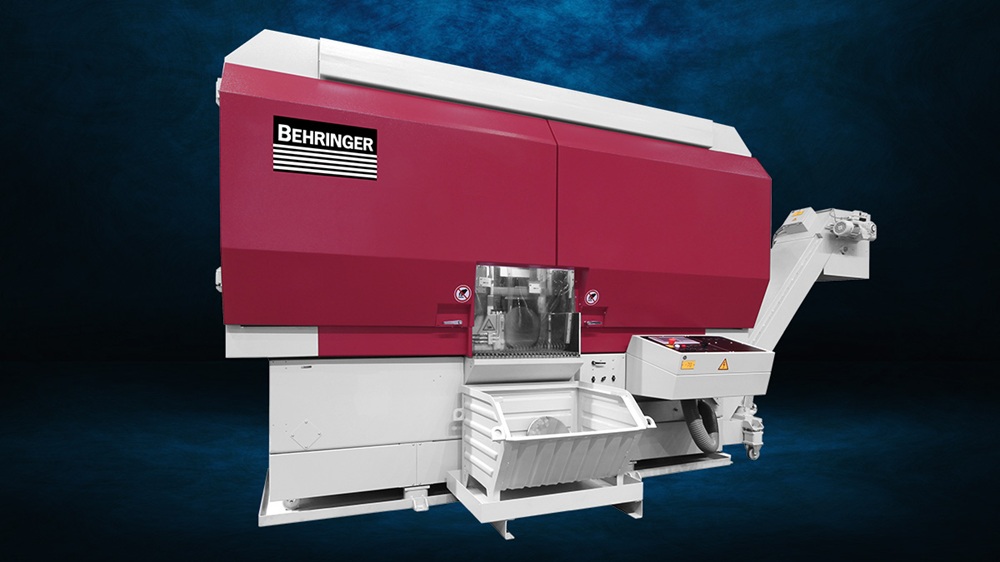
Behringer introduces high-performance bandsaw

A highlight of the Behringer stand at the EMO 2025 exhibition in Germany towards the end of last year was the company’s new HBM500SC high-performance bandsaw. The HBM500SC saws solid material from case-hardened steel with a diameter of 300 mm in under 2 minutes.

But speed is not everything: the HBM500SC is also highly flexible, offering suitability for a wide range of materials and applications. In addition, the machine impresses with its high energy efficiency and AFC Pro technology, which automatically determines the optimum sawing parameters. This capability simplifies operation. After a short briefing, any employee can start the sawing process.

Other exhibits on show at EMO included the HBE320-523G mitre bandsaw and the LPS-TA automatic table bandsaw, which is suitable for sawing small panels and blocks.

Behringer Eisele  displayed innovations in the field of circular saws. The HCS 150E, for example, is a powerful multifunctional device for the steel trade and predestined for large batch sizes and mass cutting. The VMS 400H and PSU 450H mitre circular saws, and the VMS 370PV vertical circular saw, on the other hand, are designed for manual and semi-automatic applications – suitable for smaller metal construction companies and metalworking shops.

Behringer says now is a particularly attractive time to invest in modern sawing technology: the subsidy programmes of governments around the globe are opening new financial scope for small and medium-sized manufacturers and stockholders – especially for replacement investments. The energy-efficient sawing systems from the Behringer Group typically fulfil the requirements for a subsidy and therefore offer not only technological progress, but also economic advantages.

More information www.behringer.net

A heritage of excellence and strategic diversification

Since its 2013 founding, Antrim-based Anchor Fixings has established itself as a leading supplier of fixings and fittings to the construction and engineering trade across Ireland and the UK. However, beneath the surface of this traditional business lies a company with an extraordinary heritage across multiple sectors.

The combination of experience through a multitude of markets has created a corporate culture that consistently invests in the highest quality equipment available.

“If you install the best machinery, you get fewer problems and better quality: that’s the way we work,” states business development director Guy Walker. “That’s what we’ve also done with our saw blade business – we started investing in Vollmer machines last year.”

Completed between March and June 2025, the sizeable investment package included a Vollmer CS860 with ND 230 automated loading system, a Loroch K850T sharpening machine for steel blade applications, a Vollmer CHHF 21H side dresser, and a Gockel knife grinder capable of handling blades up to 3m in length.

“We did our research on the best saw blade sharpening machines and Vollmer came out on top,” says Walker. “The quality of sharpening is second to none.”

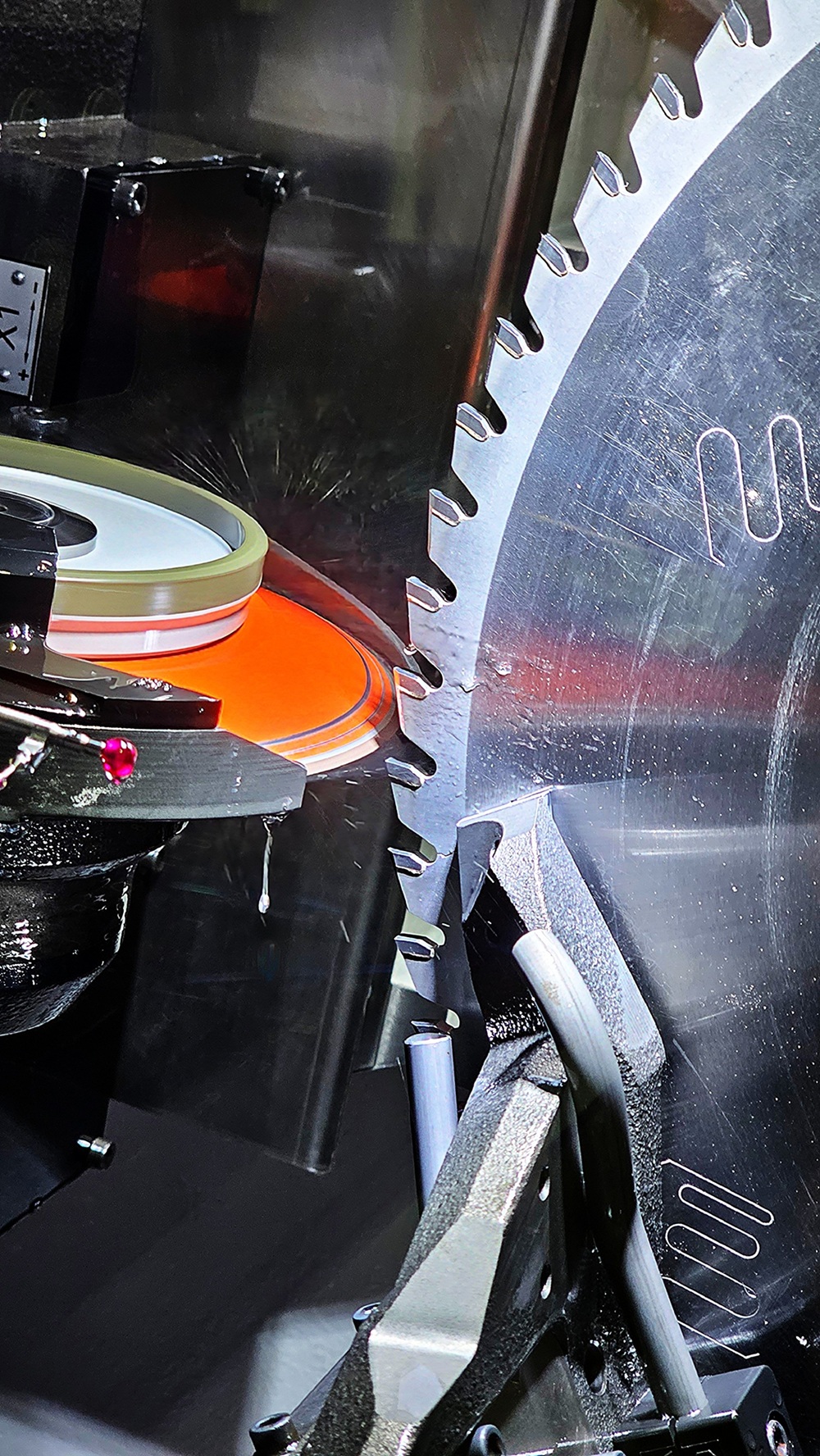
The Vollmer CS860 (pictured) is an eight-axis machine that handles circular saw blades from 80 to 860 mm in diameter with a high level of automation.

Gavin Fleming, the company’s experienced saw doctor, describes its capabilities: “You input the diameter and the number of teeth and, once you’ve done that, the machine does the rest. It probes and checks the gullet and the angle. The machine is very smart – it does a lot of the work itself.”

More information www.vollmer-group.com/en-uk

Bandsaw maintenance extends machine life

In a machine shop, few things are more valuable than preventative maintenance for a bandsaw. However, bandsaws are often considered “support equipment” and manufacturing plants tend to neglect their maintenance. This is a mistake, reports bandsaw manufacturer Sthemma – which manufacturers the established Thomas range – as regular maintenance not only lowers operating costs but also increases productivity and reduces the frustrations associated with breakdowns.

Every saw in the workshop should have a maintenance schedule. This schedule should be written on a whiteboard near the machine, with spaces to record the date and type of work performed. Inspections and maintenance generally take no more than half an hour, but this small investment of time will pay off with a longer lifespan for the machine and blade.

Manufacturers should regularly check the working parts of the bandsaw. Making the right adjustments will ensure an accurate cut and prevent any damage to the machine. This activity includes checking the belt wheels, blade tension, blade guides and wheel bearings.

Plants should also clean splinters from the clamp jaws regularly, especially after each saw use. Twice a year, check the jaws for wear and, if necessary, repair or replace them. A worn jaw compromises the alignment and accuracy of the cut.

If the saw uses a hydraulic system for power and clamping, manufacturers should check the oil level regularly. Low levels can cause air to enter the lines, compromising the entire system. Factories should also keep the bandsaw’s coolant tank full and cool, and visually inspect bearings and seals every six months, looking for oil leaks or damaged components.

More information www.sthemma.com

Fully Automated Production Line at Stena Stål

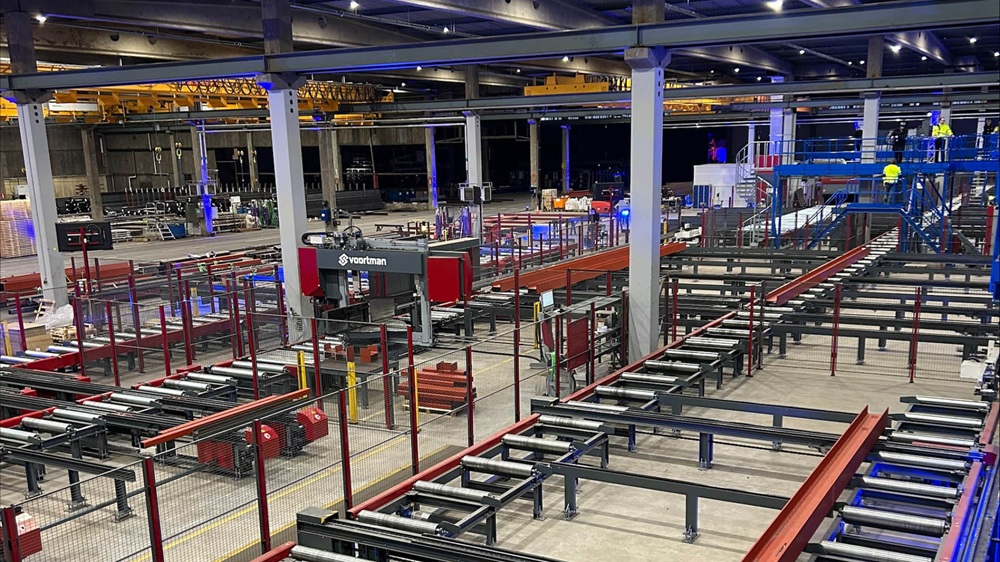
Västerås-based Stena Stål, a steel service centre that processes and distributes steel to a wide range of industries, has installed a fully automated production line to increase capacity, reduce lead times, and offer a wider range of processing services from one location.

Stena Stål now provides blasting, painting, cutting, drilling, milling, marking and measuring, all under one roof. This eliminates unnecessary material handling, making production faster and more efficient. Customers benefit from shorter lead times, improved precision and greater flexibility.

Supplied by Voortman, the machines powering Stena Stål’s MSI line include two VB1250 bandsaw machines, a V631 high-speed drilling and milling machine, a VP2500 painting machine, and a VSB2500 shot blasting machine.

At Voortman, a fully automated production line is called Multi System Integration (MSI). This approach connects multiple machines and software solutions into one streamlined process, minimising manual handling and maximising efficiency. Stena Stål’s new MSI line includes various machines, all seamlessly connected in one automated system.

Together with the machines, DIGI-Supply and DIGI-Evi software suites were sold to Stena Stål. These software solutions reduce manual input in work preparation, limit mistakes, provide better insights and save material. All business applications are fully integrated for a seamless workflow.

Voortman will continue to support Stena Stål through an ongoing partnership. One key element of this is Red Tooling System (RTS), which ensures that the right tools are always available at the right time. Additionally, Stena Stål benefits from Voortman’s Service Label Agreements, which provide structured, proactive maintenance for maximum uptime and long-term reliability of the new MSI line.

More information www.voortman.net