

Zero-finding Nadcap accreditation for AddQual

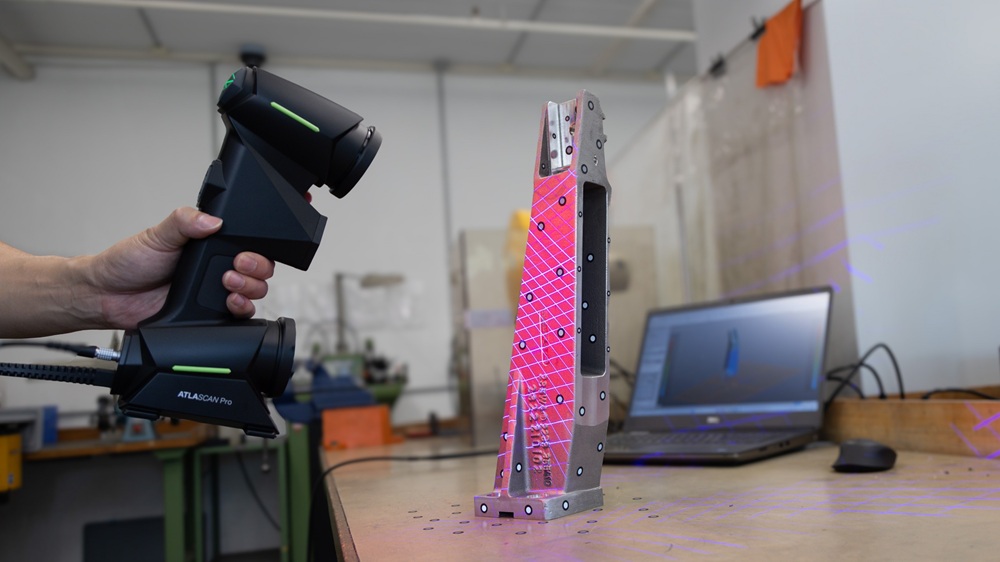
In a significant milestone for UK-based metrology specialist AddQual, the Derby-based firm has successfully completed its most recent Nadcap audit for 3D Structured Light (3DSL) measurement with zero major and zero minor findings. This rare accomplishment positions AddQual among an elite group of organisations globally that operate at the highest levels of compliance, precision and technical control in the field of advanced metrology.

The Nadcap audit, administered by the Performance Review Institute, is considered the gold standard for process control and quality assurance across aerospace, defence and high-specification engineering. It is designed to evaluate whether technical processes – such as AddQual’s 3DSL inspection capabilities -meet the highest levels of repeatability, traceability and measurement integrity.

“Achieving a zero-finding audit in such a specialist area is rare,” says managing director Ben Anderson. “ We know we’re one of  two UK Nadcap 3DSL-accredited businesses. We also know there are 17 worldwide in total. Passing with no findings is a strong endorsement, not only of our internal systems, but also of the trust we offer our customers in highly demanding industries.”

For AddQual, the achievement is more than a quality badge – it underpins the company’s mission to redefine how manufacturers approach inspection, qualification and problem-solving in high-precision environments. The firm has become known for helping customers make fast, confident decisions under pressure, whether it is qualifying a flight-critical aerospace part, diagnosing a production issue or tracing a dimensional fault to its root cause.

The combination of speed, accuracy and clarity is what differentiates AddQual. Deploying a digital-first model creates a comprehensive, auditable record that simplifies decision-making and reduces ambiguity across engineering, quality and production teams.

More information www.addqual.com

LK launches surface roughness probe for CMMs

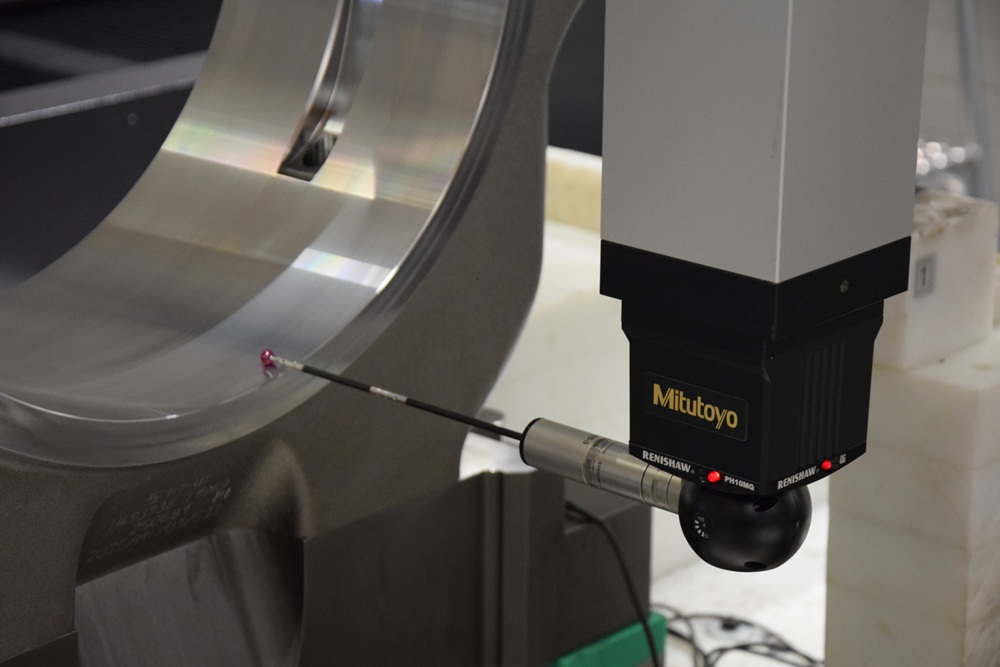
CMM manufacturer LK Metrology, which has its manufacturing facility is in Derbyshire, UK, has introduced the Surfacer SRP. This plug-and-play probe has a resolution of 1 µm for analysing the roughness of the surface of a component as part of a CNC measuring cycle on any CMM, provided it has an industry-standard probe head.

The sensor eliminates the need for secondary surface roughness inspection, either manually using a handheld instrument or automatically at a separate metrology station. Manufacturers are able to conduct comprehensive inspection on a component in a single set up in a CMM environment, resulting in significant savings in time and cost. Engineered for ease of use and versatility, the equipment comes with its own downloadable application software, facilitating integration and eliminating the need for third-party software.

Easy swapping between touch probes, tactile scanning probes, non-contact laser scanners and the roughness probe gives users extended multi-sensor capability. The Surfacer SRP mounting is compatible with change racks, including the new versions introduced recently by LK, enabling automated sensor changing and enhanced operational efficiency.

At the heart of the roughness probe lies a special body that accommodates three interchangeable, skidded, stainless-steel probe modules. One evaluates flat, conical and cylindrical surfaces, another measures concave, convex and spherical surfaces, and a third is for inspecting grooves more than 3 mm wide by less than 10 mm deep, or steps of similar height.

The CMM positions a stylus so that it contacts the part, after which the machine axes remain stationary while the probe moves the stylus across the surface under investigation. Wireless communication with the CMM computer via a Bluetooth 4.0 adapter provides data transfer for analysis, simplifying installation.

More information www.lkmetrology.com

How to Deliver Manufacturing Quality at Speed

Hexagon’s Manufacturing Intelligence division has launched its Autonomous Metrology Suite, software developed on the company’s cloud-based Nexus platform, which is designed to transform quality control. By removing all coding from CMM workflows, Autonomous Metrology Suite helps manufacturers accelerate critical R&D and manufacturing processes as experienced metrologists become harder to find.

Manufacturers across automotive, aerospace and general engineering report the same pressures: shorter product lifecycles and frequent design revisions have increased the need for high-accuracy measurement, but there are fewer skilled CMM programmers and quality data is scattered and underutilised. These issues slow new-part introduction and make it difficult to repeat good results shift after shift.

Hexagon’s Autonomous Metrology Suite tackles the problem head-on. A digital twin of every connected CMM synchronises with its physical counterpart, so the correct inspection program always reaches the right machine, helping to eliminate possible human error. All quality, utilisation and environmental information flows straight to a cloud dashboard, creating a continuous digital thread supporting data-driven decisions on the shop floor.

All applications in the suite share a consistent modern and intuitive web interface that guides both new and expert users through the process, helping to democratise the creation of CMM programs and reduce the level of skills required to interact with the solution. Depending on complexity, programming could be reduced from days to hours, following which the program deployment to one or more CMMs, execution and reporting can be fully automated from a single interface.

These efficiency gains are driven by a set of tightly integrated applications built on Hexagon’s Nexus platform, automating and streamlining the entire metrology workflow.

More information www.hexagon.com

Magnet rings enhance exoskeleton accessibility

Hutchinson is announcing its collaboration with Wandercraft, a pioneer in medical robotics, on an innovative project aimed at making exoskeletons more accessible to the general public. As an expert in the development and manufacture of angle and speed measurement solutions for magnetic encoders, Hutchinson is contributing to the success of this initiative by integrating compact Nonius magnet rings for precise and immediate angular control.

The Atalante X autonomous walking exoskeleton, a key tool for healthcare professionals, is dedicated to rehabilitation in medical centres. A new platform for personal use is currently being developed to enable a major advance in autonomy for private individuals.

Wandercraft is working on optimising its robot and standardising its components to make the product accessible to as many people as possible.

The engineer-to-engineer approach of Hutchinson and Wandercraft teams has enabled the development of a tailor-made system adapted to the architecture of the new robot. Each of the robot’s joints is equipped with a sensor featuring Nonius magnetic targets designed and manufactured by Hutchinson, enabling instant and absolute angular control. As soon as the robot is activated, the position of each axis is known before any movement is triggered.

Hutchinson’s compact magnet rings enable the creation of leaner, lighter exoskeletons. The cost of the system, including a Hutchinson magnet ring and the iC-Haus chip, is said to be cheaper than a traditional encapsulated sensor solution.

ʺMobility is part of Hutchinson’s DNA,” says Laurent Khouri, industry market leader at Hutchinson in Segré-En-Anjou Bleu, France. “Today, we’re proud to be part of a pioneering human adventure that will enable people to regain their freedom of movement.”

More information www.bit.ly/44q0ib5

Faro leaps into 3D metrology marketplace

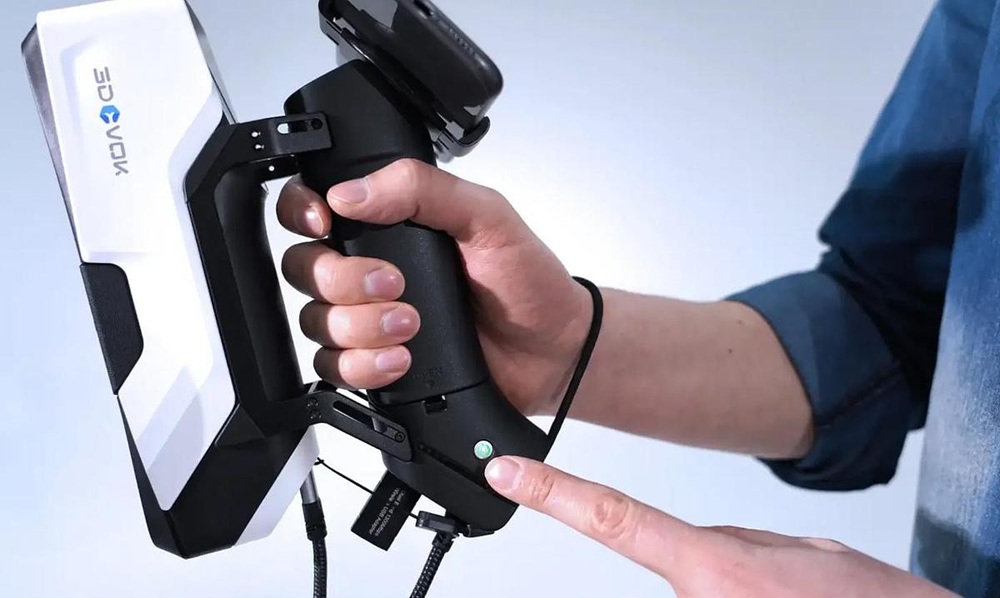
Faro has unveiled its Leap ST handheld 3D scanner. Designed as a metrology-grade tool with the versatility to measure and verify any surface or part with the flexibility of five operating modes, the company says Leap ST is a breakthrough in handheld 3D metrology technology. Compact and portable, Leap ST is intended for many workflow applications and industries. A sampling of those applications includes aerospace and automotive, transportation equipment, metals fabrication, and more.

Leap ST’s adaptability ensures quick set up with fast time to data and high data quality. The five modes are: ultra-fast scanning for fast coverage to measure part features for small to medium parts; hyper-fine scanning for capturing geometries of complex objects with high resolution; photogrammetry to maintain best accuracy over large sized objects; deep-hole scanning for maximum allowable depth with hard-to-reach areas and deep holes; and large-area scanning  for capturing large features that need inspection or when a first rough scan of a medium-to-large part is required.

Leap ST is also fully compatible with Faro CAM2, an application-focused 3D measurement software platform and its dedicated editions – CAM2 Scan Professional and CAM2 Expert – as well as third-party solutions like PolyWorks.

Developed to streamline industrial metrology applications like dimensional controls, incoming part and first article inspections, part-to-CAD comparisons, assemblies, and repeat part measurements, Faro says CAM2 increases the efficiency of measurement routines and provides an effective correlation between quality assurance and production operations.

According to Faro, Leap ST and CAM2 are among the best 3D laser scanner and software duos on the market today, equipped to address most precision measurement tasks.

More information www.faro.com