
MecWash unveils MWX600 aqueous parts washer

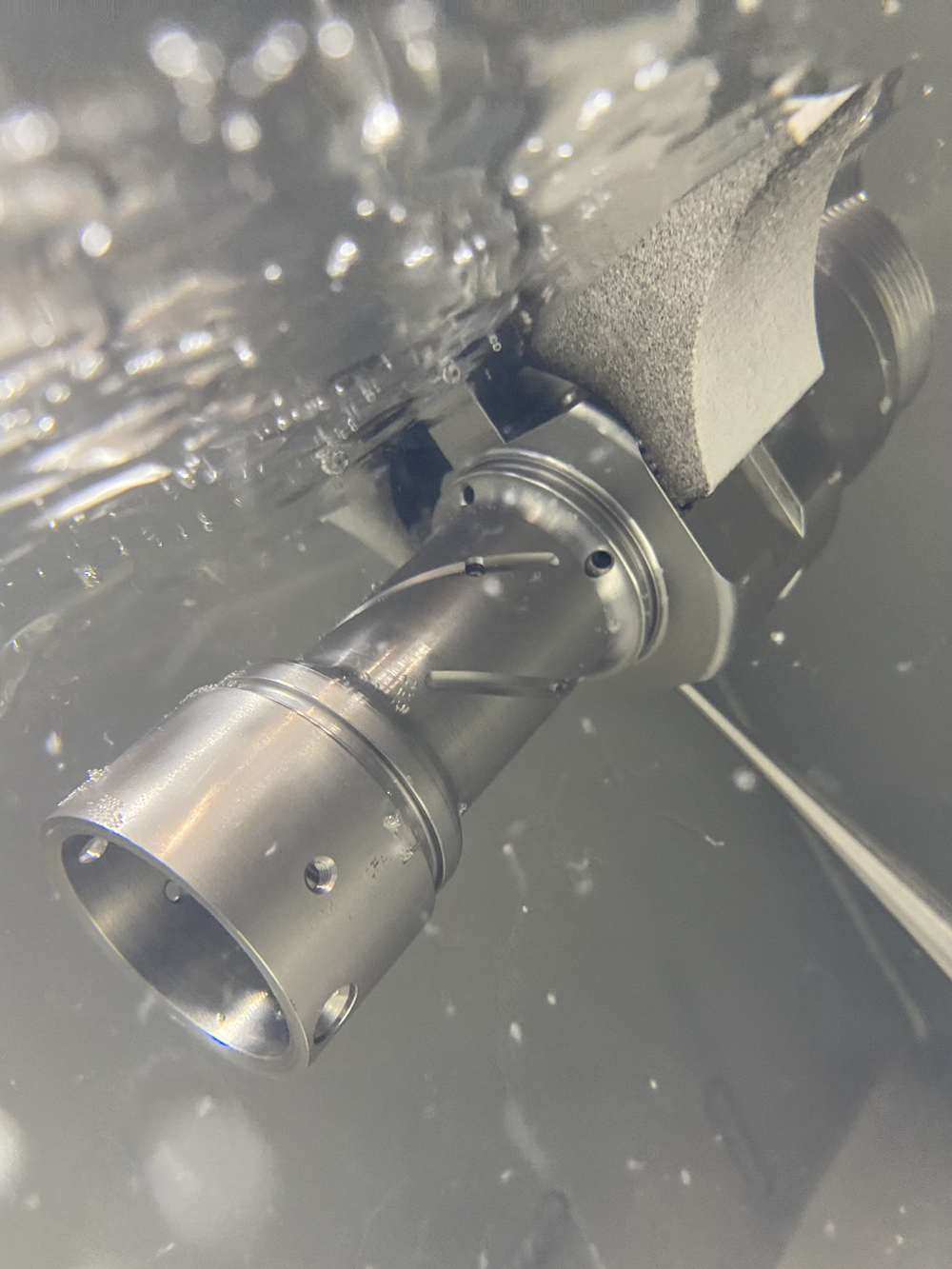
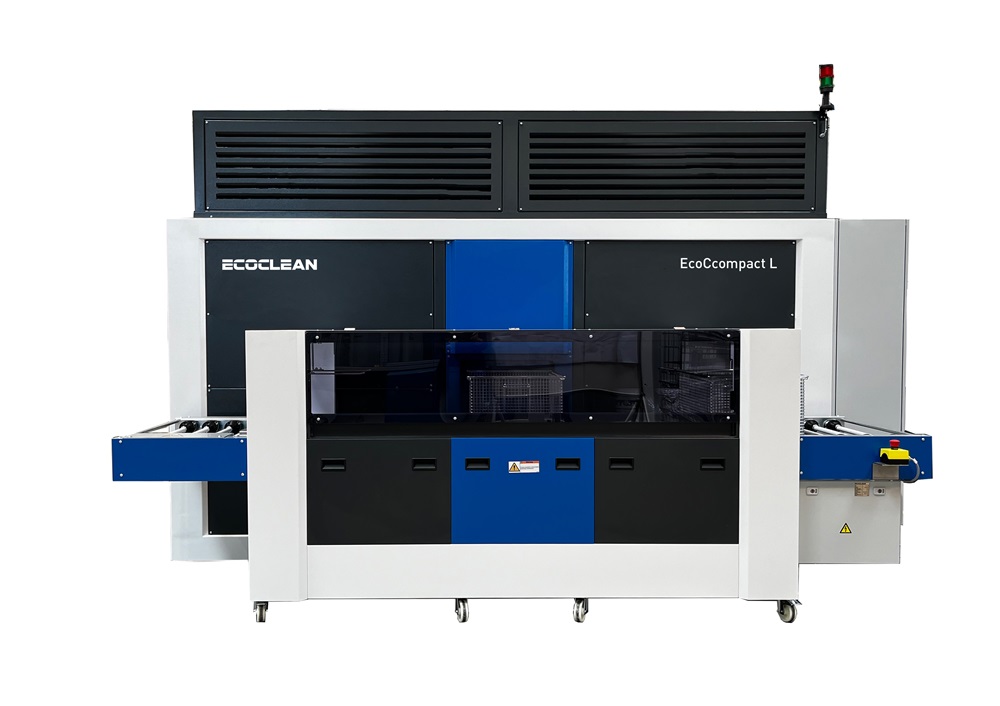
MecWash is launching its MWX600aqueous parts washerfeaturing anexpansive wash chamber measuring 600 x 660 x 1000 mm. This significant upgrade in aperture capacity makes the MWX600 the most versatile and powerful system in the company’s MWX line-up.

The MWX600 incorporates an advanced design with enhanced features for maintenance communication and servicing. For instance, the system offers remote monitoring and predictive maintenance capabilities, helping to ensure maximum uptime and efficiency.

According to MecWash, the MWX600aqueous parts washer is not just bigger – it is better. Designed to accommodate larger components such as gearbox housings and bigger engines, the MWX600 offers capacity for heavy-duty cleaning applications. Additionally, the system boasts more ultrasonic rods than ever before, delivering higher cleaning power and precision for demanding industrial needs.

As the big brother of the Maxi system, MecWash says that MWX600 brings a new level of performance to the market that is unmatched by any other manufacturer. Its innovative features and robust design make it a suitable choice for industries requiring large-scale, high-capacity component cleaning solutions.

For 30 years, MecWash has been at the forefront of aqueous component cleaning, providing cutting-edge solutions to applications worldwide. The company says that its quality, innovation and customer service makes it a trusted partner for companies across many industrial sectors. The launch of the MWX600 underscores the dedication of MecWash to advancing technology and meeting the evolving needs of customers.

More information www.mecwash.com

Automatic shot peening of EV gears parts

BMW’s plant in Dingolfing has integrated an RST 200-S15 indexing satellite table shot-blast machine from Rösler into a new manufacturing line for E-vehicle gear components. The company decided to purchase the Rösler equipment because it had excellent experience with machines of the same type regarding productivity, process stability and ease of maintenance.

The rotary table of the compact shot-blast machine contains 15 rotating satellite stations equipped with workpiece-specific fixtures. Depending on the workpiece type, a component loading/unloading system supplied by the customer places one or several parts on the satellite stations. Thanks to the machine’s design, non-productive idle times are minimal.

After loading, workpieces pass through multiple stations in the shot-blast machine at indexing cycles of 20 seconds. These stations include two blast positions. Special lifting gates prevent any spillage of blast media into other stations. During the peening operation, the satellites rotate at pre-set speeds in front of the blast turbines. In combination with automatic blast pattern adjustment to the respective workpiece shape, this ensures the realisation of homogeneous peening results. A compressed-air cleaning station placed in front of the loading/unloading section blows off dust and residual blast media from the finished components.

The master computer of the manufacturing lineselects the workpiece-specific processing programs, including the setting of the turbine position and blast pattern. For this purpose, the controls of the peening machine were integrated into the upper-level computer system at BMW in Dingolfing. 

To meet the automotive industry’s high standards regarding process stability and traceability, the machine’s controls allow the continuous monitoring of all relevant shot-blasting parameters. Replenishment of the blast media also takes place automatically.

More information www.rosler.com
Sunnen receives ‘E’ Award for Exports

Honing machine specialist Sunnen Products was awarded the President’s ‘E Star’ Award for Exports by the US Department of Commerce at a recent ceremony in Washington, DC.  Sunnen was one of 64 companies at the ceremony achieving recognition for excellence in furthering US exports, and one of 13 to receive the prestigious ‘E Star’ Award for Exports. This is Sunnen’s second time winning the award, having also received the honour in 1986.

“Sunnen has demonstrated sustained commitment to export expansion,” said Secretary of Commerce, Gina Raimondo, in her congratulatory letter to the company. “The ‘E’ Awards committee recognises Sunnen’s 80-year history as an exporter with 40% growth in export revenue over the past four years. The company’s investment in ongoing technology and marketing innovations to support export growth into the future was also notable.” 

Sunnen is celebrating its 100th year in business this year and is no stranger to supporting the US and its manufacturing efforts. In October 1942, Sunnen was a recipient of the predecessor to todays’ award, the Army-Navy Production Award (at the time, it was widely known as the ‘E’ Award for excellence) for its contribution and excellence in the production of equipment during World War II.  

Sunnen Products first began exporting into Canada and the Scandinavian countries. After World War II, the company expanded exports all over Europe, and into South America and Asia. Founder Joe Sunnen was a businessperson who knew the importance of finding solutions to unmet market needs, which included making products available globally. Sunnen has since grown into a global company with 14 subsidiaries and over 35 international distributors. 

More information www.sunnen.com

TEMSA adds to Studer fleet with S100

The Spanish TEMSA Metallurgical Group focuses on the manufacturer of special tools for cold forming. For many years, the company has also been using cylindrical grinding machines from Studer at its Barcelona production facility, where the latest arrival is a Studer S100 CNC universal internal cylindrical grinder.

The white with blue accents of the Studer S100 are a familiar sight at TEMSA, where other machines include the Studer S131 new-generation CNC universal machine for internal cylindrical grinding.

“We have confidence in the technology and value our positive relationship with the manufacturer,” says production manager Alfonso Vivar of the decision to invest. In addition, the high level of precision, reliability and ease of operation offered by Studer machines help to ensure that production is as efficient as possible.

The S100 is a good all-rounder offering maximum flexibility thanks to its numerous options for internal, face and external grinding. The machine facilitates the production of a wide range of workpieces up to 550 mm in length. Elsewhere in the facility, the Studer favoritCNC is a universal cylindrical grinding machine for the individual and batch production of medium-sized workpieces with a length of up to 680 mm. Both machines have an attractive price despite the inclusion of premium technology such as a solid mineral cast Granitan bed and optimal hardware-software interplay for ease of operation.

In addition to the machinery, Vivar cites another important reason for choosing Studer: “The customer service is outstanding, helped by several contact persons who can speak Spanish.”

More information www.studer.com

Wall thickness challenges in deep-hole boring

Tubular components are present in many sectors of manufacturing, but their design and specification vary enormously according to the intended application. In some industries, such as aerospace and medical instrumentation, tubes require machining to incredibly tight tolerances. Inaccurate machining can result in high reject rates, material losses and poor component function which, in some circumstances, can endanger end users.

Hone-All has over two decades of experience in machining high-precision tubular components. By combining expertise with the latest equipment and tools, the company says it can meet exacting specifications to achieve high surface finishes and tight tolerances for tubes up to 3 m in length.

According to Hone-All, among the challenges of machining tubular components is concentricity. In simple terms, concentricity is the measure of wall thickness consistency along the length of a tubular component. To calculate this characteristic it is necessary to measure the difference between the inside and outside diameters of the tube at different points along its length relative to the central axis.

When carrying out deep-hole boring to achieve a thin wall, it is important to start with a larger diameter material and then bore and turn gradually in stages. This approach reduces movement in the material which can lead to inconsistent concentricity and compromised tolerances. While there is a minimum wall thickness associated with deep-hole boring, Hone-All says it can achieve incredibly thin walls while maintaining concentricity.

Customers should note that it may be necessary to invest a little more initially, but this will be worth it in the long run, as the results will include less wastage and more accurate components. In turn, customers will enjoy longer, more reliable performance – saving more over time.

More information www.hone-all.co.uk