Manufacturers are being urged to harness the huge potential of AI without getting lost in the hype. The rallying call emerged from a major gathering of northwest manufacturers and technology experts hosted by Safran Nacelles in Burnley. An honest debate explored the opportunities, barriers and real-world impact of one of the fastest-moving technologies facing industry.
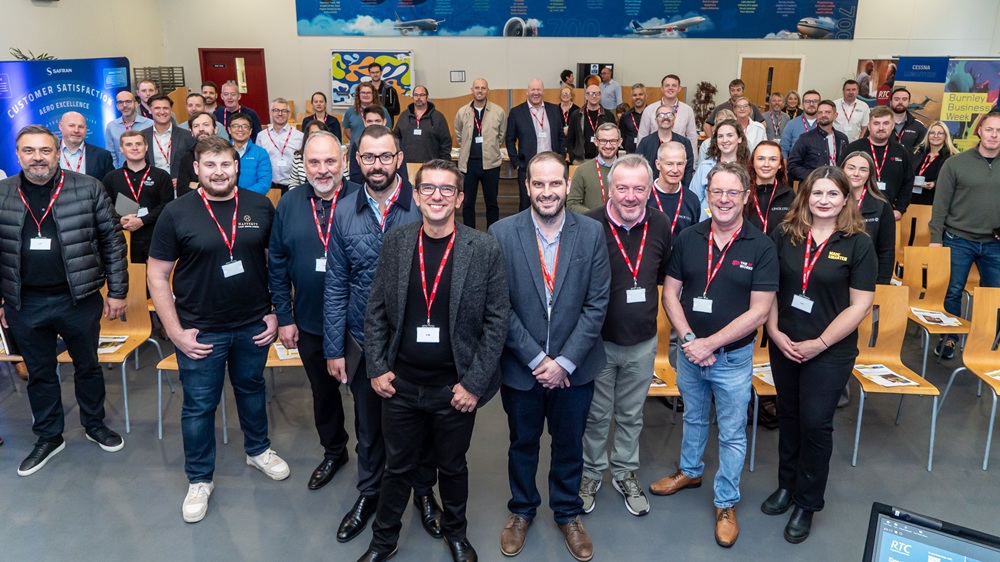
The event, entitled ‘Smarter Manufacturing: Using AI to Improve Productivity and Performance’, was organised by RTC North, Made Smarter North West and Burnley Council, as part of Burnley Business Week and to mark the recent Make UK’s National Manufacturing Day.
Almost 50 delegates attended the event, including manufacturers from sectors spanning aerospace, automotive and machinery to plastics and printing, with attendees travelling from across the northwest and as far afield as Yorkshire, London and the southwest.
Business leaders shared how they are already using AI to save time, cut costs and improve productivity, but also spoke candidly about ‘AI fatigue’, a lack of time and specialist skills, concerns around data and security, and the challenge of keeping pace with the technology.
The message was to be brave enough to experiment, but sceptical enough to question the results. Businesses were encouraged to start small, focus on genuine problems and keep human judgement firmly in the loop.
Steve Wilkinson, of innovation and business support consultancy RTC North, said manufacturers should not be put off by the “noise” surrounding AI or feel under pressure to make a giant leap: “There’s a lot of dabbling and playing going on, and that’s a good thing. It’s part of technology adoption. What matters is finding justified, meaningful applications that help people in manufacturing make better decisions faster.”
Ronan Hafferty, founder of Salford-based Hafferty Interiors, is already putting that approach into practice. With support from Made Smarter North West – the Government-backed programme helping SME manufacturers adopt digital technologies through expert advice, skills development, internships and grant funding – his company has deployed a digital intern to develop an AI strategy and explore applications from quality through to manufacturing.
“AI has already made a real difference, particularly in design where it has saved us a huge amount of time and cost,” he said. “It’s blowing our minds every week with how quickly it’s developing. But you can’t be lazy with it. You can’t get rid of common sense and the human element.”
That mix of excitement and healthy scepticism ran throughout the event. Judson Smythe, MD of Blackburn-based MGS Plastics, warned against ignoring AI’s potential or handing over too much control, urging fellow makers to “use AI as a tool, but don’t be the tool that AI is using”.
Firms struggling to find the specialist skills or time to explore AI were also encouraged to look within their own organisations. Mike Riding, MD of Burnley-based Process Instruments, discovered an unexpected pool of knowledge and enthusiasm among his workforce after setting up an internal group to explore where AI could benefit the business.
Safran Nacelles – which designs, builds and services jet engine housings known as nacelles for commercial, regional and business airplanes – offered a different perspective from a major manufacturer already well into its digital transformation journey. The 750-strong Burnley operation is exploring AI alongside technologies including manufacturing execution systems, connected machinery, simulation and automated inspection.
Michelle Hubel, head of digital transformation, said the key for any business was to focus on the fundamentals of good data, the right skills, strong governance and security, and people able to question and verify what the technology produces. She said: “We all think we’ve got good data until we actually start looking at it.”
A second panel featuring experts from Made Smarter North West, marketing agency Door4, IT and cyber security specialist Seriun and training consultancy The AI Works focused on how manufacturers can move from curiosity to practical applications.
Mark Edwards of Seriun challenged the idea that AI needs to be sophisticated to make an impact, highlighting real-world examples of simple applications already delivering significant bottom-line gains for businesses.
“Don’t worry about the stuff that AI can’t fix or can’t help,” he stated. “Use it to fix the things you can today to make your business quicker, faster, better.”
Kevin Smith, lead technology adoption specialist for Made Smarter North West, urged manufacturers to start with the business problem rather than the technology: “AI doesn’t automate jobs, it automates tasks. Look at what takes up people’s time, what frustrates them and where AI could make a difference.
“Then start small, get some quick wins and build confidence and skills,” he added. “Keep people at the heart of it and make sure you’re solving a genuine business problem. The opportunity is huge, but ultimately AI has to deliver value for your business.”
The event concluded with a guided tour of Safran Nacelles’ Burnley manufacturing operations, giving delegates an opportunity to see its sheet-metal and nacelle production, and learn more about the aerospace manufacturer’s own digital transformation journey.
More information www.madesmarter.uk