
For a company that has built its reputation entirely on software, ordering a Starrag Heckert X50 five-axis machining centre might seem like a change of direction. For TTL, a Buckinghamshire specialist in adaptive machining and digital manufacturing, it is the logical next step for a business whose customers now trust it with projects where components can be worth six figures apiece.
Founded in 1987 and based near Aylesbury, TTL has spent almost 40 years solving the problems between a CAD model and a finished part. It develops customised CAD/CAM/CNC solutions built around Siemens technology, specialising in adaptive machining, digital twins and in-process control for aerospace, defence, nuclear, medical and precision manufacturers worldwide. Around 85% of its customers are outside the UK.
TTL has been owned by the Starrag/Tornos Group for more than 15 years, but operates as a standalone business unit with its own structure and IT systems.
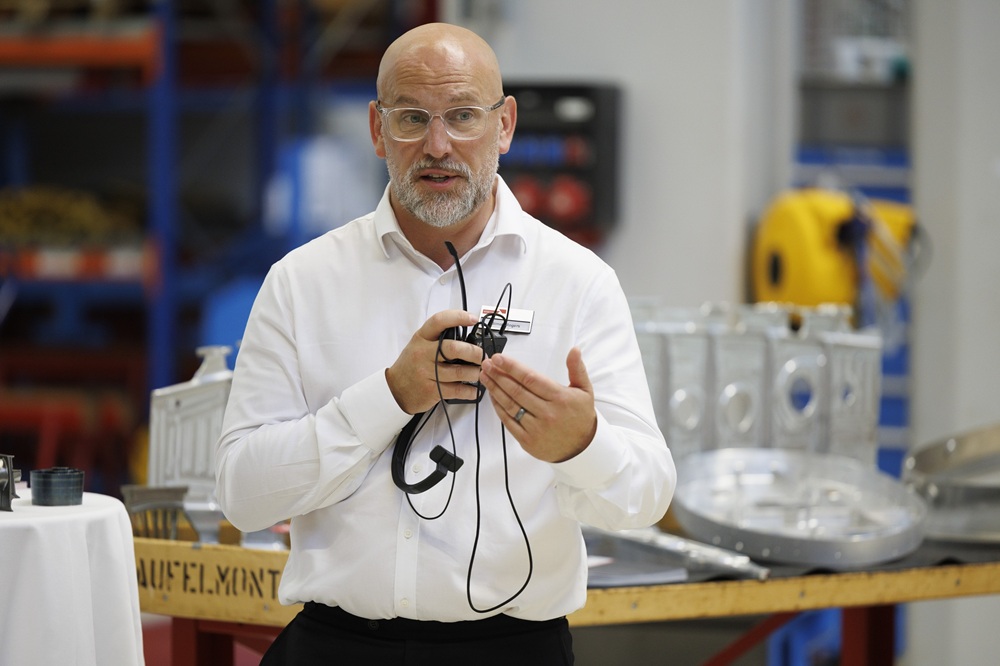
“TTL is an independent business unit which deals solely with software, and our solutions are all around Siemens NX and dealing with adaptive machining,” explains Simon Rogers, vice president at TTL.
In December, the company will take delivery of a Starrag Heckert X50 five-axis horizontal mill/turn centre, the sixth machine at its Haddenham facility and the first TTL has bought from its parent group.
Adds Rogers: “Jet engine components, repairing HPC blades, repairing blisks: that’s something we’re deeply embedded in, so we needed to invest in the best technology available. Our choice was a machine from the Starrag Group. It wasn’t purchased because we’re part of the Starrag Group. It was acquired on its technical attributes and the fact that a lot of our global customer base has invested in Starrag technology.”
The driver is the changing value and complexity of the components that TTL’s customers are asking it to process. Automating the repair of a single blade is one business case; an integrated bladed rotor (IBR), or blisk, is another.
“A complex integrated bladed rotor or blisk component, could be $50,000 to $150,000,” reveals Paul Whistance, finance director at TTL. “To automate the repair of those components with our technology and the Starrag Heckert X50 is a significant commercial advantage.”
A major factor in the purchasing decision was a multi-machine adaptive machining requirement for a major US defence programme, on which TTL is working alongside Starrag as its process and software partner. The programme has made a significant long-term investment in the Heckert X50, so having the same machine at Haddenham allows TTL to develop, prove and optimise customer processes locally rather than at sites around the world.
TTL’s five existing machines are small to medium-sized five-axis platforms, acquired from outside the group to suit lower value repair work. The business also runs a mixture of CNC control systems. As components have become more valuable and complex, however, that installed base has reached its limits.
“We’ve historically opted for non-group machines because our customers required a lower-cost, entry-level multi-axis machine,” says Rogers. “A $500 part repair is a different business case from remanufacturing or manufacturing higher-value components. This is where our interest in Starrag machines has sparked.”
The Heckert X50 is a horizontal machining centre with a trunnion table, providing short force paths, high structural rigidity and complete five-sided machining from a single set-up, alongside turning capability. For TTL, the trunnion arrangement is particularly important.
“Have a trunnion gives us the ability to move components, which is huge for us in terms of dynamic capability,” he says. “The speed at which we can keep the tool tip in contact with a component, such as an aerofoil, is significantly improved. Additionally, the diameters we can reach are nearly twice those of other platforms on site.”
The machine also provides considerably greater component height, opening up the mid-sized casings TTL previously could not accommodate, including the flanges and ports involved in casing remanufacture.
“It has an 18,000 rpm motor spindle, five-axis milling and turning capability, the ability to mount an angle head, and the security of hybrid bearings. The machine also offers very high precision, incredible resonance control and unparalleled dynamics. That’s why we selected it.”
TTL’s work typically falls into two areas. The first is new-part manufacture from castings and forgings, where the challenge is best-fit alignment in six degrees of freedom. The second is MRO (maintenance, repair & overhaul), where a component may no longer match the model from which it was originally manufactured.
“Components in service are obviously not the shape they once were,” explains Rogers. “This is where we have to adjust for deviation or shape change caused by stress or heat deformation using an automatic measurement workflow that can scan and utilise probing data.”
By measuring the component, TTL can automatically calculate a new CAD model, generate revised tool paths and post-processor code, simulate the process, and produce new G code. The ultimate objective is to eliminate manual finishing.
“Very simply, you can machine so far and then you have to stop; otherwise you’re going to scrap the component. So you have to leave some stock, and that means high blends or high stock levels. Then you need a manual hand blending or die-grinding process, and that can lead to RSI [repetitive strain injury]. The health and safety challenges present a particular risk with Inconel or titanium polishing and grinding processes.
“We have some customers that have applied the technology and no longer need hand finishing processes for their product to get back into service. This is a significant benefit.”
The X50 is the smallest machine in the Heckert X series, which makes it a good fit for TTL’s development and turnkey operation rather than a conventional subcontract machining environment.
“We have a geographical limit with our building, so we typically use small to medium-sized machines,” he says. “The X50 is a large machine for our facility, and it allows us to handle a medium-sized gas turbine component as it has a big swing with certain configurations. When it comes to a customer programme, we can align very quickly with an X70 or an X90 for the larger component types.”
That scalability is important because processes proven on the X50 at Haddenham can be transferred to larger machines in the same family at customer sites. The machine will also provide a test bed for machining hard metals.
“It’s a decision not made just by TTL; it’s a decision made by customers,” he states. “We like to follow what the end users choose. They’ve chosen Starrag for reasons based on cutting trials, assessments and specifications, and I agree with them in this case.”
The order also reflects a broader shift in TTL’s relationship with its parent group.
“Five years ago, 95%+ of our business was outside of the Starrag Group, now it’s 50%.”
Adds Rogers: “We use our skills, our experience and our engineering knowledge to solve problems that others cannot solve. By having access to these machines locally, we can increase the capability both for us and the wider group, taking business to the next level.”
More information www.starrag.com