


The art of hydraulic pipework in automated fixtures

Many might not compare a hydraulic system in an automated fixture (like the one pictured) to a work of art, but behind every smooth motion and reliable clamp lies the precision craftsmanship of the pipework. At Brown & Holmes (Tamworth) Ltd, the skills and expertise at the core of the ‘art’ could not be taken more seriously.

At the heart of every meticulously engineered hydraulic pipework system are the core skills and knowledge required to deliver smooth, reliable and repeatable performance.The fixture in the photo is one of a suite of three which helps manufacture four different components for a client. Each side of each fixture is dedicated to a different component, while the three fixtures enable three different machining processes.

Precision skills in cutting, bending and assembling pipework are crucial to ensuring the system is leakproof and reliable, and has high automation efficiency.

Precise movement, high strength and durability are key to providing the stability needed in a fixture’s hydraulic system. It is also about enhancing overall productivity and operational accuracy. Further factors include: efficiency – for minimal pressure loss and to ensure consistent flow of accurate, controlled motions; safety – proper installation with regular checks and maintenance minimise the risk of leaks, fatigue or vibration-induced failures; aesthetics andaccessibility – neat, organised layouts make systems easier to maintain and inspire confidence in the build quality; and longevity – proper bends, clean connections, and well-chosen fittings made from strong, durable materials extend the life of both pipes and components.

Automated hydraulic fixtures are the backbone of repeatability in manufacturing. And while the technology driving them may be advanced, the foundation is still built on skilled engineering and meticulous workmanship.

More information www.brownandholmes.co.uk

Success for Hurco Demo Deals Day

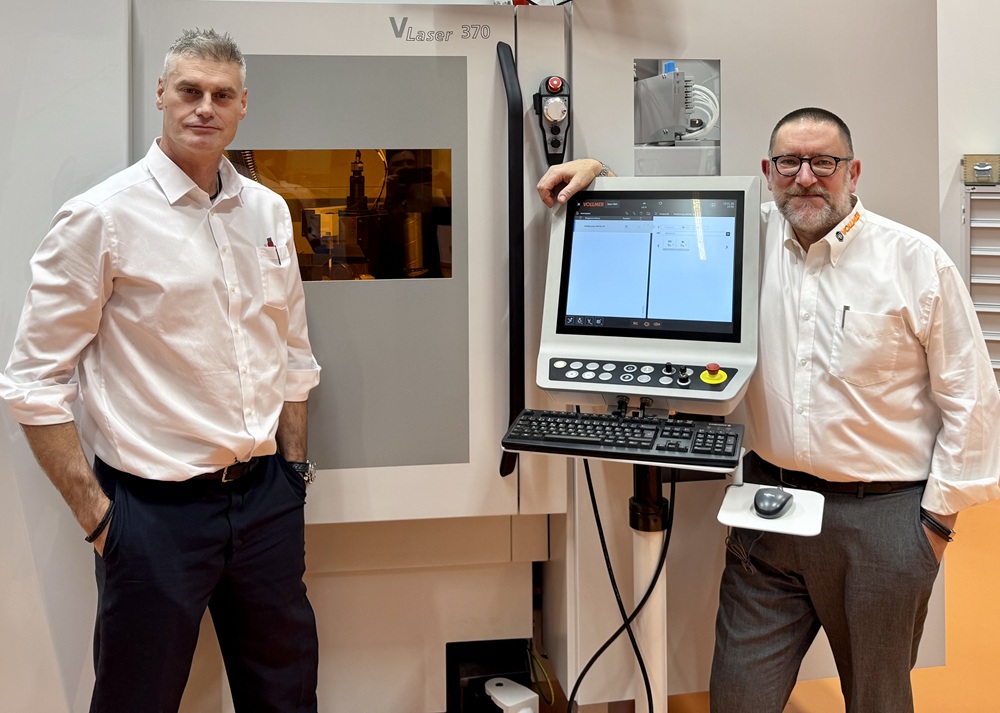
Strong customer engagement and sales were reported at Hurco Europe’s annual Demo Deals Day, which took place last month at the company’s High Wycombe showroom and technical centre. In total, 39 visitors representing 22 companies attended the event,all looking to take advantage of ex-demonstration and used machines at discounts of up to 20% (on selected models).

Demand was strong in the lead-up to the event, with several machines sold or reserved with deposits before the doors even opened. Among the most sought-after models that sold quickly were the five-axis VMX42UDi and VMX30Ui, the latter fitted with a ProCobot Profeeder-X five-drawer system. The popular VM10i and VM30i machining centres also attracted significant attention and were swiftly reserved, reports Hurco.

More information www.hurco.com

Big Turnout at Mills CNC Tech Show

Machine tool supplier Mills CNC reports that ‘The One Show,’ the company’s recent one-hit machining technology event at its campus facility in Leamington, was a roaring success. Over 180 visitors attended the event, where two new machine tools from DN Solutions made their UK debuts:the DVF 5000 Mk II simultaneous five-axis machining centre and the entry-level DNX 2100SB multi-axis mill-turn machine.

CEO Tony Dale says: “We wanted to do something different and host an event relevant to the future productivity and process efficiency needs of component manufacturers.As a result, we focused the whole event around one-hit machining, and it definitely paid off.A number of enquiries for the new DNX 2100SB and DVF 5000 Mk II are being actively followed up as we speak.”

More information www.millscnc.co.uk

Free-of-chargework-holding seminars available

According to 1st Machine Tool Accessories, workholding may not always be the most glamorous part of machining, but it is one of the most important. For engineers, a strong understanding of work-holding principles is essential asit directly influences product quality, efficiency, safety and overall manufacturing costs.

At its core, workholding ensures that a workpiece is positioned securely and accurately during machining. This stability not only guarantees precision but also enables engineers to optimise operations, reduce waste and design parts that are manufacturable at scale.

Several key reasons exist whyevery engineer should understand workholding.Optimised workholding set-ups not only prevent workpiece movement, ensuring finished parts meet exact tolerances, they can also minimise defects, rework and wasted material, directly reducing manufacturing expenses.

Of course, production efficiency also sees an increase, where quick changeovers and standardised set-ups keep machines producing for longer. Here, the ability to select the optimal device – jig, fixture, vice or chuck – for specific part geometries and production volumes, is paramount. By understanding workholding, engineers can design parts that are easier to hold and machine, even when complex.

Safety is another critical factor. Properly held workpieces prevent dangerous accidents resulting from components that shift from the held position.

1st MTA believes knowledge of workholding is essential to developing skilled, confident engineers. That is why the company is offering free-of-charge work-holding seminars to educational establishments and training centres.These sessions cover best practice, principles and hands-on demonstrations of the latest equipment, helping to bridge the gap between theory and real-world application.

More information www.1mta.com

UK’s first HBZ AeroCell 160-400 machines installed

With demand in the aerospace sector continuing to rise, Moyola Precision Engineering has taken a bold step forward in its production capabilities – investing in the UK’s first HBZ AeroCell 160-400 five-axis horizontal machining centres from Bavius. The machines mark a major milestone in Moyola’s ongoing commitment to performance, innovation and global competitiveness.

In response to continued growth and increasing demand across the aerospace sector, Moyola launched a strategic R&D initiative to expand capacity and transformed its manufacturing approach for a major international aerospace programme. The project focused on developing a new method of manufacturing, incorporating innovative tooling strategies and a reimagined, highly efficient production workflow.

Central to this initiative was the installation of two HBZ AeroCell 160-400 machines – the latest arriving in February 2025 – configured as a fully integrated twin-pallet manufacturing cell and tailored for high-speed machining of large aluminium aerospace parts.

Lee Averill CADCAM engineering manager at Moyola, says: “The HBZ AeroCell set up has played a pivotal role in redefining our approach to large workpiece machining, consistently exceeding expectations in both speed and precision.”

Today, the AeroCell machines are operating at full production capacity. Thanks to optimised engineering, intelligent pallet handling, and a well-balanced takt time, Moyola

benefits from a highly stable and continuous machining process with minimal downtime an ideal setup for scaling production while maintaining precision and consistency.

This new capability has allowed Moyola to deliver on critical production commitments with greater flexibility and efficiency. The combination of high-speed machining and ultra-precise output means Moyola can continue to meet the demanding requirements of the aerospace sector with confidence.

More information www.engtechgroup.com