The 26th edition of Southern Manufacturing & Electronics concluded earlier this month at the Farnborough International Exhibition Centre. Attracting over 460 exhibitors, the show set out a plethora of manufacturing solutions, including many in live demonstrations, for its highly engaged visitors.
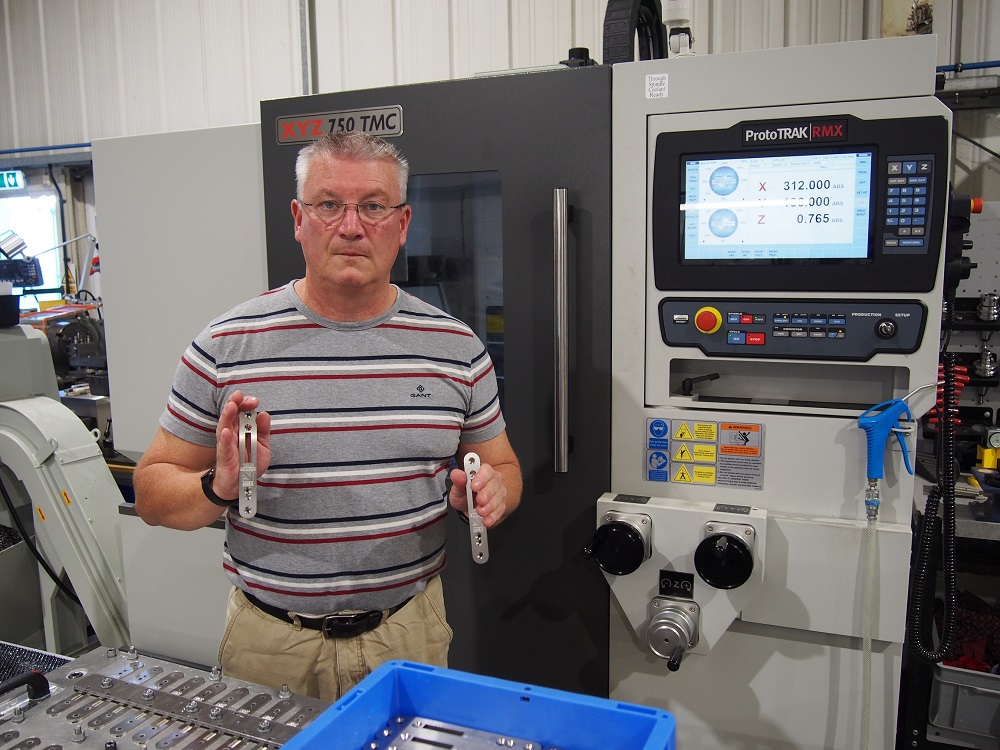
XYZ Machine Tools (www.xyzmachinetools.com), for example, performed live cutting demonstrations on seven machines, including the company’srecently introduced TMC toolroom machines for low-to-medium volume and tool-making applications. These machines, which use the same platform and linear rails as XYZ’s established LR VMC range,leverage the easy-to-use ProtoTRAK control for the rapid programming and set-up of 1-off and small-to-medium batches.
As well as two TMC machines and the RMX 2-OP second-operation machine, XYZ also demonstrated its the XYZ 800 HD vertical machining centre with Siemens 828D control and ShopMill.In addition, visitors to the stand could see the XYZ ProTurn RLX 355, a solution for low-to-medium volumes.Featuring the ProtoTRAK control, it is a fast way of getting parts cut in a machine that offers 1000mm between centres. For more component, the XYZ CT 52 LR turning centreon showprovides 52mm bar capacity, linear rail technology and a Siemens 828D control.
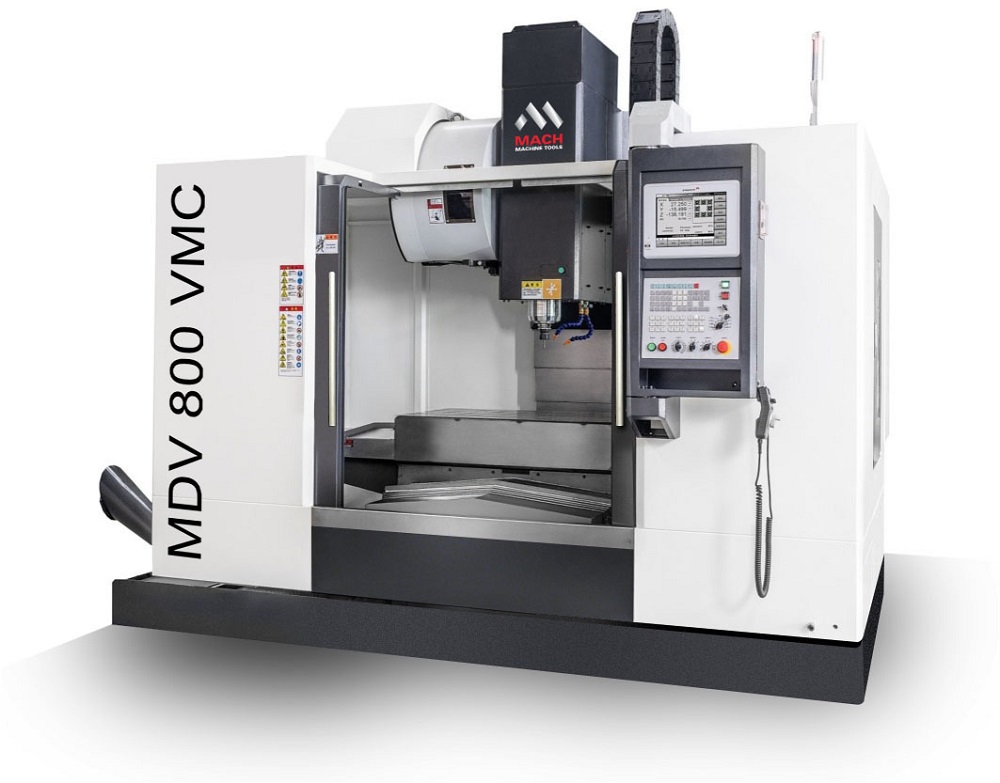
Elsewhere at the event, MACH Machine Tools (www.machmt.co.uk) showcased two DynaPath-controlled milling machines, including a new three-axis model. The MACH MDT-1 turret-type mill, one of the company’s best-selling models, shared centre stage with a new MDV 800 three-axis CNC vertical machining centre that only recently made its UK debut at the company’s open house in January.
While the MDT-1 turret-type mill, with its rigid design and build, powerful spindle and good-sized working envelope offered obvious appeal to visitors, large and small, it was the new production-oriented MACH MDV 800 vertical machining centre that pulled in the crowds.
The new MDV-series, comprising the MDV 800 and MDV 1100 machines, is a high-performance range of machining centres that MACH Machine Tools says delivers excellent cutting performance and improved process efficiencies. In addition to the DynaPath WinDelta CNC control, the machines feature a BT 40 air-cooled, high-torque (11-15 kW) 8000 rpm spindles as standard.
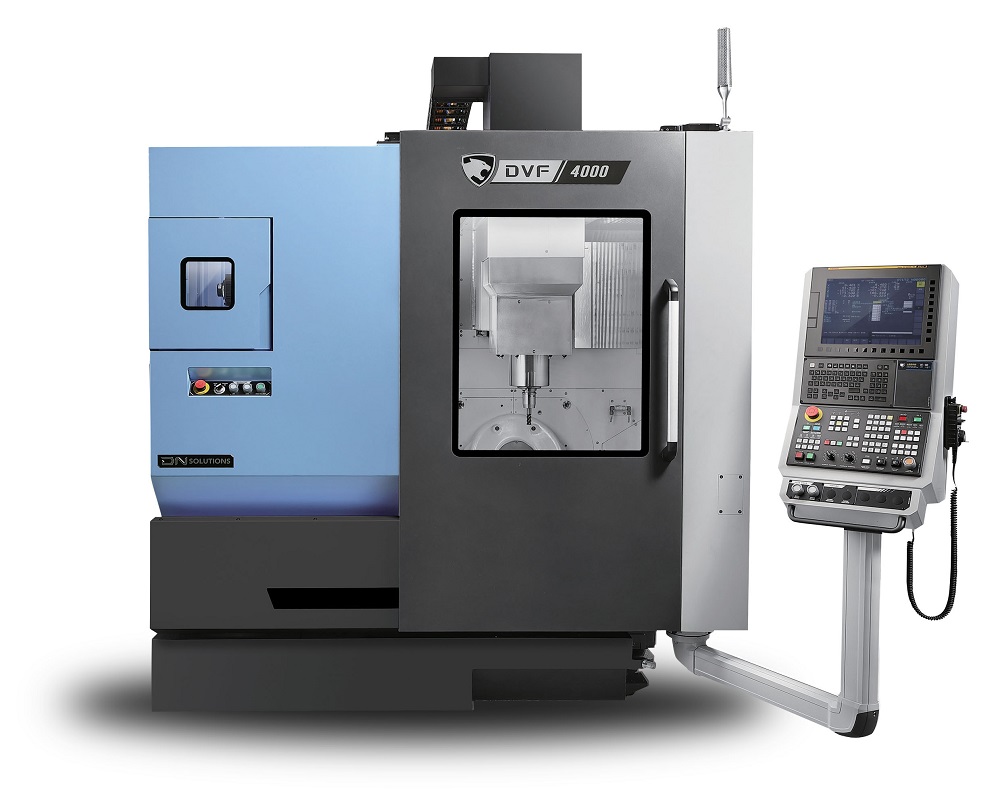
Mills CNC (www.millscnc.co.uk) provided visitors with a display of two new machine tools from DN Solutions. The compact DVF 4000is the latest addition to Mills’ best-selling DVFseries of five-axis simultaneous machining centres, providing component manufacturers with a ‘one-hit’ machining solution.The machine features an 18.5kW/12,000rpm (BT 40) directly-coupled spindle as standard, and a 400mm diameter, built-in rotary, tilting table with a zero-backlash roller gear cam design for improved process reliability.A 60-tool servo-driven ATC and integrated thermal compensation deliver increased productivity and part accuracies, and roller LM guideways ensure fast processing speeds.
Also on the Mills CNC stand and continuing the one-hit machining theme was a Lynx 2100LSYB multi-tasking turning centre.This 8” chuck/65mm bar capacity Lynx 2100LSYB is a productive multi-tasking turning centre equipped with a 5” chuck, 6000rpm sub-spindle, a Yaxis (±52.5mm) and driven tooling capabilities (6000rpm).
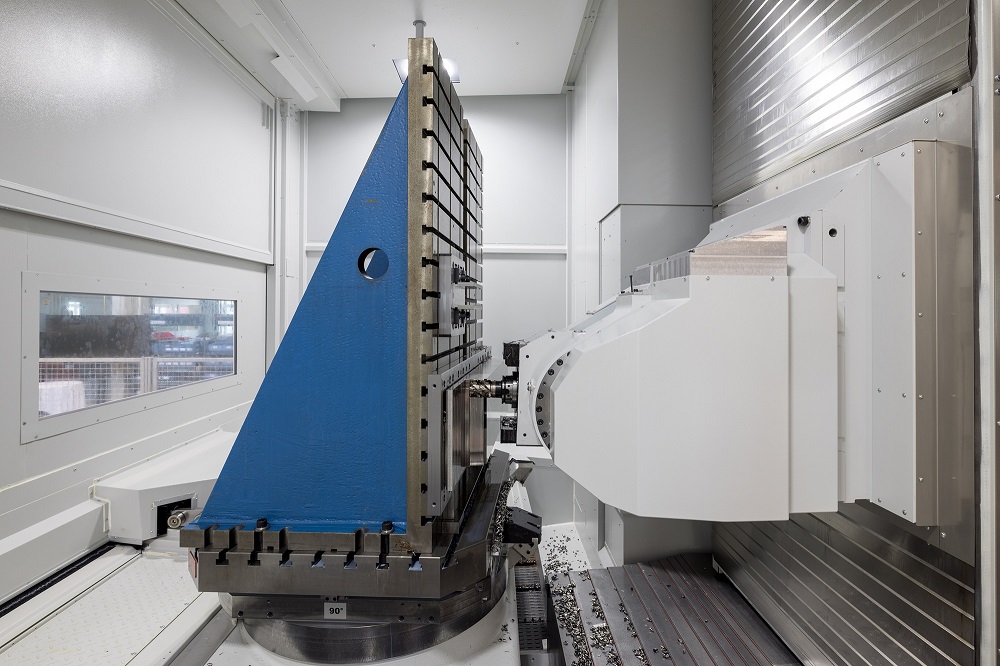
Another supplier keen to show its solutions for one-hit machining was Matsuura (www.matsuura.co.uk). Following the success of its MX-330 PC10, Matsuura has introduced the MX-420 PC10 five-axis VMC configured with 10 pallets and 90 tools for larger workpiece machining. A fully automated MX-420 PC10 made its debut UK appearance at Southern Manufacturing, machining live throughout the show and demonstrating just how flexible the 10-pallet changer can be during unmanned operation.
From a tooling perspective, Industrial Tooling Corporation (ITC, www.itc-ltd.co.uk) presented its latest product lines and introduced its new e-commerce platform.The online portal provides enhanced accessibility to the company’s exponentially growing product lines. This informative and easy-to-navigate e-commerce platform allows manufacturers to create an account and place orders, browse through stock and see everything ITC has to offer, including from partners such as Widia, Big Kaiser, Kemmler and Bass.
Exhibition visitors seeking out the latest software solutions found CGTech (www.cgtech.co.uk)shining the spotlight on its latest Vericut CNC simulation software. Vericut is now in use at over 7000 companies in more than 60 countries, simulating machining and correcting errors to eradicate potential crashes prior to actual cutting. The latest version, Vericut 9.4, focuses on increased connectivity between the actual machine and the virtual simulation.
With the machining process complete, attention of course turns to measurement and inspection, with a plethora of solutions on display at Southern Manufacturing. The Mantis 3rd generation stereo microscope from Vision Engineering (www.visioneng.com), for example, attracted plenty of attention. Building on the original award-winning Mantis design, the company says that the latest additions to the range deliver superior image quality, expanded field of view and an integrated digital camera for maximum efficiency when capturing, reporting and analysing.
Many other metrology companies offering metrology equipment or services were present at the show. Aberlink (www.aberlink.com), for example, demonstratedits Fulcrum manual CMM with a particularly simple user interface. The company says it can start measuring parts within minutes of being switched on, even if the operator has no previous experience.
Keyence (www.keyence.co.uk), which is known for its sensors, 3D imaging, machine vision, microscopes and metrology systems, showed its latest VHX-7000N digital microscope with 4K resolution, while another metrology specialist, LK (www.lkmetrology.com), launched a high-accuracy CMM and demonstrated its Freedomindex table. The latter is said to speed component inspection by up to 40% when using a portable, multi-axis measuring arm.
The next Southern Manufacturing & Electronics exhibition will take place under the auspices of Easyfairs, which in January acquired the show from European Trade & Exhibition Services.
Matt Benyon, group CEO of Easyfairs, says: “Southern Manufacturing & Electronics is a perfect strategic fit for our growing portfolio.As part of an established stable of industry-leading events, the event’s future development and its loyal exhibitor and visitor base, which has been built up over the past 30 years, will be in very safe hands.”
For further information www.industrysouth.co.uk