
Finecast welcomes UK industry stakeholders

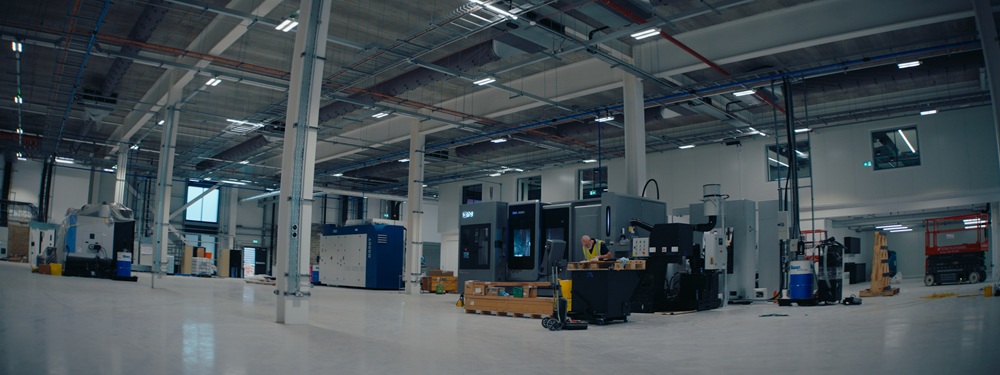
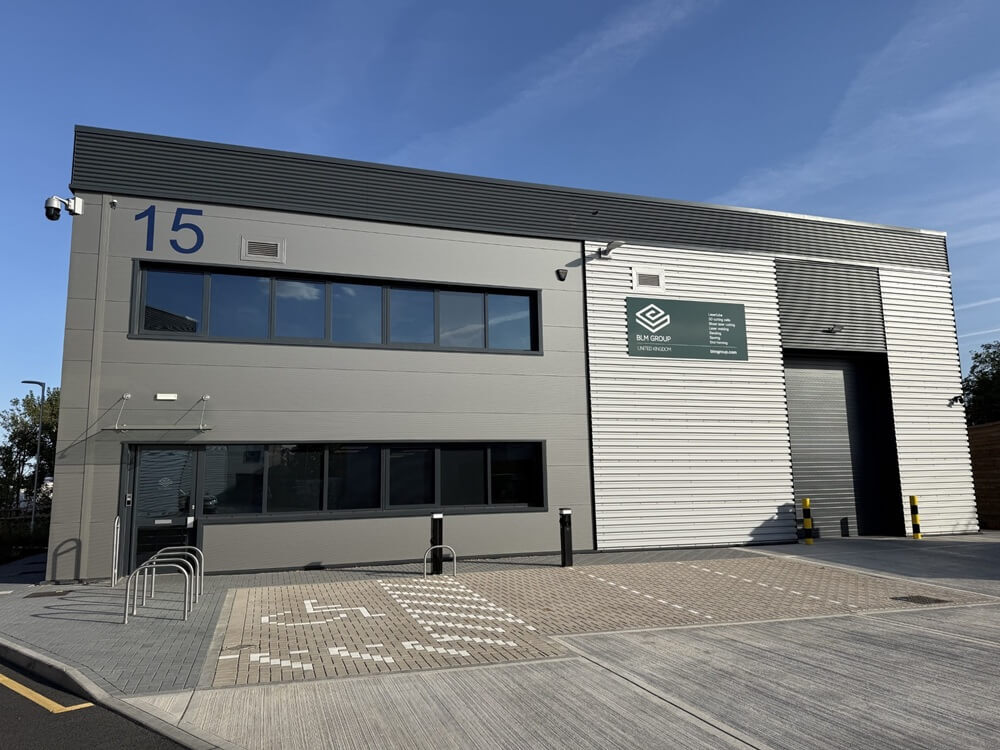
Finecast, a West Sussex-based precision casting and machining specialist, opened its doors to a diverse delegation last month to address one of the most pressing challenges facing UK manufacturing today: the future of the domestic casting industry. Delegates comprised members of the Worshipful Company of Founders, a historic livery company dedicated to supporting and promoting the modern metals and casting industries. Also attending the event were industry leaders, academics, engineers and apprentices. 

The day began with an informal roundtable discussion, followed by a behind-the-scenes tour of Finecast’s advanced foundry and machine shop. Finecast has recently invested £2m in its machine shop capabilities and is in the process of achieving NADCAP accreditation.

The company also employs advanced inspection technologies such as GOM optical 3D metrology systems for precise geometric measurement.

More information www.finecast.co.uk

Productivity and process stability in cast-iron machining

As global manufacturing continues to face pressure from raw material volatility and supply chain concentration, machine shops are reassessing how critical tool materials are deployed within their processes.

Tungsten carbide remains indispensable across a wide range of applications. However, its reliance on tungsten, a strategically sensitive material, is prompting manufacturers to reconsider where it delivers maximum value and where alternatives can offer distinct technical advantages.

With expertise in ceramic material engineering and application development, NTK continues to advance cutting tool performance in demanding environments. In cast-iron machining, engineered ceramic grades provide a highly robust solution for high-temperature applications.

Machining cast iron generates extreme cutting temperatures, particularly in dry and high-speed operations. Under these conditions, alumina- and silicon-nitride-based ceramics retain hardness and wear resistance beyond conventional carbide limits. In stable, heat-dominated processes, they enable higher cutting speeds, shorter cycle times, consistent wear behaviour and reliable dry machining performance – benefits grounded in material science and proven in production environments.

Ceramics are not intended to replace carbide across all operations. Carbide remains the preferred choice for heavy interruptions, unstable set-ups and applications requiring maximum edge toughness. The opportunity lies in identifying operations driven primarily by thermal load rather than mechanical shock. In these conditions, ceramic grades can deliver measurable productivity gains, while carbide continues to excel where toughness is critical.

NTK’s ceramic portfolio includes SP9, SX6 and HC1/HW2 grades, developed specifically for cast-iron machining. Widely used across automotive, heavy equipment and industrial casting sectors, these solutions have demonstrated increased cutting speeds and productivity in components such as wheel hubs and structural housings, while supporting more efficient, lower-resource manufacturing.

More information www.ntkcuttingtools.com

MACH 2026: Mapal presents latest tooling solutions

Tooling specialist Mapal is attending MACH 2026 (NEC Birmingham, 20-24 April), highlighting its latest and most innovative solutions. Among many highlights is the OptiMill-Uni-HPC, the third generation of the Mapal solid-carbide milling cutter. Optimised for automated manufacturing environments, the company says this high-performance tool delivers high cutting efficiency, making it suitable for demanding machining operations.

Also on stand 20-340 is the new NeoMill-16-Finish milling cutter, developed to meet tough requirements for surface finish and dimensional accuracy in the series production of steel and cast materials. The NeoMill-16-Face proves an economical tool for pre-machining milling applications, suited to machining cast and steel parts. Equipped with 16 cutting edges on the indexable insert, it enables low cost per part while maintaining stable and reliable machining processes, reports Mapal.


Elsewhere on the stand is the NeoMill-Alu-Rough, a milling solution developed specifically for roughing aluminium components. Tailored to the requirements of the automotive and aerospace industries, this tool is both effective and productive, even at very high chip volumes.


A focus within fluid power and hydraulic manufacturing sectors are two new spool bore solutions. A pilot drill with three or five cutting edges for different casting properties, enables efficient and economical component piloting, reducing machining steps and saving tool changes. While the three-lipped core drill is used for stable raw parts, the option with five cutting edges offers precise results at high feeds in unstable casting conditions.

Like the pilot drill with three cutting edges, the solid-carbide boring tool with three cutting edges is based on Mapal’s patented multi-chamfer technology. This design ensures clean chip removal and no ring formation in the cavities due to special bore geometry, including at drilling depths up to 10xD.

More information www.mapal.com

Launching CoroMill MR20 for controlled, stable profile milling

Cutting tool specialist Sandvik Coromant has launched its CoroMill MR20, an indexable milling concept engineered to deliver stability, predictable performance and high metal removal rates across demanding materials and applications. Designed for manufacturers that require process security, the new indexable-insert cutter brings both confidence and productivity to profiling and face milling operations, reports the company.

CoroMill MR20 is a single-sided round-insert concept for ISO M, ISO S and ISO P materials. Its combination of security and versatility makes it suitable for pocketing and complex profiling in titanium and other HRSA materials used for aerospace and oil and gas components. The tool also excels in ISO P mould and die applications, delivering reliable roughing and semi-finishing performance. In ISO M materials, it handles heavy metal removal for pump and valve components with the high predictability and productivity these industries demand. CoroMill MR20 is now Sandvik Coromant’s first-choice solution for these applications.

“Our goal while developing CoroMill MR20 was to create a polyvalent cutter that offers the highest level of process security,” says Alvaro Ruiz, global product application specialist. “Customers machining high-value components need predictable, repeatable performance, which CoroMill MR20 delivers.”

CoroMill MR20 is engineered not only for performance but also for more sustainable machining. By enabling higher feed per tooth, the tool reduces the energy required during machining. Its long tool life means fewer inserts are consumed, lowering the overall carbon footprint associated with production.

“Increasing feed capability while extending tool life means fewer resources used and less waste generated,” confirms Ruiz. “It’s a win for productivity and for sustainability.”More information www.sandvik.coromant.com

AWI secures major nuclear quality accreditation

Successful accreditation to a prestigious quality standard is set to create £2m of global opportunities for Alloy Wire International (AWI).This UK manufacturer of precision drawn, flat and profile wire has taken just nine months to gain ISO 19443, the international benchmark for supplying critical components and material to the nuclear sector.

AWI recorded zero non-conformities during the assessment, with the business praised for its strong quality management systems, employee culture and enhanced communications strategy that was integral to the successful application.The firm’s 62-strong range of exotic alloys is in growing demand from the sector, with sales to this market increasing to 10% of the firm’s annual £16.5m turnover.

More informationwww.alloywire.com