

Edgecam boosts business and turnover at STDU

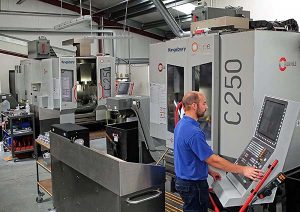
“Edgecam means shorter machining cycle times. And shorter machining cycles increase our productivity.” Those are the words of Cyril Gloriant, technical director at a company producing complex components for a variety of industry sectors, including agriculture, medical, aerospace and gas.

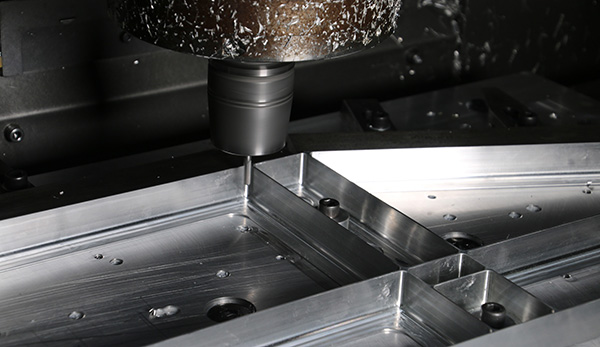
As Société Toulousaine d’Etude et d’Usinage (STDU) manufactures parts with tolerances down to 0.01 mm, Gloriant says the company needs “a perfect working combination of operator, machine tool and software”.
Around 80% of components at STDU are machined using Edgecam CAM software to drive a number of CNC lathes and mill-turn machining centres, including those manufactured by Mori Seiki, Haas, Manurhin and Hardinge. “It’s important for Edgecam to be able to pilot all our machines; we can’t accept a two-tier production system,” says Gloriant. “As all the necessary machining information is contained within the post-processors, all our operators can use it, while only a few are now capable of manually programming the machines.”
He adds that Edgecam offers real flexibility to the company’s pool of CNC machinery. “If we suddenly need to move a job from one machine to another, production can be switched rapidly with the same kinematic characteristics and a different post-processor.”
Operating from 1000 sq m premises in Pinsaguel, France, with 10 employees, STDU purchased Edgecam in 2017, and progressed to using it daily in the workshop early this year, as part of a planned development. Gloriant, who will take over as CEO in September, says that the company currently uses both Edgecam’s milling and turning modules, incorporating all of the software’s machining strategies, including Waveform turning and milling.

STDU currently finds Edgecam’s feature recognition capability to be particularly valuable. “With a single click Edgecam analyses the part and determines the operations to be carried out, along with recognised function properties such as depth, minimum radius and angles. The feature prepares machining sequences which can easily be modified according to our specific requirements. Once Edgecam has defined the functions according to part topology, machining runs smoothly every time, and we no longer have to worry about aspects such as tool depth and drills. Edgecam automatically machines the features.”

He says reduced programming and cycle times, as well as acquiring new skills and knowledge from Edgecam, has opened up new markets for STDU in serial production and more complex parts. “As customers know we can now produce parts that previously we didn’t have the skills or capacity for, they’re designing more innovative and complex components, and we’ve risen to the challenge every time. We’re saving up to three hours by programming the machines offline, while they’re running with other jobs.
“When we receive the CAD model from our customer, we determine which production method we’re using – either turning or milling – along with the appropriate machine tool,” continues Gloriant. “We then open the 3D CAD model in Edgecam and run the feature recognition module, which analyses the part and prepares the machining sequence.” When parts are to be milled, with a long machining cycle time, the company also uses Edgecam to establish a quote, as it provides STDU with accurate timings.
Gloriant says the company has already seen turnover rise from €1.2m in 2016, to €1.35m last year – a rise of 12.5% – thanks to winning contracts that the business couldn’t have undertaken without Edgecam. “Between 20 and 30% of our machining is on new products, for customers.”
And plans are underway to take state-of-the-art CNC programming to the next step. Operatives are currently training on the software’s Strategy Manager feature-based automated machining system, which will reduce certain aspects of repeat programming to mere seconds.
“We’ll soon be able to rely on Strategy Manager’s predefined functions based on part topology to save us even more time on preparation, programming and machining cycle time,” says Gloriant. “We’re intending to define a strategy for each type of part that can be replicated, such as the number of tools, dressing operations, pre-drilling, drilling and cutting, which will be applied each time.”
While the company works mainly as a subcontractor, it also provides a reverse engineering service, offering advice concerning the feasibility of a part, and examining and evaluating the topology to ensure it functions correctly, at the lowest cost.

In conclusion, Gloriant says although the company originally invested in Edgecam so it could work directly on customer 3D files without the need to redraw plans, and easily configure it for STDU’s own requirements, as well as creating macros, the business quickly realised how it could save time and money throughout the whole manufacturing process. “For example, thanks to the Waveform turning strategy we’ve reduced machining time by up to 30% on some parts, and up to 40% on milling in association with rest-material machining.
“As quality and service are STDU’s priority, Edgecam’s dynamic roughing strategy allows us to concentrate all our attention on those targets.”
For further information www.edgecam.com

30-taper machine is 40% quicker than predecessor

At the Barnoldswick factory of bicycle aftermarket component manufacturer Hope Technology, nearly all parts are machined from aluminium. Due to the relatively light metal cutting involved, it is not surprising that nimble, 30-taper machining centres are found on the shop floor alongside more powerful but relatively ponderous machines having a 40-taper tool interface.

Indeed, works and production manager Lindley Pate has started to replace some 40-taper machines with 30-taper technology, although there is no conscious policy to do so. Each machine is purchased on its merits for the intended applications.
A case in point occurred earlier this year when a Japanese-built Brother R650X1 30-taper, three-axis vertical machining centre (VMC) with 650 x 400 x 305 mm travels and twin-pallet changer was delivered by Whitehouse Machine Tools. The machine replaced an ageing, 40-taper twin-pallet VMC with a similar working envelope, and the benefits have been far-reaching.
First, the Brother machine is much more productive. For example, Op 2 on three twin-piston brake calipers fixtured side-by-side now takes 19 minutes, whereas it previously took 32 minutes, representing a 40% reduction. Time savings of this order are typical across the expanding range of parts being transferred to the more agile machine.
Secondly, the footprint occupied by the R650X1 is 20% smaller, which is helpful in a busy factory requiring more and more machine tools to service a business where recent annual percentage turnover growth is well into double digits.
A third advantage is that, as any 30-taper machining centre draws less power than a 40-taper machine with equivalent working envelope, there is an ongoing reduction in energy consumption that not only saves money but is also appropriate in a company that makes equipment for carbon-free transportation. The R650X1 additionally provides power regeneration from spindle deceleration, while the Brother CNC-C00 control minimises the power consumed by motors, pumps and lights by putting them into standby when not in use.
Works and production manager Lindley Pate says: “We use ten 30-taper machining centres on our production floor and 15 prismatic metal-cutting machines with 40-taper spindles, a mix of VMCs and horizontal-spindle machines. Half of the 40-taper machines are in multi-pallet cells and that will not change; in fact at MACH 2018 I ordered another five-axis model equipped with a 32-pallet pool.

“Where there is scope for swapping to 30-taper is in respect of our single-table and twin-pallet 40-taper machines,” he adds. “The benefits are compelling due to the higher output that is possible using the smaller tool interface, while accuracy and repeatability are just as good. In fact they are fantastic on the Brother machine. We hold down to 5 µm total tolerance on some components such as cassettes, which have to mate with another sprocket set produced on a different machine to provide the higher gear ratios.”
He points to the use of a Big Plus spindle on the latest R650X1, which provides face-and-taper contact with the tool’s back end, leading to extra rigidity. The spindle allows, for instance, a 32 mm diameter face mill to skim components and achieve a fine finish on some surfaces; cosmetic features which are much appreciated by customers in more than 40 countries that use Hope’s high-end bicycle parts.
The manufacturer’s first encounter with Brother agent Whitehouse Machine Tools was five years ago when two 30-taper TC-2RB three-axis machining centres were purchased to cope with increased workload. At the time Hope used, and still does, six 30-taper machining centres of a different make; some equipped with manual pallet change.
Brother TC-2RB machines were selected owing to their superior speed and productivity, and due to the compact design of the automatic pallet changer. Brother calls this a QT (quick turn) table, which is essentially one large pallet rotating around its centre, so no time is lost by having to temporarily disengage pallets for 180° indexing into and out of the machine’s working area.
Two years ago, the first R650X1 arrived on the shop floor at Barnoldswick, again to cope with steeply increasing demand for Hope’s bicycle accessories. The machine was considerably faster in-cut than the TC-R2Bs, as well as offering similarly short idle times. Brother’s R650X1 also provided a larger table, 800 x 600 mm, instead of 600 x 300 mm, and at a competitive price. The extra table area enables more parts to be fixtured for longer run times, which is especially useful for lights-out machining during 24-hour operation, currently from Monday through to Thursday. A single shift is operated on Friday, while weekend working is according to demand.
Further benefits of the R650X1 are the option of 22-tool storage capacity rather than 14 positions on the TC-R2B, 15-bar coolant delivery through the 16,000 rpm spindle and, notably, 30 m/min cutting feed rate in all axes instead of 10 m/min in X and Y, and 20 m/min in Z on the TC-R2B. The inherent speed
of all Brother machining centres derives from fast tool changes and APC time, as well as 50 m/min rapids, all of which happen at the same time so that the tool is in position to cut the next part instantaneously after pallet changeover.

Larger memory capacity in the Brother control is useful, as two dissimilar Hope parts can be fixtured and machined on the R650X1’s pallets. In contrast, on the old 40-taper machine, a relatively complex part had to be machined two at a time due to lack of control memory. The ability to produce different parts on one machine is appreciated by Pate, who sees part numbers for machining new component derivatives arriving all the time from the design office, but very few being deleted.
In conclusion, Pate says: “There is a greater variety of 30-taper milling centres around now, and more tooling is available to use on them. They are extremely compact, helped by the carousel style of tool magazine. We use two major makes of 30-taper machine here. Brother machines have the edge in terms of speed, compactness, value for money and reliability, and they provide good access for loading and unloading parts, so are popular with our operators. Whitehouse also provides excellent after-sales backup and service.”
For further information www.wmtcnc.com

Automotive supplier places trust in Tornos

With more than 4000 employees in 10 countries, Bontaz-Centre has fully placed its trust in Tornos, accrediting much of its success to the machine-tool brand. In fact, the French firm has recently expanded its fleet of Tornos NC multi-spindle lathes and Swiss-type machines significantly.

Bontaz-Centre is a global success story on how to transform a bar-turning workshop into a worldwide automotive supplier. The history of the company is closely linked to that of its founder, Yves Bontaz, a man that formed the company with the aim of developing an innovative, dynamic and fully future-driven enterprise.
As a born entrepreneur from the Arve Valley, Yves Bontaz decided, together with his twin brother Florent, to join the National Clock-making School in Cluses. In 1958, the brothers were conscripted to maintain aircraft for the French army. After 30 months of military service, Yves realised that he wanted to go into business for himself. However, to purchase his first machine, his parents ended up selling their horse. He canvassed his first customers and soon began expanding his machine inventory, which rapidly increased from 5 to 30 machines.
For 10 years, the subcontractor manufactured for the big names of the Arve valley. However, this kind of bar turning was poorly paid, so productivity and quality became a keynote issue for Bontaz. Even today, these two aspects still form the basis of the company. After 10 years of contract manufacture, Bontaz bought his first three multi-spindle lathes and became a supplier to Peugeot and Renault. The margins were higher and the two customers ordered large volumes.
One day, the purchasing agent of a major car manufacturer gave him a part no other bar-turning company wanted to produce. The component was a cooling nozzle, entirely made of aluminum, and it was the main part of the engine cooling system. This contract marked the beginning of sustained growth for Bontaz.
Environmental protection became a central issue in the 1990s. The better the engine cooling system; the less polluting the engine. The result was a 20-fold increase in the demand for cooling nozzles, which was the start of globalisation for the Bontaz Group. In response to the constant pressure on pricing exerted by the purchasers, Bontaz established its first subsidiary in Eastern Europe, which was soon followed by a subsidiary in Shanghai. Today, over 400,000 new cars comprising a component manufactured by Bontaz will roll off a production line each month.

After China, Bontaz also gained foothold in the US, South America and then in North America. Today, the company has almost 4000 employees and branches in nine countries, with four sites in Tunisia and China respectively, plus manufacturing plants in Morocco, the Czech Republic, India, Brazil, the US, Japan and South Korea, and of course the company’s headquarters in Marnaz, France.
In short, Bontaz has become a major tier-one supplier to the automotive industry. Apart from the famous cooling nozzle, the company specialises in the assembly of various sub-assemblies, such as electro-magnetic handbrakes and all types of fluid control systems.
In Bontaz machine shops around the world, a large number of Tornos cam-type multi-spindle lathes can be seen. Just recently, various Tornos machines of different types have found their way into the workshops and this includes Tornos Swiss DT 13 machines.
“The Swiss DT 13 was chosen due to its competitive price, its productivity and its quality,” says Yannick Bontaz, nephew of Yves. Swiss DT 13 machines are a valuable alternative to cam-type lathes as they boast the flexibility of numerical control while being ultra-productive. Thanks to their L-type kinematic system, the machines can achieve highly competitive cycle times.
Additionally, the company has installed a series of Tornos Swiss GT 32 machines.
“With its B-axis facility, rigid structure, high performance and driven tools that can reach speeds of up to 9,000 rpm, the Swiss GT 32 machines are able to tackle machining tasks of high complexity,” says Yannick.
The company also reports that it now has four MultiSwiss 6×16 machines, although it was never a foregone conclusion that the machines would be Tornos models.
“Even if we trusted Tornos and their cam-type multi-spindle lathes for a great many years, we still decided to contact another manufacturer for NC multi-spindle machines,” Yannick reveals. “However, over time we realised that the MultiSwiss would offer a very high performance. We decided to take the plunge and purchase our first Tornos NC multi-spindle lathe.
“The machine is very easy to operate and set up,” he adds. “Set-up changes can be realised in no time and this is a major advantage. Furthermore, the MultiSwiss provides us with exceptional responsiveness. The quality of the parts and of the series produced is also excellent. That’s why we have already installed four machines and ordered a fifth.

“Given the success of the MultiSwiss 6×16, we did not hesitate when Tornos presented us with the MultiSwiss 8×26. And we have to admit that the machine has already fulfilled its promises in terms of dimensional accuracy, thermal stability and surface finish. We owe the success of our company to Tornos’ expertise and their sophisticated machines. So, we are looking forward to the two new machines that will complement our MultiSwiss 8×26 fleet.”
The entrepreneur from the Savoy region, a colorful personality, concludes: “Tornos displays the same conscientiousness in everyday work as I do.”
For further information www.tornos.com

Platform for growth at composites subcontractor

In 1979, Harlow-based TK Fabrications opened its garage door for business. Today, almost 40 years after the father and son company was conceived, the third-generation family business is filling its impressive new factory with high-end machine tools, the latest addition to which is a Fanuc RoboDrill D21MiA5 five-axis machining centre.

As a manufacturer that exclusively machines plastic and composite materials, TK Fabrications has a machine shop packed with high-end turning centres, machining centres and routing machines. These machines are tasked with manufacturing anything from prototype to 1000+ batch runs that are supplied to customers around the UK, Europe, China, Malaysia and the US. Fanuc has been supporting the growth of the subcontract company since 2002.
Recalling the introduction to Fanuc machine tools, company director Sam Howlett says:
“The first RoboDrill, a T14iB arrived in 2002 with a 4th-axis Nikken rotary unit, which was fantastic. We then bought a used Fanuc and had Fanuc engineers to do some work on the machine to keep it up to the required specifications. We kept that machine for five years. Now, we’ve invested in the new five-axis RoboDrill D21MiA5 and it’s outstanding.”
The reason that TK Fabrications has continually invested in Fanuc technology is two-fold: performance and reliability. Referring to the reliability of the Fanuc brand over the 16-year duration, Howlett says: “Throughout our ongoing growth period, Fanuc has helped our small business to save money, telling us we didn’t need a service contract because the machines don’t breakdown. They were 100% right. After all these years, the machines have never broken down. We’ve had Fanuc come in and do some work, such as lowering a machine after integrating a Microloc work-holding unit. They have also done some other retrofit work, but never attended a breakdown.”
This reliability is a critical aspect to any subcontract manufacturer, as Howlett confirms: “The ability to get finished parts out of the door to meet customer deadlines is a business-critical factor. Failure to meet deadlines has consequences; luckily we buy Fanuc machines so this isn’t an issue. Over the last year, we manufactured over 155,000 components with 98% on-time delivery and the remaining 2% delivered early. Fanuc machines played a considerable role in achieving these statistics by never failing us. Any machine tool failure would be detrimental to these statistics.”
From a productivity perspective, Howlett says that the Fanuc machines have always been streets ahead: “Even the older Fanuc machines have a 15,000 rpm spindle with 54 m/min rapid traverse rate.”

Despite the glowing productivity endorsement of the RoboDrill series, the latest five-axis RoboDrill D21MiA5 has taken TK Fabrications to the next level.
“The D21MiA5 is swallowing work from the other machines on our shop floor,” states Howlett. “It’s giving us more capacity throughout the factory and this is because the new RoboDrill is so much faster than our existing plant list.”
This factor is demonstrated with a plastic component that has a total machining time of 2 minutes 53 seconds, which includes drilling a 170 mm deep hole and then rotating the part to a secondary set-up for machining all faces. The component was previously machined in 6 minutes on an alternate machine, thus cycle times have been cut by over 50%.
Another rectangular plastic part machined on the new D21MiA5 is clamped with two Lang vices and drilled to a depth of 300 mm. This component is being machined in less than 5 minutes, whereas the previous total machining time was over 20 minutes.
The 3+2 configuration of the RoboDrill D21MiA5 is ideal for TK Fabrications as it has no specific requirement for full simultaneous five-axis machining.
“The process to configure the machine from 3+2 to full simultaneous five-axis is simple for Fanuc, and we thought we would have requested it by now,” says Howlett. “However, almost all our jobs only require 3+2 machining, and with the capability of the new Fanuc, it is increasingly close to capacity with no simultaneous five-axis work going through it. This is because it is drawing more work from less productive machines.”
The latest RoboDrill incorporates a Big Plus BBT spindle configuration and more than sufficient capacity in the X, Y and Z axes. In fact, TK Fabrications specified the new addition with a riser block at the rear of the machine to lift the five-axis unit by 50 mm. The purpose of this request was to give the company greater swing capacity, which facilitates the machining of larger components.
Primarily machining plastics and composite materials, TK Fabrications runs every machine without coolant. With the Fanuc RoboDrill, this concept has seen a central dust-extraction system fitted to remove airborne dust.

“The airborne particles are collected via the extraction unit and the machine base is cleaned every 30-40 parts to remove chips,” explains Howlett. “Swarf is automatically blown from the work area as we have a through-tool air blast. This capability keeps the cutting tools at an optimal temperature, clears the work envelope and improves processes such as tapping and deep-hole drilling. The air blast works at 6.2 bar and has been a revelation for us. It stops the tapping process from binding-up, is more productive and delivers extended tool life.”
In conclusion, Howlett says: “Fanuc have been an outstanding machine tool partner. The reliability and machine uptime is amazing, while the service and applications team are extremely helpful and supportive. In short, the technology, speed and capability of the RoboDrill series is perfect for our business.”
For further information www.fanuc.eu

Achieving productivity beyond sliding heads

Almost 78 years after Tenable Screw was founded by a Swiss watchmaker as a manufacturer of screws, the company has become one of the UK’s largest subcontract producers of turned parts.
With three manufacturing sites in Marlborough, Coventry and its headquarters in Wimbledon, Tenable has more than 250 machine tools that include 71 coil-fed Escomatics, 26 multi-spindle machines, 56 sliding-head turning centres and four fixed-head turning centres. The machines produce millions of components every month.

Committed to an ongoing culture of quality-assured engineering, Tenable Screw invests 10% of annual turnover in the latest technology to support its live base of over 250 customers. Part of this investment strategy has seen the arrival of a Tornos MultiSwiss 6X14.
The modern face of Tenable Screw sees the company manufacture everything from connector pins and sockets through to bolts, screws and much more for the electronics, instrumentation and control, automotive, aerospace, medical, defence, transport and telecommunications sectors in quantities that range from prototypes and small batch production up to runs of more than 100,000. With London property at a premium and the 45,000 sq ft Wimbledon headquarters packed with machine tools, the philosophy behind the MultiSwiss 6X14 purchase was to add flexibility and capacity to a business with limited floor space.
Commenting upon the arrival of the Tornos MultiSwiss 6X14, Tenable Screw commercial director Nigel Schlaefli says: “We initially acquired the MultiSwiss to alleviate capacity issues on our single-spindle sliding-head machines, while having the production capacity of multiple single-spindle machines in a floor area significantly smaller than five-to-six single-spindle machines. Although we initially used the MultiSwiss as a flexible centre that was supporting our single-spindle machines, like any subcontract manufacturer that has a fluid workflow, customer base and component types, the MultiSwiss is now dedicated to producing just one component family. Despite being restricted to a single family of parts, the productivity, precision, cost reduction and floor area benefits are evident.”
Just a few months after installing the MultiSwiss 6X14, Tenable Screw won a long-term automotive contract. The family of parts comprises stainless-steel pins that require numerous external turning processes, as well as knurling, drilling and parting off. The UK contract demands 1,500,000 parts every year, a quantity equal to 30,000 parts per week. Tenable Screw trialled the automotive part on one of its sliding-head turning centres and the cycle time was 1.5 parts per minute. In stark contrast, the MultiSwiss 6X14 was capable of producing 9 parts per minute – an output equal to six sliding-head turning centres.
“We calculated that we would have needed to run six single-spindle turning centres for 24 hours a day to meet the contract capacity level,” says Schlaefli. “In comparison, the MultiSwiss 6X14 hits the same output by just running for 17-18 hours a day. This means we can run the machine during a day shift, change tools and re-stock the barfeed at the end of the shift, and then run for an extra 8-9 hours unmanned.

As with all manufacturers with relentless quality standards, Tenable Screw has a dedicated quality control department and its production adheres to ISO9001. With regard to production, Tenable applies SPC and CPK procedures to its manufacturing processes. The CNC manager responsible for more than 60 CNC machine tools at Tenable Screw, Paul Kelley, says: “If we were producing this automotive part on six machines there would inevitably be a variation in CPK values between them. Although the part has an average tolerance band of ±20 µm, the MultiSwiss easily maintains a band of less than ±10 µm, and this improves our CPK and SPC values considerably.
“What we have also found is that each spindle on the MultiSwiss works independently, unlike conventional multi-spindle or CAM-auto machines. This allows us to change the spindle speeds for each spindle and operation, which in turn considerably improves surface finishes and contributes to extended tool life compared with other production machines.”
Contributing to both quality and tool life is the hydrostatic spindle technology integrated into the Tornos MultiSwiss 6X14.
“Over an extended period of time, roller bearing technology on machine tools will generate wear and this results in diminishing component quality,” explains Kelley. “However, the hydrostatic spindle technology on the Tornos eliminates wear; this means precision and consistency will not reduce. The hydrostatic spindle also eliminates vibration in the spindle head and this enhances component quality and surface finishes.”
Referring to the tool life on the machine, Kelley says: “The MultiSwiss will run for two days without any need for tool changes. Even then, we are only changing inserts as a precautionary measure. The only tool we change on a daily basis is the knurling tool. To put this in context, we are producing 18,000 stainless steel parts before we change inserts. The MultiSwiss is achieving at least double the tool life of the single-spindle machines.”
The MultiSwiss at Tenable Screw has demonstrated how it can lower floor-space requirements and reduce power consumption, tooling and general running costs compared with five or six single-spindle machine tools offering a similar production output.

Concluding upon the CNC control and ease-of-use characteristics of the MultiSwiss, Kelley says: “The MultiSwiss has 14 linear axes and seven C axes with up to 18 tool stations. Despite the number of axes and tool positions, the machine is significantly easier to program than single-spindle sliding-head machines. We apply G-code programming and determine the number of operations for each spindle. Combining these features with a well-lit and easy-to-access work envelope, the MultiSwiss is easier and faster to set-up than single-spindle machines.
“This ease-of-programming is certainly beneficial; but one equally important factor is the operator,” he adds. “There is a distinct lack of skilled CNC machine operators and programmers in the UK. Combining the ease-of-use characteristics with the facility to be as productive as six alternate machines, the MultiSwiss reduces the reliance and requirement for highly-skilled staff.”
For further information www.tornos.com