

Students learn about sharpening technology

Towards the end of 2018, around 250 students began their studies at the Faculty of Wood Technology and Construction at the Rosenheim University of Applied Sciences.

The budding engineers not only benefit from theoretical lessons, but from shared knowledge that is geared towards practical applications. To achieve this ambition, the Rosenheim students collaborate closely with companies from the wood industry, including sharpening specialist Vollmer. The machine-tool specialist develops grinding and erosion machines for sharpening circular saw blades.
“Our many partners enable us to give students an insight into the every-day work of the modern wood industry at an early stage of their studies – whether that involves innovative wood construction, materials technology or tool machining,” states Prof Frieder Scholz from the Rosenheim University of Applied Sciences. “With Vollmer, we are supported by a company which teaches our students about the precise machining of circular saws – a process that takes place right at the very beginning of the wood industry’s value chain.”
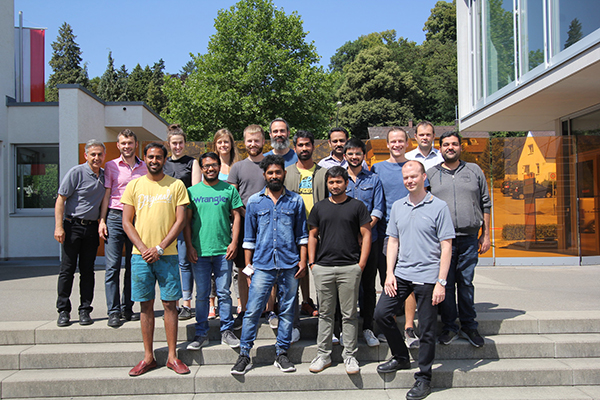
Last year, 15 students from the Rosenheim University of Applied Sciences travelled to Biberach to spend a week at Vollmer. At the sharpening specialist, the trainee engineers learned through theory and practice about which critical factors are required to ensure the precise machining of circular saw blades. The practical placement week is part of the Wood Technology Master’s programme and is designed to give students a chance to experience the every-day work of the modern wood industry at the company itself. At Vollmer, the international group of students – hailing from India, Pakistan, Bosnia-Herzegovina, Brazil, Iran and Germany – found out about the role that tool sharpening plays in the wood industry, and in research and industrial projects.
For further information www.vollmer-group.com
Jig saw blades unveiled by Lenox

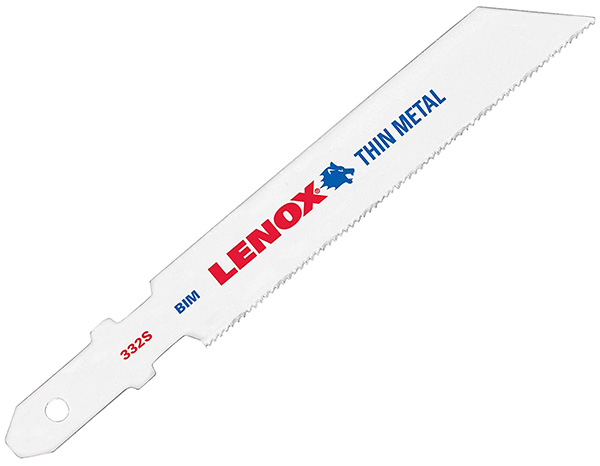
A new range of ‘Jig Saw Blades’ designed to deliver optimal performance when cutting a variety of materials, including metal, has been introduced by Lenox.

When end users were asked what they look for in a blade, clean cuts, long blade life and durability were the top priorities. For common metal-cutting applications, such as sheet metal or steel tubing, Lenox bi-metal Jig Saw Blades feature ‘Power Blast Technology’, a high-speed blasting process that strengthens the blade to reduce breaks, as well as proprietary T2 Technology to provide fast, efficient cutting. For tough metal cutting applications, like steel plate or stainless steel, the updated offering features Lenox Power Arc curved Jig Saw Blades. The curved profile of the blade optimises the angle of attack for fast cutting and provides up to two times longer life than the company’s previous generation blade.
“At Lenox, we continue to advance our product portfolio to meet the demands of the end user,” says Brian Morrison, senior product manager at Lenox. “When developing the new Lenox Jig Saw Blade portfolio, we strived to exceed the expectations of our customers, incorporating proven, industry-best technology from our other product categories to offer superior cutting.
Additionally, the new Jig Saw Blades are manufactured in the USA with global materials. We are proud to manufacture high-quality products domestically.”
For further information www.lenoxtools.com

Effective bandsaw setting and maintenance

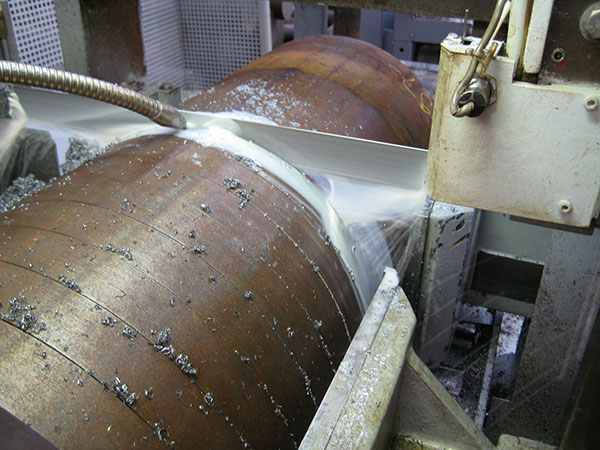
To ensure that a bandsaw cuts accurately and efficiently, it should be set up correctly. With this in mind, ADS Precision, which offers sawing machines from principals such as Hydmech, MEP and Meba, has identified key areas that should be checked, as well as procedures to ensure that the saw is operating at its best.

One of the first things to check is the machine’s swarf brush. A swarf brush in poor condition can lead to bandsaw blade tooth breakage, premature tooth wear and rough cutting, reports ADS Precision, which recommends replacement as soon as deterioration is noticed.
Another area that requires attention is blade tension, which can be measured with a dedicated meter. The correct tension for both carbide and bi-metal blades should be between 250 and 330 N/mm2, says the company, depending on the size of the blade and machine type. Incorrect tension can lead to blade breakage, crooked cutting, and vibration and slippage between the band and the wheel. Similar issues can occur if running at incorrect blade speed for the material, while in addition, coolant flow and concentration must be checked.
A further culprit when experiencing issues such as band breakage, crooked cuts or blade vibration, can be the blade guides. Blade guides should be disassembled to check for cracks and/or chips. The carbide guide surface should be higher than the surface of the steel holder. As a point of note, look for excessive wear on the corners of the carbides.
With regard to wheel bearings, check for flat spots on the surface of the wheels, and rock the wheel from side-to-side to assess bearing play. Any issues here can result in blade slip or even breakage.
For further information www.adsprecision.com

Double mitre cutting bandsaw unveiled

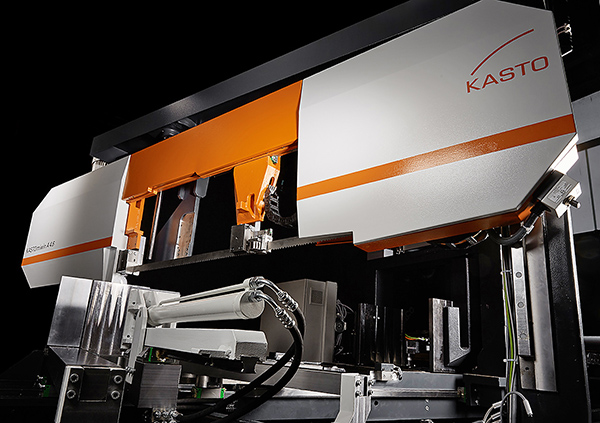
German sawing machine manufacturer, Kasto, is supplementing its bandsaw programme with the addition of a twin-column machine for cutting stock to length and mitring between -45° and +60° to a high degree of precision. The KASTOmiwin saw is said to be suitable for use by steel stockholders due to its power and rigidity.

Available in semi-automatic and automatic versions, U 4.6 and A 4.6 respectively, the latter model has a rack-and-pinion drive to feed material by up to 3000 mm in a single stroke. Blade down-feed is actuatedelectrically via a ballscrew drive.

The clamping range of the new bandsaw is up to 460 mm, depending on material profile, whilethe smallest size that can be cut is 10 x 10 mm. For single straight cuts, the KASTOmiwin semi-automatic machine leaves a rest piece of 30 mm, increasing to 200 mm on the automatic model. The user can adjust the band speed steplessly between 12 and 150 m/min.

According to Kasto, the installation length required by the KASTOmiwin is 3,950 mm, or 5,450 mm for the version with material infeed, whilepositioning the saw head at an angle reduces the width to 2980 mm, making it suitable for transportation in a container.

The KASTOmiwin can of course be served by a robot if required. In fact Kasto UK managing director Ernst Wagner, says there is a marked trend towards automated sawing.

“Nearly half of carbide circular sawing machines sold in Germany have some degree of automation, for example the inclusion of robotic chamfering, centring or sorting of cut pieces without operator intervention,” he says. “What’s more, there are similarly many examples of automation applied to bandsawing installations, not only in Germany but also across Europe and the USA. Here again, around half of installations are automated to some extent.”
For further information www.kasto.com

Compcut 200 helps to increase productivity

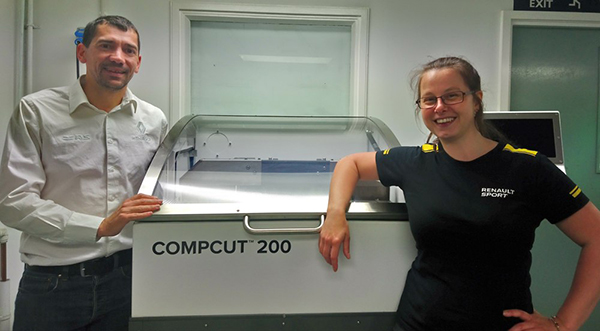
Sharp and Tappin says it is proud to add Renault Sport Racing to its expanding list of Formula One and blue-chip engineering clients. Earlier in the year, Sharp and Tappin installed and commissioned one of its Compcut 200 composite plate saws at Renault’s test facility in Enstone, Oxfordshire.

Recent feedback received from the team at Renault reinforces Sharp and Tappin’s belief that its Compcut 200 is the leading technology for the preparation of composite samples in test lab environments.

Maria Brooks, Renault Sport Racing’s senior materials laboratory technician, says:“Sharp & Tappin installed and commissioned the Compcut 200 in January and we are delighted with the plate saw.Renault Sport Racing is a competitive Formula One team, so all testing work, including preparation, needs to be of the highest quality and standard, which is what we get with the Compcut 200.

“The productivity of the materials testing laboratory has increased significantly since January as the Compcut 200 allows us to setup and run multiple panels and specimen cuts automatically,” she continues.“Full automation of the machine positions the material after each cut, removing the need to stop/start the saw to remove a cut specimen and realign and clamp.

“The Compcut 200 gives us high-quality test specimens with an excellent edge finish within the tight tolerances expected cut after cut. The level of service provided over the course of the 6 months from Sharp and Tappin has been excellent. In addition, the Compcut 200 has a compact footprint and is extremely simple to clean and maintain.”

Ben Sharp, Sharp and Tappin’stechnical director, adds: “We are extremely proud that our latest machines are now proving themselves at the highest levels of engineering. We had been in discussions with Renault Sport Racing since the Advanced Engineering show in 2017, where they viewed one of our pre-production Compcut 200s. Their initial comments and feedback helped us to hone the final production model, and our flexibility, commitment to product performance, and support, gave them the confidence to purchase the machine.
For further information www.sharpandtappin.com