

Gripple enjoys benefits of using Nukon laser

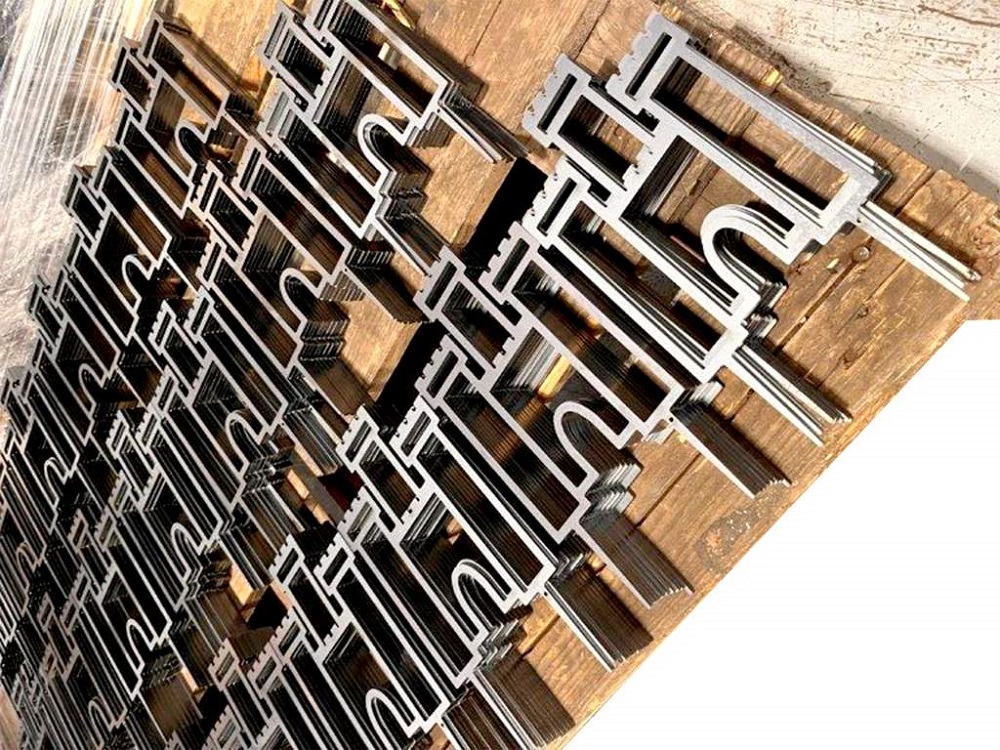
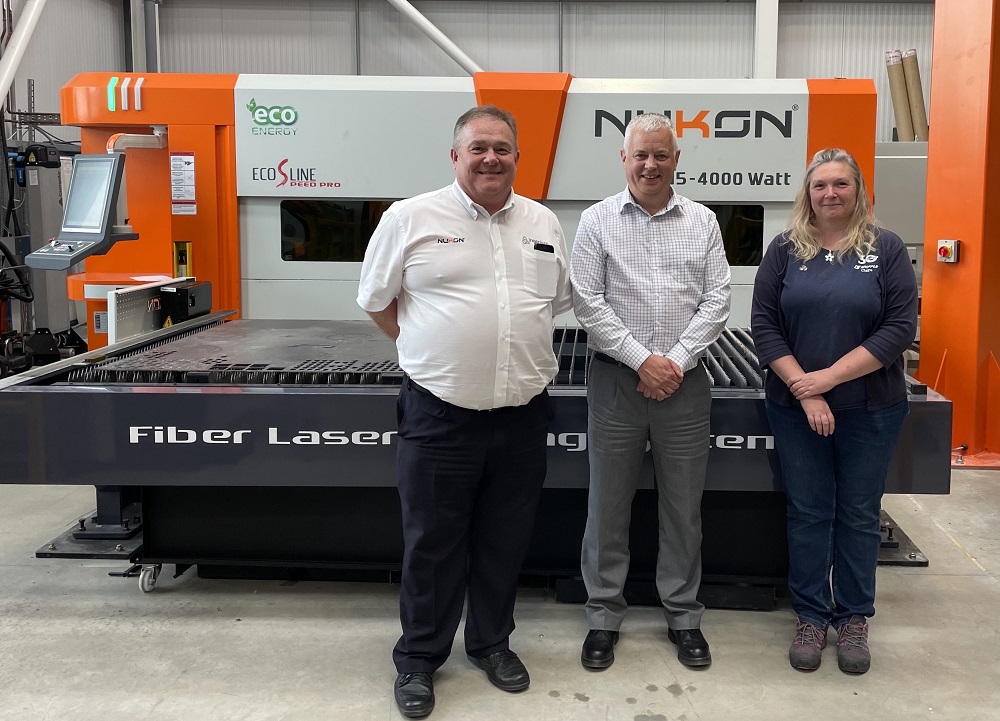
A Nukon 2D fibre laser machine from Nukon Lasers UK is bringing significant vertical integration, product development and sustainable manufacturing benefits to Gripple, a manufacturer of wire joining, tensioning and suspension systems.A little over 12 months since the installation of a new Nukon 2D fibre laser cutter at its recently opened, net-zero-certified Norfolk Bridge manufacturing site in Sheffield, Gripple reports considerable benefits from its purchase.

The machine, a European-built Nukon Eco 315 4kW model, was supplied by Nukon Lasers UK, the exclusive UK and Ireland distributor for Nukon’s 2D fibre laser, 3D fibre laser and fibre laser tube cutting technologies, and the sister company of UK-based tube bending machinery specialists, Unison Ltd.

After considering a number of fibre laser machine manufacturers, Gripple shortlisted Nukon and another leading brand. With the high levels of product quality and capability provided by Nukon machines never in doubt, it was the commitment shown by Nukon Lasers UK’s sales director, Steve Haddrell in fully understanding Gripple’s laser cutting requirements, which secured the sale.

“Following installation, our Nukon fibre laser machine quickly gained a key role in the cost-effective manufacture of our OSHPD OPA-2123-10 seismic bracing and blast protection systems – brackets developed for some of the most demanding environments in the world,” comments Claire Tunnard, production manager at Gripple’s 21,000 sq ft Norfolk Bridge site.

Furthermore, by cutting largely with compressed air rather than costly nitrogen gas, which looks set to remain at historically high prices, Gripple is benefiting from significant savings that also assist it in remaining competitive.

For further information www.nukonlasers.co.uk
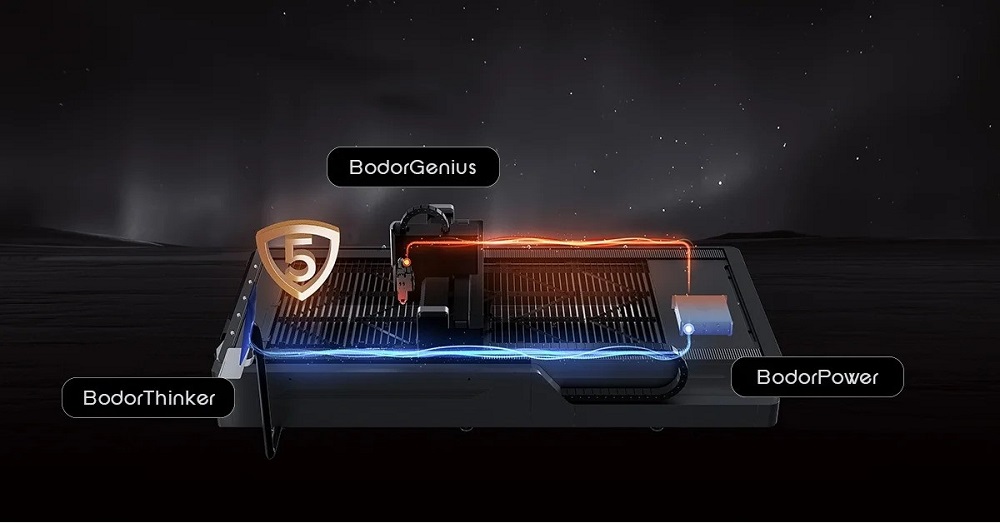
Five-year warranty for Bodor laser components

Bodor Laser is releasing anexclusive service policy: five-year warranty care for a trio of core Bodor laser components: the BodorGenius laser head, BodorPower laser source and BodorThinker control system.

Supported by tens of thousands of trials, the integrated design of the core laser components demonstrates Bodor Laser’s holistic approach to tackling various industry challenges related to mismatched assembly.

“We came up with this integrated core laser components concept to assure customers of an effortless production process and excellent product quality,” says Adam Liu, CEO of Bodor Laser’s overseas marketing centre. “Problems such as connection failure, high maintenance costs and contamination risks have been bothering metal fabricators for a long time, but the integration of core laser components solves them once and for all.”

To provide the best user experience, Bodor Laser’s integrated design, production, testing, and delivery for the three core laser components reduces the failure rate, ensuring quality throughout transportation, delivery and maintenance.

With MTBF (mean time between failure) exceeding 45,000 hours in burn-in ageing tests, Bodor Laser says itreduces industry bottlenecks by designing an integrated technique for the three core laser components, ensuring compatibility and stable equipment running conditions for its users.

“Bodor Laser is committed to providing customers with the best solutions and services,” says Liu.“The integration of laser components results from our continuous R&D, and we’re confident it will bring a revolutionary service experience to clients. With the five-year warranty, we want to show our customers that we stand behind our products and value their trust and satisfaction.”

For further information www.bodor.com

Amada helps Q-Laser meet growing demand

Q-Laser, a Tyne & Wear based precision subcontractor offering laser cutting, bending, waterjet cutting and fabrication services, is investing in the latest manufacturing technologies from Amada, including a laser cutter, press brake and production monitoring software. The investments are helping to meet growing demand at the company, which has seen a 22% increase in turnover over the past year alone.

With so much growth and success, Q-Laser deemed it necessary to invest in additional manufacturing technology, identifying another laser cutter as its top priority.

“We needed more cutting hours with the benefit of production flexibility,” reports company owner, Colin Hewitt.“Importantly, we recognised the need to keep expanding the business, where a second machine would support the laser cutter already on site. Our customers expect to have their orders processed and delivered within a few days, so it was our duty to try and accommodate that demand.”

Hewitt and his team considered two potential laser cutting machines, ultimately opting for a new Amada Ensis 3015AJ 6kW fibre laser.

“Not only was the price within our budget, but the technology and features offered, along with the machine’s ease-of-use, made our decision easy,” explains Hewitt.“It was actually our laser operators that made the final call after visiting and operating the machine at Amada’s UK headquarters in Kidderminster.”

The company’s laser-cutting operation is currently running across a single shift, with the aim of achieving two shifts in the near future.

“The Amada Ensis-AJ has given us a distinct boost over our existing laser cutter, providing higher speed, better cut quality, greater consistency and more ease-of-use,” says Hewitt. “We particularly like the ability to see the recording/live feed on the laser, which is very beneficial.”

For further information www.amada.eu

TLM grows portfolio with ultra-short pulsed lasers


The latest addition to TLM Laser’s range, from partner FOBA Laser, is a new ultra-short pulse range of laser systems, the pulse width of which is in the femtosecond to picosecond range. These laser types are able to offer a number of distinct advantages in many marking applications.

Ultra-short pulse lasers produce an intensive beam of light that allows high-precision processing, while minimising the amount of heat absorbed by the surrounding area. Due to the adjustable pulse duration, from the femtosecond to picosecond range, the heat input remains low, despite the high pulse energy. As a result, it is possible to create precise marks even on temperature-sensitive materials, reliably and economically.

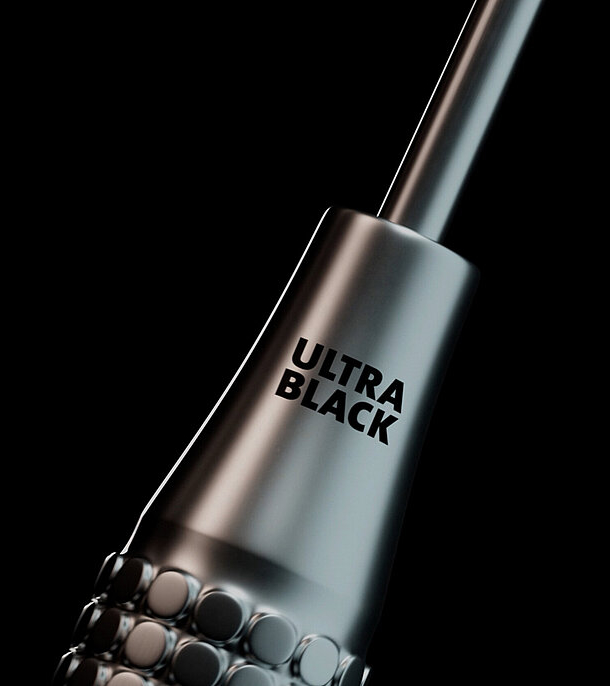
The fine structures created by the laser process prevent the reflection of light, so the laser marks appear deep black and offer good readability from different viewing angles. Almost any material can be marked with the F.0100-ir laser system. From metals to heat-sensitive components and even transparent materials, the new laser marker opens up many possibilities.

TLM Laser says the system is suitable for medical sector applications, where its performance characteristics allow it to produce high contrast marks on medical instruments made of stainless steel, titanium or even plastics. These same attributes also make it suited to various applications in the production of automotive and electronic components.

Depending on the workpiece material, marking speeds of up to five times faster than nanosecond laser systems are possible, reports TLM Laser. Furthermore, TLM says FOBA’s F.0100-ir offers one of the most compact designs in the field of ultra-short pulse lasers, suiting easy integration into production lines and laser marking machines such as the FOBA M series.
For further information www.tlm-laser.com

Mazak unveils OPTIPLEX 3015 NEO 20 kW at EMO


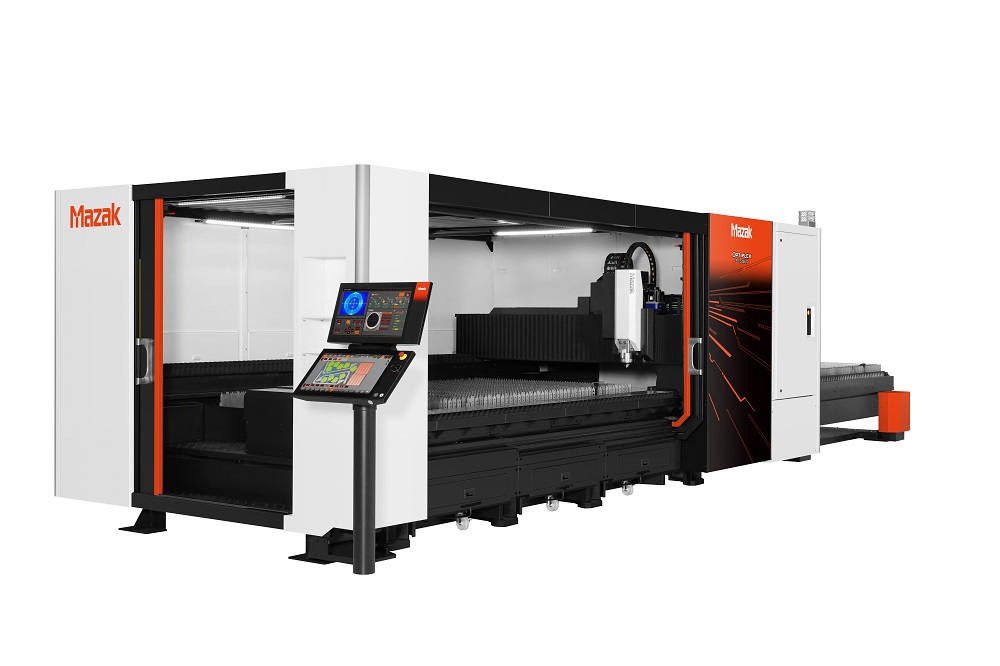
At the recent EMO exhibition in Hanover, Yamazaki Mazak showcased its newest high-power 2D laser machine for sheet metal cutting operations: the OPTIPLEX 3015 NEO 20 kW. The machine’s working area allows the processing of workpieces up to 1525 x 3050 mm through a new 20 kW fibre laser resonator. Thanks to this high power, the machine is able to cut 30% faster and reduce gas consumption by 30% when cutting with nitrogen.

Mazak says that the OPTIPLEX 3015 NEO 20 kW is equipped with proprietary beam-shaping technology to adjust the power density of the laser beam in a controllable and automatic manner, ensuring the best possible result on various materials and thicknesses.

The new MCT3 cutting head and MAZATROL SmoothLx CNC system are just two stand-out technical features of the machine. Mazak’s MCT3 boasts multiple intelligent functions to streamline the operator’s role. For instance, beam diameter control automatically adjusts the laser beam diameter while automaticfocus enables distance adjustment for different materials to deliver faster cutting speeds. Furthermore,automaticprofilercalibration is a function that maintains the nozzle to workpiece distance to boost edgequality and productivity.

Automating the overall set-up time can lead to 95% quicker preparation compared with standard laser machines, reports Mazak. Moreover, intelligent cutting functions such as flash cutting and fine power ramping are able to enhance the overall process even more. Instead of stopping at each axis, the laser turns on and off through ‘flash cutting’;synchronising the axis and laser movements leads to reduce cutting times. Another function, fine power ramping, adjusts the laser power and feed rate, minimising dross at cutting corners without compromising straight-line cutting speed.
For further information www.mazakeu.co.uk