

Babcock wins GDEB extension

Babcock, an aerospace and defence company, has been awarded a multimillion pound contract extension to manufacture a further 18 tactical missile tube assemblies (MTAs) for GDEB (General Dynamics Electric Boat).

Babcock
Pic Peter Devlin

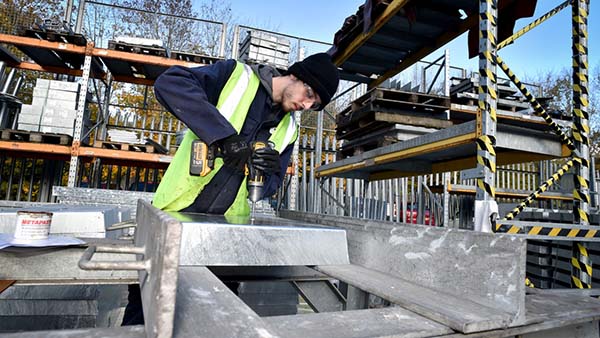
The MTA is part of the Common Missile Compartment (CMC) project for the UK Dreadnought class and US Columbia class submarine programmes, and will support more than 200 advanced manufacturing jobs at Babcock’s Rosyth and Bristol facilities.
Defence Minister, Jeremy Quin, says: “This is a prime example of the capability of our defence industry to deliver specialised and complex manufacturing in support of an internationally significant programme. The contract extension will support 200 highly skilled jobs in Bristol and Rosyth, building next-generation technology for our vital nuclear deterrent.”
For further information www.babcockinternational.com

IMTS 2020 cancelled

IMTS 2020, which was due to take place in Chicago this September, has been cancelled for the first time since WWII due to health and safety requirements imposed by the state of Illinois for holding conventions, which include the availability of a vaccine for COVID-19 or a highly effective treatment protocol.

IMTS will, however, offer two comprehensive digital programmes, IMTS Network and IMTS Spark, over the coming months to assist exhibitors and the manufacturing community. IMTS is fully committed to returning to McCormick Place as scheduled for its normal rotation on 12-17 September 2022. Visitors who have registered for IMTS 2020 have the choice of receiving a refund on registration or transfer their registration to a tax-deductible donation in favour of ‘Miles for Manufacturing’, where every dollar is given to programmes that prepare students for careers in manufacturing technology.
For further information www.imts.com

Vibration-free machining

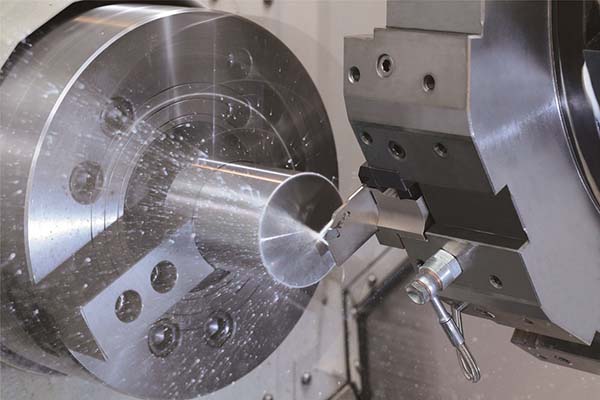
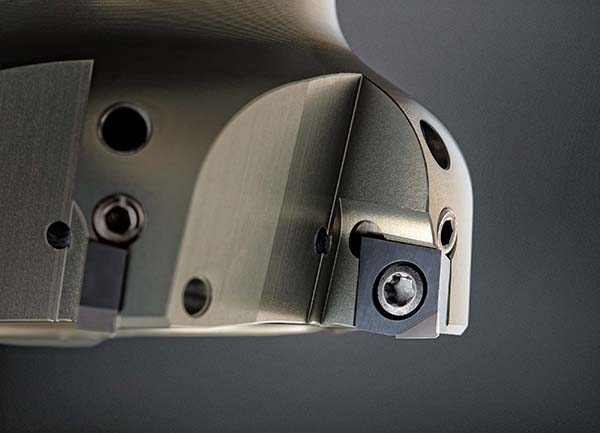
The new Accure·tec vibration damping technology from tooling expert Walter GB ensures vibration-free and low-noise cutting in difficult-to-machine turning and milling applications using long – up to 10xD – tools.

W_A_AC001_Capto_MI_P02.tif

These applications include the milling of components with deep cavities, as widely found throughout all sectors, and turning in the energy industry (oil industry valves, for instance), as well as aerospace landing gear.
Pre-set by Walter and delivered ready for use, the axially and radially positioned damping element allows turning operations up to 10xD with high process reliability and surface finish using, for example, A3000 boring bars.
Examples include H7 engineering tolerances and the counterboring of generator shafts to finishes of Rz 6.3. Moreover, the also new QuadFit quick-change heads enable rapid tool change to repeat accuracies of ±2 µm.
When milling, Accure·tec AC001 adaptors of up to 5xD can be applied with cutting data up to three times higher than with conventional tools, says Walter. The adaptors are particularly suited to Walter’s high-feed milling cutters, which exhibit their main cutting forces in the axial direction of the spindle.
Also promising longer tool life and higher productivity rates, Accure·tec AC001 (milling) and A3000 (turning) are supplied with all popular interfaces, including Walter Capto, HSK/HSK-T, SK, MAS-BT and parallel shank.
For further information www.walter-tools.com

Mapal improves milling performance

Mapal has expanded its milling portfolio with the OptiMill SPM family of tools for processing aluminium and steel, which is available in two formats, the ‘Rough’ and ‘Finish’ series.

Optimised infeed machining depths, as well as the highest feeds during roughing, are possible with the OptiMill-SPM-Rough, reports Mapal. The reason for this performance is the novel knurled roughing geometry that ensures the power consumption during machining is significantly lower in comparison to tools with a straight cutting edge. Furthermore, heat introduction into the part is minimal due to the plunging characteristics of the tool.
The three-flute OptiMill-SPM-Rough is available with diameters of 12, 16, 20 and 25 mm, with corner radii of 2, 3 and 4 mm, to prolong tool life and prevent edge chipping during heavy-duty cutting. With a short flute length of 1.5xD and polished flutes, the OptiMill-SPM Rough has been designed for high material removal rates with vibration and cutting forces minimised due to the smooth cutting action of the tool.
For finishing contours and pocket walls, even at large depths in a single pass, Mapal has revealed the OptiMill-SPM-Finish. Mapal says this new end mill prevents swarf wrapping, even when operating in corners with enormous tool contact and high machining loads. Optimally designed cutting-edge geometry ensures there is no vibration during machining. The chip flutes are polished and, as a consequence, chip removal is optimal. Like the OptiMill-SPM-Rough, the new OptiMill-SPM-Finish is available in diameters from 12 to 25 mm, with imperial variants available upon request. The uncoated four-flute end mill is offered with corner radii from 2 to 4 mm and is first choice for aluminium machining.
In addition, Mapal is announcing the OptiMill-Uni-Wave as an extra-long version for roughing even in deep cavities. Availability is in diameters from 6 to 20 mm.
For further information www.mapal.com
Making the shift to sustainability

Dormer Pramet aims to lead a change in the metalworking industry by making sustainability an integral part of its business.

At the core of this strategy is the use of new technologies and ways of working that deliver value for employees, customers and suppliers, brought together under a programme called ‘Make the Shift’.
The programme encompasses a range of initiatives and targets under four key headings: circularity, climate, people and fair play. A list of key actions and objectives are now in place with the aim to deliver all by 2030, including: increasing recycling of the company’s products and packaging material; reducing waste; lowering CO2 impact; halving the total recorded injury frequency rate; developing a diverse and inclusive workforce; and engaging in community involvement projects.
An example of the tangible results already achieved by this initiative comes from Dormer Pramet’s production and R&D department. Through international collaboration, a project team has made innovative technological developments which have enabled significant reductions in energy consumption and, at the same time, improved product quality. By implementing new insulation on its furnace coating (pictured), the manufacturer improved the heating of its CVD coating reactor, significantly shortening cycle time. This move not only improved deposition conditions, which affects the evenness of the coating on inserts, but also generated a positive environmental impact, reducing CO2 emissions by 25 tonne per year.
In addition, Dormer Pramet modified the sintering cycle during the production phase, which involved a redesign of the gas flow passing through the charge to enable a more efficient furnace. The project succeeded in shortening the length of a single sintering cycle by 100 minutes (10% of the total length of the cycle), while maintaining process quality.
For further information www.dormerpramet.com