

Using Vericut to safeguard machining

Those who have filled up their vehicles this week might want to thank Conroe Machine. That’s because this specialty job shop in Conroe, Texas, machines most of the components required to build down-hole positive displacement motors (PDMs). The oil and gas industry refers to these devices, which perform the directional drilling of oil and gas wells, as mud motors. And without mud motors, the oil and gas needed to power vehicles and heat homes would stay forever underground.

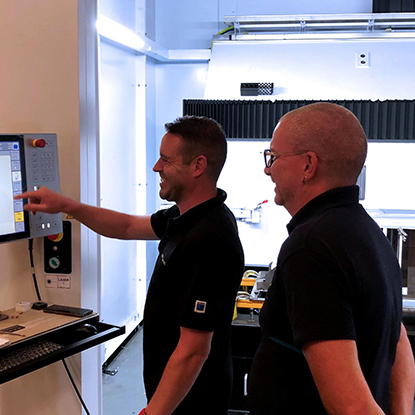
James Wardell gets a little credit, too. As the programming technology manager at Conroe Machine, Wardell was part of the team that implemented Vericut tool-path simulation software, and without Vericut, the company’s machining operations would be less efficient, less safe and far less predictable.

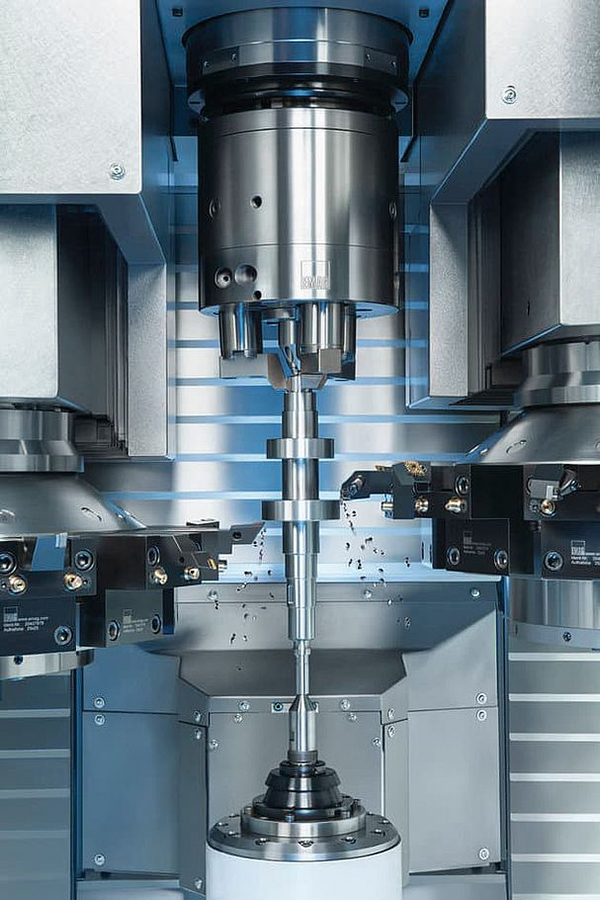
“Machining has become more complex in recent years,” he says. “It’s no longer just linear moves and simple arcs. You have dynamic roughing paths, 3D surfacing, and simultaneous four and five-axis cutting; you can’t expect a machinist to catch program errors in this situation. That’s why we needed a tool that could verify our NC programs and give us confidence in advance that everything’s good to go.”

As Wardell points out, Conroe Machine produces much more than mud motors. Since 2000, this 160-employee, 65,000 sq ft facility located on Conroe’s North Industrial Park has machined a wide array of high-precision parts for the likes of Halliburton, National Oilwell Varco (NOV) and Global Drilling Support International. These components include subsea parts such as stab plates and various control valves, many made from Inconel, Nitronic 50, ToughMet and other challenging materials. In addition, the company has extensive fabricating and engineering capabilities.

“We make bearing races, housings and PDM transmission parts by the hundreds of thousands, and we also do a lot of low-volume and prototype work,” says Wardell. “Much of what we do here centres on the oil and gas industry. After the last downturn, though, we’ve tried hard to diversify our customer base, and have expanded our service offering accordingly.”

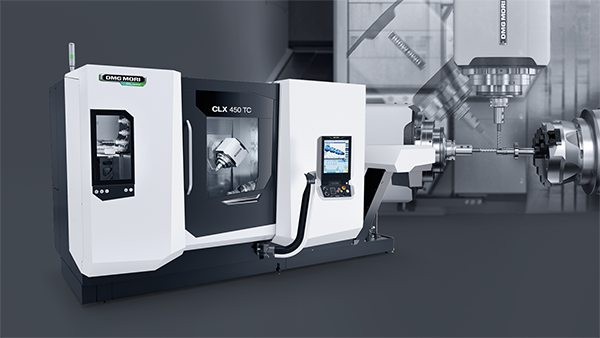
Part of that expansion saw the purchase of a Toyoda SB316YM, a fixed-rail, bridge-type, five-axis machining centre with 10 tonnes of table capacity and 3 m of X-axis travel. Wardell and his colleagues call it the company’s flagship machine. Just prior to its installation, Conroe switched its programming system to Mastercam and invested in the aforementioned Vericut from CGTech, a provider of numerical control (NC/CNC) simulation, verification, optimisation and analysis software technology.

Conroe Machine had plenty of other reasons to purchase Vericut. The company boasts an impressive array of CNC machine tools, including an Okuma LU45 II four-axis lathe, Doosan DMV 5025 and 3016 machining centres, a 3-m capacity Mighty Viper 3100 vertical milling centre, and more. It was the crash potential that comes with five-axis machining, though, that helped convince the management team of the necessity for accurate tool-path simulation.

“We also have several automated production cells, with inline inspection and robotic part handling, but it was the bridge mill in particular that got us thinking about Vericut,” explains Wardell. “We wanted a way to verify that the post-processors on our new CAM system were accurate, and that we could catch any programming errors before they got to the production floor, possibly damaging the most expensive piece of equipment in our shop.”

That was five years ago, and Wardell says Vericut continues to prove its value every day.

“We’ve not had any crashes due to programming errors since implementing Vericut,” states Wardell. “There’s been a couple missed dimensions here and there, stuff I might have fat-fingered or forgotten during programming, but that’s why I started using the Auto-Diff function in Vericut, to make sure everything is where it’s supposed to be, and that I didn’t miss anything.”

Aside from crash avoidance, Vericut also reduces set-up times. As the operators can see the entire program in advance, there is less guesswork and apprehension. Wardell has not tracked how much time the company has saved, although he says it is significant.

“It simply takes a lot longer on an unverified program. The operator has to meticulously dry-run each line, with hands on the override and feed-holding the entire time. With a Vericut program, they can just go for it.”

In fact, notes Wardell, the machinists at Conroe no longer trust non-Vericut programs. Such programs are a rare occurrence in his department, though, and about the only time he does not simulate the entire program is when using a specially-shaped cutting tool or unconventional work holding, and has not had time to model it in the CAM system.

For those shops thinking about Vericut but concerned over the amount of work-holding and tool-holder modelling necessary to replicate the machining environment, Wardell says there is no need. He explains that he will sometimes draw a rough outline around non-standard tooling, “just enough to detect a collision”, and says he never did model the entire machine tool, only those areas where interference with a tool holder or fixture is a distinct possibility.

“I love Vericut,” he states. “If there’s any way I can use it, I will, and the operators feel the same. If they’ve had to edit the program, for example, they’ll ask me to simulate it again, just to be sure they didn’t miss a decimal point or a minus sign. We pride ourselves on being a cutting-edge shop, and are always looking for technology to make our facility more efficient, safer, and better equipped to maintain high-quality levels. Vericut definitely helps us achieve that.”

For further information
www.cgtech.co.uk

Smart factory has 30 connected machines

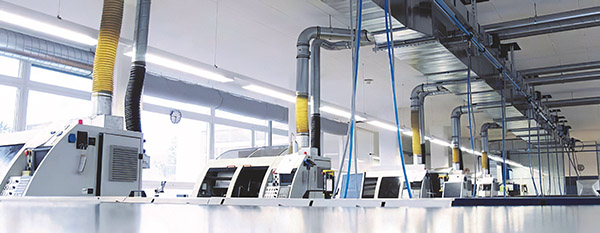
Trumpf has opened a new smart factory at its headquarters in Ditzingen, where the facility is already producing sheet-metal parts for the company’s machine tools. Designed as a fully connected manufacturing environment, the smart factory also serves as a demonstration centre where SMEs and other businesses can see efficient fabricated-part manufacturing in action. The smart factory hosts 30 connected machines across three production halls covering a total of 5000 sq m. Along with Chicago (US) and Taicang (China), Ditzingen becomes Trumpf’s third fully connected manufacturing facility.

For further information www.trumpf.com
ASG strengthens portfolio

Aero Services Global Group (ASG) has acquired one of Liverpool’s oldest surface-treatment specialists and is now looking to maximise its new ‘one-stop’ capability with aerospace clients across the world. The Manchester-based Group, which is run by Simon Weston and backed by Amin Amiri of a2e Industries, has purchased King & Fowler in a deal that will safeguard all 59 jobs and signal a new investment drive in processes and plant at its Liverpool factory. According to ASG, the move will enhance the group’s operating efficiencies and provide access to an extended blue-chip client base.

For further information
www.asg-group.co

Automation sector acquisition

Belgrave & Powell, a specialist engineering services group, has acquired 100% of the shares of Autotech Robotics, based in Plymouth, UK. The acquisition will form part of Belgrave & Powell’s Machine Technology Group (MTG). Established in 1989, Autotech Robotics is a provider and integrator of robotic systems across the automotive, aerospace, marine and metal-processing industries.

Paul Ward, a partner in Belgrave & Powell who will lead the company as part of the MTG, says: “Coupled with our other machine tool, engineering and automation specialists, the MTG now has sizeable scale and capability across a range of robotic and automation platforms. Our focus will be on automated cells for machine loading, vision systems, robotic welding, cutting, forming, painting and handling, initially for the metalworking industries, but followed by expansion into other sectors.”

For further information
www.autotech-robotics.com

Bending large parts from thick material

Amada has extended its range of HFE3i intelligent press brakes by adding a 400 tonne machine in 4, 5 and 6 m lengths. Aimed at heavy-engineering sectors such as agriculture, commercial vehicle, rail, construction, mining and shipbuilding, the new HFE3i HT (High Tonnage) model can bend mild steel up to 20 mm thick.

A high-rigidity frame offers optimum performance in high-tonnage applications, while Amada’s design of the lower table guarantees parallel beam deflection. Furthermore, the strong and flexible back gauge combines payload and positioning accuracy via its five motorised axes.

The standard single Delta-X finger, which can move forward and backwards independently of the other, allows high gauging flexibility and is particularly useful when bending asymmetrical workpieces. Optionally, customers can select Delta-X on both fingers.

HFE3i HT machines feature a range of equipment designed specifically for high-tonnage applications. For instance, Digipro uses wireless technology to transmit the measured angle to the control before the machine compensates to provide a precise bend angle. At all times, operators can use a hand wheel to make manual adjustments to each axis. If required, an optional device for active angle measurement is available: the Bi-M laser can measure and correct the angle in real time.

A further benefit for customers is Amada’s Eco inverter technology, which means the machine stops using power as soon as the bend is complete. As well as saving energy, this smart hydraulic power system reduces maintenance requirements, oil consumption and noise.

The HFE3i HT can be optionally fitted with Amada SF200 sheet followers (200 kg per arm) to help improve accuracy and safety. SF200 units follow the bend speed as folding takes place.

For further information
www.amada.eu