While it it straightforward to demonstrate the cycle time reductions facilitated by Vericut
Optimizer, substantiating claims regarding the energy savings of this software has proved
more challenging. Now, however, an independent energy monitoring trial involving Seco
Tools, Virtual Manufacturing UK and Grob, confirmed that the estimated 19% savings in
electricity consumption when applying Optimizer to a sample titanium workpiece did indeed
correlate to actual measured data.
With Vericut Optimizer, a stand-alone version of Vericut’s integrated Force module, the
company can easily prove facts and figures regarding cycle time savings to its customers and
prospects. Vericut simply takes an existing process and applies Optimizer to get a ‘before
and after’ result.
The company also knows that the impact of this optimisation means the CNC machine
consumes less energy. This fact was recognised recently, with Vericut and Seco Tools
winning the 2025 ‘Sandvik Sustainability Award in Memory of Sigrid Göransson’. The
accolade recognised a collaboration that continues to provide a significant contribution to
reduced environmental impact during machining. In tests, Vericut Optimizer reduced
machine energy consumption by 18% and demonstrated a substantial increase in tool life.
“Having won the award, we wanted to back-up calculated savings with hard evidence of the
energy savings that Optimizer provides,” explains Scott Ravenscroft, sales manager at
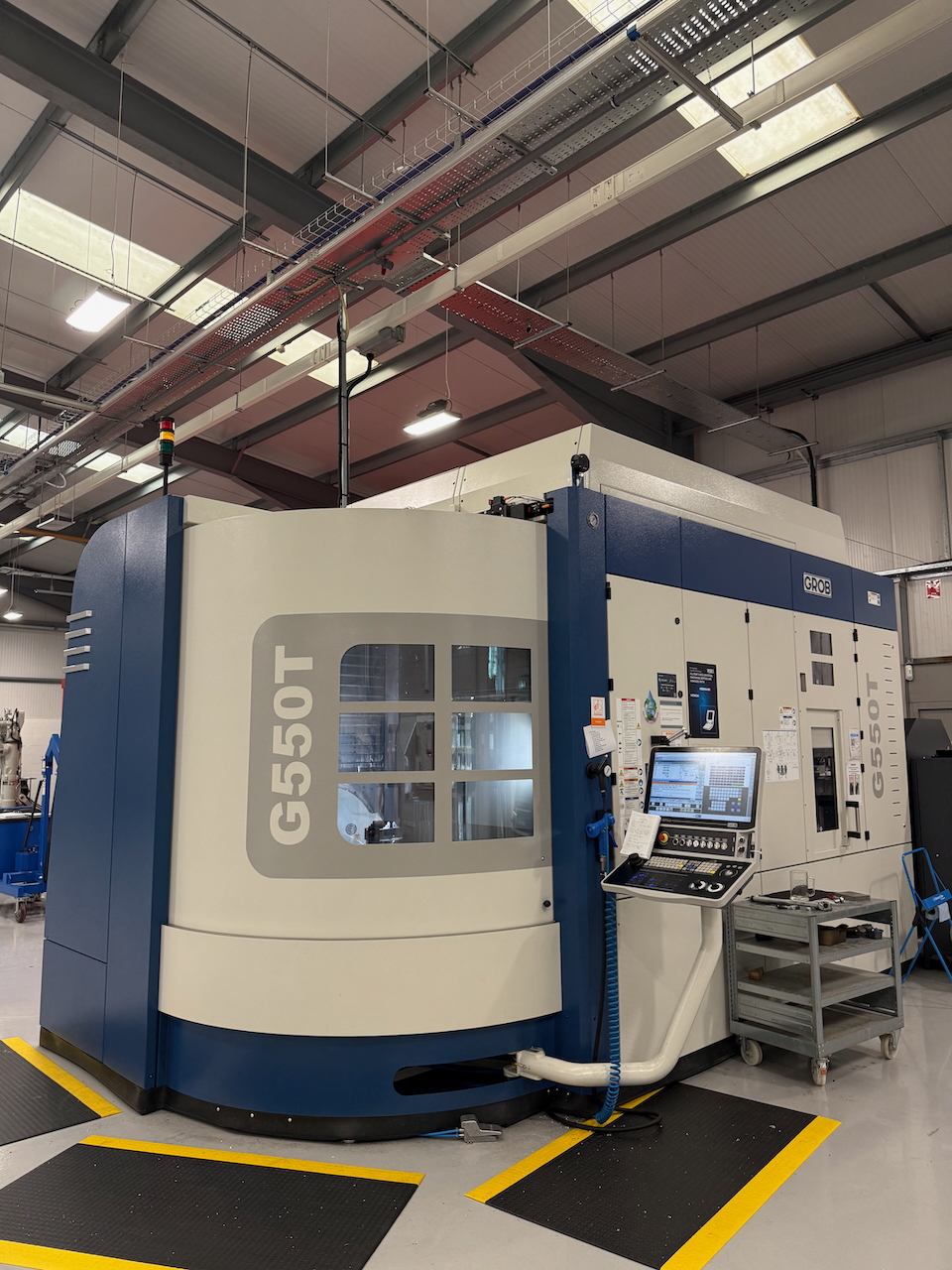
Vericut UK. “We asked Seco Tools to produce a sample component on its Grob 550T
universal CNC mill-turn centre and invited Virtual Manufacturing UK to monitor the
machine’s energy consumption in real time.”
Adds David Magnall, innovation partnership manager at Seco Tools UK: “Our Innovation Hub
at Alcester is where we assess factors beyond just cutting tools. We look at more holistic
solutions for customers, perhaps involving digitalisation or sustainability, for example. All
projects take place in collaboration with technical partners, in this case Vericut, Virtual
Manufacturing UK and Grob.”
Sustainability is a hot topic right now and something that manufacturers increasingly
consider as part of their investment strategies. It can even influence funding decisions if the
technology solution identified is particularly energy efficient.
“If we can offer sustainable, holistic solutions, the impact on the manufacturing industry will
be positive and profound for all stakeholders: technology suppliers, users and funders,” says
Magnall.
The trial focused on the machining of a titanium (Ti-6Al-4V) sample workpiece featuring a
number of freeform surfaces, pockets and slots. Recording an original (un-optimised) cycle
time of 30 minutes
and 35 seconds, a second run following the application of Vericut Optimizer saw this time
reduce to 23 minutes and 6 seconds, an impressive 24.5% saving. The various operations
included dynamic milling, face milling and radius cutting using a selection of Seco cutters,
such as solid-carbide end mills and indexable-insert shoulder mills.
Then it was time to re-run the trial with energy monitoring hardware, including current
clamps and a sender unit, temporarily fitted to the three-phase, 440V main feed of the Grob
CNC mill-turn machine. The system was able to collect, process and report total energy
consumption for both optimised and non-optimised NC code.
“For the purposes of trial expediency, data analysis took place manually using
spreadsheets,” says Henrik Nyby, manufacturing consultant at Virtual Manufacturing UK.
“Virtual Manufacturing UK specialises in real-time energy monitoring and digital
optimisation tools for manufacturers, with Gazpacho Energy at the heart of our offering. By
continuously monitoring energy usage, Gazpacho Energy enables you to make informed
decisions on when and how to deploy your production equipment. You can uncover
patterns, identify peak usage times, pinpoint energy inefficiencies, and optimise your
operations for maximum efficiency.”
Algorithm-based Vericut Optimizer data showed predicted energy savings for the
component of 19%. With Virtual Manufacturing UK’s help, the aim was to qualify this
calculation.
“Capturing and collating data across the main feed showed the Grob machine consumed
13.75 kWh for the un-optimised cycle of the titanium sample component, whereas the
optimised cycle saw the machine consume 11.11 kWh: a 19.2% reduction,” reports Nyby.
Adds Luke Manders, development engineer at Seco Tools UK: “Interestingly, certain
machining strategies, such as adaptive milling, appeared to deliver higher energy savings
than other operations. The trial proved useful in many ways, helping to grow our knowledge
of this technology.”
A reduction in electricity usage of around 19% is significant and would accumulate rapidly
over a batch of components.
“The energy savings add to the already considerable savings that Vericut Optimizer provides
in reduced cycle times, typically 10-30%, making for an attractive investment proposition
with a potentially fast return-on-investment,” says Ravenscroft.
Most CAM systems do not adjust for changing cutting conditions. In particular, they fail to
compensate for chip thinning. Chip thickness is the most important parameter when
machining, not feeds and speeds, as many assume. Vericut Optimizer automatically adjusts
chip thickness for each tool operation using Vericut-calibrated materials and cut-by-cut tool
engagement analysis. Optimizer keeps the chip thickness as constant as possible by
adjusting feed rates, block by block of NC code, even adding blocks if necessary to deliver
ideal cutting. The result? Shorter cycle times.
Another aspect of the sustainability trial at Seco Tools was tool life and the potential
provided by Vericut Optimizer to extend the lifecycle of carbide tools. Optimizer provides a
balance between machining with high cutter engagement (for productivity) and the
prevention where necessary of excesses like force, deflection and chatter to reduce carbide
shocks and extend tool life. Unfortunately, the trial at Seco Tools did not demonstrate
sufficient run time to verify extended tool life of up to 30% witnessed by Vericut on other
customer parts.
With the trial complete, the next step will see Seco Tools UK extend the sustainability theme
at its ITI (Inspiration Through Innovation) event in February 2026.
“We’re working towards the creation of an entire end-to-end sustainability demonstrator,”
reveals Magnall. “By considering the manufacture of a component from start to finish, we
plan to show how many process touch points we can impact in terms of sustainability. In
total, the demonstrator will involve solutions from around 12 technology partners, with
Vericut Optimizer playing a central role. The event will also feature an expert panel
discussion on this increasingly important topic.”
More information www.vericut.com