Fives Acquires Italy-based Pietro Carnaghi

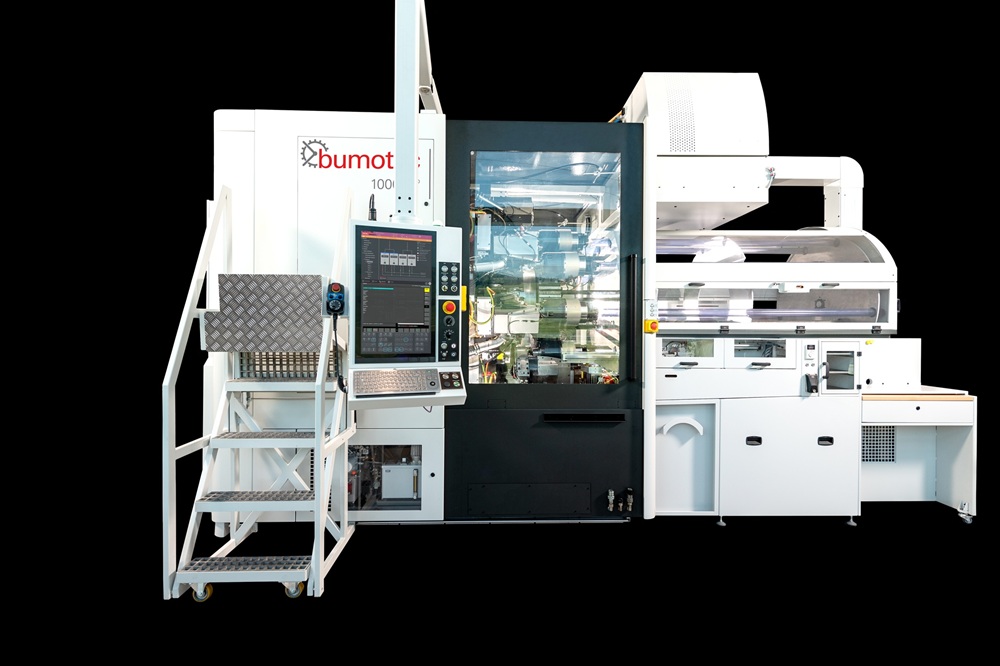
Fives has acquired Pietro Carnaghi SpA, an Italy-based manufacturer of large machine tools. Together, the operations of Fives’ HPM division and Pietro Carnaghi are expected to generate revenue of approximately €400-450m, relying on the combined workforce strengths of 1,900 global employees to expand markets, enhance capabilities and deliver even greater value to clients.

Fives will increase its manufacturing capabilities and gain greater control over its supply chain, thanks to the integration of a state-of-the-art 45,000 m² industrial facility in northern Italy. Says Giuliano Radice, chairman of Pietro Carnaghi: “This transaction reinforces our ability to maintain ongoing activities and honour existing contractual commitments, ensuring a consistent and high-quality presence in the market.” More information www.fivesgroup.com

THE FOUR KEY CHALLENGES INJECTION MOULDERS MUST OVERCOME

With annual sales turnover of £32.8bn, the plastics industry is vital to the UK economy. A total of 5700 companies employ approximately 160,000 people (according to the British Plastics Federation), with many more working in the wider supply chain across sectors such as healthcare, automotive, packaging and electronics.

Plastics processers have faced challenges over the past decade in terms of public perception around sustainability, as well as increased export and bureaucracy issues following Brexit. However, in 2020 the pandemic prompted a change in fortune – the plastics industry was essential to the UK fight against Covid-19, with ventilators, masks, testing kits and more produced locally in huge volumes at extremely short notice.

Now, the plastics sector is facing a new struggle on a number of fronts. Reports are abound of UK moulders auctioning off equipment to raise funds, dealing with workshop capacity of up to 50% and, in the worst cases, entering liquidation. Here, Sam Carr, ROBOSHOT Sales Manager for FANUC UK, outlines the four key challenges facing UK moulding firms today – energy costs, reshoring, people and investment – and the steps that can be taken to ensure plastics businesses remain competitive in a rapidly changing world.

The cost of energy is by far the biggest crisis facing moulding firms today – a problem that is not going away. UK plastics processers have faced volatile and rising energy prices since 2021, and the country is now paying one of the highest rates for energy across Europe – well ahead of Italy, Germany and Spain, for example. This makes it difficult for UK moulders to be competitive on an international scale, not just when quoting against European firms, but also those from the Far East.

This alone is crippling some businesses. The fact is that energy prices are now so high that even if they do come down, they will not drop to the levels seen back in 2018/19, for example. Moulders must accept this and place energy efficiency at the top of their agenda. When considering investing in equipment, look for energy efficient technology as a priority, such as the FANUC all-electric ROBOSHOT injection moulding machine.

Reshoring has been a buzzword in the industry for a few years now, with many moulders bringing production back to the UK from the Far East and Eastern Europe to shorten the supply chain and close the loop. Following Brexit and the post-Covid supply chain crisis, there seemed to be a heightened appetite for British-made products, which could command a premium to account for the higher production costs associated with bringing work back to the UK.

However, the reality does not appear to have matched the expectation. Of the companies with whom FANUC has had discussions, reshoring has not made the anticipated impact on their business. In fact, increased UK staffing and energy costs have negatively affected overall productivity. For any home-grown moulding firms considering reshoring, the advice is to undertake thorough research and speak to companies that have already followed this path – forewarned is forearmed.

The UK has an ageing workforce and an ageing population as a whole. In this sense, the plastics industry is no different. But the negative connotations surrounding plastics in terms of its green credentials means the country is finding it particularly difficult to attract young people into the industry.

Mainstream media reports of plastic as being bad for the environment and damaging to the oceans have prompted an anti-plastic backlash among Gen Z. While nobody could argue against fewer single-use plastics, plastic products are essential to our everyday life and can last for years – from the tables and chairs at coffee shops, to the planes that take people on holiday, to the inhalers and medical devices that support health.

The industry needs to showcase just how useful and essential plastic is to the next generation, and get them switched on to the exciting career opportunities that the sector offers, such as moulding, toolmaking, robotics, AI/smart factories and even the development of sustainable and/or biodegradable polymers. All stakeholders must all strive to change the perception around plastics and encourage more young people to come onboard and join the industry – or the current skills shortage will only get worse.

As well as an ageing workforce, the plastics industry is also coping with an ageing field of injection moulding machines and other essential equipment. There is a tendency among moulders to run a machine for years and years, then repair it and carry on. However, investing in a legacy machine is risky – the bill to repair it will be extremely expensive and ultimately, shops are still left with an asset which consumes far more energy that today’s new models. This can be a costly strategy, albeit one that many moulders feel they have no choice but to follow.

With moulders struggling on a number of fronts – not least high energy costs – the industry would greatly benefit from a government investment strategy to support plastics firms to invest in new, energy efficient, highly productive and accurate machines. As well as helping the sector to become more environmentally sustainable, the UK will also be better able to compete internationally: creating more jobs, generating more revenue and ensuring a continued domestic pipeline of plastic production.

For moulding firms themselves, investing in an accurate all-electric injection moulding solution such as the FANUC ROBOSHOT, rather than patching up a legacy machine, will pay dividends for years to come. In addition, combining it with FANUC’s robotics, factory automation and smart production systems can turn a mould shop into a lean, data-driven, sustainable enterprise, future-proofed for decades.

The ROBOSHOT’s overall total cost of ownership (TCO) package is one of the best on the market. Its initial cost is comparable with rival all-electric machines, but where the ROBOSHOT really excels is in its cost of operation, maintenance, downtime and production – all of which are the lowest in the marketplace. Paired with high second-hand value, the ROBOSHOT is the ultimate long-term, energy-efficient smart investment for moulders looking to reduce their energy consumption and invest wisely.

More information www.fanuc.eu

Employers wanted

A UK engineering and manufacturing apprenticeship provider is urging companies in the Black Country, Birmingham and Shropshire to continue tapping into a 200-strong talent pool to help ease recruitment worries. In-Comm Training, which operates two technical academies in Aldridge and Telford, had the biggest collection of young people looking for vocational learning placements in its 43-year history during the summer. The firm has already placed 125 individuals with employers and is now seeking to find positions for a further 75 for the October/November intake.

More information www.bit.ly/4n3d3Ps

Custom-made transformer

Electro-Wind says its has designed, manufactured and delivered a custom-built 500 kVA, three-phase, 415/690 V transformer for one of the UK’s most significant infrastructure projects — the construction of Hinkley Point C nuclear power station. Working in partnership with a leading electrical wholesaler, Electro-Wind was entrusted with supplying a highly robust IP55-rated transformer, specifically engineered for external environments and designed for installation on a raised platform. The transformer now plays a crucial role in providing temporary power to the Unit 2 reactor polar crane during commissioning.

More information www.electro-wind.co.uk

First fully UK-built Boxer Mission Module

MTL Advanced, one of the UK’s largest contract manufacturing businesses, has formally handed over the first fully British-manufactured Mission Module for the Boxer Mechanised Infantry Vehicle (MIV) programme to KNDS UK. Everything was built entirely in the UK, from raw plate material through to final fabrication, and is part of MTL’s base order with KNDS for over 100 modules. The order forms part of more than £40m in contracts awarded by KNDS to MTL Advanced to support the UK’s Boxer MIV programme, which also include over 450 Drive Module armour kits for KNDS’s fabrication line in Stockport.

More information www.mtladv.com