

Door firm invests in Salvagnini technology

Assa Abloy Security Doors, a UK division of Assa Abloy, a global specialist in door opening solutions, has invested in a number of new technologies at its Lisburn manufacturing plant in Northern Ireland. Two new Salvagnini systems – an L1X-30 fibre-laser system and a P4lean-3216 panel bender – are helping to enhance the site’s manufacturing capabilities by improving lead times, increasing productivity and reducing environmental impact.

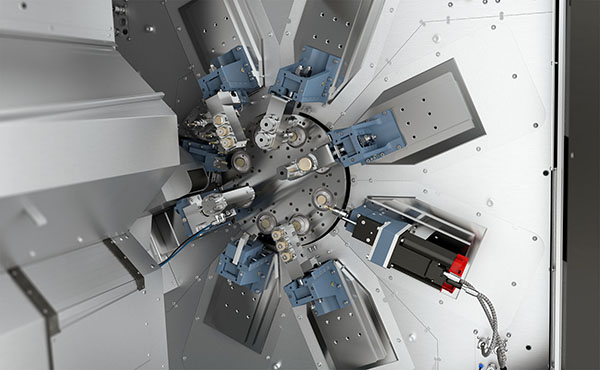
The fibre-laser system – which was installed last month – combines high-speed sheet metal processing with precise cut quality, while the new panel bender will enable the company’s SMARTform technology to fold doors more accurately and quickly. In addition, MAC 2.0 software ensures folding results remain at a consistently high standard.
The panel bender will be able to process 90% of the total door range at Assa Abloy Security Doors.
Having been awarded the ISO 14001 accreditation for environmental management in 2017, the new investments further contribute to this objective. For instance, the consumption of electricity and oil is reduced when using the Salvagnini machines, resulting in lower running costs.
Neil Chambers, production manager at Assa Abloy Security Doors, says: “The new systems have allowed us to streamline production by improving areas of our manufacturing and removing some unwanted processes that were labour intensive and costly. This move reflects our commitment to improving operational efficiencies while investing in sustainable technology. In the near future, we believe these new technologies will positively impact on lead times, product design and overall product quality.”
For further information www.salvagninigroup.com

Tube line

Voestalpine Tubulars, based in Styria, Austria, has acquired a new heat treatment line and a hot tube-straightening machine from SMS group.

Voest Alpine Tubulars GmbH & Co Kg

The line is designed for seamless tubes with outside diameters between 60.3 and 273.0 mm, and can process steel grades with alloying contents of up to approximately 20%. Offering a maximum capacity of 25 tonnes per hour, Voestalpine is strengthening its position as a supplier of seamless tubes for oil and gas exploration. The heat treatment line consists of a walking beam type austenitising furnace, an SMS quenching head, a cooling table for normalising, a tempering furnace, a cooling bed and two sawing stations.
For further information www.sms-group.com

Amada award

Amada UK has been crowned ‘Large Employer of the Year 2017’ at the Worcestershire Apprenticeships Awards, where 300 people were in attendance. The award is seen as recognition for the company’s successful apprenticeship programme, which has been in place since 2006.

At present, Amada employs 17 apprentices, mostly in engineering, but also in accountancy and business administration schemes. The programme supports Amada UK’s mantra of “growing our own talent pool”, providing management candidates of the future with Amada ‘DNA’.
For further information www.amada.co.uk

Cold forming capabilities extended

Dawson Shanahan has further boosted its capabilities in cold forming by investing in a high-throughput Formax machine. The move takes the company’s investment in new machinery to £500,000 for the third year in a row.

Additional investments have been made in Dawson Shanahan’s turning, milling and grinding capabilities, as well as in metrology and cleaning systems. The Formax FX54M is a four-die, high-speed cold former that will extend the company’s capability in two ways: its increased size will allow Dawson Shanahan to make larger cold-formed parts; and its throughput of up to 190 pieces per minute will help raise overall production capacity.
For further information www.dawson-shanahan.co.uk

3D-printed gas turbine blade success

Siemens has received an award from the American Society of Mechanical Engineers (ASME) for its technological achievement with the first successfully 3D-printed and tested gas turbine blades.

Siemens kann mit seinem umfassenden Wissen in den wesentlichen Bereichen wie der Werkstoffkunde, der Automatisierung, dem Fertigungsprozess und der Verfahrenstechnik die Hochleistungskomponenten mittels Additive Manufacturing herstellen.
Siemens is able to produce the high performance components using Additive Manufacturing due to his broad knowledge in materials sciences, automation, manufacturing and process know how.

The components were tested at 13,000 rpm and temperatures beyond 1250°C, and featured completely revised and improved internal cooling geometry manufactured using AM technology. Siemens’ project team worked with blades manufactured at the company’s 3D printing facility in Finspong, Sweden, and at Materials Solutions, the recently acquired company in Worcester, UK.
For further information www.siemens.com