

Mitutoyo helps navigate automotive sector changes

Specialising in the production of prototype components and complex small batch runs for the automotive sector, Birmingham-based Advanced Engineering (UK) Ltd has always maintained its ethos of investment in technology to deliver quality components in lead times beyond the capabilities of its competitors. This philosophy has resulted in the company placing its trust in metrology equipment from Mitutoyo.

As a manufacturer that works primarily with automotive OEMs, as well as others in the Formula One, aerospace, defence, rail and nuclear sectors, Advanced Engineering prides itself on quality management systems that include ISO9001. In addition, the company can comply with requirements from other industry-specific standards, from TS16949 to AS9100.
Spending over £3m on new equipment in the past five years, two of the most recent arrivals at Advanced Engineering include a Mazak Variaxis i-700 five-axis machining centre that arrived in November, and a Mazak Quick Turn 250 turning centre. These investments now give the company a total of 19 Mazak machines that undertake everything from complex prototype work through to automotive production projects, which include all levels of PPAP, APQP, FMEA, SPC and full supply chain management. Mitutoyo is central to these strategies.
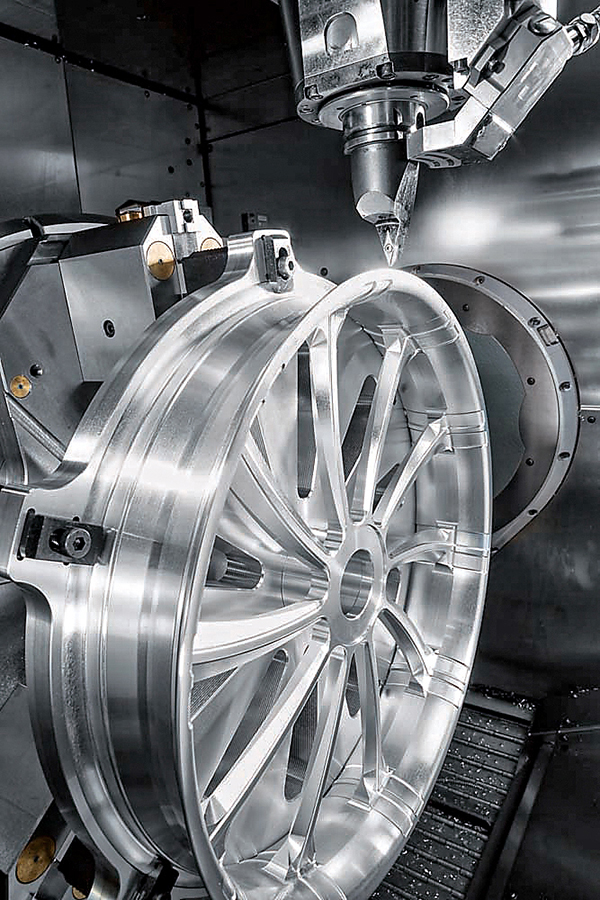
Producing everything from CAM covers, cylinder blocks, control arms, pump housings, decorative door linings and prototype wheels for automotive OEMs, turnaround times are a critical factor for Advanced Engineering. This is why the combination of Mazak five-axis machine tools, hyperMILL CAM software and a complete suite of Mitutoyo inspection equipment are central to expediting high-quality components through the business at a fast pace.

The relationship with Mitutoyo dates back over 20 years, with a complete range of hand tools and the first Mitutoyo CMM, a Crysta Apex 9106, arriving on site some 15 years ago. Still reliably running up to 12 hours a day, the Apex 9106 was followed by a smaller Crysta Apex 574 CMM over 8 years ago. The second machine was acquired to relieve the bottleneck of work that was building on the company’s first CMM.
As the quality manager at Advanced Engineering, Andrew Stevens, says: “All our work is based around customer requirement. We deal with a one-off prototype product, through to support, NPI products and new product model launch. Also, we work closely with tier-one manufacturers and OEMs.”
The smaller, more cost effective Apex 574 CMM has not only relieved capacity, it was the perfect product for the changing market demands of the automotive sector, as Stevens explains: “Our work initially evolved beyond cylinder head and engine blocks into turbos and other small, complex powertrain parts, and the Apex 574 proved an excellent solution with its compact footprint. However, our workload has continued to evolve even further, with more body-in-white work and, in particular, suspension parts. With the requirement for additional measurement capacity, we once again opted for a Mitutoyo solution, the Crysta Apex-S CMM. We bought the Apex-S as we wanted the new CMM to be capable of mirroring the Apex 9106 machine, something that would give our metrology team more flexibility, reduced set-ups and extra capacity as and when required.”

Commenting upon the continual changes in the automotive sector and how Advanced Engineering is addressing the issues from a measurement perspective, Stevens says: “We got to a point where our Apex-S and Apex 9106 have been working side by side, with the smaller Apex 574 being reserved for smaller parts, providing much needed capacity at busy periods. However, a lot of our OEM customers and their cylinder-head work have taken on a new level of dimensional tolerances over the years.
“To facilitate this, we swapped out the TP20 touch probes that operate on a touch-trigger mechanical mechanism, with the new continuous contact SP25 Renishaw system,” he continues. “Mitutoyo fully retrofitted the system to both our Apex 9106 and Apex-S CMMs, and this gives us precision to 2 µm. Furthermore, by continuously scanning the complex features of parts, we’re getting a full 3D scan of the components, which can be compared directly with the CAD model. All this is innovatively done with the Mitutoyo MCOSMOS operating software, with full certification and traceability for our customers.”
With 85% of work at Advanced Engineering passing through the metrology department, Mitutoyo was once again on hand when yet more demands filtered downstream.
“Surface finish has become more prominent in the automotive market, with seal seat surfaces and waveforms on engine blocks and cylinder heads taking on more stringent controls,” says Stevens. “To measure surfaces, we approached Mitutoyo and they recommended the SurfTest SJ-410 portable surface roughness tester. OEMs are now placing more 100% inspection demands on critical features like cylinder-head bores and, to once again relieve capacity and reduce set-ups on our CMMs, the SurfTest SJ-410 was the perfect addition.”
Referring to the relationship with Mitutoyo, Stevens says: “Our tie-up with Mitutoyo goes back many years. We’ve always used Mitutoyo due to the reliability and quality of the products which they supply, and that goes right the way through from hand tools to CMMs. We have an amazing service contract with Mitutoyo and they carry out all our calibration work. We wouldn’t trust anyone else to calibrate our equipment. It’s a long-standing relationship that has been based on trust, good service and the level of product innovation.

“We chase microns on the shop floor and we need to be able to repeatedly measure microns and be confident that each measurement is accurate. With the type of products we’re producing here, we are pushing the bounds of our CMMs through varying customer requirements. So, when we see new customer demands, and we need the CMMs to do something slightly different to meet those requirements, Mitutoyo have engineers on the end of the phone, so we can get their technical support to resolve challenges very quickly.”
For further information www.mitutoyo.co.uk

Changes in leadership structure at Mazak

Mazak has made important changes to its leadership structure. President Tomohisa Yamazaki is now the company’s chairman, while vice president Takashi Yamazaki has been named the new president.

The transition, which took effect on 24 June to coincide with the company’s 100th anniversary, is the result of a long-planned leadership evolution designed to position the company for continued growth. Takashi Yamazaki’s key objectives will be to reinforce Mazak’s position in the increasingly globalised manufacturing market, and the promotion of new technologies and products.
For further information www.mazakeu.co.uk

Expert invests in XYZ machines

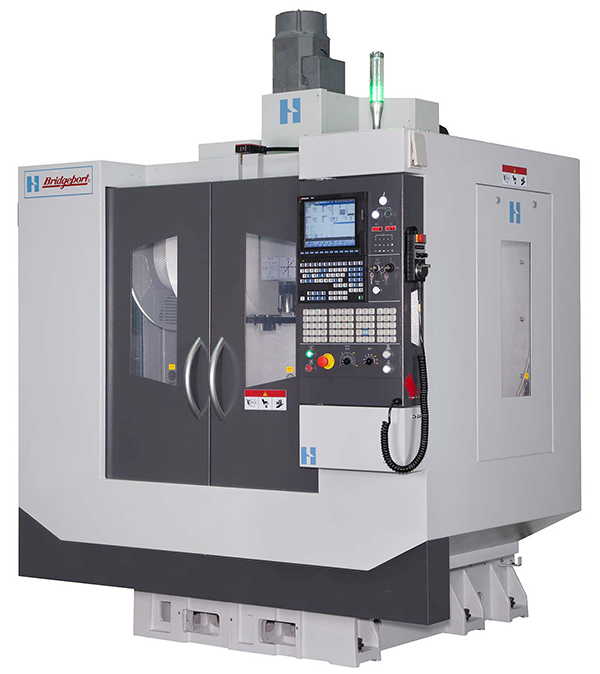
Newcastle-based Expert Precision Engineering has invested in four machines from XYZ Machine Tools, two XYZ TC400 turning centres, and XYZ 1100 HD and XYZ 800 HD vertical machining centres.

Among the key reasons to choose XYZ was its use of the Siemens ShopMill and ShopTurn control systems, along with the solid construction of the machines, with their box slideways and overall machining capacities.
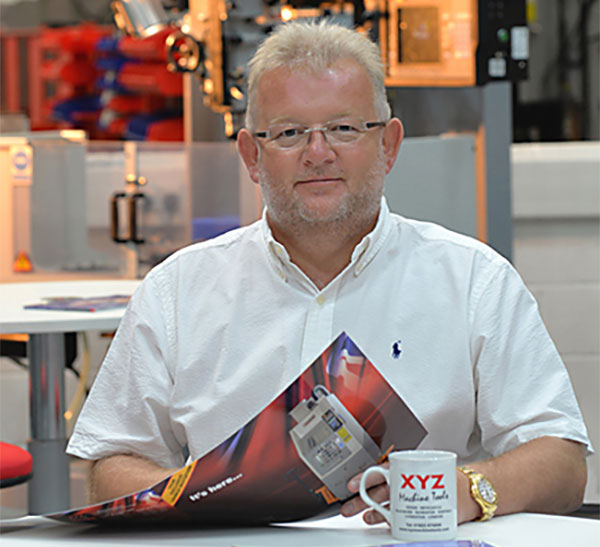
“We find that with the Siemens control we can cut programming time in half thanks to the easy-to-use interface and graphics, and we can also edit programs quickly,” says director Martin Stokoe. “The rigid construction of the machines, along with the powerful spindles, also suited the work we would be machining, which involves hogging-out material. In our view, the XYZ models can do the work of machines that would be twice the price, so they provide excellent value for money and cost-effective machining, delivering savings that we can pass on to customers.”
For further information www.xyzmachinetools.com

Engineering firms lead way in apprentice recruitment

Over 50% of engineering firms in the UK have taken on an apprentice in the past two years, a new survey by the Manufacturing Technologies Association (MTA) and Close Brothers Asset Finance has found.

The survey looked across a range of sectors, including food and drink, retail, recruitment and services, discovering that construction was the only other industry employing apprentices at a similar rate to engineering firms.
One of the most interesting points to emerge from the survey was that the biggest barrier to employing an apprentice was not the Apprenticeship Levy, but the lack of suitable candidates, and as well as problems with training providers. Steve Gee, CEO of Close Brothers Asset Finance’s Industrial Equipment Division, says: “Over the past four years Close Brothers Asset Finance, working in partnership with the MTA and the University of Sheffield’s AMRC Training Centre, have funded the training of 60 apprentices. It is very encouraging to see the results of this survey and we’re proud of the part we have played.”
For further information www.mta.org.uk

Dyer installs five Doosan machines

Mills CNC has recently supplied Dyer Engineering, a precision manufacturer located in the northeast of England, with five Doosan machine tools.

The machines – three Doosan DNM 4500 vertical machining centres, one Doosan DNM 6700 large-capacity vertical machining centre and one Lynx 2100LMB lathe equipped with driven tooling and supplied with a barfeed – have been installed at Dyer Engineering’s 100,000 ft2 split-site manufacturing facility in Stanley, County Durham.
All five machines were selected for their reliability, productivity, cutting performance, competitive price, ready availability, and the service and aftersales support provided by Mills CNC. The decision to make such a significant investment in capital equipment followed an internal audit undertaken by Dyer Engineering. It was intended that the audit would identify any weaknesses or potential production ‘pinch points’ that could affect the company’s ability to meet its future growth objectives and ambitions.
Says Leigh Foulger, BatchLine Division lead: “We are committed to continuous improvement and, as such, continually monitor and benchmark all aspects of our performance. The audit results revealed that some of our existing CNC machine tools, while still performing adequately were, owing to their age, becoming less reliable and more prone to breakdown. We knew that the situation, if not addressed, would only become more acute over time and so we decided to ‘grasp the nettle’ and make the significant investment required to address our weaknesses and improve our machining capabilities in one fell swoop.”
Although Dyer Engineering does not necessarily push its machines to deliver exacting part accuracies (typical tolerances required are ±0.2 mm), they can be in operation around the clock and, as such, have to be reliable performers in order to meet OTIF arrangements made with customers.
For further information www.millscnc.co.uk