Powermill HPC3 gantry mill destined for China

Among the gantry mills manufactured by Mecof for large components, the Powermill HPC3, built for a Chinese customer, combines power, precision and operational flexibility. This portal milling machine is designed to meet the complex needs of the electrical cable manufacturing industry, but with features that also make it suitable for other high-production applications.

With axis strokes of 12 m in X, 4 m in Y and 2.5 m in Z, the portal architecture of the Powermill HPC3, combined with its box-in-box design, ensures rigidityand thermal stability.The latest-generation Siemens Sinumerik ONE numerical control guarantees optimal cycle management and the digital integration of production processes.

One of the machine’s strengths is its ability to manage different interchangeable heads, all designed for automatic changeover.The universal bi-rotary head with automatic millesimal positioning offers ample power (38 kW), torque (1000Nm) and speed (6000 rpm) for complex machining operations, while the more compact vertical spindle head meets the need for precision and versatility. The latter offers 15 kW of power, 390 Nm of torque and a speed of 3000 rpm.Both heads feature an ISO 50 connection.

Productivity arrives courtesy of a 64-position tool magazine (two chains of 32 positions), integrated into the shoulder of the machine, with independent chains to maximise changeover speed. The machine also features a complete measurement and control system, which includes a Renishaw radio probe, kinematic measurement, and tools for checking tool length and diameter.

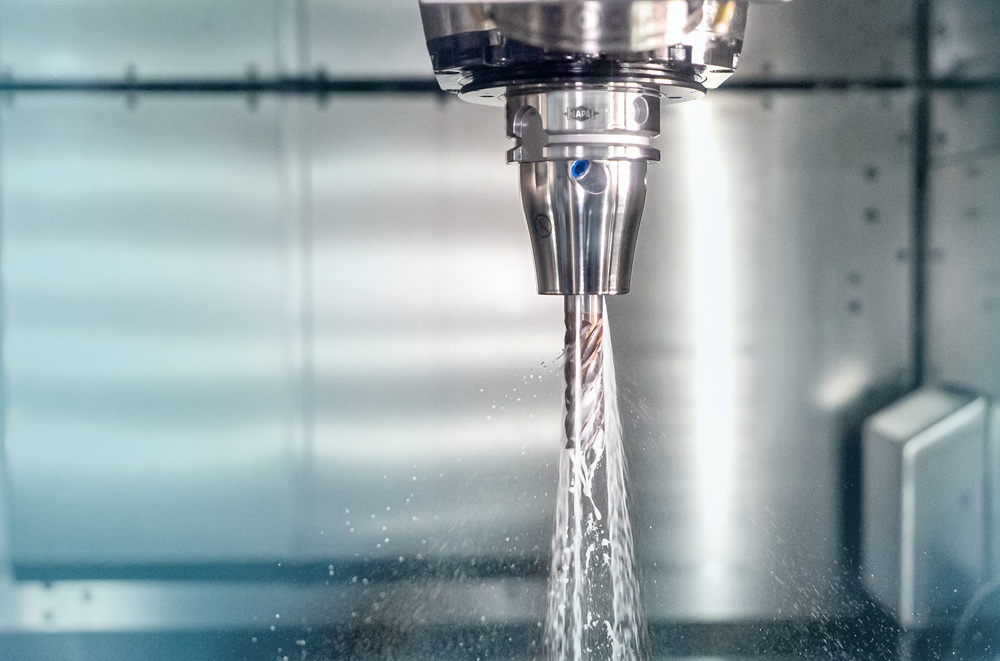
Intensive milling requires effective cooling. For this reason, the Powermill HPC3 destined for China is equipped with a dual cooling system, both external and internal to the spindle (up to 40 bar), 2000-litre collection and filtering tanks, and flow control devices.

More information www.bit.ly/4tFgmQu

Future is bright for Bronte Precision Engineering

Mills CNCrecently supplied Bronte Precision Engineering, a Bradford-based precision subcontract specialist, with a new heavy-duty three-axis vertical machining centre.The machine, a box guideway Mynx 6500/50 II manufactured by DN Solutions, replaced an older Daewoo Mynx 540 machining centre supplied to Bronte by Mills CNC in 2004.

Since its installation, the Mynx 6500/50 II with FANUC 0iMP control and gearbox-driven 6000rpm (BT 50) high-torque spindle has been put through its paces machining a range of high-precision complex components. These parts include valve-type components (for subsea applications) made from Inconel castings for a long-standing customer and manufacturer of industrial pumps.

Programmed offline and machined in small batches, the pump valve components are approximately 400 x 300mm in size, involve long and intensive roughing and finishing operations, and are characterised by their tight tolerances and stringent surface finishes. Cycle times with the new Mynx 6500/50 II are significantly faster (up to 50%) than those achieved using the Mynx 540, vindicating the new machine acquisition.

Says Bronte Precision director Steven Haigh:“The Mynx 6500/50 II is a powerful, accurate and flexible machining centre that, in just a few short weeks, has proved its worth. Its rigidity, box guideway construction and BT 50 spindle with through-spindle-coolant capability has enabled us to improve our productivity and process efficiencies.The ability to ramp up speeds and feeds and take more aggressive depths of cut have shortened cycle times.”

He adds: “The machine is still being ‘bedded-in’ so to speak, but I’m confident that once we’re more familiar with its onboard technologies, we’ll hit tolerances of ±0.03mm on selected features.”

More information www.millscnc.co.uk

Starrag Machine Achieves Unprecedented MRR

The Starrag S1250 HD five-axis machining centre with hydrostatic guides, which is suitable for machiningtitanium thanks to its rigidity and damping attributes, achieved astonishing results in performancetestsperformed by Starrag at its main plant in Rorschacherberg. Using a carbide cylindrical endmill (40 mm diameter, 18 teeth), the machiningspecialist achieved a metal removal rate (MRR) of 1516 cm3/min. Starrag estimates this MRR is potentially a world record in titanium machining.

Even the prototype of the Starrag S1250 HD proved to be a highly efficient machine for cutting titanium structural components. Two years ago, in roughing tests, the machining centre with hydrostatic guides achieved up to three times the MRR of the Starrag STC 1250 version featuring roller bearings. The improved damping and dynamic performance also ensured high precision and surface quality during finishing.

For the series-produced machine, Starrag engineers imparted a few additional modifications to increaseMRR further and reduce tool wear. As the most critical factors in this context are rigidity and damping, Starrag made the machine and column structure even more sturdy.

Another revision concerned the rotary table, which is now designed as a gearbox version. With a high torque of 25,000Nm and a clamping torque of 32,000Nm, it fully meets the requirements of titanium machining. In addition, the compact swivel milling head was enlarged on one side, creating space for a 50% stronger Aaxis with 12,000Nm of torque and 20,000Nm of clamping torque while retaining accessibility.

In terms of the work spindle, a new feature is the HSK-B160 interface, which ensures high tool rigidity when cutting large depths.

Airbus has already ordered five Starrag S1250 HD machines for its Varel site in Germany.

More information www.starrag.com

HOW PORTESCAP HELPS OEMs EMPOWER HUMANOID ROBOTS

As the robotics sector steadily moves from science fiction to the factory floor, a new
generation of humanoid robots is emerging to reshape industry, healthcare and daily life.
These machines are designed to do more than automate – they’re built to move like people,
work alongside humans, and, at times, even replacing them.
Yet replicating human motion is not just a question of software and AI. It starts at the core
components that enable this movement, with actuators and motors that combine compact
size, lightweight design and remarkable performance.
That is where Portescap comes in. As part of the Regal Rexnord family of brands, Portescap
brings decades of experience in miniature motion systems and a proven track record in
high-performance medical and industrial applications. Today, the company is supporting a
new wave of robotics OEMs as they transition from prototype to production.
The idea of a humanoid machine has fascinated engineers, scientists and storytellers for
over a century, appearing in literature and early cinematic visions of the future long before
the technology existed to make them real. Early attempts at humanoid robots in the mid-to-
late 20th century were largely experimental, often limited to slow, rigid movements and
basic programmed routines.
Since the turn of the millennium, however, a combination of breakthroughs in AI,
computing, motion control and materials science has brought the concept within reach.
Today, humanoid robots are being developed with increasingly sophisticated capabilities:
they can walk, balance, manipulate objects, and respond to voice commands or sensory
feedback.
The purpose of this form factor is not simply to mimic the human body for its own sake. It
allows these robots to interact with human environments, designed around size, tools and
workflows, without needing extensive changes to infrastructure. That makes them well-
suited to working alongside people, whether on production lines, in warehouses, in
healthcare settings or in the field.
Many of today’s robotics applications are destined for highly controlled environments like
warehouses or hospitals. However, as the technology matures and its capabilities grow,
there is a very good chance that tomorrow’s systems may need to walk the ocean floor,
enter radioactive zones or carry out maintenance in the vacuum of space.

In many of these environments, human workers would face unacceptable risks from heat,
pressure, radiation or isolation. Humanoid robots and exoskeletons offer a way to extend
human capability into these hazardous zones, performing tasks remotely, reliably and –
vitally, without exposing human operators to danger.
These scenarios demand more than smart AI; they require mechanical systems engineered
to endure the extremes. Portescap is already well-prepared for these scenarios, as the
company has extensive experience in building motors for extreme conditions, such as high
heat, chemical exposure, vibration and more.
While many robotic applications are still pre-commercial, Portescap is already developing
solutions that can handle these tough operating conditions. With sealing, insulation and
specialised materials, the company is ready to support OEMs as their applications move off
the lab bench and into the field.
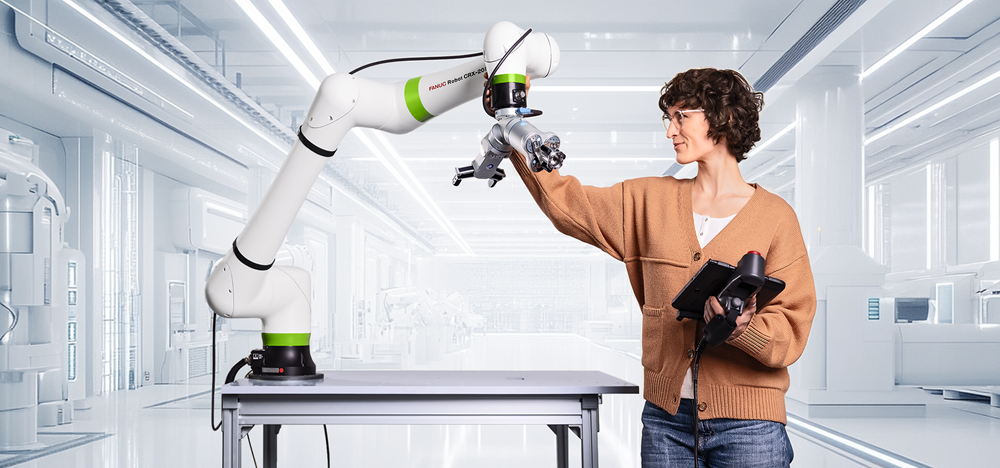
One of the key requirements of any humanoid robot is the ability to interact with its
environment in the same way a human would. As such, it is vital they have functional hands.
Achieving this design ambition, however, is not necessarily a simple task.
Although often taken for granted, the human hand is a marvel of engineering, one that is
capable of delicate manipulation, strong grip and complex motion, all in a compact,
adaptable form. This means that any robotic replica must be small enough to fit inside
human-like form factors, strong enough to grip and lift weight, and smart enough to know
just how much of that strength to use.
To meet this challenge, Portescap offers a wide portfolio of motor topologies and
technologies. Cylindrical motors, shaped like slim batteries, can be embedded in fingers or
palm area. Flat motors, meaning with short axial distance, offer high torque in compact
packages for wrists or arm integration. Crucially, the company also provides brushed DC,
hybrid stepper and brushless DC options (including both slotted and slot-less designs),
helping developers strike the right balance of speed, torque, smoothness and efficiency for
each axis of motion.
But components alone do not make a system. What sets Portescap apart is its “engineer-to-
engineer” approach. The company works directly with roboticists – guiding design teams
through motor selection, integration with gearheads and encoders, and performance
optimisation – to achieve specific motion goals. Whether an OEM needs fast, high-volume
gripping or smooth, multi-articulated gestures, Portescap can configure a solution that fits
the form and delivers the function.
Humanoid robots are not the only application for this kind of solution, however. Perhaps the
most immediate and transformative impact of robotic hand development instead lies in
prosthetics.

Portescap’s technology is already powering a new generation of bionic limbs that combine
functional grip with intuitive control. These solutions go beyond raw motor specifications,
drawing on a deep understanding of cost, weight and patient ergonomics.
Prosthetic developers often target around 80% of human hand dexterity, with 10-20 basic
motion patterns. These designs must be lightweight, durable and efficient, while remaining
affordable for cost-sensitive markets. Portescap’s experience in both premium and value-
engineered designs makes it well suited to this space.
Across the industry, OEMs are racing to prove the value of next-generation robotics.
Demonstrator units and pilot projects are being used to unlock funding, attract strategic
partners and secure long-term market positions. That means motion system partners must
be able to deliver quickly, reliably and flexibly.
Portescap supports this full journey. The company can provide small quantities for R&D
testing and validation, then take advantage of Regal Rexnord’s global reach and engineering
expertise to scale seamlessly in support of commercial launches, with lead times and
production infrastructure already proven in demanding sectors like medical devices and
aerospace. This capability makes Portescap not just a component provider, but a long-term
platform partner.
Such scalability also enables cost-effective iteration. Customers can test several
configurations or gear ratios in parallel, then down-select based on actual test data.
Portescap’s global support network helps manage this process efficiently, reducing
development risk and time to market.
As robotics moves toward real-world deployment, success will come down to more than
innovation. It will require motion solutions that are engineered precisely, delivered reliably
and scaled effectively.
From form-fit options and technical expertise to production agility and application support,
Portescap offers everything OEMs need to bring humanoids and exoskeletons to life. In a
field where form follows function, the company is ready to power whatever comes next.
And as part of Regal Rexnord, it does so with the strength and support of a global
organisation, combining local expertise with worldwide reach to help OEMs turn ideas into
fully realised, market-ready solutions.
More information www.portescap.com

Early Careers Engagement

BEP Surface Technologies reinforced its commitment to skills development and earlycareers engagement with a recent hands-on visit to Hazel Wood High School in Bury, Greater Manchester. Managing director Andrew McClusky and design engineer Callum Taylordeliveredinteractive sessions to Year 8 and Year 9 students.To support engagement, BEP used an illustrated storybook to explain its role within industry in an accessible way. During the day, BEP delivered ten 12-minute small-group sessions, creating space for open discussion on engineering careers, apprenticeships and technical routes into manufacturing.

More information www.bep-st.com