


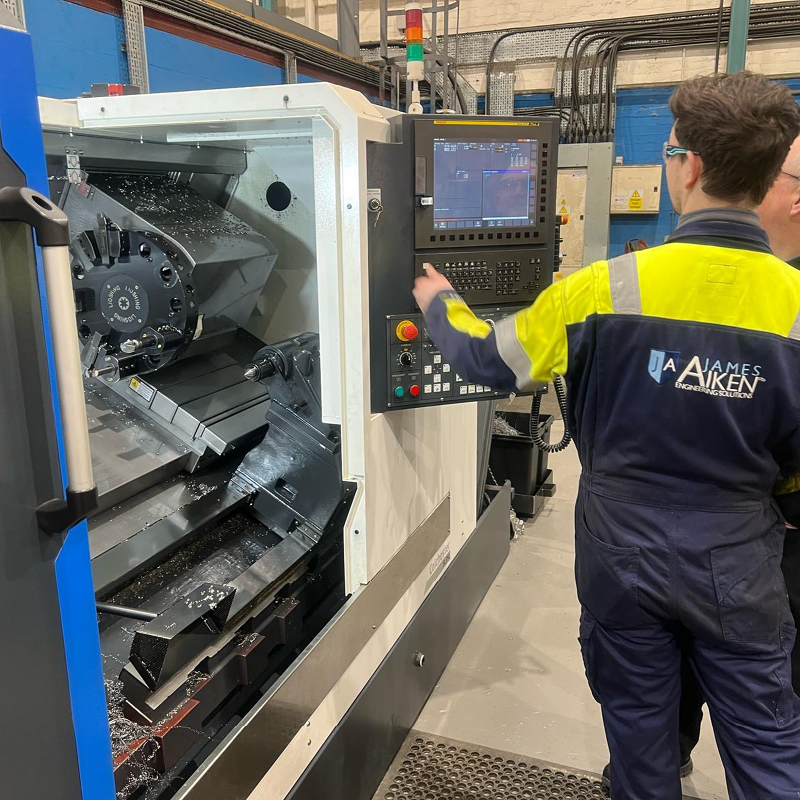
James Aiken, a precision engineering company based in Aberdeen, has strengthened its machining capabilities with the addition of a Colchester Tornado SL35L.
Specialising in onshore and offshore energy, power generation, food processing and commercial utilities, the company provides high-precision machined components for critical applications. To maintain its reputation for quality, reliability and efficiency, James Aiken needed a turning centre that could meet the high demands of these industries while ensuring long-term performance.
The company duly invested in a Colchester Tornado SL35L two-axis, long bed-turning centre. This particular model was selected to increase production capacity, optimise workflow, and ensure consistent precision for machining complex components used in energy infrastructure and industrial systems.
The Tornado SL35L is a versatile and robust CNC lathe, engineered to meet the rigorous standards of industries where reliability, accuracy and efficiency are essential. The long-bed capability accommodates larger components required in offshore and power generation applications, while its potential for high-precision machining ensures repeatable accuracy for mission-critical components.
Having used Colchester Tornado machines since 2006, James Aiken has continuously relied on the precision, durability and performance that these lathes provide. Its decision to purchase the SL35L was based on this proven track record of reliability, ensuring the production line remains efficient and capable of delivering high-quality components to customers.
Beyond the quality of Colchester machines, James Aiken values the customer support and aftercare provided by Colchester Machine Tool Solutions. Access to expert technical assistance, maintenance and spare parts ensures machining operations remain at peak performance, minimising downtime and maximising productivity.
More information www.colchester.co.uk