

EPS Services explains bandsaw tooth pitch

When choosing a bandsaw blade, tooth pitch is often treated as a secondary consideration. Blade width or overall blade type usually takes priority, with TPI mentioned almost as an afterthought. In reality, tooth pitch plays a major role in how a blade performs in the cut, influencing cutting speed, surface finish, blade life and even machine load. According to EPS Services, problems often blamed on set up or machine condition can frequently be traced back to blade selection.

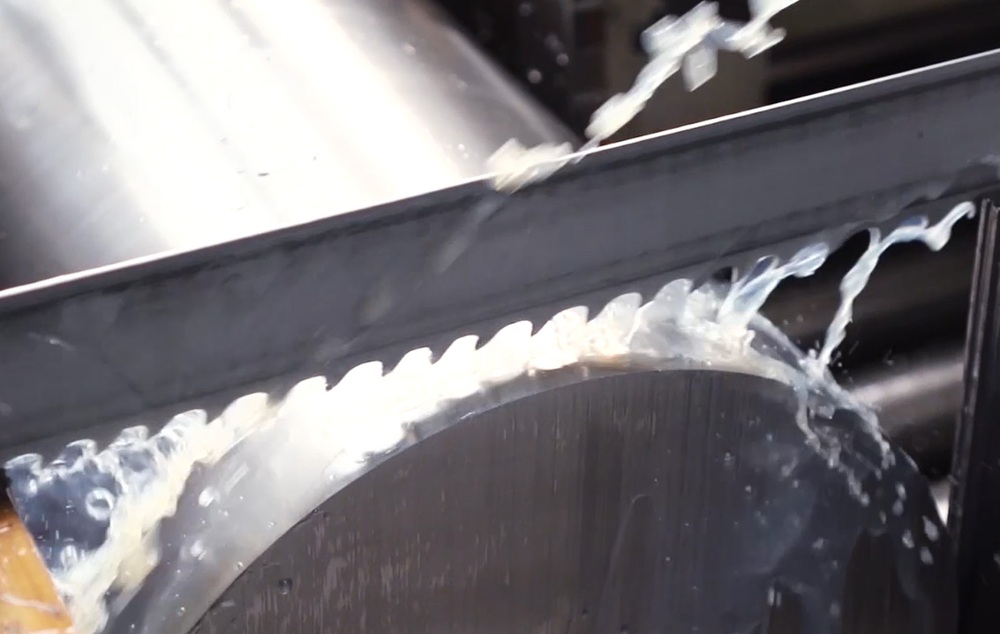
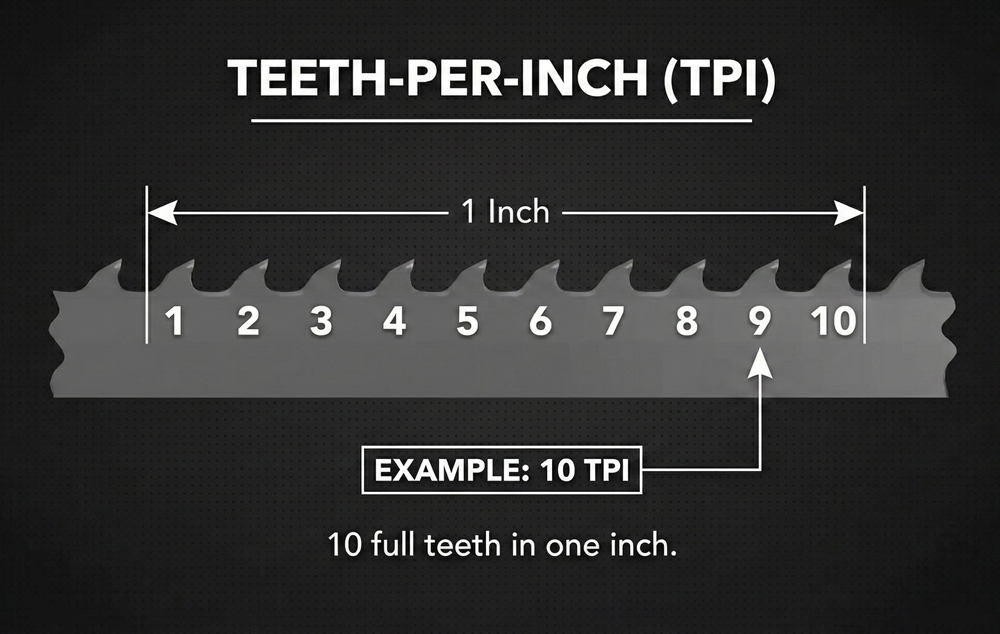
Tooth pitch refers to the number of teeth per inch of blade, written as TPI. Lower TPI blades feature larger teeth with deeper gaps between them, while higher TPI blades have smaller, closely spaced teeth. These gaps, known as gullets, are responsible for carrying chips away from the cut. If chips cannot clear efficiently, they pack into the gullets, increasing friction and heat and accelerating blade wear. Poor chip clearance is one of the most common causes of premature dulling.

A useful rule of thumb is to ensure at least three teeth are always engaged in the material. This spreads the cutting load and promotes smooth operation. Too few teeth can cause grabbing and chatter, while too many can lead to rubbing rather than cutting, generating heat and reducing efficiency.

Fast dulling, slow cutting, burning and wandering cuts are often linked to incorrect pitch selection, even when machine set up is sound. These symptoms are sometimes misattributed to blade quality.

Variable pitch blades, which alter tooth spacing along the blade, can reduce vibration and improve stability. However, they are not a substitute for selecting the correct pitch range.

Ultimately, tooth pitch affects far more than surface finish. A small change in TPI can significantly improve cutting performance, consistency and blade life.

More information www.eps-services.co.uk
Cosen fills the gap with new SH-520DM bandsaw

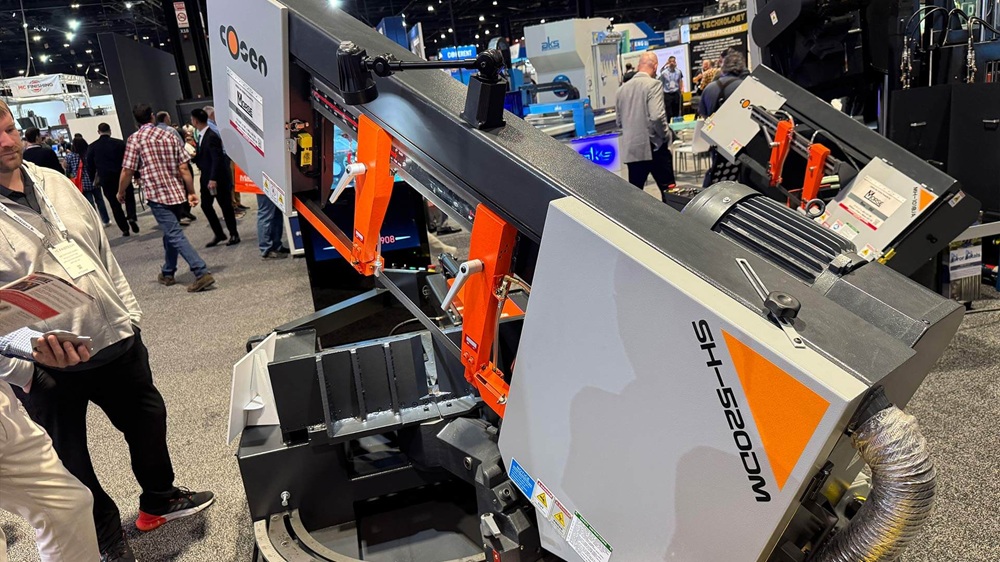
Any new fabrication equipment worth mentioning is often the result of a company listening to the needs of its customer. As just one example, fabricators working in structural steel, heavy manufacturing and job shop environments sometimes find themselves forced to compromise by investing in a small saw that cannot keep pace with production needs because the large-format saw would be overkill in more ways than one. The engineers at Cosen Saws, however, listened to customers and developed a solution with a product that it says “fills the gap” – the SH-520DM bandsaw.

Peng Huang, president of Cosen Saws North America, says at the heart of the SH-520DM double-mitre bandsaw is its ability to make a mitre cut up to 60° in either direction. For a variety of shops, that range is critical as it allows aggressive angles and precise cuts on I-beam, channel, tubing and other structural material without the need for multiple set ups or added equipment.

Huang says manufacturers in the utility and fabrication space need a saw that can handle straight cuts and severe angles, and the SH-520DM gives them that flexibility while keeping the material flow straightforward and well-supported.

“There was a need for the shops that started out with a smaller machine and wanted to grow their production into the next machine, but the next machine was too big to fit their floor space,” he explains. “The introduction of this model not only saved them on floor space, it also produces at the capacity that they can comfortably grow into.”

Cosen made a deliberate decision to go semi-automatic with the SH-520DM. Huang notes that not everyone needs a fully computerised machine. There is a strong market for saws that are intuitive, practical and versatile without heavy programming. The SH-520DM is designed to meet that need.

More information www.cosensaws.com

Cutting-edge stainless steel sawing: The real results

Since UK-based KR Saws was founded in 2004, the stainless steel industry has been one of its core focus areas. Backed by the innovation and research of parent companies Kinkelder and Roentgen, KR Saws says it has continually pushed the boundaries of cutting performance and efficiency. The company’s long-standing commitment to this sector is reflected in its position as the only bandsaw blade supplier to be a member of the British Stainless Steel Association.

Roentgen’s R&D team never stops refining its blade technology. After promising test results on stainless steel, the company introduced the Titan ST — a next-generation carbide-tipped bandsaw blade designed for speed, precision and durability. To put the Titan ST to the test, KR Saws partnered with a major stainless steel stockholder that wanted to reduce cutting times and improve productivity.

The stockholder had been using a bi-metal blade, but using Roentgen’s RCS cutting calculator, KR Saws recommended a cutting speed four times faster than the company’s previous set up. In addition, the Titan ST delivered longer blade life, while its pre-honed edge meant no running-in period.

“I’m actually shocked,” said the customer. “The carbide ST blade has been running for a week at the recommended feed and speed, and it’s still cutting perfectly. We’ve had over 100 cuts (16.6 m² blade life) and it’s still going; this blade is a game changer.”

Another recent stainless steel project pushed the limits further — cutting large-diameter 316 and 304 stainless steel. The target was to outperform a competitor’s average blade life of 8.9 m². Following Roentgen’s recommendation, KR Saws introduced the M51 Master, a bi-metal blade built for stainless and alloy steels. Across five blades, the M51 Master achieved an average life of 10.8 m², outperforming the competition by over 21%.

More information www.krsaws.co.uk

Why bandsaw accuracy drops and how to fix it fast

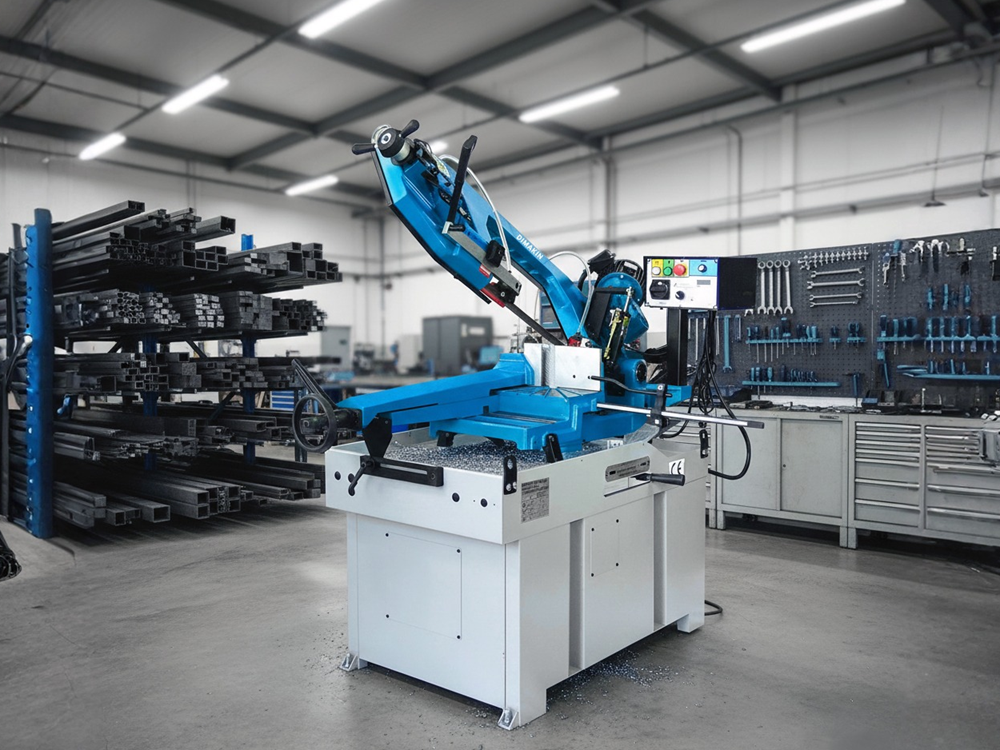
When the cutting accuracy of a bandsaw drops, the impact is immediate: uneven cuts, higher scrap rates and longer cycle times. In this article, UK bandsaw supplier Dimakin explains why cutting accuracy declines, and how to correct it quickly.

Accuracy rarely disappears overnight. In most cases, clear warning signs emerge first, allowing workshops to correct problems quickly and avoid unnecessary downtime. Common symptoms include angled or tapered cuts, rough or inconsistent surfaces, blade wandering, excessive burr formation, and inconsistent cut lengths. Operators may also notice increased vibration, chatter or unusual blade noise. These indicators typically point to issues with blade condition, set up, alignment or feed control.

Blade condition is one of the most frequent contributors to poor accuracy. Worn blades struggle to maintain a straight cutting path, particularly in thicker sections or higher-strength materials. Incorrect blade selection has a similar effect: fine-tooth blades can clog in thick material, while coarse pitches lack stability on thin sections. Both increase cutting resistance, leading to blade deflection. Prompt blade replacement and correct tooth pitch, geometry and width selection are among the fastest ways to restore accuracy.

Blade tension is equally critical. Under-tensioned blades flex during cutting, while excessive tension accelerates fatigue and places unnecessary strain on machine components. Following manufacturer-recommended tension settings and checking them regularly helps maintain stable blade tracking.

Guide and bearing alignment also play a vital role. Worn, misaligned or contaminated guides allow the blade to drift under load. Keeping guides clean, correctly aligned and positioned close to the workpiece minimises unsupported blade length and improves precision.

Finally, consistent feed control and secure workpiece clamping are essential. Controlled bow descent prevents blade deflection, while firm, square clamping eliminates vibration and movement.

More information www.dimakin.co.uk

Kaltenbach introduces saw-drill line of machines

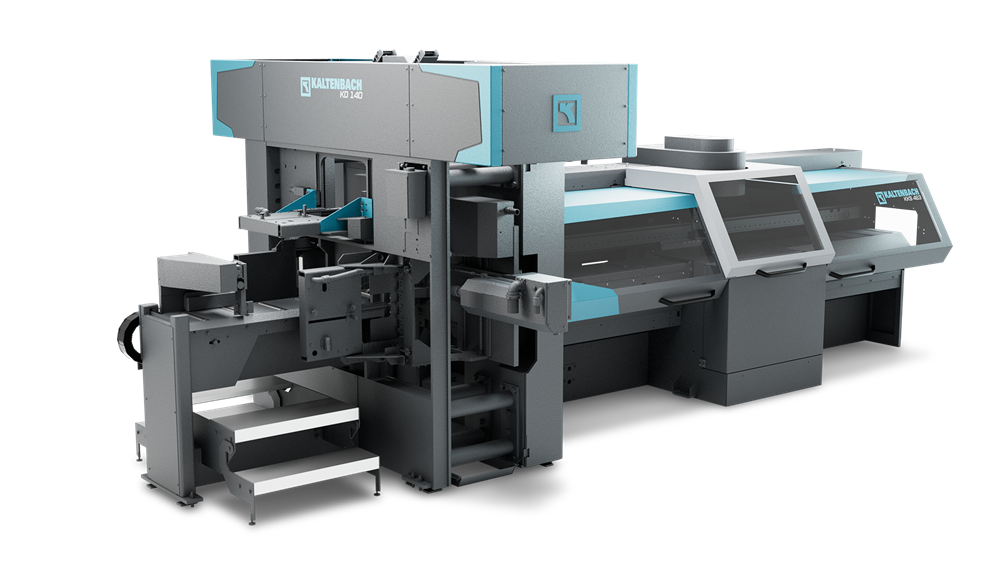
Kaltenbach has unveiled its latest innovation: the KKS 463 NA | KD 140 saw-drill line. This versatile all-round machine has been developed to meet a wide range of requirements in metal construction, steel stockholding and steel fabrication. It combines all essential processing steps in one compact system – capable of handling various steel shapes, especially in the smaller dimension range. While large systems are often uneconomical for small-format profiles, Kaltenbach says this machine offers the solution the market has long been seeking.

With the new saw-drill line, steel processing companies can handle nearly all materials and profile shapes: from round material with a diameter as small as 15 mm to special profiles up to 140 x 140 mm or flat material up to 240 mm wide. Mitre cuts of up to ±20° make the machine highly versatile.

The technology enables fully automated and precise drilling, milling, thread cutting, flow drilling and marking on all four sides of the profile. High automation and speed are the hallmarks of this machine, which only requires personnel for loading. Remnant lengths of less than 15 mm ensure maximum material utilisation, making the entire production process more efficient and resource-friendly.

The automatic tool changer, intelligent material preloading with feed magazines and fully automated part sorting boost productivity. Automatic adjustment during material changes – without any manual set up – reduces staffing needs to a minimum.

“Our new saw-drill line was specifically developed to meet the needs of our customers,” explains René Eger, managing director of Kaltenbach Cutting Systems GmbH. “Market demand was high, and we’re proud to offer a solution that combines high automation with fast processing times. This enables our customers to work more efficiently and significantly increase their productivity.”

More information www.kaltenbach.com