

Five-axis HMC has novel chip-breaking function

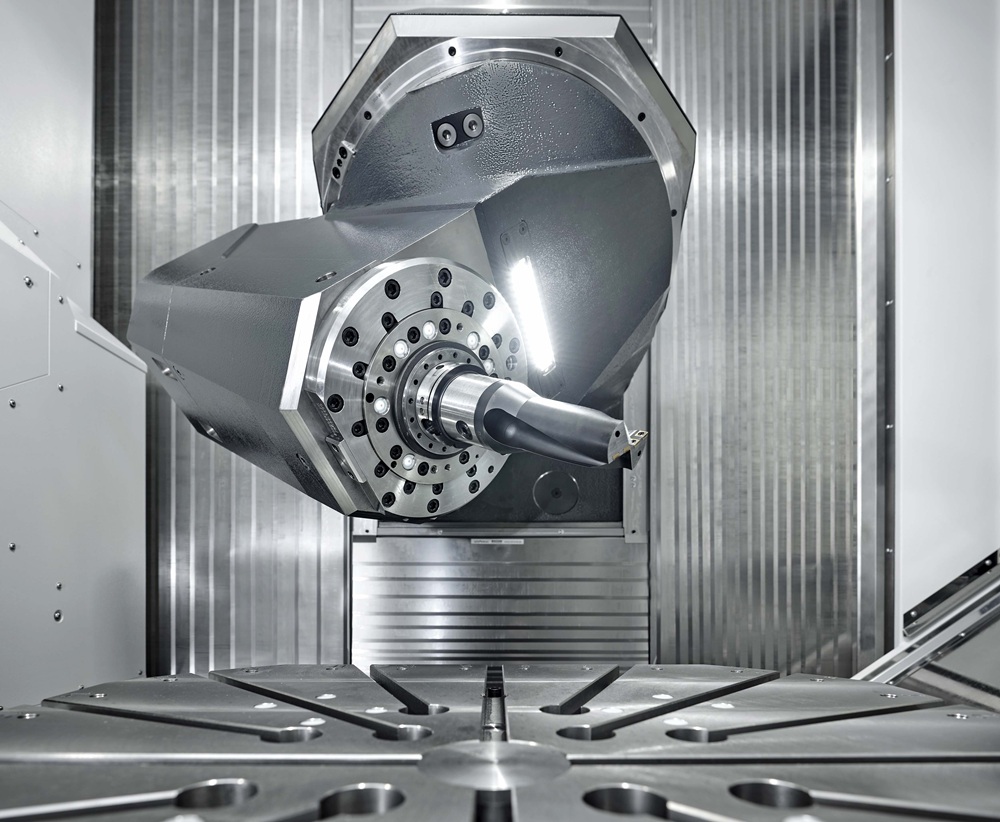
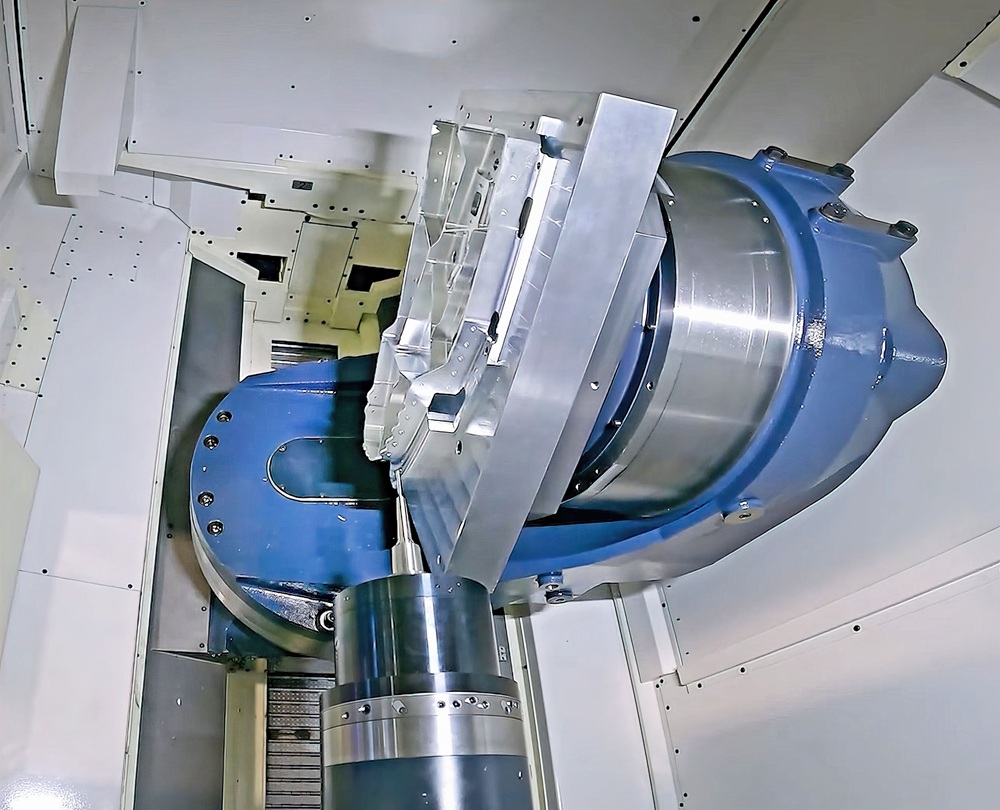
NCMT has introduced to the British and Irish markets the Makino a500iR, a five-axis, twin-pallet horizontal machining centre that is available with a choice of three spindles. One has a BT40 interface and a maximum speed of 14,000 rpm, while the other two feature an HSK-A63 interface with a maximum speed of 20,000 rpm or 24,000 rpm.

The centre of gravity of the 500 mm square pallet and fixtured workpiece is close to the vertical centreline of the -110° to +180° rotary B axis, enabling high-speed workpiece positioning at up to 267° per second. Notably, the rotating C axis facing the horizontal spindle has an even faster rapid motion of 600° per second. Maximum workpiece size is 900 mm diameter by 600 mm high and the table will accept a load of 400 kg. Linear travels in X, Y, and Z are 900, 750 and 800 mm.

As with all high-performance machining centres, the a500iR generates copious amounts of swarf that is efficiently evacuated by means of slanted panels in the working area and with the assistance of coolant delivered from the spindle head, nozzles and the ceiling of the chamber.

A new feature is the GI (Geometric Intelligence) chip-breaker function, which introduces micro-movements into a drilling operation to break stringy swarf into small chips, avoiding accumulation within the hole and possible damage to the cutter and component. Manufacturers can therefore leave the Makino to run unattended with confidence. Notably, the GI breaker works without impacting the cycle time. This is in contrast to options offered by other machine tool manufacturers, reports NCMT, which tend to lengthen a cycle.

More information www.ncmt.co.uk
30-taper machine makes parts from tough materials

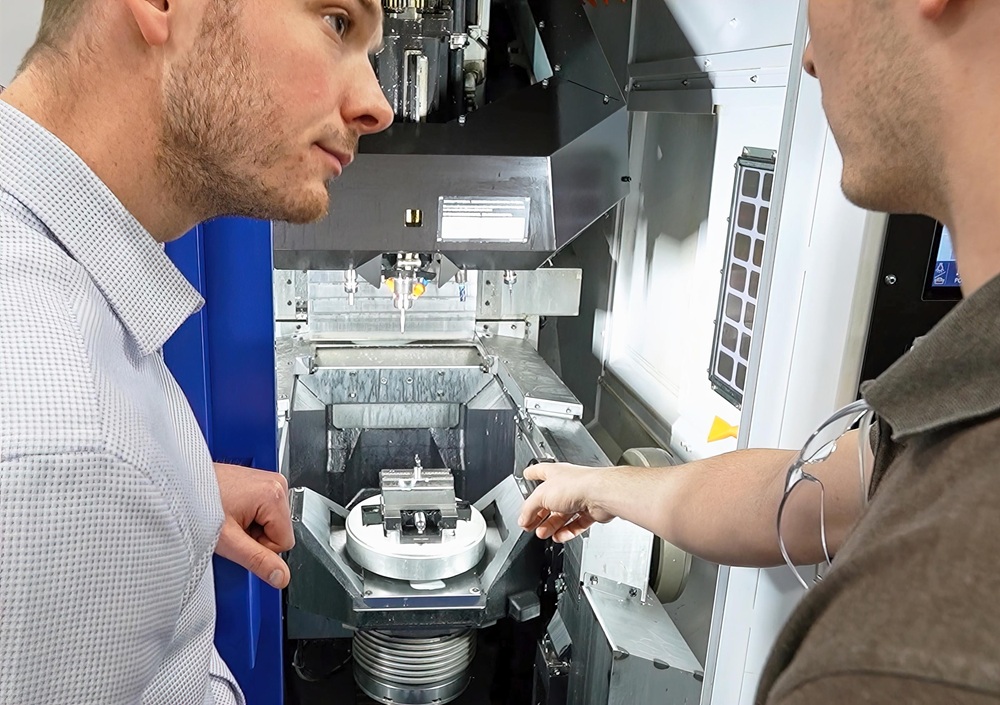
Leeds-based subcontract machining firm Kirkstall Precision has enhanced its capability to serve the demanding medical sector with the installation of a Brother Speedio M200Xd1-5AX, a Japanese-built five-axis CNC machining centre supplied by sole UK and Ireland sales and service agent Whitehouse Machine Tools.

For the past seven years, the company has focused almost exclusively on producing components for the medical industry, while also manufacturing surgical instruments and implants for the veterinarian sector. The company is seeing a 15-20% year-on-year growth rate due to high demand.

The Brother was chosen for its accuracy, repeatability, versatility and compact footprint. Kirkstall’s managing director Adam Thornton says: “Accuracy in the medical sector is a given. Everything has to be completely correct, so we inspect and report all dimensional tolerances. Opting for a top quality machine tool like the Brother was a fairly obvious decision.” 

Approved to ISO 13485, a globally recognised quality management system standard for medical devices, Kirkstall produces mainly low-volume orthopaedic components from challenging materials, including stainless steel, hardened stainless, titanium and other tough alloys. Brother says the 30-taper Speedio is suitable for machining these materials continually. In addition, it is able to combine on a single platform five-axis prismatic machining using the 16,000 rpm spindle and turning with the rotary torque table, which was a further key attraction. 

“We’ve used 40-taper five-axis technology for some time, but the Brother is faster and takes up less space,” reports Thornton. “It’s ideal for the smaller, high-accuracy parts we produce and has typically delivered a 20% cycle time reduction compared with our larger production centres.”

More information www.wmtcnc.com

Heller five-axis machine boosts AMRC research

The Advanced Manufacturing Research Centre (AMRC) in Rotherham is enhancing its machining capabilities with the installation of a Heller F6000 five-axis horizontal machining centre. Located at the AMRC’s Advanced Manufacturing Park, the machine supports subtractive machining activities.

As an industrial research organisation, the AMRC benchmarks the machine tool market on behalf of its membership to identify the most effective production equipment and techniques. Across its sites, the AMRC operates more than 60 CNC machine tools, including several horizontal-spindle platforms.

Installing the Heller machine strengthens the AMRC’s efforts to secure high-value manufacturing jobs in the UK, many in the aerospace sector. A key aim is to transfer Heller’s reputation for high reliability and uptime – proven in automotive production – into aerospace applications.

The mill-turn F6000 will also play an integral role in the AMRC’s new autonomous toolroom demonstrator, part of its Factory of the Future. More broadly, it will contribute to projects tackling supply chain resilience, skills gaps, the integration of digital technologies, production automation, real-time process analysis and ecological sustainability.

Tom McCready, engineering and operations manager of the AMRC Machining Group, says: “The exceptional capabilities of Heller horizontal machining centres make them ideal for processing hard metals like titanium, which is required for structural aircraft parts and aero engine components. The F6000 will be the first machine in our Factory of the Future to use the Siemens Sinumerik One control system. Combined with Heller software, the control will be a valuable platform for research into connectivity and manufacturing traceability.”

He adds: “Beyond its high chip removal capacity, the twin-pallet machine is automation-ready, allowing the retrofit of various pallet storage systems and paving the way for potential autonomous production cells.”

More information www.heller.biz

Autonomous five-axis machining around the clock

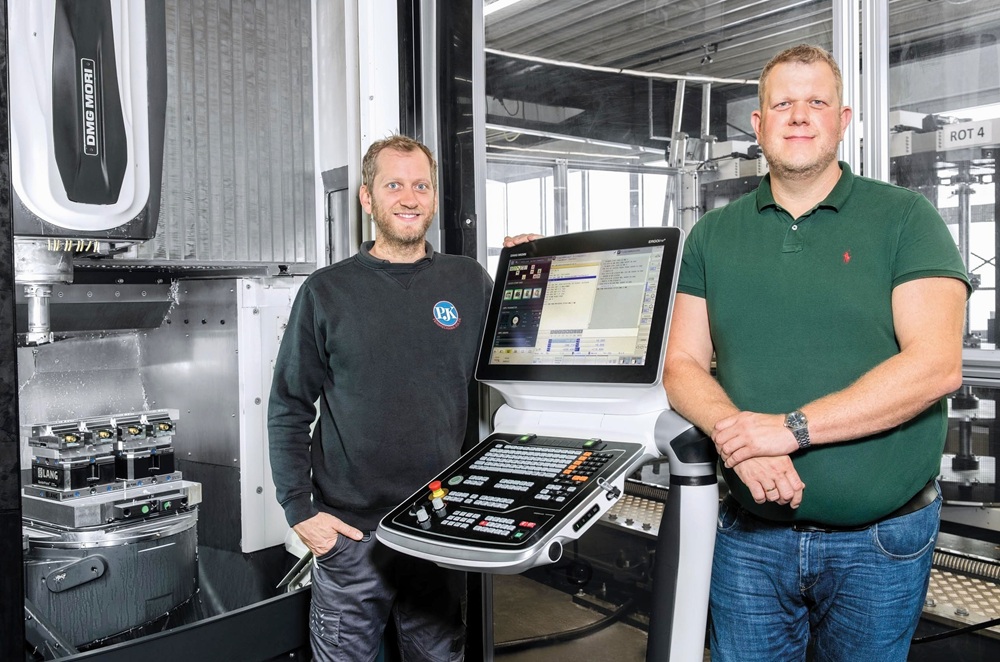
Since 1983, Peter Josef Klein Feinmechanik GmbH (PJK) – a 50-employee subcontractor based in Sankt Augustin near Bonn, Germany – has been producing precision components and assemblies from aluminium, titanium, stainless steel and high-performance plastics for customers principally in the medical, food and aerospace industries. For metal cutting, the company mainly uses machine tools from DMG Mori, including seven DMU 60 eVo machining centres, all of which feature automation.

Two of the machines are connected via a pallet handling system, which has 40 locations and can accommodate 300 fixtures that are exchangeable between pallets. An Erowa MTS zero-point clamping system serves as the basis for the flexible, automated cell.

Second-generation Peter Klein, who runs the company with his brother Julian, says: “Our main challenges are the extreme quality customers require and the high degree of competitive pressure. Our components are accurate to within microns, while at the same time we also have to continuously check and optimise our processes.”

One way of meeting these challenges is autonomous manufacturing, with PJK using automated cells to maximise machine utilisation since 2011. It means an employee can operate several machines during day shifts, while the company gains extra production output during unmanned running overnight and at the weekend.

To ensure precise and dynamic machining, the majority of DMG Mori machining centres on site at PJK are fitted with linear drives.

Says Julian Klein: “The machines produce our range of components efficiently by five-axis machining and meet our tight tolerance requirements. Customers stipulate accuracies down to single-figure microns, which we have to hold consistently. Five-axis machining contributes to our ability to control this level of quality, as the number of manual re-clamping operations is reduced or even eliminated.”

More information www.dmgmori.com

SW to launch BF 12-21D at EMO 2025

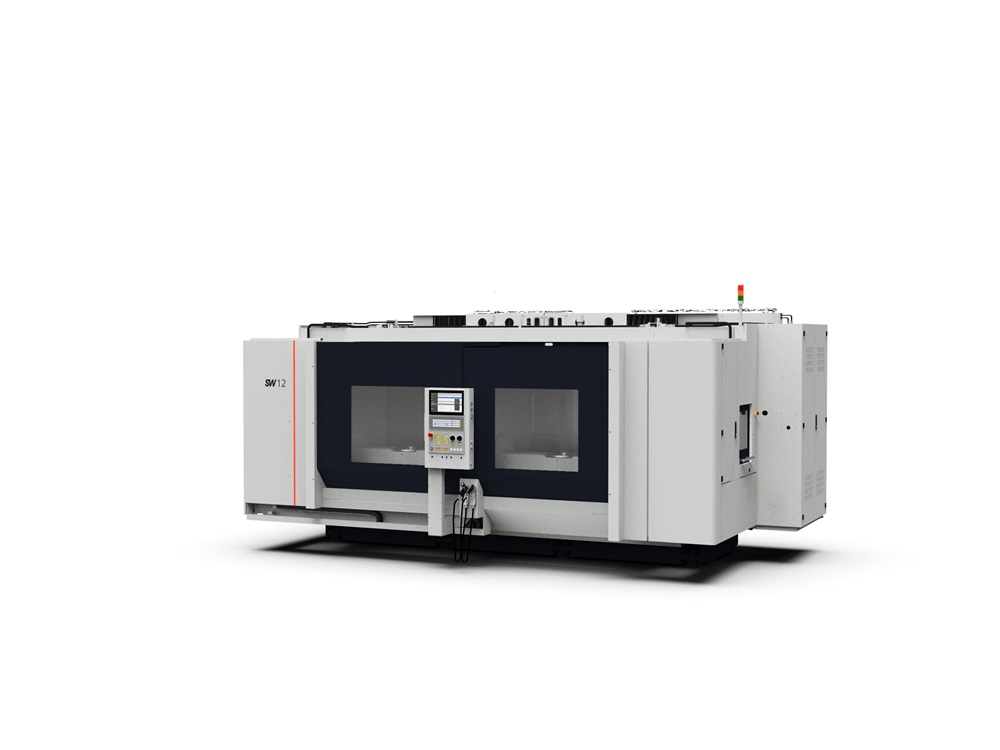
The right solution for every application, from small to large series production: at this year’s EMO 2025 exhibition in Hanover, Schwäbische Werkzeugmaschinen (SW) is presenting a new machine tool on stand C05 in hall 12. With the BF 12-21D, SW says it is responding to the current trend in automotive engineering toward die-cast aluminium body parts. The BF 12-21D is suitable for high production volumes, in particular for the fast machining of frame and structural components.

“In automotive engineering, we’re seeing a clear trend toward the use of aluminium die-cast parts in vehicle body construction,” explains product manager Michael Kreuzberger. “These parts require less manufacturing precision than, for example, gearbox or stator housings. With the BF 12-21D, we offer an economical and dynamic machine concept for precisely these applications.”

The BF machine series differs from other SW machines in its structural design: to fit specific market conditions it features a hybrid axis configuration, utilising a linear drive for the X axis, while the Y and Z axes are driven by ball screws. SW also relies on proven twin-spindle technology to meet high productivity requirements. With two three-axis units and one spindle per working area, the BF 12-21D can replace two conventional single-spindle machines and achieve higher output with a smaller footprint, reports the company. When components are changed in one working area, the second spindle in the other working area can be used to achieve even higher productivity.

SW will also exhibit an established machining centre at EMO. The BA 442 is one of SW’s fastest and most sustainable machines. With four spindles, it offers high effectiveness per square metre of space while also being energy-efficient.

More information www.sw-machines.com